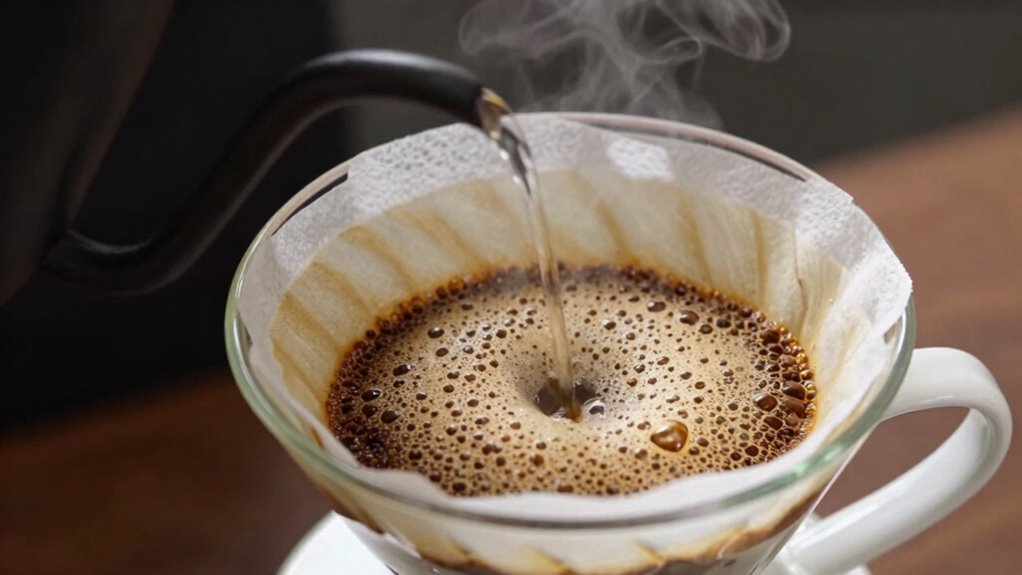

The pour-over bloom isn’t a myth—it’s a vital step in brewing great coffee. When you pour water over fresh grounds, trapped carbon dioxide escapes, creating a visible bloom. This signals your coffee is fresh and properly roasted, helping guarantee even extraction and better flavor. Getting this step right improves aroma and taste. Stick around, and you’ll discover how to perfect your bloom technique for outstanding results every time.
Key Takeaways
- The bloom indicates the release of trapped CO₂, signifying fresh, properly roasted coffee beans.
- Proper bloom enhances flavor, aroma, and even extraction during pour-over brewing.
- Achieving a good bloom involves using medium-coarse grounds and water at 195–205°F.
- Timing (30–45 seconds) and spiral pouring help ensure even saturation and optimal bloom.
- Troubleshooting bloom issues includes adjusting grind size and water temperature for consistent results.

Bodum 34oz Pour Over Coffee Maker, High-Heat Borosilicate Glass with Reusable Stainless Steel Filter and Cork Grip – Made in Portugal
Pour Over Coffee: Manual Pour Over Coffee Maker allows you to brew an excellent cup of Coffee in…
As an affiliate, we earn on qualifying purchases.
As an affiliate, we earn on qualifying purchases.
What Is the Pour-Over Bloom and Why Does It Matter?
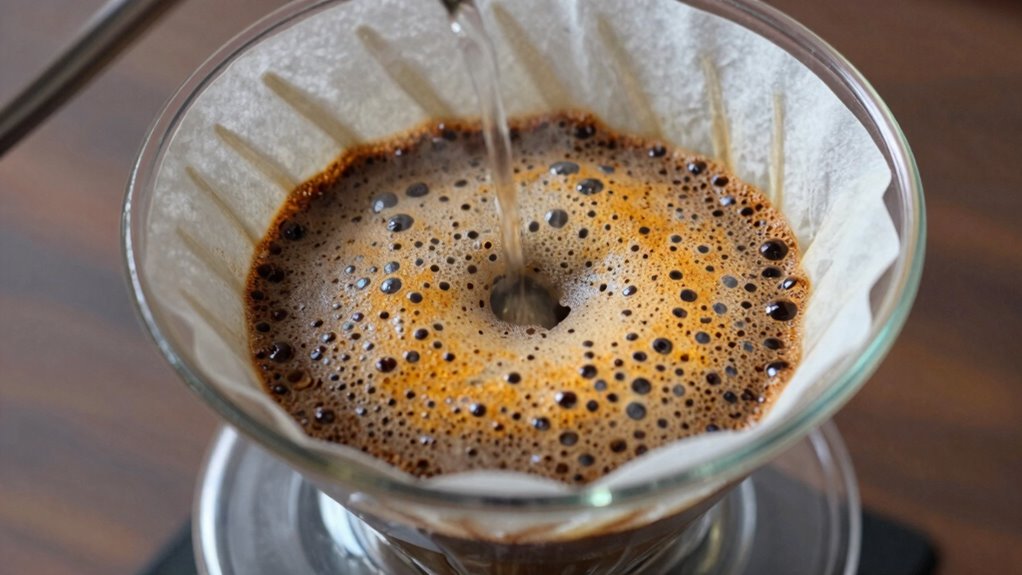
Have you ever wondered what causes that initial bubbling or “bloom” when you start pouring water over your coffee grounds? That bubble is your coffee releasing carbon dioxide, which is a sign of good coffee freshness. Freshly roasted beans contain trapped gases that escape when hot water hits them, creating the bloom. The water temperature plays a vital role here; if it’s too cold, the gases won’t escape efficiently, leading to a weak bloom. Conversely, too hot water can over-extract the coffee, ruining flavor. The bloom isn’t just visual; it signals that your coffee is fresh and ready for extraction. Proper blooming guarantees even saturation, revealing maximum flavor and aroma in every cup. Additionally, understanding the coffee roasting process can help you select beans that produce a vibrant bloom, enhancing your brewing experience. Knowing how degassing affects coffee freshness can also guide you in choosing beans that will bloom optimally. Moreover, controlling the brew method ensures you maximize the benefits of the bloom for better flavor extraction. Recognizing the role of freshness in coffee can further improve your brewing results by emphasizing the importance of using recently roasted beans. Furthermore, consistent temperature control during brewing can help maintain the integrity of the bloom and overall flavor profile.

SYBO Coffee Pot Decanter, 12-Cup Glass Coffee Decanter Black
[High Quality Glass]: With laboratory-grade stress-free glass, Reliable and departs no aftertaste to coffee and is easily cleaned.
As an affiliate, we earn on qualifying purchases.
As an affiliate, we earn on qualifying purchases.
How to Bloom Your Coffee for Maximum Flavor
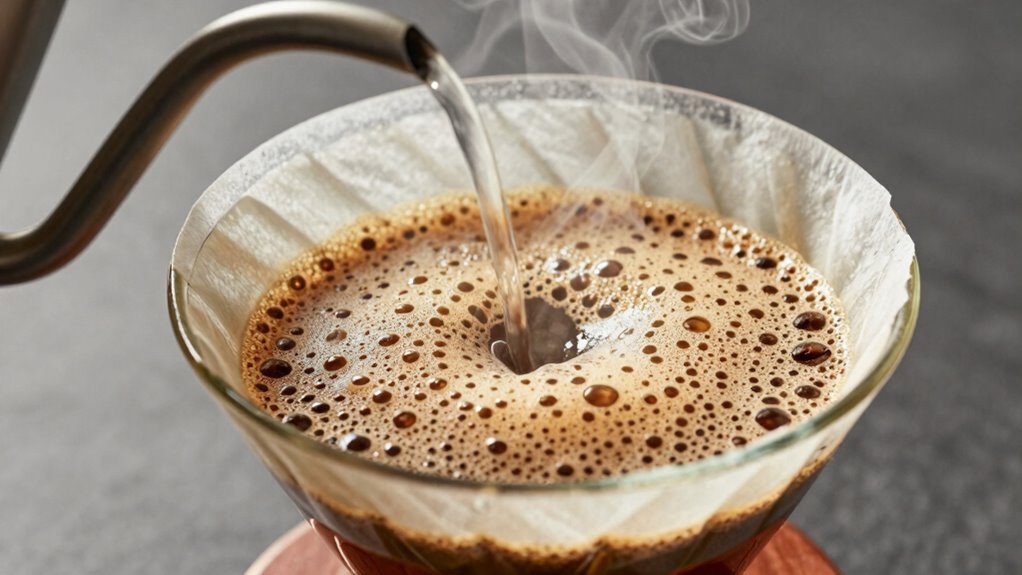
To maximize the flavor extraction during your pour-over, mastering the blooming process is key. Start with a proper grind size—medium to medium-coarse—to guarantee even extraction. Use water just off the boil, around 195–205°F, for ideal saturation. Proper temperature control can significantly impact extraction quality. Pour enough water to wet all the grounds evenly, allowing the coffee to bloom and release gases. Wait 30-45 seconds before pouring the rest of your water in a slow, steady spiral. This technique enhances flavor complexity and prevents over-extraction. Remember, timing and temperature are vital. Adjust your grind size or water temperature based on taste preferences and coffee origin. Here’s a quick guide to help you bloom like a pro:
| Grind Size | Water Temperature | Bloom Time |
|---|---|---|
| Medium to Coarse | 195–205°F | 30–45 sec |
| Fine | 190–195°F | 20–30 sec |
| Coarse | 205°F+ | 45+ sec |
| Very Fine | 180–185°F | 15–20 sec |
| Extra Coarse | 205°F+ | 50+ sec |

Maestri House S2 Espresso Coffee Scale with Timer, USB-C Rechargeable 2kg/0.1g Precision Shot Scale, Digital Scale for Espresso Brewing(Black & Silver)
【Ultra Small, Yet Professional】The Espresso Scale is small enough to fit in your palm. It measures 4.13*4.13*0.78 inches…
As an affiliate, we earn on qualifying purchases.
As an affiliate, we earn on qualifying purchases.
Common Pour-Over Bloom Myths Debunked
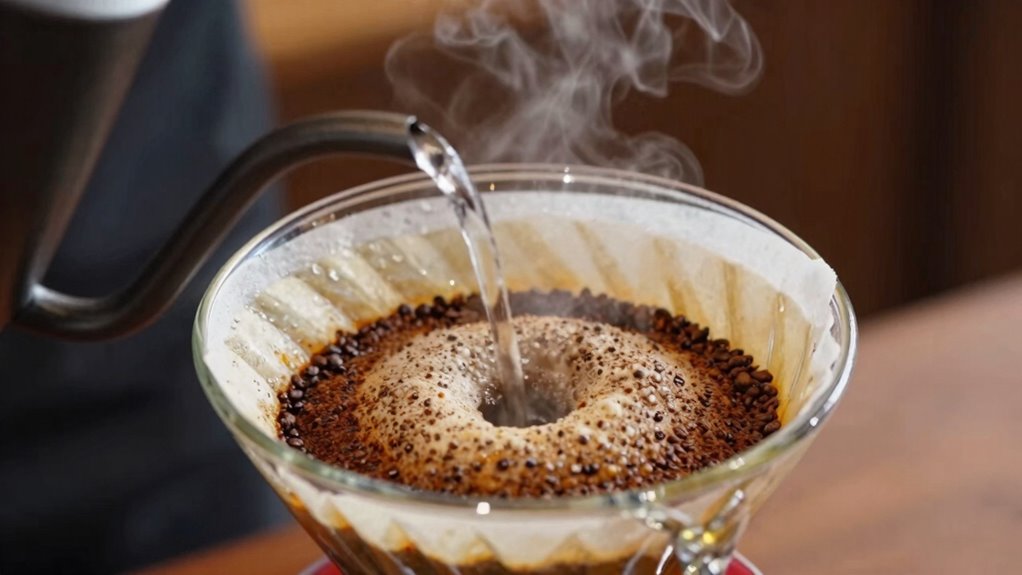
Many common beliefs about the blooming process in pour-over coffee are actually myths that can hinder your brewing results. One myth is that a longer bloom always results in better coffee extraction; in reality, it’s more about proper technique than time. Another misconception is that a finer grind size makes the bloom more effective, but too fine a grind can impede water flow and lead to over-extraction later. Conversely, too coarse a grind can cause under-extraction, even if you bloom properly. The truth is, optimizing grind size and bloom duration helps ensure even extraction and balanced flavor. Don’t assume that a one-size-fits-all approach works—adjust your grind size based on your beans and brewing method for the best pour-over results.

Gooseneck Kettle for Manual Drip Coffee & Tea 40oz Stainless Steel Pour Over Coffee Kettle with Thermometer Tea Kettle for Stovetop,1200ml,6 Cup,Silver,1Pack
ENJOY BETTER COFFEE AT HOME: The coffee pot is designed with a gooseneck spout. This kind of gooseneck…
As an affiliate, we earn on qualifying purchases.
As an affiliate, we earn on qualifying purchases.
Troubleshooting Bloom Issues for Consistent Results
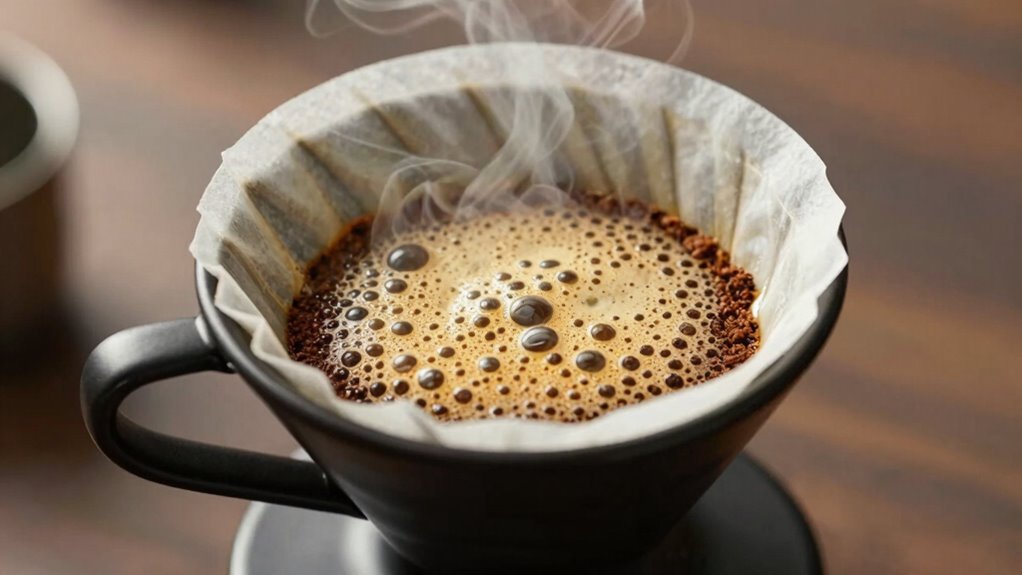
When your bloom isn’t consistent, it’s often due to uneven wetting or incorrect technique. First, check your water temperature—aim for around 195-205°F—to ensure proper extraction and bloom. Too hot or too cold, and the coffee may not fully release gases, causing uneven blooming. Next, examine your grind size; a medium-coarse grind typically works best. If your grind is too fine, water struggles to flow evenly, leading to inconsistent bloom and over-extraction. Conversely, if it’s too coarse, the bloom may be weak or sparse. Adjust your grind size gradually and monitor the water temperature to achieve a steady, uniform bloom. Consistent results come from fine-tuning these variables to ensure even wetting and gas release during the bloom phase.
Tips to Level Up Your Pour-Over Bloom Technique
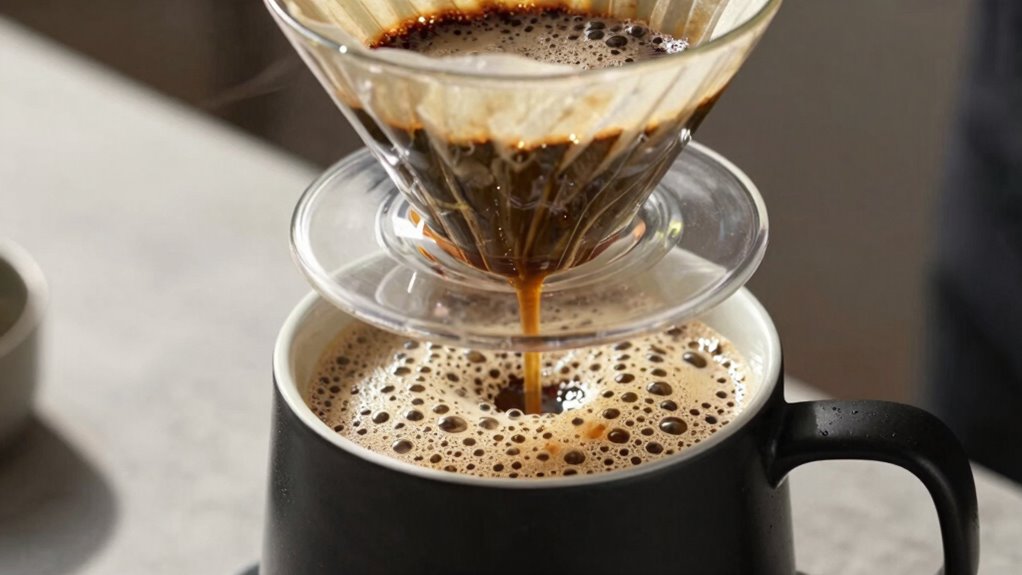
Refining your pour-over bloom technique can make a noticeable difference in the overall flavor and consistency of your brew. To enhance your coffee aroma and extraction, focus on your grind size—an even, medium grind allows for ideal water flow and extraction. Start with slightly wetter grounds during the bloom, ensuring they’re fully saturated without overdoing it. This process benefits from connected equipment that can monitor and optimize water flow, ensuring a more precise bloom. Use a slow, steady pour, beginning from the center and spiraling outward, to promote even saturation. Avoid rushing the process, as it can lead to uneven blooming and inconsistent flavor. Incorporating precision automation can help you fine-tune your pour-over technique for optimal results. Understanding the importance of water temperature can further improve extraction and flavor clarity. Paying attention to grind size is essential for consistent blooming and extraction. With practice, adjusting your grind size and pouring technique will improve the bloom, resulting in richer aroma, better extraction, and a more balanced, flavorful cup.
Frequently Asked Questions
Can the Bloom Be Skipped Without Affecting Coffee Quality?
Yes, you can skip the bloom, but it might impact your coffee’s flavor. The bloom myths suggest that skipping it can lead to uneven extraction and lost aroma, which affects flavor. When you ignore the bloom, you risk missing out on the full depth of your coffee’s profile. Taking the time to bloom releases gases and primes the grounds, ensuring a richer, more balanced cup, so it’s worth the extra step.
How Does Water Temperature Influence the Blooming Process?
Water temperature critically impacts the blooming process because it influences water chemistry and mineral extraction. If you use water that’s too hot, it can cause over-extraction and bitterness, while cooler water might under-extract, leading to flat flavors. Ideally, aim for around 195-205°F (90-96°C) to optimize mineral dissolving and gas release. This balance ensures your coffee blooms properly, enhancing overall flavor and aroma.
Does the Type of Coffee Grind Affect the Bloom Size?
You’ll notice that a coarser coffee grind leads to a larger bloom size because it exposes more surface area, allowing gases to escape more easily. About 98% of the gases are released during the bloom, and the grind size plays a vital role. Using proper brewing equipment and adjusting water temperature can optimize this process, but the grind type directly influences that initial gas release and bloom expansion.
What Role Does Altitude Play in the Bloom’s Development?
Altitude effects considerably influence the bloom’s development because higher elevations often mean beans with denser structures. This can lead to a slower, more vigorous blooming process, revealing unique flavor nuances. When brewing at high altitudes, you might notice a more vibrant bloom, which enhances extraction and highlights the coffee’s complex flavors. Adjust your grind size or brew time accordingly to optimize the bloom and fully enjoy the distinct taste profile.
Can Different Brewing Equipment Alter the Bloom’s Behavior?
Different brewing equipment can definitely alter the bloom’s behavior. Your brew method and equipment design influence how water interacts with coffee grounds, affecting bloom expansion. For example, a gooseneck kettle provides precise pouring control, resulting in a more uniform bloom, while a wider dripper might produce a quicker, less pronounced bloom. Adjusting your equipment helps you control extraction and enhances flavor, making your pour-over experience more consistent and flavorful.
Conclusion
Mastering the pour-over bloom isn’t just a step; it’s the gateway to liberating your coffee’s true potential. When you embrace this essential process, you turn a simple brew into a symphony of flavors, each note resonating with clarity and depth. Don’t let myths cloud your journey—trust in technique and see how the bloom transforms your coffee experience from ordinary to extraordinary. After all, great coffee begins with a well-timed bloom—your secret ingredient to perfection.