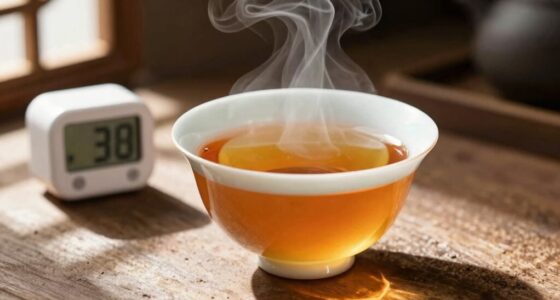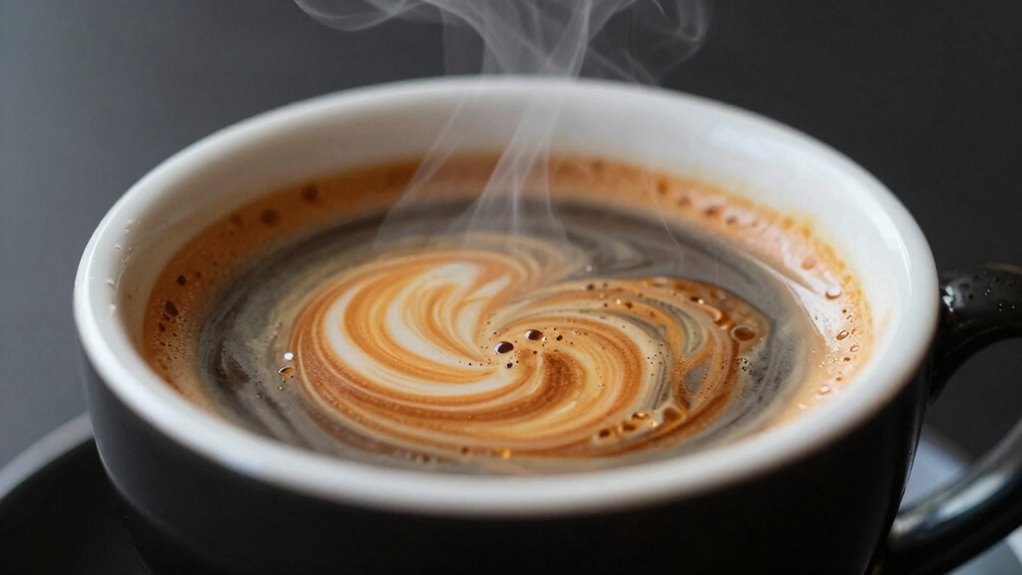

When you brew coffee at different temperatures, you alter how compounds dissolve and extract, changing the flavor. Higher temperatures break down grounds more thoroughly, releasing aromatic oils and acids, but too hot can cause bitterness. Cooler brews might miss complex flavors, resulting in a lighter taste. Maintaining a steady, ideal temperature balances extraction, ensuring your coffee develops rich, smooth flavors. If you keep exploring, you’ll discover the key to consistently great brews.

Get kitchen staples and gadgets delivered free — and shop member deals
- Fast, free delivery on millions of items
- Access to Prime Big Deal Days deals on October 6–7
- Prime Video, Amazon Music and more included
Key Takeaways
- Higher temperatures extract more aromatic oils and acids, enhancing flavor complexity but risking bitterness.
- Lower temperatures may lead to under-extraction, resulting in sour or weak-tasting coffee.
- Temperature fluctuations cause uneven extraction, producing inconsistent flavors and undesirable notes.
- Optimal temperature balances extraction, ensuring rich, smooth flavors without harsh or burnt tastes.
- Proper temperature control ensures uniform heat exposure, improving overall coffee quality and flavor stability.
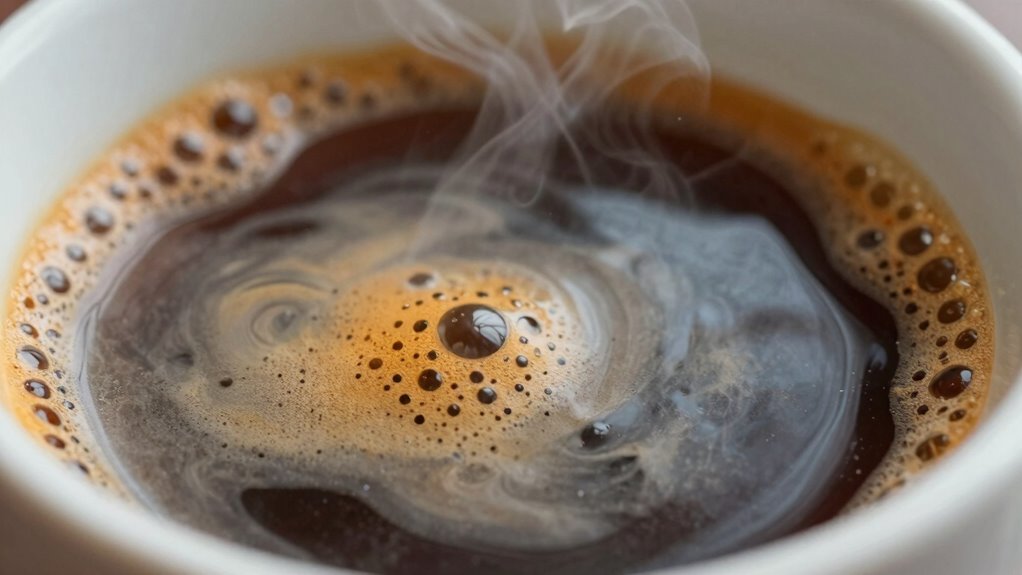
Have you ever noticed that your coffee tastes different depending on how hot or cold you brew it? That’s because temperature plays a vital role in how flavor extraction happens during brewing. When you brew at higher temperatures, the heat helps break down coffee grounds more thoroughly, releasing more of the aromatic oils, acids, and soluble solids that give coffee its rich flavor. This process, known as flavor extraction, is highly sensitive to temperature because it determines which compounds are dissolved and in what proportions. Brew too hot, and you might extract undesirable bitter compounds; brew too cold, and you might miss out on the full spectrum of flavors that make coffee complex and enjoyable. The key is finding that sweet spot where the temperature promotes ideal flavor extraction without overdoing it.
Temperature stability is equally significant because fluctuations during brewing can alter the extraction process, resulting in inconsistent flavors. If your brewing temperature varies even slightly, it can cause uneven extraction, leading to a cup that’s either underwhelming or overly bitter. For example, if the water cools too quickly or if the brewing device isn’t maintaining a steady temperature, some grounds will be under-extracted, leaving behind sour or weak notes, while others may be over-extracted, producing harsh, burnt flavors. This inconsistency affects your overall coffee experience, making it feel unpredictable or unsatisfying. To get the best flavor, you want a steady temperature throughout the brew, ensuring that each coffee particle is exposed to a consistent heat level for the right amount of time. Proper temperature control can also influence the development of undesirable flavors, helping to prevent their formation. Maintaining consistent temperature not only improves flavor but also enhances the overall quality and predictability of your brewed coffee, helping home baristas replicate their favorite brews more reliably.
coffee temperature control kettle
As an affiliate, we earn on qualifying purchases.
As an affiliate, we earn on qualifying purchases.
Frequently Asked Questions
How Does Altitude Affect Coffee Brewing Temperature?
Altitude affects your coffee brewing temperature by lowering boiling points at higher elevations, usually around 90-95°C instead of 100°C. You need to adjust your brewing process to maintain consistency because altitude impacts extraction, making it harder to reach ideal flavors. To guarantee brewing consistency, consider increasing brew time or temperature slightly. This way, you can get a balanced, flavorful cup despite the altitude differences.
Can Brewing Temperature Impact Coffee’s Caffeine Content?
Think of brewing temperature as the maestro conducting caffeine extraction—the right temp guarantees harmony. When you brew at ideal temperatures, your coffee achieves better brewing efficiency, extracting more caffeine from the grounds. If it’s too hot or cold, you risk under- or over-extraction, which can alter caffeine content. So, yes, brewing temperature directly impacts caffeine levels, making your coffee not just flavorful but also energizing exactly as intended.
Does Water Mineral Content Change Taste at Different Temperatures?
Yes, water mineral content does change taste at different temperatures. When you brew coffee, mineral extraction varies with temperature, affecting flavor enhancement. Hotter water extracts minerals more efficiently, which can intensify or mellow flavors depending on the minerals present. This means that at different temperatures, you’ll notice subtle shifts in taste because mineral balance influences the overall coffee profile, making your brewing experience more nuanced and personalized.
How Do Different Coffee Bean Types Respond to Temperature Variations?
Different coffee bean types respond uniquely to temperature variations because of their distinct coffee bean chemistry. Light roasts often highlight brighter, fruity flavors at higher temperatures, while darker roasts develop richer, bolder notes when brewed slightly cooler. Temperature influences flavor extraction dynamics, affecting how compounds like acids, oils, and sugars release. You’ll notice these differences in taste, aroma, and mouthfeel, depending on the bean’s origin, roast level, and the brewing temperature you choose.
Is There an Optimal Temperature for Brewing Specialty Coffee?
Sure, there’s a prime temperature—around 195°F to 205°F—that’s your best bet for a stellar brew. You want to maximize flavor extraction without sacrificing aroma preservation, right? Brew too hot, and you risk bitterness; too cold, and you’ll miss out on those rich flavors. Stick within this sweet spot, and you’ll reveal the perfect harmony of taste and aroma, making your coffee truly unforgettable.
As an affiliate, we earn on qualifying purchases.
Conclusion
So, don’t let the idea of different brew temperatures scare you away from experimenting. It’s true that temperature influences taste, but that means you can find your perfect cup by trying various methods. Even if your first attempt doesn’t match your favorite coffee shop’s flavor, keep exploring. With a little patience, you’ll discover the temperature that reveals your ideal brew—making every cup a tasty adventure worth savoring.
coffee brewing temperature controller
As an affiliate, we earn on qualifying purchases.
As an affiliate, we earn on qualifying purchases.
As an affiliate, we earn on qualifying purchases.
NFL season / tailgating Picks
team gear
As an affiliate, we earn on qualifying purchases.