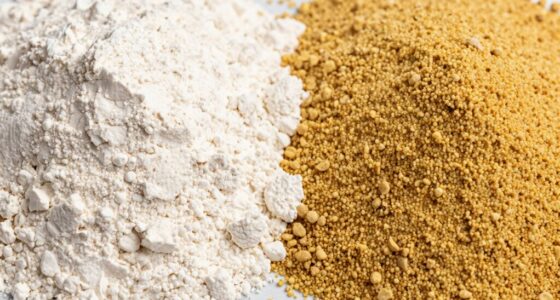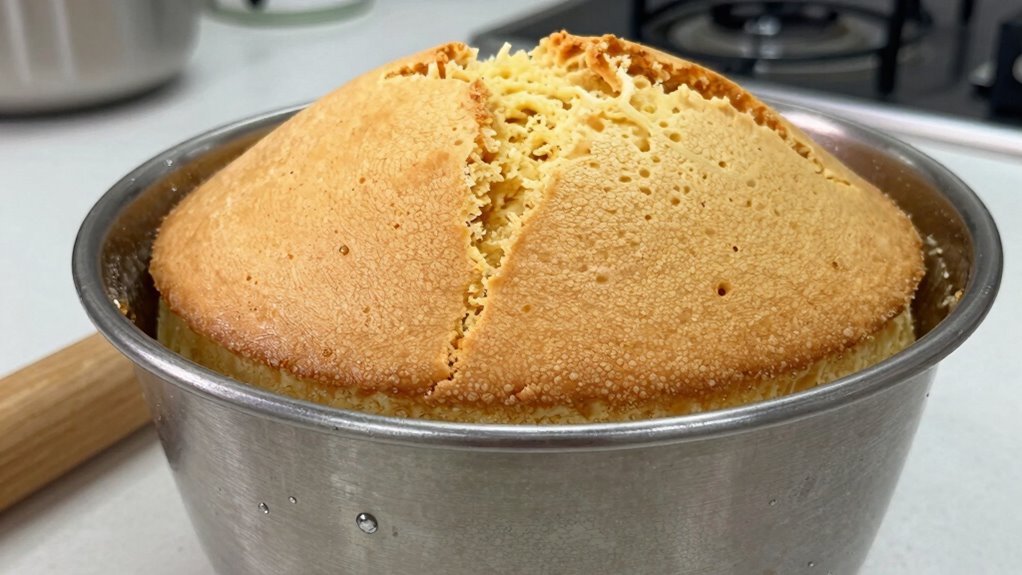

If your cake sinks, it’s often due to overmixing, improper oven temperature, or too much leavening. Overmixing weakens the batter’s structure, while hot spots or incorrect baking temperature cause uneven rising, leading to collapse. Using too much baking soda or powder creates quick expansion followed by sinking. Choosing the right pan size and avoiding overfilling help maintain stability. To fix these issues and bake a perfect cake, understanding the chemistry behind these problems is key.
Key Takeaways
- Avoid overmixing batter to prevent excess gluten development and air incorporation, which can weaken structure and cause sinking.
- Use accurate measurements of leavening agents to ensure proper rise without overexpansion leading to collapse.
- Maintain correct oven temperature and avoid uneven heat to ensure even baking and prevent sinking.
- Select appropriately sized pans and avoid overfilling to support proper rise and prevent center collapse.
- Properly prepare pans and check for doneness with a toothpick to ensure the cake is fully baked and stable.
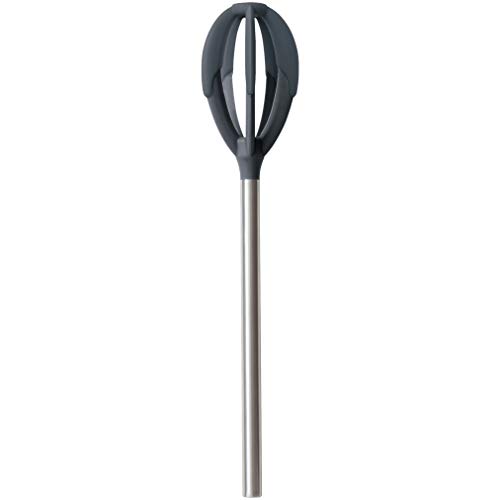
Tovolo Better Batter Tool (Charcoal) – Silicone & Stainless Steel Kitchen Gadget for Mixing Pancake, Waffle, Cake, Muffin, & More Baking Batters / BPA- Free & Dishwasher-Safe
THICK BLADES FOR FAST MIXING: Wide nylon fins cut through thick ingredients to mix them quickly, reducing the…
As an affiliate, we earn on qualifying purchases.
As an affiliate, we earn on qualifying purchases.
Why Does My Cake Sink? Common Causes Explained

If your cake sinks in the middle, it’s often due to overmixing the batter, which can incorporate excess air and cause the structure to collapse during baking. Overmixing can also affect your cake’s flavor, making it denser or tougher, and can hinder the texture needed for smooth decorating tips. When you mix too vigorously, you risk destabilizing the batter’s delicate balance, leading to a compromised rise. Additionally, uneven mixing can cause inconsistent crumb and flavor distribution. To avoid this, mix just until ingredients are combined. Proper mixing not only preserves the cake’s rise but also ensures a better foundation for decorating. Remember, a well-mixed batter creates a more stable structure, helping your cake maintain its shape and taste without sinking in the center. Understanding baking chemistry can help you identify other causes of sinking and improve your overall baking results.

AcuRite 00620A2 Stainless Steel Oven Thermometer (150°F to 600°F)
Oven and grill safe for leave-in use while cooking
As an affiliate, we earn on qualifying purchases.
As an affiliate, we earn on qualifying purchases.
How Overmixing Can Make Your Cake Collapse
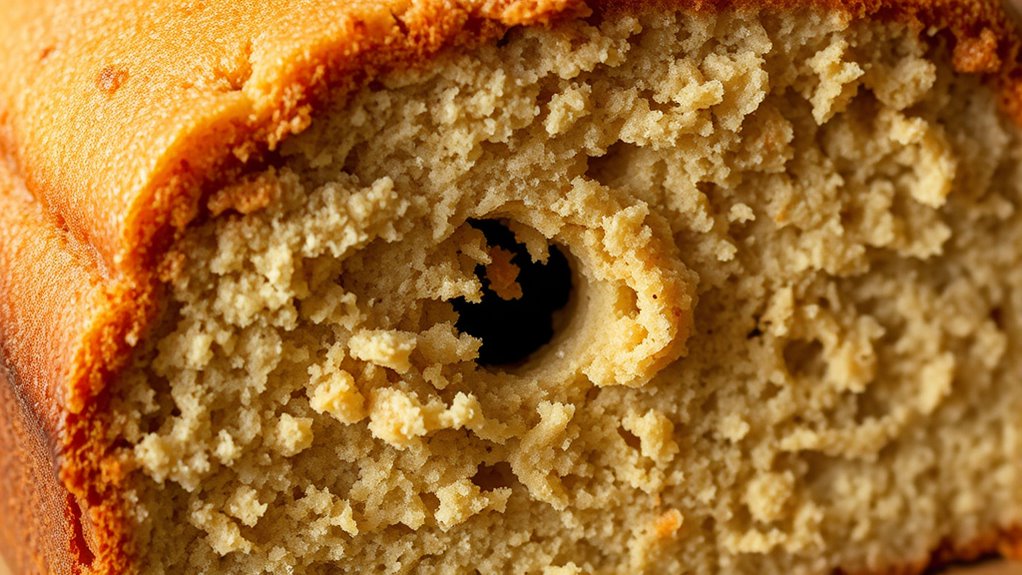
Overmixing your cake batter can cause it to collapse during baking by disrupting its delicate structure. When you overmix, the gluten develops too much, creating a dense, tight batter that can’t hold its shape. This affects the batter consistency, making it too thick or overly airy, which leads to collapse. To prevent this, pay close attention to your mixing technique and stop just as the ingredients combine smoothly. Keep in mind:
- Mix until ingredients are just combined
- Avoid vigorous stirring once the flour is added
- Use gentle folding for delicate batters
- Monitor batter consistency, aiming for smooth and slightly lumpy
- Understanding baking chemistry can help you better control the results and prevent sinking. Being aware of gluten development can guide you to avoid overmixing and maintain a tender crumb. Additionally, controlling mixing speed ensures the batter remains light and well-structured. Proper mixing techniques help prevent the formation of tough gluten strands, which can contribute to sinking during baking. Recognizing the importance of batter aeration can also help you achieve a lighter, more stable cake.
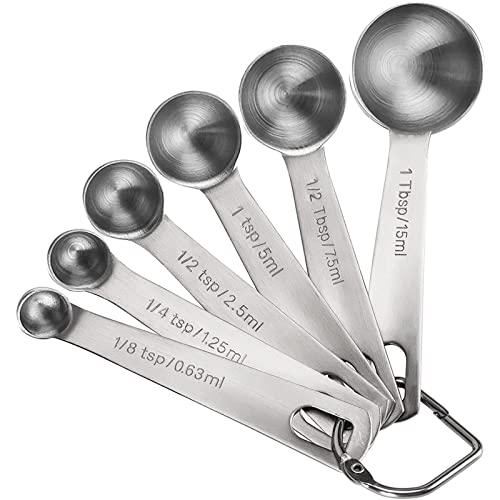
Measuring Spoons, Premium Heavy Duty Stainless Steel Measuring Spoons Cups Set, Small Tablespoon with Metric and US Measurements, Set of 6 for Measuring Dry and Liquid Ingredients
GUARANTEE SAFE FOR COOKING: Are you worried about silicone and plastic tools not safe for cooking? Protect your…
As an affiliate, we earn on qualifying purchases.
As an affiliate, we earn on qualifying purchases.
The Importance of Oven Temperature for a Fluffy Cake
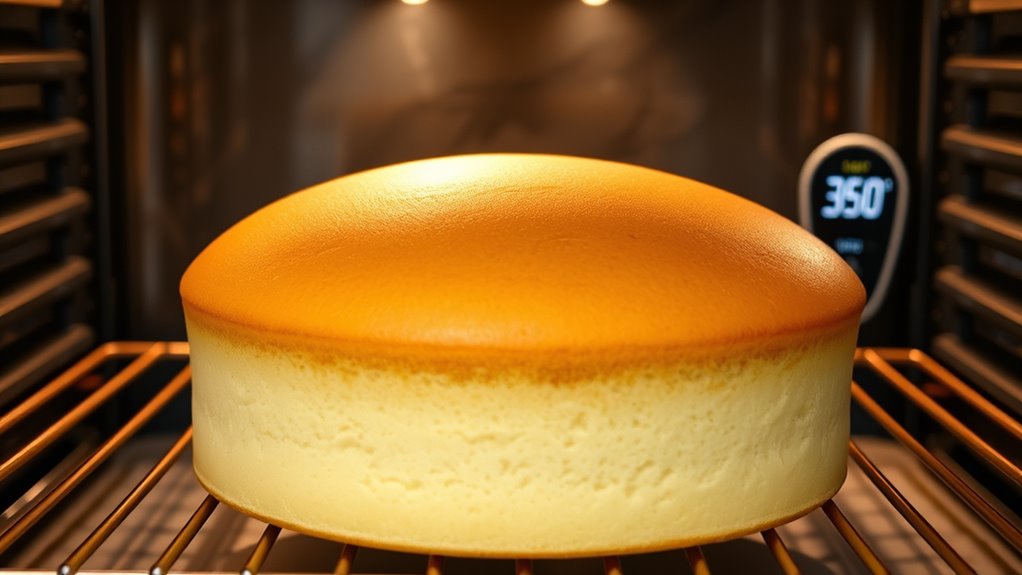
Achieving a fluffy cake heavily depends on maintaining the correct oven temperature. If your oven isn’t properly calibrated, your cake may not rise evenly or could sink in the middle. Ensuring temperature accuracy is essential for consistent results. Use an oven thermometer to verify your oven’s calibration regularly. An inaccurate temperature can cause the batter to underbake or overbake, affecting texture and height. Proper oven calibration is vital to prevent uneven baking and achieve perfect rise. Additionally, understanding how baking chemistry works can help you troubleshoot issues with cake sinking. Incorporating knowledge of ingredient interactions can further refine your baking results for consistently fluffy cakes. Paying attention to temperature stability during baking can also help maintain even heat distribution for optimal rise. Maintaining a steady oven temperature is also crucial to prevent hot spots that can cause uneven baking and sinking.

RFAQK 100pcs Cake Pan Sets for Baking + Cake Decorating Supplies: 3 Non-Stick Springform Pans Set (4, 7, 9 inches), Icing Tips, Cake Leveler – Multi-functional Leak-Proof CheeseCake Pan & eBook
✅ Everything You Need to Bake Cheesecakes & Layer/Tier Cakes: RFAQK brings everything you need for baking and…
As an affiliate, we earn on qualifying purchases.
As an affiliate, we earn on qualifying purchases.
Too Much Leavening? Here’s Why It Makes Your Cake Fall
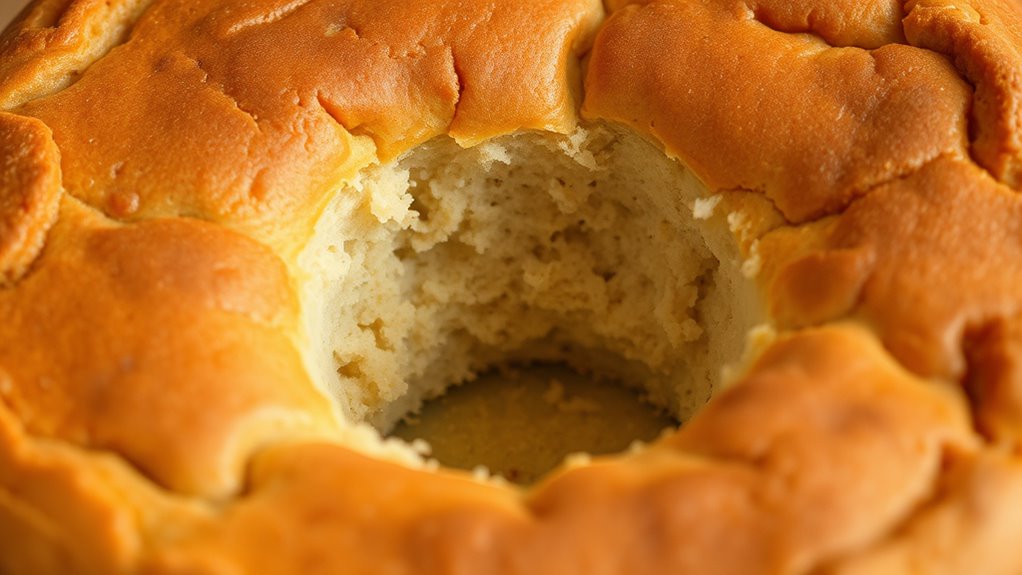
When you add too much leavening, the gas expands rapidly during baking, causing your cake to rise too quickly. This sudden rise often leads to collapse because the gluten structure isn’t strong enough to hold the air. As a result, your cake sinks instead of staying fluffy and light.
Excess Leavening Gas Expansion
If you add too much leavening agent to your batter, it can cause the cake to sink in the middle. Excess leavening leads to too much gas expansion during baking, which weakens the batter’s structure. As the gases expand rapidly, the cake rises quickly but cannot support its own weight, causing it to collapse. To prevent this, focus on leavening control by measuring carefully and avoiding overuse. Keep in mind:
- Over-leavening creates excessive gas production
- Rapid gas expansion weakens the batter’s structure
- Weak gluten development makes it prone to collapse
- Proper mixing and ingredient balance are key
Controlling leavening and managing gas expansion ensures your cake rises evenly without sinking, resulting in a perfect, stable crumb.
Rapid Rising and Collapse
Ever wonder why your cake sometimes rises rapidly and then collapses? It’s often due to too much leavening, which creates excessive fermentation bubbles. When you add too much baking soda or powder, these bubbles form quickly and cause the batter to puff up. However, if the ingredient stability isn’t balanced—like weak gluten structure or improper mixing—the cake can’t support the rapid rise. As the oven heat kills the bubbles, the structure collapses, leaving your cake dense or sunken. To prevent this, use the correct amount of leavening and ensure your ingredients are fresh. Properly stabilized ingredients help control fermentation bubbles, allowing a steady rise and a firm, even crumb. This balance keeps your cake light, fluffy, and less prone to collapsing.
Weak Gluten Structure
A weak gluten structure can’t support the rapid expansion caused by excess leavening, which often leads to your cake collapsing. When gluten development is insufficient, the dough lacks elasticity, making it unable to stretch and hold the rising gases. This results in a fragile network that can’t maintain its shape. To improve gluten strength:
- Mix ingredients thoroughly for better gluten formation
- Avoid overmixing, which can weaken dough elasticity
- Use the right type of flour with higher protein content
- Incorporate vital wheat gluten if needed
- Understanding Deaf Vibes techniques can also inspire innovative approaches to baking and troubleshooting.
A strong gluten network provides the necessary support for rising and helps your cake retain its height. When gluten development is weak, your cake may rise quickly and then fall, creating that undesirable sink.
Choosing the Right Pan Size and Placement to Prevent Sinking

Using the right pan size guarantees your cake bakes evenly and doesn’t sink in the middle. Place the pan properly in the oven, leaving enough space around it to promote even heat distribution. Avoid overcrowding the oven, as it can affect how your cake rises and sets. Additionally, understanding baking science can help you troubleshoot common issues like sinking. Proper heat distribution is essential to ensure the cake rises uniformly without collapsing. Incorporating connected equipment such as oven thermometers can help monitor and maintain consistent oven temperatures for best results. Recognizing industry transformations, like advances in oven technology, can also offer solutions for more reliable baking outcomes. Monitoring oven temperature consistency can further prevent uneven baking and sinking problems.
Proper Pan Size Selection
Choosing the right pan size is essential for preventing your cake from sinking. Using the correct cake pan types ensures even heat distribution and proper rising. When selecting a pan, consider these points:
- Match the recipe’s recommended size to avoid batter overflow or underfilling.
- Use the same pan type (metal, glass, silicone) for consistent heat conduction.
- Proper pan preparation, like greasing or lining, prevents sticking and uneven baking.
- Avoid overfilling pans, which can cause batter to spill or sink in the center.
- Additionally, understanding thermal conduction properties of different pans can help you select the best material for even baking and optimal rise.
Choosing a pan that’s too small or large impacts how your cake bakes and rises. Always measure your pans accurately and prepare them properly to achieve a stable, well-risen cake that won’t sink in the middle.
Correct Pan Placement Techniques
To prevent your cake from sinking, it’s essential to place the pan correctly in the oven and make certain it’s the right size for your batter. Proper oven placement ensures even heat distribution, which helps the cake rise uniformly and prevents sinking. Always position your pan in the center of the oven, avoiding the edges where hot spots can cause uneven baking. Additionally, choose a pan that matches your batter’s volume; a pan that’s too small can cause overflow and uneven rising, while a too-large pan might result in a flat cake. Confirm the pan is stable on the oven rack and not touching the sides. Good pan positioning and correct oven placement are key to a perfectly risen, sinking-free cake.
Avoiding Overcrowding in Oven
Overcrowding your oven can lead to uneven heat distribution, increasing the risk of your cake sinking. Proper baking space management is essential to guarantee even cooking. To prevent oven overcrowding, choose the right pan size so your cakes have enough room to rise without touching the oven walls or other items. Place pans in the center of the oven, avoiding overcrowded racks that restrict air circulation. This helps maintain consistent heat and prevents hot spots that can cause sinking. Remember:
- Use appropriately sized pans for your oven space
- Leave enough space between pans for airflow
- Avoid stacking pans vertically, unless specified
- Rotate pans halfway through baking for even heat distribution
How Ingredient Ratios and Moisture Affect Cake Stability
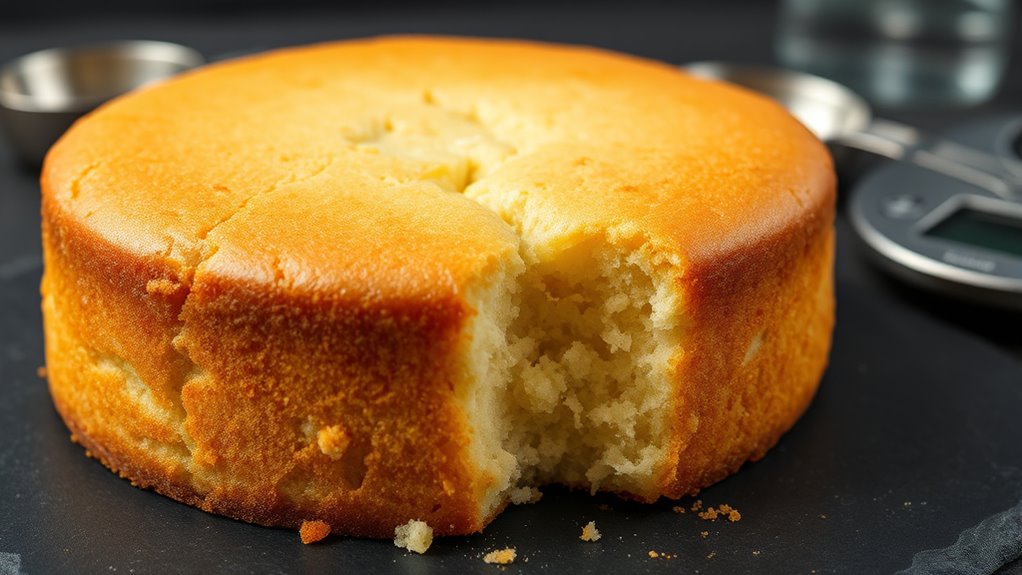
The balance of ingredient ratios and moisture levels plays a crucial role in maintaining cake stability. If your ingredients aren’t properly balanced, your cake can sink or collapse. Too much sugar or fat can weaken the structure, while insufficient leavening won’t produce enough lift. Proper ingredient balance ensures a firm, yet tender crumb. Moisture control is equally important; too much moisture can weaken the gluten network, causing sinking, while too little can make the cake dry and crumbly. Adjusting your liquid-to-dry ingredient ratio helps prevent these issues. Using the right amount of eggs, liquids, and fats contributes to a stable structure. Consistently measuring ingredients and understanding how moisture affects your batter helps you achieve a well-structured, sinking-proof cake. Additionally, understanding how baking chemistry influences ingredient interactions can help you troubleshoot and perfect your recipes.
Troubleshooting: Fixing Underbaked or Overbaked Cakes
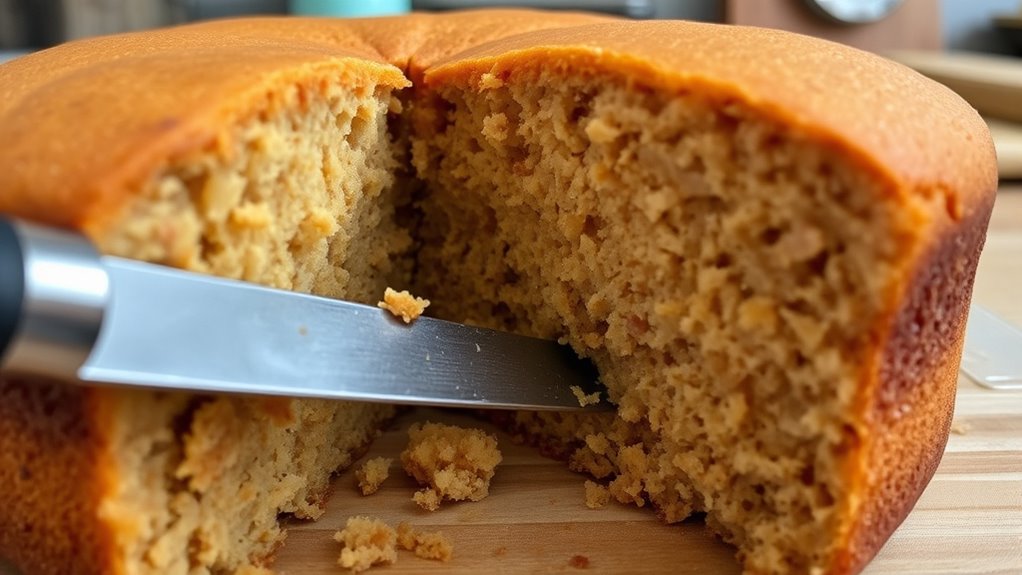
When your cake turns out underbaked or overbaked, it can be frustrating, but many issues can be fixed with quick adjustments. If your cake is underbaked, try returning it to the oven for a few minutes, or cover it with foil to prevent over-browning. For overbaked cakes, trimming the crust or adding moisture with simple syrup can restore flavor and texture. To guarantee the best cake flavor and appearance, consider these tips:
- Use a toothpick test to check doneness accurately
- Adjust baking time and temperature for your oven
- Incorporate decorative techniques to hide imperfections
- Store properly to maintain moistness and flavor
- Understanding how baking chemistry influences cake outcomes can help you troubleshoot more effectively, such as how ingredient interactions affect texture and rise. Recognizing the role of baking reactions can also help you make informed adjustments during baking, especially when considering factors like heat transfer that impact baking consistency. Additionally, familiarizing yourself with oven calibration can improve your baking precision and results.
These fixes help salvage your cake, ensuring it looks great and tastes delicious, even if it’s not perfectly baked.
Best Practices for Mixing and Incorporating Ingredients

Getting your ingredients combined properly sets the foundation for a perfectly baked cake. Focus on ingredient mixing until each component is just blended; overmixing can develop excess gluten, leading to a dense crumb. For ideal batter consistency, mix ingredients until they’re smooth but not overly whipped. Use a gentle folding motion when incorporating delicate ingredients like whipped egg whites or flour to maintain airiness. Pay attention to the texture—your batter should be uniform, with no streaks or lumps. Proper mixing ensures even distribution of ingredients, which helps prevent sinking and promotes a light, tender crumb. Remember, patience and gentle handling are key to achieving the right batter consistency, setting you up for a successful bake every time.
Preventing Your Cake From Deflating in Future Bakes

To prevent your cake from deflating, focus on handling the batter and baking process carefully. Properly mixing ingredients ensures the cake flavor develops evenly, while gentle folding avoids over-activating leavening agents that can cause collapse. Keep your oven temperature consistent—too high, and the cake rises quickly then sinks; too low, and it won’t rise enough. Understanding baking history helps you recognize the importance of these steps. To improve results, consider these tips:
- Use fresh baking powder or baking soda
- Avoid opening the oven door early
- Measure ingredients precisely
- Follow your recipe’s recommended baking time
This attention to detail preserves the cake’s structure and prevents it from deflating, making your baking history a success.
Frequently Asked Questions
Can Using Expired Baking Powder Cause My Cake to Sink?
Yes, using expired baking powder can cause your cake to sink. Over time, baking powder loses its freshness and ingredient longevity, making it less effective at providing the rise needed for a fluffy cake. When you use old baking powder, your batter won’t rise properly, leading to a dense or sunken cake. Always check the expiration date to guarantee your baking powder is fresh and active for perfect results.
Does Altitude Affect Cake Rising and Sinking?
Yes, altitude affects how your cake rises and sinks. At higher altitudes, the thinner air causes leavening gases to expand faster, so you need altitude adjustments like reducing baking powder and increasing baking temperature. These changes help your cake rise evenly and prevent sinking. By tweaking your recipe for altitude, you guarantee a better rise and a more stable, delicious cake.
How Does Adding Eggs Influence Cake Structure?
Did you know adding eggs makes a cake 50% more stable? When you mix eggs into your batter, you’re strengthening the egg structure, which forms a protein network. This network provides essential support, trapping air bubbles and giving your cake its rise. Without enough eggs, the structure weakens, increasing the risk of sinking. So, adding eggs helps create a firm, resilient cake that holds its shape beautifully.
Is It Better to Open the Oven Door During Baking?
It’s best to avoid opening the oven door during baking because it causes temperature fluctuation, which can negatively impact your cake’s rise. When you open the door, the sudden drop in heat can cause the structure to collapse or sink. To prevent this, check your cake through the oven window and resist the urge to open the door until the baking time is complete. This guarantees your cake bakes evenly and maintains its perfect rise.
What Role Does Sugar Play in Cake Stability?
Did you know sugar makes up about 10-15% of a typical cake recipe? It plays a vital role in stability by retaining moisture, keeping your cake tender and moist. Sugar also impacts gluten development; it weakens gluten strands, preventing the batter from becoming too tough or dense. This balance helps your cake rise evenly and stay firm, ensuring it doesn’t sink or collapse during baking.
Conclusion
Remember, baking is like a delicate dance—each step and ingredient plays a essential role. When you understand the chemistry behind your cake, you’re steering clear of sinking pitfalls and guiding your creation to rise like a sunlit peak. So, trust your instincts, master the techniques, and soon you’ll craft cakes that stand tall and proud, each bite a sweet symphony of perfect harmony in your kitchen’s orchestra.