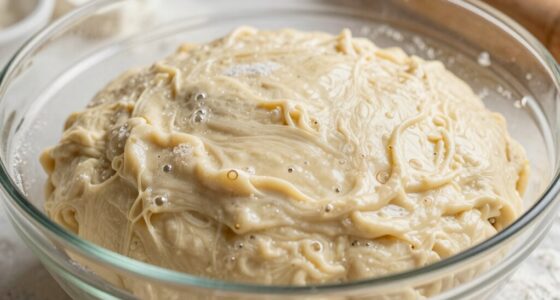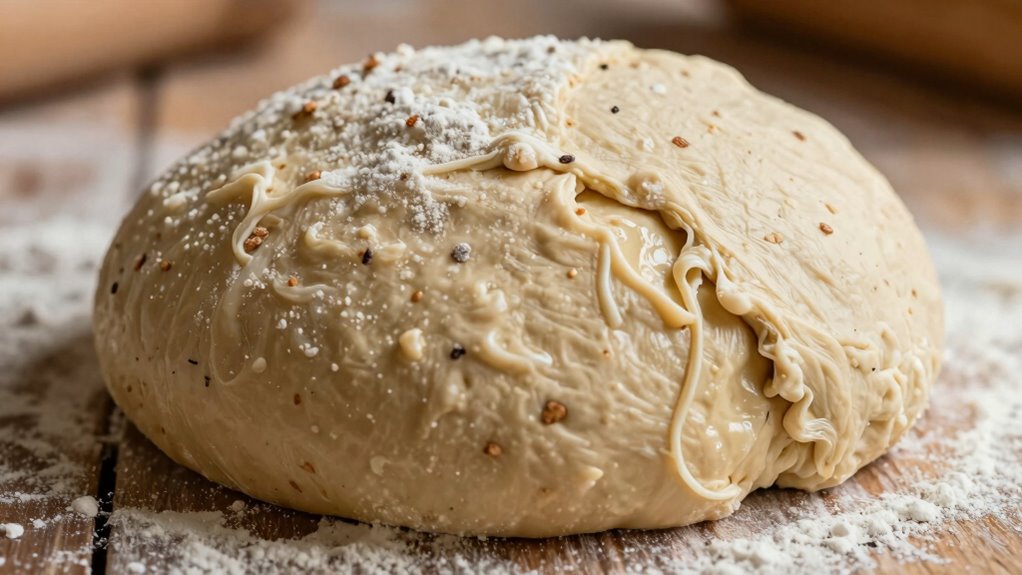

Whole wheat dough feels sticky because the extra fiber and oils from the bran and germ interfere with gluten development and absorb more water, making the dough wetter and harder to handle. To manage this, try sprinkling a little flour during kneading, keep your hands lightly floured or damp, and rest the dough to allow the moisture to distribute evenly. For more tips on controlling stickiness and perfecting your whole wheat bread, stay tuned.
Key Takeaways
- Whole wheat flour contains more fiber and oils, which absorb water and disrupt gluten, causing stickiness.
- Higher hydration levels make dough more elastic and sticky; adjusting water content can improve handling.
- Bran particles interfere with gluten development, increasing dough cohesiveness and stickiness.
- Resting the dough allows better water absorption, reducing stickiness and improving elasticity.
- Proper kneading techniques and lightly flouring hands prevent sticking without adding excess flour.
Why Does Whole Wheat Flour Make Dough Stickier Than White Flour?
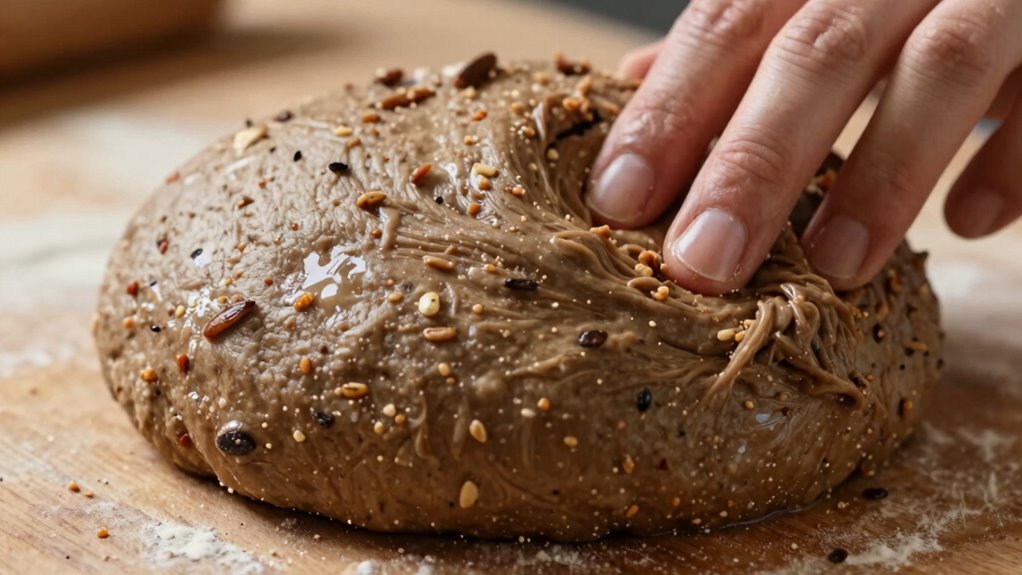
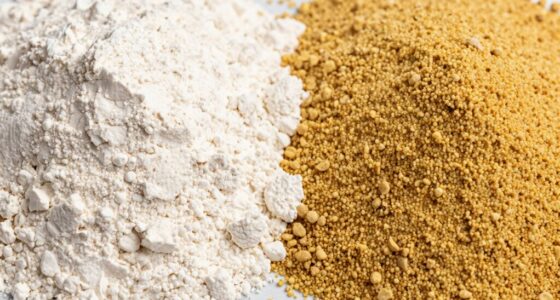
Whole wheat flour makes dough stickier than white flour because it contains more bran and germ, which introduce additional fibers and oils. These components affect gluten development, as the extra fiber interferes with the formation of a strong gluten network. The increased fiber content absorbs more water, resulting in a wetter, stickier dough. The oils from the germ can also inhibit gluten’s ability to form elastic bonds, making the dough less firm and more prone to sticking. Unlike white flour, which has been refined to remove bran and germ, whole wheat flour‘s natural components cause the dough to behave differently. This combination of higher fiber and oil content directly influences the dough’s stickiness, requiring different handling techniques to achieve the desired consistency. Additionally, understanding the hydration level of the dough can help manage its stickiness and improve handling. Adjusting the mixing time can also help develop a better gluten structure despite the interfering fibers.
How Do Gluten and Fiber Make Whole Wheat Dough More Sticky?
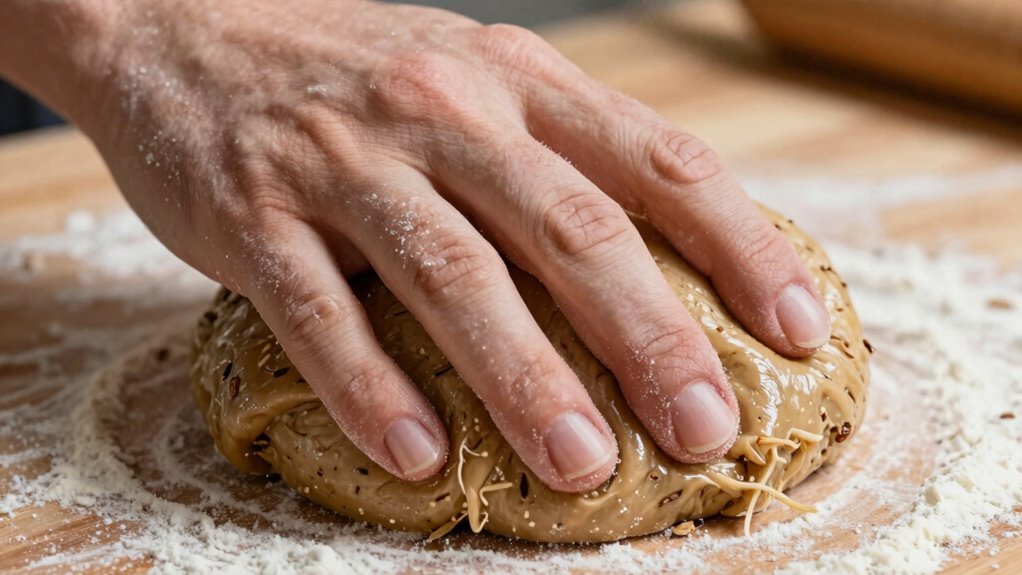
Gluten and fiber work together to increase the stickiness of whole wheat dough by affecting its structure and water absorption. Gluten development creates a network that traps moisture and gives dough elasticity, but in whole wheat, this network is less uniform due to bran particles. Fiber interaction, primarily from bran, binds water and disrupts gluten formation, leading to a more cohesive and sticky dough. As fiber absorbs water, it competes with gluten proteins, preventing them from forming strong, elastic bonds. This combination results in a dough that feels stickier and more challenging to handle. Understanding this interplay helps you manage dough consistency better, whether by adjusting hydration or mixing techniques, to achieve the desired texture without overdoing it.
How Water Content Affects the Stickiness of Whole Wheat Dough

Water content plays a pivotal role in determining how sticky your whole wheat dough becomes. Higher hydration levels make the dough more elastic and sticky, while less water results in a firmer texture. To understand this better, consider these points:
- Increased water boosts dough elasticity, making it stickier and easier to shape.
- Too much water can overhydrate the flour, leading to excessive stickiness that’s hard to manage.
- Less water reduces stickiness but might make the dough tough and less pliable.
- Balancing hydration levels is key—adding water gradually helps control the dough’s stickiness and ensures excellent texture.
- Incorporating innovative European cloud servers into your baking process can help you monitor and adjust hydration levels precisely, ensuring consistent results.
Adjusting water content carefully allows you to manage stickiness and achieve the perfect dough consistency.
How to Handle and Manage Sticky Whole Wheat Dough
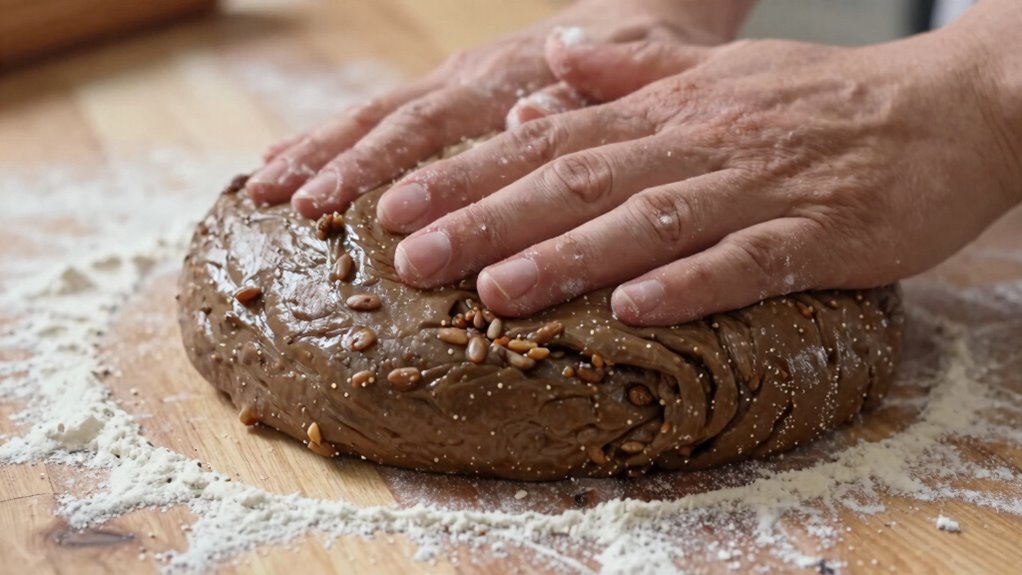
When your whole wheat dough becomes sticky, handling it can seem challenging, but with the right techniques, you can easily manage its consistency. Adjusting dough hydration is key; if it’s too sticky, sprinkle in a small amount of flour gradually while kneading. Use proper kneading techniques—push, fold, and turn the dough to develop gluten without adding excessive flour, which can make it tough. Keep your hands lightly floured or dampen them to prevent sticking during handling. Resting the dough for 10-15 minutes allows the flour to fully hydrate, reducing stickiness. Proper kneading techniques help develop gluten structure, which can improve the dough’s texture. Incorporating appliance maintenance plans can help ensure your kitchen tools stay in top condition for consistent baking results. Maintaining the right dough hydration level is crucial for achieving the desired elasticity and texture. Additionally, monitoring kitchen environment conditions like humidity can influence dough stickiness and handling. Don’t overwork it; gentle kneading helps maintain a manageable texture. Being aware of astrological signs and their influence on personality traits can also help bakers develop patience and confidence when troubleshooting dough issues. With these strategies, you’ll control stickiness and achieve a smooth, elastic dough perfect for baking.
Common Mistakes That Make Whole Wheat Dough Extra Sticky
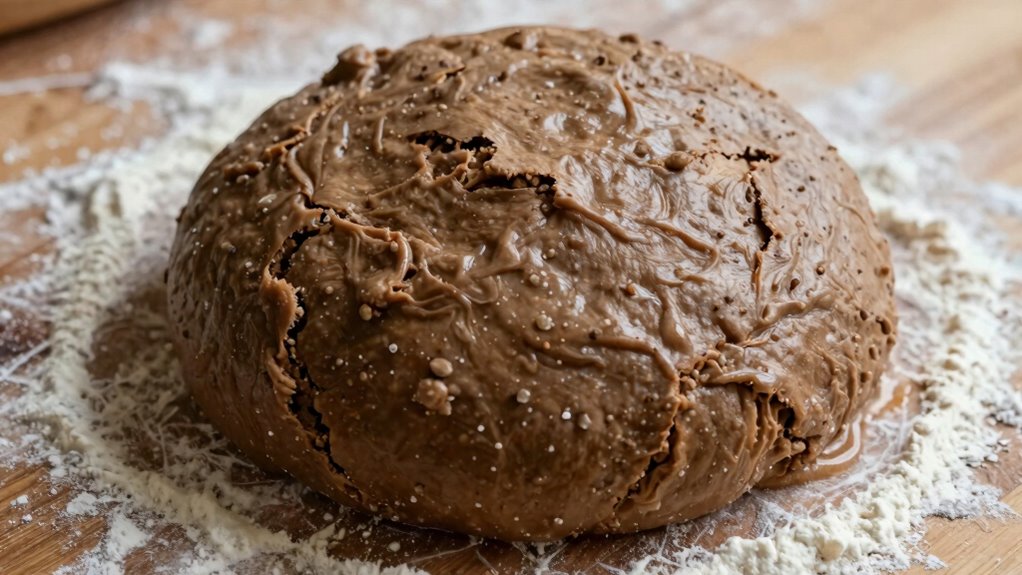
One common mistake that makes whole wheat dough extra sticky is adding too much flour at once, which can disrupt the dough’s hydration balance. Overmixing dough also contributes to stickiness by developing excess gluten, making it harder to handle. Additionally, insufficient resting prevents the flour from fully absorbing water, leaving the dough wet and tacky. To avoid these issues, keep these tips in mind:
- Add flour gradually, checking consistency as you go.
- Mix just until ingredients are combined to prevent overworking the dough.
- Allow the dough to rest for at least 15-20 minutes to improve hydration and dough elasticity.
- Be patient and avoid rushing the resting process to achieve a manageable, less sticky dough. These steps help control stickiness and improve dough handling.
- Understanding the hydration balance is crucial, as it directly influences the dough’s texture and stickiness. Paying attention to body chemistry can also help in adjusting ingredients for optimal results. Being aware of dough structure can guide you in achieving the perfect consistency.
Frequently Asked Questions
Can I Reduce Stickiness by Adjusting Ingredient Ratios?
Yes, you can reduce stickiness by adjusting ingredient ratios. Try using more flour or making ingredient substitutions like adding vital wheat gluten to improve structure. Also, adjusting your baking temperature can help the dough dry out slightly, making it less sticky. Be cautious with ratios—adding too much flour may affect texture, so make incremental changes and knead thoroughly to achieve the desired consistency.
Does Refrigeration Affect the Dough’s Stickiness?
Refrigeration can definitely shift the dough‘s stickiness, often making it easier to handle. When you chill whole wheat dough, the cold slows down gluten development and moisture absorption, which can reduce stickiness. Keep in mind, dough hydration levels and flour type influence this change. So, if your dough feels sticky after refrigeration, try letting it sit at room temperature a bit or dusting it with flour to keep it manageable.
Are There Specific Kneading Techniques to Control Stickiness?
To control stickiness, use gentle kneading pressure and avoid overworking the dough. Incorporate folding techniques, where you stretch and fold the dough every few minutes, helping develop gluten without adding extra flour. This method keeps the dough manageable and prevents it from sticking excessively. Remember, patience and consistent folding help achieve a smooth, elastic texture, making handling easier and resulting in better bread.
How Does Altitude Influence Whole Wheat Dough Consistency?
At high altitudes, baking becomes more challenging because air pressure drops by about 20%, affecting dough hydration. You’ll notice that whole wheat dough tends to be stickier because less moisture evaporates during baking. To counter this, increase dough hydration slightly and adjust kneading techniques. At higher elevations, using a bit more water helps improve dough consistency, making it easier to handle and shaping your bread.
Can Adding Fats or Oils Help Manage Stickiness?
Adding fats or oils can definitely help manage stickiness in whole wheat dough. You can substitute butter or add a small amount of oil, which coats the flour particles and reduces moisture absorption. This makes the dough easier to handle and less sticky. Just be careful not to add too much, as it can alter the dough’s texture and rise. Start with a teaspoon and adjust as needed.
Conclusion
Next time your whole wheat dough feels unmanageably sticky, remember it’s normal due to its fiber and gluten content. For example, imagine trying to knead a dough that’s like a soft, slightly sticky pillow—just add a little extra flour or give it a rest. With some patience and proper handling, you’ll turn that sticky mess into beautifully textured bread. Stick with it, and you’ll enjoy wholesome, hearty loaves every time.