
To weigh ingredients for consistent baking, choose a reliable digital or analog kitchen scale with high precision and easy-to-use features. Guarantee your scale is on a flat, stable surface and properly calibrated using known weights. Always tare your container before adding ingredients, and measure slowly for accuracy. For best results, weigh ingredients rather than spooning or estimating. Keep your equipment maintained, and check calibration regularly—if you want to master these techniques, more tips will guide you through every step.
Key Takeaways
- Use a reliable digital kitchen scale on a flat, stable surface for accurate measurements.
- Tare the scale with your container before adding ingredients to measure only the ingredient weight.
- Weigh ingredients directly rather than spooning or scooping for consistency.
- Calibrate your scale regularly with standard weights to maintain measurement accuracy.
- Record measurements and note any adjustments to ensure reproducibility in future baking.
Top picks for "weigh ingredient consistent"
Open Amazon search results for this keyword.
As an affiliate, we earn on qualifying purchases.
Why Precise Measurements Matter in Baking

Because baking relies on chemical reactions, even small variations in ingredient amounts can alter the outcome. Precise measurements guarantee your baked goods turn out just right, with the right texture and flavor. When you make ingredient substitutions, it’s essential to adjust the quantities carefully, as different ingredients can affect the balance of your recipe. Proper ingredient storage also plays a role—if ingredients aren’t fresh or are stored improperly, you might need to tweak measurements to compensate. For example, stale baking powder won’t react as expected, impacting rise and texture. Using a reliable kitchen scale helps you measure accurately, reducing inconsistencies. Additionally, understanding ingredient quality and its impact on baking results can help you refine your techniques. Good measurement tools like digital scales with precise calibration can further improve measurement accuracy. It’s also helpful to familiarize yourself with thermal behavior to better understand how ingredient temperature can influence outcomes. Being aware of ingredient interactions can help you troubleshoot and perfect your recipes. Ultimately, precise measurements and good ingredient storage habits give you control, helping you produce consistent, delicious baked treats every time.
How to Choose the Best Kitchen Scale for Baking

When selecting a kitchen scale, you want one that provides precise measurements to guarantee your baked goods turn out just right. Look for a model that’s easy to operate so you can quickly weigh ingredients without hassle. Prioritizing these features helps you achieve consistent, professional results every time. Additionally, considering features like accuracy and reliability can further ensure your baking outcomes remain uniform. A luxury lifestyle approach to baking also involves choosing high-end, stylish scales that complement your sophisticated kitchen décor. Investing in a calibrated scale can help maintain measurement accuracy over time, ensuring long-term consistency in your baking. For added confidence, opt for scales with digital displays that are easy to read and minimize measurement errors. Incorporating a regular calibration routine can further enhance measurement precision and baking consistency.
Precise Measurement Capabilities
Choosing the right kitchen scale for baking means prioritizing precise measurement capabilities. Accurate scales account for ingredient density, guaranteeing you get consistent results. Look for a device that offers multiple measurement units, like grams and ounces, so you can adapt to different recipes. Consider these key features:
- High sensitivity — measures small quantities with accuracy. To ensure measurement precision, it’s important to select a scale that can detect minute differences in weight.
- Multiple measurement units — allows flexibility for various recipes.
- Consistent calibration — maintains accuracy over time, vital for ingredient density considerations.
- Digital displays— ensure clear, easy-to-read measurements for precise baking. Additionally, selecting a scale with auto-off functionality can help conserve battery life and ensure reliable performance over time. A scale with these capabilities ensures you capture the true weight of ingredients, not just volume, which can vary due to density. Proper calibration and sensitivity are essential for measurement accuracy, helping you achieve consistent baking outcomes and perfect textures every time.
Ease of Use
To make certain your baking process is smooth and efficient, select a kitchen scale that’s easy to operate. Look for a model with simple controls and a clear display, so you can quickly weigh ingredients without frustration. An intuitive scale reduces clutter, helping you maintain good kitchen organization and making ingredient storage more manageable. Consider features like tare functions, auto-off, and straightforward unit switching, which streamline your workflow. A user-friendly scale minimizes errors and saves time, allowing you to focus on your baking. Additionally, selecting a model with clear visibility ensures you can read measurements accurately at a glance, further supporting consistent results. Choosing a scale with easy-to-clean surfaces can also save you time and effort during cleanup, keeping your workspace tidy. Incorporating smart features such as digital connectivity or app integration can enhance your precision and make tracking your baking progress even easier.
How to Set Up and Calibrate Your Scale for Accuracy

To guarantee your scale provides accurate measurements, you need to set it up properly and calibrate it regularly. Use the right calibration tools, like standard weights, to check its accuracy. Making this a routine guarantees consistent results every time you bake. For precise results, consider consulting measurement techniques to further refine your calibration process. Additionally, selecting a vetted vacuum that maintains its calibration over time can help ensure your measurements stay consistent if your scale is stored or used in environments with fluctuating conditions. Proper electrical safety practices when handling your scale can prevent damage and ensure longevity. Recognizing and avoiding passive voice in your instructions can also improve clarity and precision. Regular maintenance and understanding the air purifier guidelines can further improve the accuracy of your measurements and the longevity of your equipment.
Choose the Right Scale
Selecting the right scale is essential for accurate baking measurements, so you can trust your results every time. When choosing a scale, prioritize digital accuracy to guarantee precise readings, especially for small quantities. An ergonomic design helps you weigh ingredients comfortably and reduces user fatigue. Consider these key points:
- Digital accuracy: Opt for a scale with high precision, ideally measuring in grams and ounces.
- Size and capacity: Match the scale’s capacity to your typical baking needs, avoiding models that are too small or too large.
- Ease of use: Look for intuitive controls and a clear display, making measurements quick and straightforward.
Choosing the right scale sets a solid foundation for consistent baking results.
Use Proper Calibration Tools
Once you’ve chosen the right scale, it’s important to guarantee it provides accurate readings. Start by using digital calibration tools designed for your scale. Many digital scales have a calibration mode—simply follow the manufacturer’s instructions to set it up correctly. Regular calibration ensures the weight readings stay consistent, maintaining weight consistency for your recipes. Keep a calibration weight handy to verify accuracy periodically. Avoid using objects that aren’t specifically meant for calibration, as they can give false readings. Check that your scale is on a flat, stable surface before calibrating. Proper calibration helps prevent errors in ingredient measurements, leading to more consistent baking results. Investing a few moments in this step ensures your scale remains precise, giving you confidence in every measurement.
Regularly Verify Accuracy
Regularly verifying your scale’s accuracy is essential to guarantee precise measurements every time you bake. To do this effectively, consider these key steps:
- Test with known weights in alternative measurement units to confirm the scale’s reliability across different systems.
- Compare digital and analog scales if you have both, ensuring consistent readings between them.
- Recalibrate your scale periodically, especially if you notice discrepancies or after moving it.
Using these methods helps identify calibration issues early, ensuring your measurements stay precise. Whether you rely on digital or analog scales, regular accuracy checks prevent errors in your recipes. This consistency is crucial for achieving the perfect texture and flavor in your baked goods.
How to Weigh Ingredients Step-by-Step
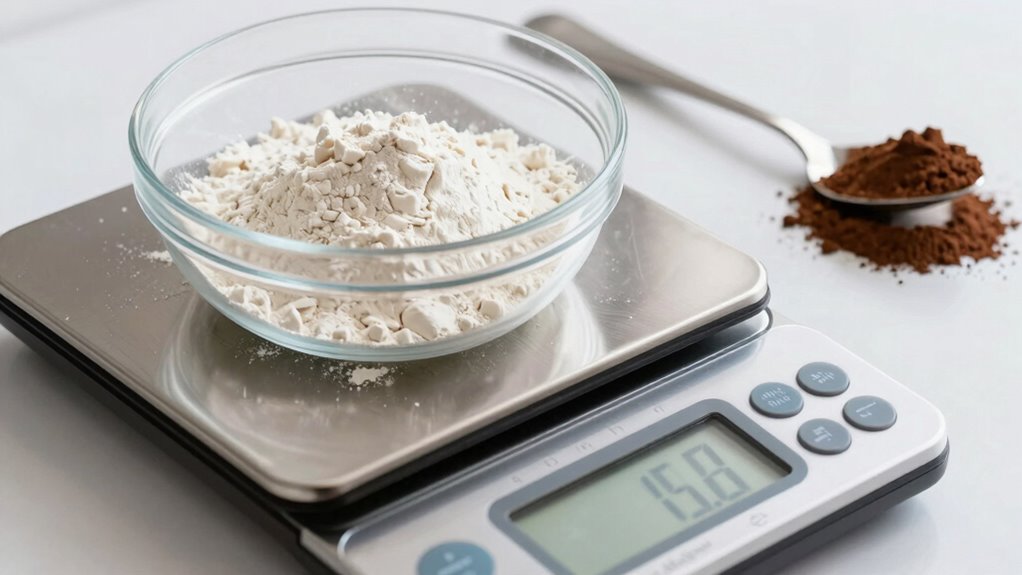
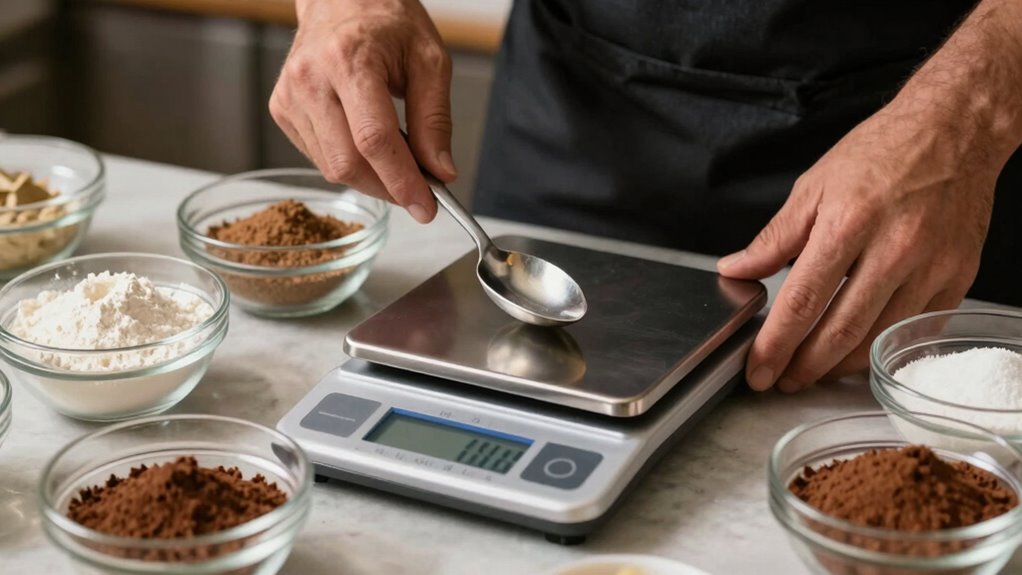
To guarantee accurate and consistent results, you need to understand the proper way to weigh ingredients. Begin by placing your scale on a flat, stable surface and turning it on. Use a clean, dry bowl or container—avoid ingredient substitution with incompatible materials. Zero out the scale (tare) before adding each ingredient. Add the ingredient slowly until you reach the desired weight. For liquids, use a glass or plastic measuring cup on the scale to avoid spills. Always record measurements immediately, especially if you’re adjusting recipes. Store your ingredients properly to prevent spoilage, which can affect weight accuracy. Following these steps ensures precise measurements, leading to reliable, consistent baking outcomes every time.
How to Maintain Consistent Measurements and Avoid Mistakes

Maintaining consistent measurements requires careful attention to detail and a few simple habits. First, always use the same type of measuring tools to avoid discrepancies. Second, double-check measurement conversions when substituting ingredients, ensuring accuracy. Third, note that ingredient substitutions can affect weight; weigh rather than spoon when possible. To prevent mistakes, avoid guessing or eyeballing measurements—trust your scale. Consistent results hinge on precise measurements, so record any adjustments needed during testing. Be mindful that measurement conversions vary between systems, so verify conversions for ingredients like flour or sugar. By sticking to your tools, confirming conversions, and understanding the impact of substitutions, you’ll keep your baking consistent and reliable. This approach minimizes errors and guarantees delicious, repeatable results every time.
Troubleshooting Common Weighing Problems
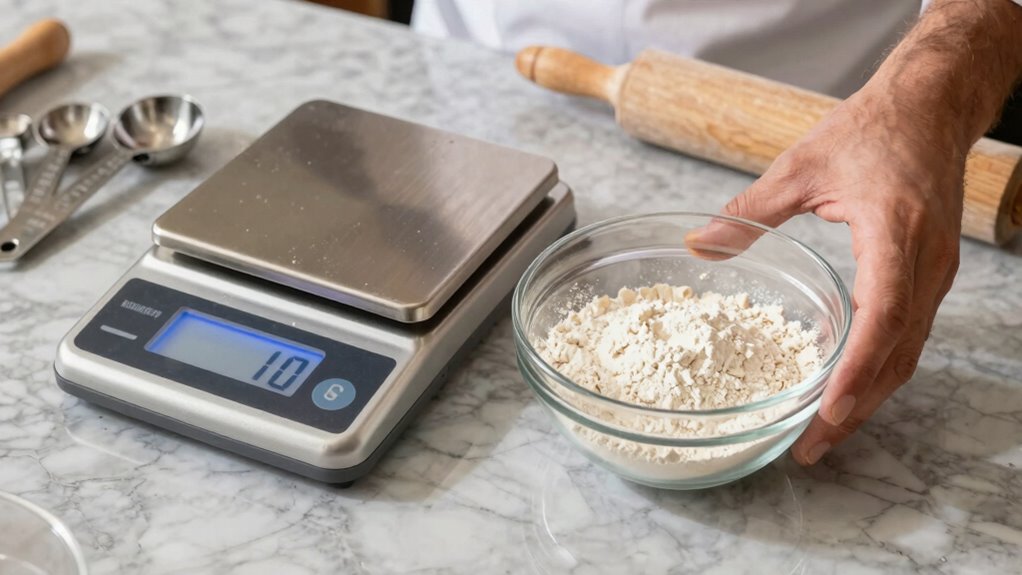
When your scale gives inconsistent readings or shows unexpected results, troubleshooting becomes essential to guarantee accurate measurements. First, check your ingredient substitution options—using different brands or types of ingredients can affect weight accuracy. Also, consider storage considerations; ingredients that clump or settle can throw off measurements. Ensure your scale is on a flat, stable surface and calibrate it regularly, especially if it’s digital. Avoid weighing ingredients in containers that aren’t tared properly, which can lead to errors. If your scale still acts up, clean it carefully to remove dust or debris that might interfere with sensors. Proper storage and consistent ingredient handling help maintain accuracy, reducing the need for troubleshooting and ensuring your baked goods turn out just right.
Frequently Asked Questions
Can I Use a Regular Kitchen Scale for Baking?
Yes, you can use a regular kitchen scale for baking. Digital scales are generally more precise than analog ones, making them ideal for accurate measurements. However, if you have an analog scale, just guarantee it’s calibrated correctly for consistent results. Both types work well; just choose the one that fits your baking needs and comfort. Accurate measurements lead to better, more predictable baking outcomes, so pick the scale that suits you best.
What Is the Difference Between Weighing and Measuring Ingredients?
Weighing and measuring ingredients differ mainly in precision and accuracy. When you weigh ingredients, you use measurement tools like a scale for exactness, ensuring consistent results. Measuring involves volume, like cups or spoons, which can be less precise because of air gaps or ingredient packing. So, if you want precision and accuracy, weighing is the way to go—making your baking more reliable and delicious every time.
How Do Temperature and Humidity Affect Weighing Accuracy?
Temperature effects and humidity fluctuations can impact your weighing accuracy. When the air is humid, moisture can add weight to ingredients or the scale itself, leading to inconsistent results. Conversely, temperature changes can cause the scale to expand or contract slightly, affecting precision. To guarantee accuracy, weigh in a stable environment, avoid drafts, and keep your scale calibrated regularly, especially during significant temperature or humidity shifts.
Should I Weigh Ingredients Directly in the Mixing Bowl?
Think of weighing ingredients directly in your mixing bowl as walking a tightrope—you need balance and caution. You should weigh ingredients in a bowl that’s safe and compatible with your scale to guarantee accuracy. Use a bowl sturdy enough to hold your ingredients securely without slipping, and avoid overfilling to prevent spills. This method saves time, but always double-check that your bowl is appropriate and stable for precise, consistent baking.
How Often Should I Calibrate My Scale for Optimal Accuracy?
You should calibrate your scale at least once a month to guarantee maximum accuracy. Regular scale maintenance, including calibration checks, helps you avoid inaccurate measurements that can affect your baking. If you notice inconsistent readings or drop in performance, calibrate it more frequently. Always follow the manufacturer’s instructions for calibration, and keep your scale clean and stored properly to maintain precision over time.
Conclusion
So, after all that fuss about precision, it turns out a tiny bit off won’t ruin your masterpiece—unless it does. Irony? Your perfectly calibrated scale might just be the secret to unpredictability in baking. But hey, if you want consistent results, keep weighing faithfully. Because in baking, even the slightest misstep can turn a cake into a comedy—or a masterpiece. Either way, enjoy the process, and remember: sometimes, perfection is overrated.