Flour protein levels determine how strong and elastic your dough becomes, affecting its rise, texture, and structure. Higher protein flours create stronger gluten networks, giving your dough more stretch and better air retention, ideal for bread. Lower protein flours produce softer, more tender baked goods like cakes. Knowing how protein content influences dough will help you choose the right flour for your goals, and exploring this can lead to even better baking results.
Key Takeaways
- Higher flour protein levels strengthen gluten networks, resulting in more elastic, chewy dough with better gas retention.
- Lower protein flours produce softer, more tender dough with less structure and gas-holding capacity.
- Increased protein enhances dough elasticity and stretchability, improving rise and volume during baking.
- Excessively high protein can cause tough dough; insufficient protein leads to weak, crumbly textures.
- Adjusting hydration and kneading based on protein content optimizes dough handling and final baked texture.
What Is Flour Protein Content and Why Does It Matter?

Understanding flour protein content is essential because it directly affects how your baked goods turn out. Higher protein levels promote gluten development, which gives dough its structure and elasticity. When you knead or mix, the proteins in the flour interact, forming gluten strands that trap air and help the dough rise. Conversely, lower protein flours produce softer, more tender baked goods. Protein denaturation also plays a role; heat causes proteins to unfold and form new bonds, impacting texture and crumb. Knowing the protein content helps you select the right flour for your recipe, whether you need strong flour for bread or tender flour for pastries. Additionally, gluten formation influences dough’s ability to stretch and hold gases, shaping the final product’s texture. The protein content of flour can vary depending on the wheat variety and milling process, affecting the overall baking outcome. Recognizing how dough elasticity functions in relation to protein levels can further refine your baking techniques. A deeper understanding of wheat varieties and their protein profiles can help bakers customize their flour choices for specific baked goods. Moreover, understanding flour protein levels allows bakers to troubleshoot and improve consistency in their recipes.
How Flour Protein Levels Affect Dough Elasticity and Strength

Flour protein levels directly influence how your dough behaves during mixing and kneading. Higher protein content develops a stronger gluten network, which enhances dough elasticity and overall strength. This gluten network is responsible for giving your dough the ability to stretch without tearing, improving its dough stretchability. When the protein level is high, the gluten strands form a resilient, interconnected web that supports better structure and firmness. This results in a dough that holds its shape and resists over-extend, making it ideal for bread and other baked goods needing a sturdy crumb. Conversely, lower protein flours produce a weaker gluten network, leading to less elastic dough that’s softer and more delicate. By understanding these effects, you can select the right flour for your desired dough texture and performance. Gluten development is also influenced by kneading techniques, which can further modify dough elasticity and strength. Additionally, the protein content of flour can impact the final baked product’s texture and rise, helping bakers tailor their recipes more precisely.
How Protein Levels Influence Dough Rise and Air Retention

Since protein levels directly affect gluten development, they play a crucial role in how well your dough rises and retains air. Higher protein content creates a stronger gluten network, trapping gases more effectively during fermentation. This results in better volume and a lighter crumb. Conversely, lower protein flours produce weaker gluten, limiting rise and air retention. The fermentation effects are amplified with adequate gluten development, allowing gases to expand the dough without collapsing. To visualize this, consider the table below:
| Protein Level | Gluten Development | Dough Rise | Air Retention | Fermentation Effects |
|---|---|---|---|---|
| Low | Weak | Limited | Poor | Less gas expansion |
| Medium | Moderate | Good | Adequate | Balanced fermentation |
| High | Strong | Excellent | Excellent | essential fermentation |
This balance influences how airy and risen your baked goods turn out. Additionally, protein content in flour can also impact the dough’s elasticity and handling properties, which are key for achieving the desired texture. Proper protein levels also influence the hydration capacity of the flour, affecting dough consistency and workability. In addition, responsible use of high-quality ingredients can enhance the overall baking process and results.
Reading Flour Protein Labels to Choose the Right Flour

Understanding how to read flour protein labels helps you pick the right flour for your baking needs. Protein content varies across flour types, affecting how your baked goods turn out. By knowing what to look for on labels, you can make informed choices that guarantee your recipes succeed. Properly reading labels also helps you select sustainable ingredients, contributing to environmentally conscious baking practices. Recognizing protein levels can also guide you toward healthier options that align with your dietary goals. Being aware of halal standards in ingredients ensures your baking ingredients meet your dietary requirements. Additionally, understanding electrical safety considerations in your kitchen can help prevent accidents during baking activities.
Protein Content Variations
When selecting flour, paying attention to its protein content on the label can make a big difference in your baking results. Variations in protein levels influence gluten development, affecting dough elasticity and structure. Higher protein flours, like bread flour, create stronger gluten networks, ideal for chewy breads. Lower protein options, such as cake flour, yield tender textures. Nutritional differences also come into play, as protein levels can impact the overall health benefits of your baked goods. Here’s a quick guide:
| Protein Level | Best For | Gluten Development |
|---|---|---|
| 8-10% | Pastries, cakes | Minimal |
| 11-13% | All-purpose, cookies | Moderate |
| 14%+ | Bread, bagels | Strong |
Choosing based on protein content ensures ideal gluten formation and desired texture.
Flour Types and Uses
Ever wondered how to select the perfect flour for your baking project? Understanding flour types helps you harness gluten formation for better baking chemistry. For bread, choose high-protein flours like bread flour; they create strong gluten networks, resulting in chewy, well-structured loaves. Cake flour, with lower protein content, produces tender, delicate baked goods by limiting gluten development. All-purpose flour offers a versatile middle ground, suitable for a variety of recipes. When reading labels, pay attention to the protein percentage—this guides your choice based on the desired dough elasticity and crumb structure. Knowing which flour type to use guarantees your baked goods achieve the right texture, thanks to precise gluten formation and baking chemistry. Flour protein levels play a key role in determining dough strength and final product quality. This knowledge helps you pick the right flour for every baking need.
Reading Labels Effectively
Reading flour labels carefully helps you select the right type for your baking needs. Pay attention to grain varieties, as they influence gluten development and final texture. Here are key points to contemplate:
- Protein content percentage indicates how much gluten can develop, affecting dough elasticity.
- Grain variety details reveal whether the flour is soft or hard wheat, impacting crumb structure.
- Label descriptions often specify ideal uses, guiding you toward bread, pastry, or all-purpose flours.
- Additional ingredients or enrichments can alter gluten formation and dough strength.
Common Flours and Their Typical Protein Ranges

Different types of flour have distinct protein levels that influence their baking properties. Knowing the typical protein ranges helps you predict gluten development, which affects dough elasticity and strength. Here’s a quick guide:
| Flour Type | Typical Protein Range (%) |
|---|---|
| All-Purpose | 10-12 |
| Bread Flour | 12-14 |
| Cake Flour | 7-9 |
Protein measurement varies by method, but higher levels generally lead to stronger gluten networks. For bread, a higher protein content boosts structure and chewiness. Cake flour’s lower protein minimizes gluten, giving tender baked goods. Selecting the right flour depends on understanding these ranges and how they influence dough behavior. Odor characteristics can also provide clues about flour freshness and quality.
Selecting the Best Flour Protein Level for Different Baked Goods

Choosing the right flour protein level is essential for achieving the desired texture and structure in your baked goods. Higher protein flours promote gluten development, creating a chewy or sturdy texture, ideal for bread. Lower protein flours produce tender, delicate baked items like cakes or cookies. To select the best flour:
- Match flour protein to your baked good’s purpose.
- Use high-protein flours for yeast-based breads requiring strong gluten networks.
- Opt for lower-protein flours for pastries and cakes where tenderness matters.
- Adjust your baking techniques accordingly, such as kneading or mixing time, to optimize gluten development.
Additionally, understanding how water interacts with flour can influence dough consistency and final texture. Recognizing how AI ethics impact technology development can also guide informed choices in baking innovation. Considering protein content helps tailor your ingredients to specific recipes for consistent results. Moreover, being aware of gluten formation can help you better control dough elasticity and strength. Knowing how flour type affects baking results enables bakers to refine their techniques for perfect outcomes.
Adjusting Your Recipe Based on Flour Protein Content

When working with different flour protein levels, you may need to adjust the amount of liquid in your recipe to achieve the right dough consistency. You might also find that changing your mixing technique helps develop the gluten structure appropriately. Experimenting with these adjustments guarantees your baked goods turn out perfect, no matter the flour you choose. Incorporating visual and auditory cues can also support understanding and technique refinement during baking.
Adjust Liquid Amounts
Adjusting the liquid amounts in your recipe is essential when working with flour that has varying protein levels. Higher-protein flours absorb more water, affecting gluten development and hydration balance. To get it right:
- Increase water for high-protein flour to support gluten structure.
- Decrease water for low-protein flour to prevent a sticky dough.
- Observe dough consistency—aim for smooth, elastic texture.
- Adjust gradually, testing hydration until the dough feels just right.
Balancing hydration ensures proper gluten development, giving your dough strength and extensibility. Too much water weakens gluten, resulting in a loose dough; too little hampers gluten formation, making it tough to knead. Fine-tuning liquid amounts based on flour protein content helps create a dough with ideal texture and structure.
Modify Mixing Technique
Modifying your mixing technique based on flour protein content can considerably impact the final dough quality. If you’re working with high-protein flour, you might need a gentler mixing approach to prevent overdeveloping gluten, which can make the dough tough. Conversely, low-protein flour benefits from a longer, more vigorous kneading strategy to develop enough gluten structure. Pay attention to how the dough feels during mixing—resisting overly sticky or overly stiff textures. Adjust your kneading time and technique accordingly: shorter for high-protein flours, longer for lower-protein ones. Properly modifying your mixing technique ensures ideal gluten development and dough strength, ultimately resulting in a better rise, texture, and crumb. Tailoring your approach based on flour protein content helps you achieve consistent, high-quality baked goods.
Troubleshooting Dough Problems Related to Protein Levels
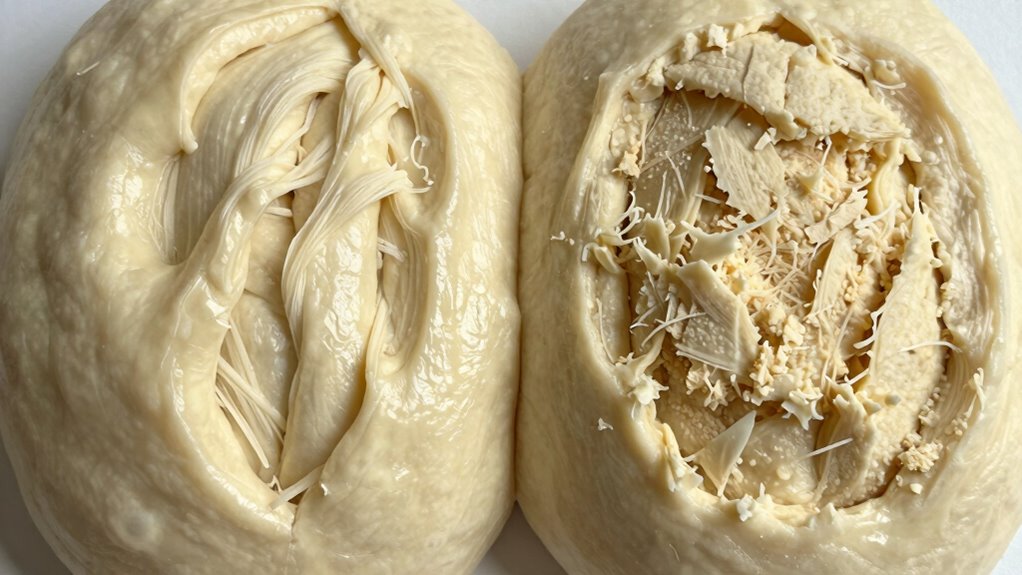
Dough issues often stem from protein levels that are either too high or too low, affecting its structure and texture. When gluten development is insufficient, the dough becomes weak and sticky, while excess protein can make it tough and difficult to knead. To troubleshoot, consider these points:
- Adjust hydration strategies—more water helps gluten develop in low-protein flours.
- Use proper mixing techniques to promote even gluten formation.
- Balance flour type with recipe needs; too much high-protein flour can cause toughness.
- Rest the dough adequately; this allows gluten to relax and strengthen naturally.
How Paying Attention to Flour Protein Can Improve Your Baking Results

Paying close attention to flour protein content can considerably elevate your baking results because it directly influences the dough’s structure and texture. Higher protein flours promote better gluten development, resulting in a stronger, more elastic dough that traps gases effectively. This leads to improved rise and a chewier crumb. Conversely, using flour with lower protein levels can produce softer, tender baked goods with a delicate crumb. If your flour lacks sufficient protein, protein supplementation—such as adding vital wheat gluten—can enhance gluten formation. By selecting the right flour or supplementing when needed, you control dough strength and elasticity, ensuring consistent, professional-quality results. Paying attention to these details helps you tailor your recipes, improve texture, and achieve the desired bake every time.
Frequently Asked Questions
How Does Flour Protein Content Affect Gluten Development?
Higher flour protein content boosts gluten elasticity, which makes your dough more resilient and easier to stretch without tearing. It also increases dough strength, allowing it to hold gas better during rising, resulting in a chewier texture and better rise. With lower protein flour, gluten development is softer and less elastic, leading to a more tender crumb. So, selecting the right protein level is key to achieving your desired dough texture and structure.
Can Changing Flour Type Impact Baking Times and Temperatures?
Yes, changing flour type can impact baking times and temperatures because different flours have varying gluten strength. Higher gluten strength flour may require longer baking or slightly higher temperatures for ideal results, while lower gluten flours might need shorter times. You’ll want to make baking adjustments based on the flour’s protein content to guarantee your baked goods turn out perfectly, with the right texture and rise.
Are There Health Considerations Related to High-Protein Flours?
High-protein flours can pose health concerns if you have gluten sensitivity or celiac disease, as they contain more gluten. If you’re healthy, these flours offer nutritional benefits like higher fiber and protein content, supporting your diet. Think of it like choosing whole grains for added nutrients. Always check labels and consult healthcare providers if you have gluten-related issues, to verify your flour choice aligns with your health needs.
How Does Altitude Influence Baking With Different Protein Levels?
At high altitudes, you need to make altitude adjustments when baking with different protein levels. Lower air pressure causes dough to rise faster, so you should reduce leavening agents and slightly decrease flour absorption. For high-protein flours, add a bit more liquid to compensate for increased absorption. This helps maintain dough consistency, ensuring your baked goods turn out well, regardless of altitude or flour protein content.
What Are the Best Storage Practices for Maintaining Flour Quality?
Think of flour as a treasure that needs safeguarding. To maintain flour freshness, store it in airtight containers in a cool, dark place. Use resealable bags or glass jars to prevent moisture and pests from invading. Keep it away from direct sunlight and heat sources. Proper storage methods guarantee your flour stays fresh longer, preserving its quality and helping you bake consistently delicious bread and pastries every time.
Conclusion
By understanding flour protein levels, you unveil the secret recipe for perfect baked goods. Think of protein content as the backbone of your dough—stronger or weaker, it shapes your final product. Paying attention to these details is like tuning an instrument; it helps you hit every note perfectly. So, embrace the science behind your ingredients, and watch your baking skills rise to new heights like dough in a warm oven.