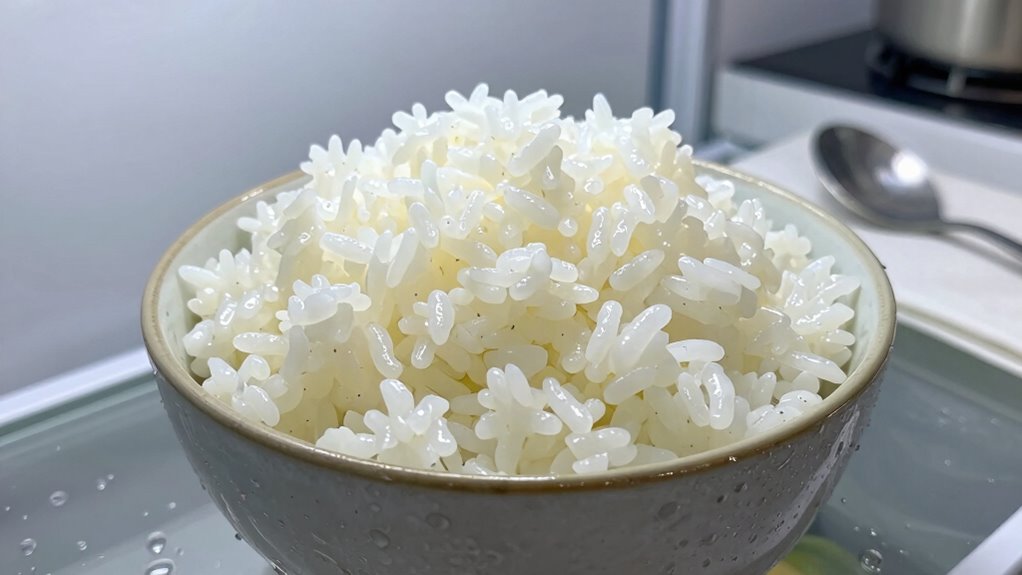

When rice cools in the fridge, starch molecules realign into crystalline structures, squeezing out moisture and making the grains dry and hard. Refrigeration accelerates moisture loss, especially if not stored properly in airtight containers. To keep rice soft, add a little water, cover well, and reheat gently, preferably with steam. Want to discover proven tips to restore softness and prevent hardening? Stick around for effective storage and reheating tricks that make a difference.
Play games included with Prime
Start a Prime free trial and play with Amazon Luna on your devices.
As an affiliate, we earn on qualifying purchases.
Key Takeaways
- Cooling causes starch retrogradation, which realigns molecules and pushes water out, making rice hard and dry.
- Refrigeration accelerates moisture loss, decreasing rice’s tenderness and increasing firmness over time.
- Proper storage in airtight containers retains moisture and prevents air exposure, helping keep rice soft.
- Reheating with added water or broth and covering traps steam, restoring moisture and softness.
- Avoid high heat and dry reheating methods; gentle steaming or adding liquids prevent rice from becoming hard.
As an affiliate, we earn on qualifying purchases.
Why Does Rice Turn Hard in the Fridge?
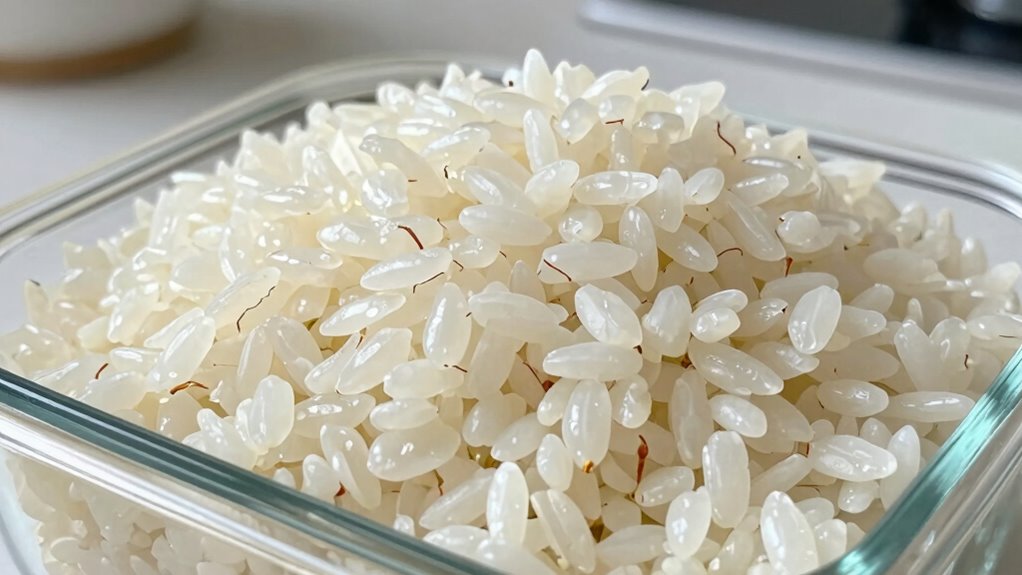
Ever wondered why your leftover rice becomes hard and dry after storing it in the fridge? The main reason lies in how rice’s starch molecules change during cooling, affecting grain preservation. When rice cools, the starch retrogrades, pushing water out of the grains, which leads to a dry, tough texture. This process diminishes the rice’s natural moisture, making it less appealing to eat. Additionally, refrigeration can cause the flavors to fade, reducing the overall flavor enhancement you initially enjoyed. To combat this, storing rice properly—like keeping it airtight—helps retain moisture and preserves the grain’s softness. Understanding these factors helps you keep your rice fresher longer and maintain its flavor, making reheating more effective and enjoyable.
As an affiliate, we earn on qualifying purchases.
The Science Behind Rice Getting Hard When Cooling
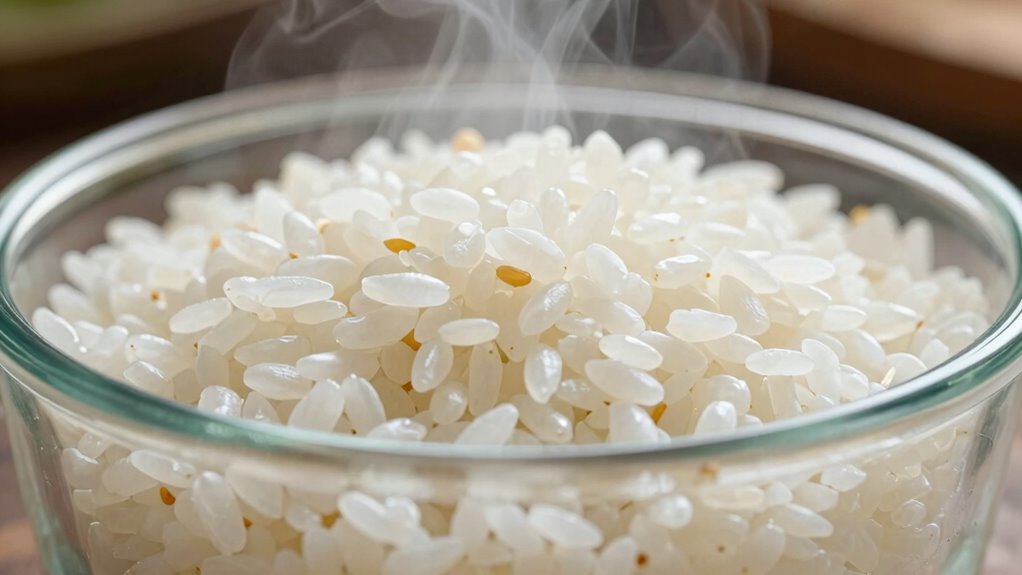
When rice cools after cooking, its starch molecules undergo a process called retrogradation, which causes the grains to become hard and dry. During cooling, starch molecules realign, forming crystalline structures that lead to starch retrogradation. This process reduces moisture within the rice, making it feel firm and dry. As the rice cools, grain expansion slows, and the starch molecules settle into tighter arrangements. Understanding this helps you see why reheating alone won’t always restore softness. Here’s a simple comparison:
| Stage | Description | Effect on Texture |
|---|---|---|
| Hot, fresh rice | High moisture, starch gel state | Soft and sticky |
| Cooling begins | Retrogradation starts | Grain expansion slows |
| Fully cooled | Crystals form, moisture lost | Hard and dry |
| Reheating | Partial reversal of retrogradation | Restores some softness |
| Over time | Further retrogradation occurs | Increased hardness |
As an affiliate, we earn on qualifying purchases.
How Refrigeration Changes Rice’s Moisture and Texture
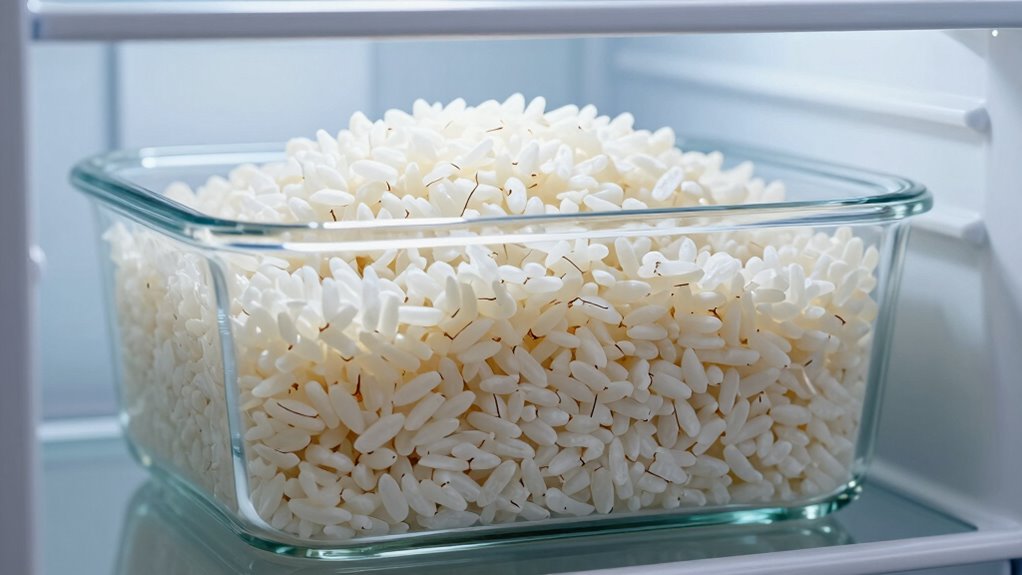
Refrigeration accelerates the moisture loss in cooked rice by slowing down the natural evaporation process, which causes the grains to become drier and firmer. During rice storage, the moisture within the grains shifts outward, leading to a drier texture. As the rice cools, the starch molecules rearrange, resulting in a firmer, less tender bite. This change considerably impacts texture preservation, making rice feel harder and less appetizing when eaten cold. The reduction in moisture content causes the grains to lose their softness, emphasizing the importance of proper storage techniques. Understanding how refrigeration affects rice’s moisture balance helps you better manage its texture, ensuring it stays as moist and tender as possible until reheating. Additionally, the temperature at which rice is stored plays a crucial role in maintaining its quality and preventing bacterial growth. Proper storage techniques can help mitigate these effects and preserve rice’s desirable qualities for longer periods. For example, airtight containers can reduce moisture loss and protect rice from absorbing other odors in the fridge. Implementing these practices is especially important because food safety can be compromised if rice is stored improperly.
As an affiliate, we earn on qualifying purchases.
Best Ways to Reheat Rice So It Stays Soft
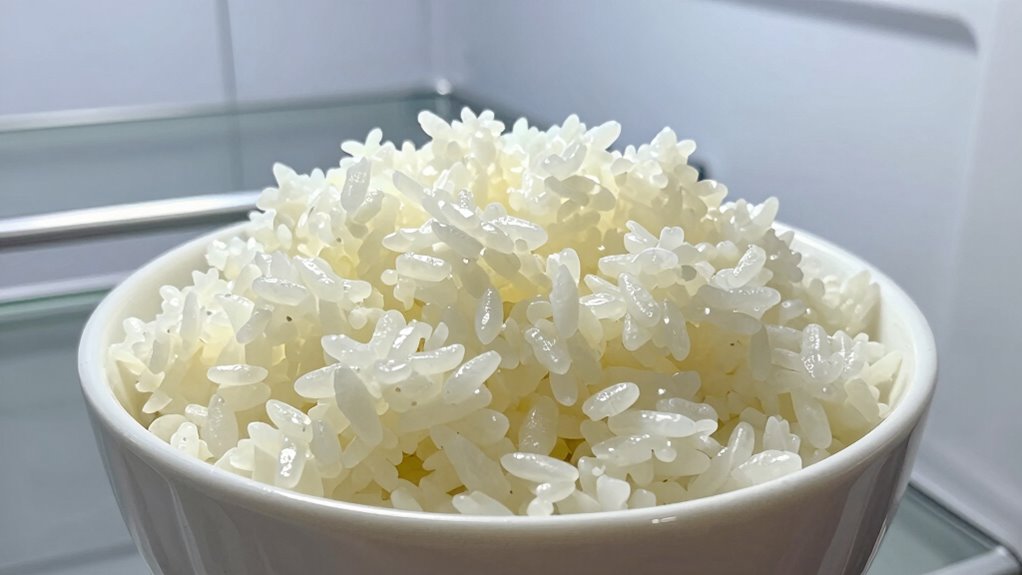
To keep your rice soft when reheating, focus on moisture retention techniques like adding a splash of water or broth. Using proper reheating methods, such as steaming or microwaving with a cover, helps maintain its texture. These simple steps ensure your rice stays tender and delicious every time. Additionally, understanding moisture retention can help you better preserve rice’s soft texture during reheating. Incorporating proper storage practices can also prevent rice from drying out before reheating. Employing gentle reheating methods minimizes moisture loss and keeps the rice fluffy, especially when combined with techniques that support heat distribution. Being mindful of temperature control during reheating can further enhance the rice’s softness and prevent overcooking.
Moisture Retention Techniques
Reheating rice while keeping it soft can be straightforward if you use the right moisture retention techniques. To preserve moisture, add a splash of water or broth before reheating. Cover the rice tightly with a lid or microwave-safe wrap to trap steam, which helps maintain its original texture. Using a damp paper towel over the rice in the microwave can also prevent it from drying out. Stirring occasionally during reheating redistributes heat and moisture evenly, enhancing texture preservation. Avoid reheating rice uncovered or with too little liquid, as this leads to dryness and hardness. Proper reheating methods ensure your rice stays soft and fluffy, preventing that unappetizing hard texture that often develops in the fridge. Additionally, selecting the right reheating techniques can make a significant difference in maintaining rice’s desirable texture. For best results, understanding the importance of moisture retention is key to consistently delicious reheated rice.
Proper Reheating Methods
The key to keeping rice soft when reheating is choosing a method that retains moisture and gently restores its texture. To do this, avoid microwaving rice directly from the fridge without adding moisture, as this can make it hard and dry. Instead, add a splash of water or broth, then cover the rice with a damp paper towel or lid to trap steam. Using gentle heat on the stovetop or in the microwave ensures even reheating while preserving flavor. Steaming is also effective, as it maintains moisture and prevents rice from drying out. Proper rice storage, combined with these reheating techniques, helps preserve the rice’s original flavor and soft texture. Additionally, understanding food safety practices is crucial to prevent bacterial growth during storage and reheating. This approach ensures your reheated rice stays moist, tender, and delicious, and considering temperature control can further improve safety and quality. To further enhance the reheating process, employing a moisture retention technique can help maintain rice’s softness throughout reheating.
Tips for Storing Rice to Keep It Fresh and Fluffy
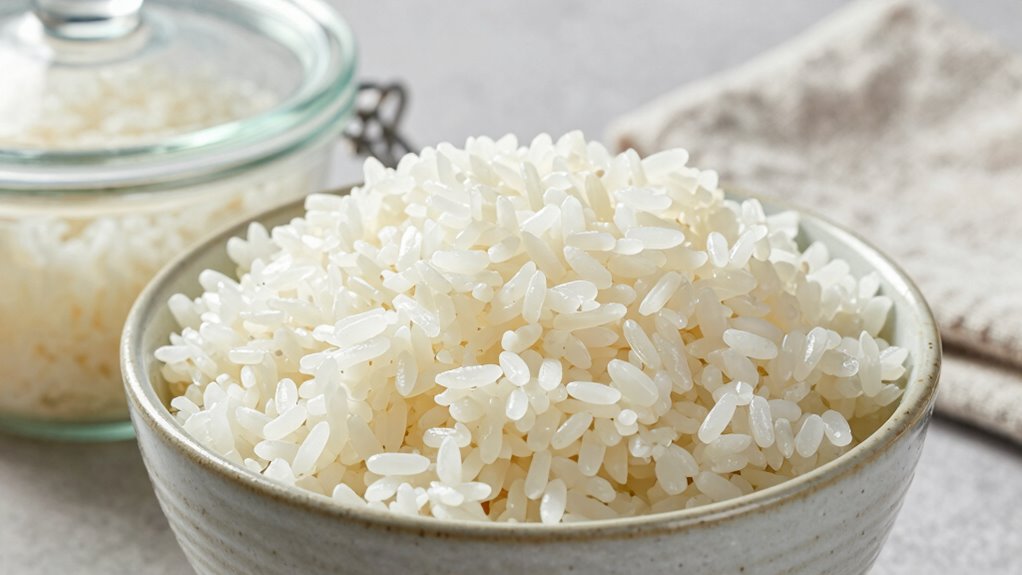
Using the right storage containers keeps your rice fresh and fluffy longer. Make sure to choose airtight options that prevent moisture and air from getting in. Also, try to eat stored rice within a few days to enjoy it at its best. Proper storage helps maintain rice quality and safety by reducing the risk of bacterial growth and spoilage storage best practices.
Proper Storage Containers
Have you ever noticed how rice tends to dry out and become hard even when stored in the fridge? The key is using proper storage containers. Opt for air tight containers to prevent moisture loss and keep the rice soft and fresh. These containers create a seal that blocks air, slowing down the drying process. Additionally, choose stackable storage options so you can maximize your fridge space and keep rice organized. Make sure the containers are clean and dry before filling them, as lingering moisture can cause spoilage. Avoid using flimsy or open containers, which can lead to air exposure and quicker staling. Properly stored rice in air tight, stackable containers will stay fluffy and delicious for longer.
Cool and Consume Quickly
To keep rice fresh and fluffy, maintaining its quality requires cooling it quickly after cooking and consuming it within a short timeframe. This helps preserve the rice’s flavor and texture, especially across different rice varieties. To do it right:
- Transfer the rice to a shallow container immediately to cool it faster.
- Spread it out in a thin layer to prevent clumping and uneven cooling.
- Consume within 1-2 days to ensure ideal flavor and prevent spoilage.
- Using proper storage techniques can further extend its freshness and safety.
Quick cooling minimizes bacterial growth and keeps rice tasting fresh, whether you’re dealing with jasmine, basmati, or short-grain rice. Proper timing is key to preventing rice from turning hard or developing off-flavors. Always refrigerate promptly for the best results, as storage conditions play a crucial role in maintaining rice quality over time.
Creative Methods to Reheat and Revive Leftover Rice
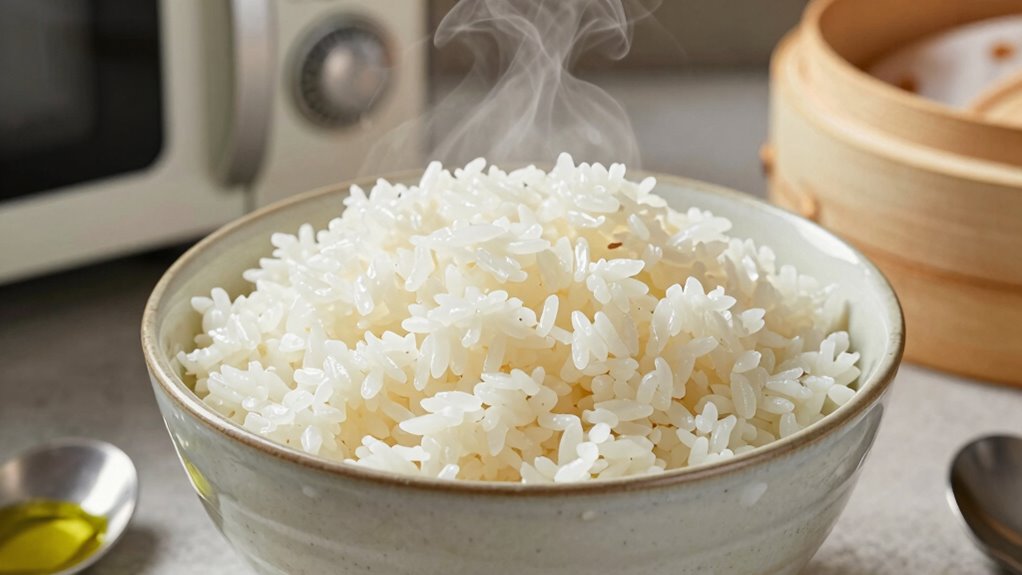
Reviving leftover rice can be tricky, but creative reheating methods can restore its texture and flavor. For better flavor enhancement, try steaming rice with a splash of broth or adding a pat of butter before reheating. To preserve texture, avoid microwave overheating; instead, use a skillet or steamer for gentle heat. Incorporating proper reheating techniques ensures the rice retains its original quality and taste. Additionally, understanding traditional food preservation methods from Indigenous practices can inspire innovative ways to maintain freshness and prevent spoilage. Exploring food safety practices can also help prevent the growth of bacteria and ensure your reheated rice is safe to enjoy, especially when combined with connected kitchen technology that monitors temperature and storage conditions. Employing temperature control methods during storage and reheating plays a crucial role in maintaining rice quality and safety.
Common Mistakes That Make Rice Hard When Reheated
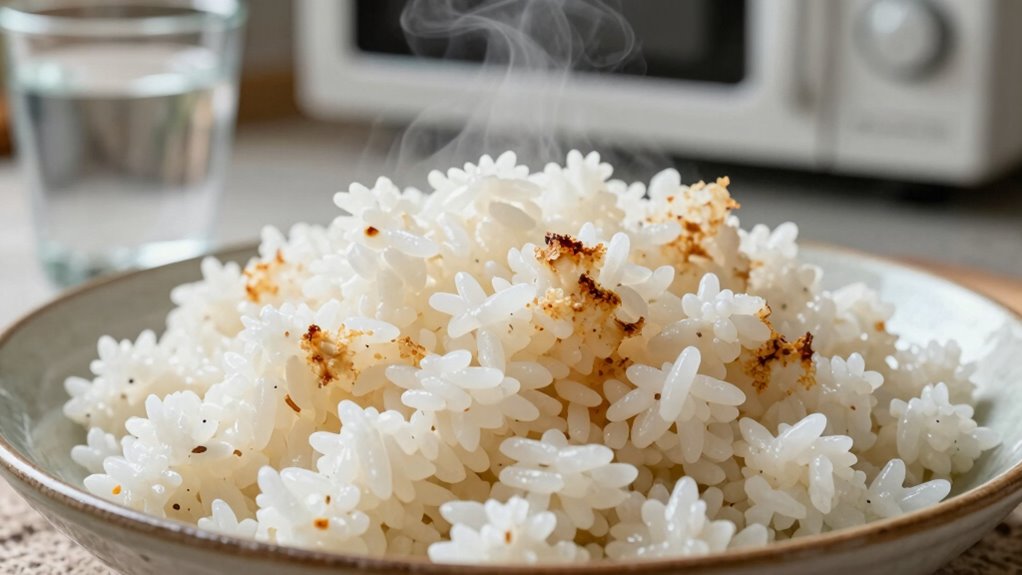
One common mistake that causes reheated rice to turn hard is overheating it, which dries out the grains and destroys their moisture. This considerably impacts the rice texture, making it tough and unappetizing. To avoid this, many people misuse reheating techniques, leading to undesirable results. Here are three mistakes to watch out for:
- Reheating rice at high heat, causing rapid moisture loss.
- Using dry heat methods like oven baking without moisture, which dries out the grains.
- Overheating in microwave without adding water or covering, resulting in uneven heating and dryness.
A helpful tip is to incorporate connected cooking techniques, such as using a microwave with a steam function or a sous-vide setup, to maintain moisture and ensure the rice stays tender.
Frequently Asked Questions
Can Freezing Rice Prevent It From Turning Hard?
Freezing rice can help retain moisture, which may prevent it from turning hard later. When you freeze rice properly, it slows down moisture loss and preserves its texture. Keep in mind, the freezing impact depends on how well you store it—use airtight containers or resealable bags. This method guarantees your rice stays softer and fresher, making reheating easier and more enjoyable whenever you need it.
Is It Better to Store Rice in an Airtight Container?
Storing rice in an airtight container is definitely better because it keeps moisture inside, preventing the rice from drying out and turning hard. Airtight storage minimizes exposure to air and humidity, which can cause rice to lose its softness. Plus, it helps prevent odors from seeping in or out. For the best results, always seal your rice tightly in an airtight container to retain freshness and ideal moisture.
Does Adding Vinegar Help Keep Rice Soft in the Fridge?
Adding vinegar can help with preservation, but it doesn’t effectively keep rice soft in the fridge. Vinegar acts as an antimicrobial, which may extend freshness, but for softening techniques, focus on storing rice in an airtight container and reheating it with a splash of water or broth. These methods help retain moisture, keeping your rice tender and avoiding that unwanted hard texture.
How Long Can Cooked Rice Safely Stay in the Fridge?
You probably wonder how long cooked rice stays safe in your fridge. Generally, you should consume it within 4 to 6 days to ensure food safety. After that, harmful bacteria can develop, risking your health. Keep an eye on storage duration, and store rice promptly in an airtight container. If it smells off or has a slimy texture, it’s best to discard it. Your safety comes first—don’t take chances.
Can Reheating Rice in the Microwave Make It Softer?
Yes, microwave reheating can make your rice softer. When you reheat rice in the microwave, add a splash of water or broth to help steam it and restore its original texture. Cover the dish with a microwave-safe lid or wrap to trap moisture, which prevents the rice from drying out. This method effectively improves the rice texture, making it fluffy and tender again, perfect for your next meal.
Conclusion
Remember, patience is a virtue, especially with leftover rice. By understanding how refrigeration affects moisture and using the right reheating methods, you can keep your rice soft and fluffy. Avoid common mistakes, store it properly, and reheat thoughtfully. When in doubt, gentle reheating and adding a splash of water work wonders. After all, a well-prepared meal is worth the effort—because you reap what you sow, even in your leftovers.
Fall yard work Picks
leaf blowers
As an affiliate, we earn on qualifying purchases.