
To fix bland food quickly, focus on balancing the flavor triangle: salt, acid, and umami. Add a pinch of salt to enhance underlying flavors, emphasize brightness with lemon juice or vinegar, and deepen richness using ingredients like Parmesan or soy sauce. Regular tasting and gradual adjustments help you achieve harmony. Mastering these elements allows you to transform simple dishes into flavorful ones—keep exploring, and you’ll discover even more ways to elevate your cooking.
Key Takeaways
- Use the flavor triangle—balance salt, acid, and umami—to quickly elevate bland dishes.
- Adjust seasoning gradually, tasting frequently to achieve harmony among the three elements.
- Brighten flavors with acid (vinegar, lemon juice) and deepen with umami-rich ingredients like soy or cheese.
- Incorporate spices thoughtfully to add complexity and enhance the natural flavors of ingredients.
- Employ techniques like reduction or proper seasoning to develop richer, well-rounded taste profiles rapidly.
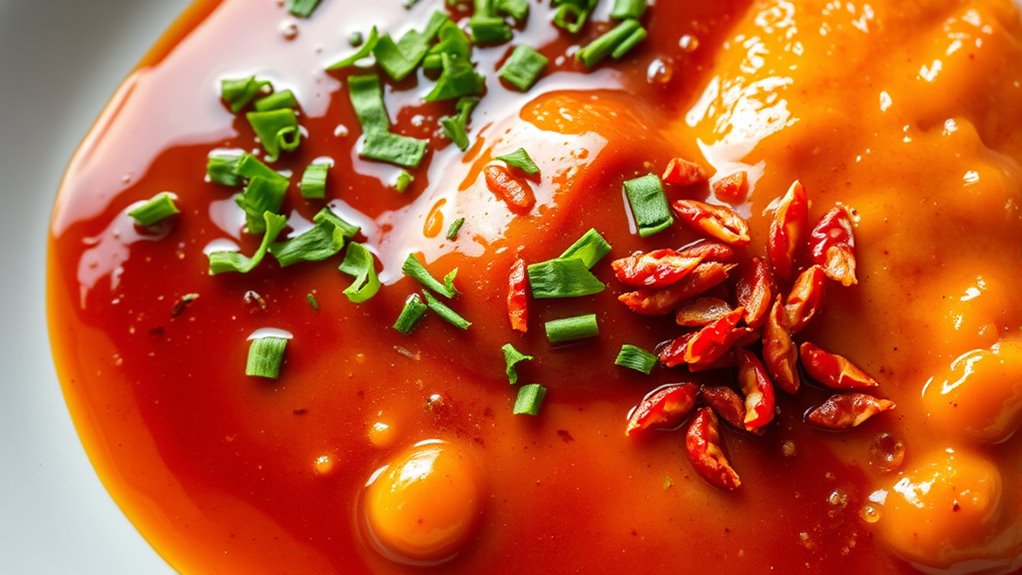
Have you ever wondered how chefs create perfectly balanced dishes? The secret often lies in mastering what’s called the “flavor triangle,” a simple yet powerful concept that can transform bland, uninspired food into something flavorful and exciting. At its core, the flavor triangle emphasizes the importance of three key elements: salt, acid, and umami. When you understand how to balance these components, you can elevate any dish from dull to delicious in no time.
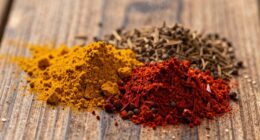
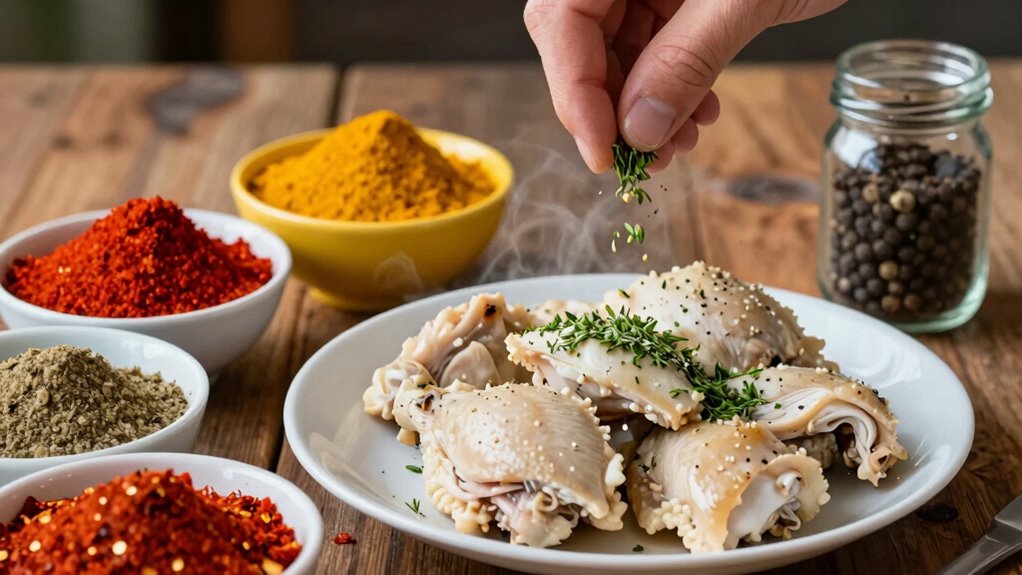
One of the easiest ways to start fixing bland food is by experimenting with spice combinations. Spices aren’t just for heat; they add depth and complexity to your dishes. Think about how cumin, coriander, smoked paprika, or even a pinch of cinnamon can influence the overall flavor. Mixing spices thoughtfully creates layers of taste that keep your palate engaged. When you develop your spice combinations, you’re fundamentally adding a new dimension that complements the other elements in your dish. Remember, it’s not about overpowering but harmonizing. A well-chosen spice can also act as an umami source, enriching the savory qualities of your meal. For example, adding a dash of soy sauce or miso paste introduces umami that enhances the natural flavors of ingredients like vegetables or meats. These umami sources boost the overall flavor profile, making your dish taste more complex and satisfying.
Experiment with spices like cumin, paprika, and cinnamon to add depth and umami to your dishes.
Balancing these elements involves a bit of practice, but once you get the hang of it, you’ll find it’s straightforward. Start by tasting your dish and adjusting the salt to bring out inherent flavors. Next, add acid—think lemon juice, vinegar, or even a splash of wine—to brighten and lift the dish. Incorporating water-based techniques like broths or reductions can also help concentrate flavors and achieve harmony. Additionally, understanding biochemical reactions such as caramelization or Maillard reactions can help you develop richer, more appealing flavors in your cooking process. Recognizing that modern culinary techniques like sous vide can optimize flavor extraction and texture is also valuable for elevating your dishes. Incorporating flavor balancing principles into your cooking ensures that no single element dominates, creating a more harmonious and satisfying dish. Lastly, incorporate umami sources, whether through ingredients like Parmesan cheese, anchovies, or fermented foods, to deepen the savory notes. The goal is to create a harmony where no single element overwhelms the others but instead works together to produce a full-bodied flavor. Recognizing the importance of European cloud innovation can also inspire more sustainable and efficient culinary practices in the food industry, leveraging new technologies for better flavor management.
Once you understand how spice combinations and umami sources fit into the flavor triangle, you’ll be able to troubleshoot and fix bland dishes effortlessly. Remember, seasoning is an art, and the key is to taste as you go. With practice, you’ll develop an intuitive sense of how to balance these three elements. Before long, you’ll be transforming even the simplest ingredients into flavorful masterpieces, all by applying the principles of the flavor triangle. No more bland meals—just delicious, well-rounded dishes every time.

Redmond Real Salt – Ancient Fine Sea Salt, Unrefined Mineral Salt, 16 Ounce Pouch (1 Pack)
FLAVOR – Real Salt is unlike any salt on earth. It’s subtly sweet, never bitter sea salt that…
As an affiliate, we earn on qualifying purchases.
As an affiliate, we earn on qualifying purchases.
Frequently Asked Questions
How Does the Flavor Triangle Differ From Traditional Seasoning Methods?
The flavor triangle differs from traditional seasoning methods by focusing on achieving a balanced seasoning that emphasizes ingredient harmony. Instead of layering multiple spices, you use the triangle’s principles to blend salty, sweet, and umami flavors in precise proportions. This approach simplifies seasoning, making your dishes more flavorful quickly. It helps you create a well-rounded taste experience by ensuring each element complements the others, avoiding overpowering or bland results.
Can the Flavor Triangle Be Applied to All Cuisines?
Absolutely, the flavor triangle can be applied to all cuisines, and it’s like a secret weapon in your culinary arsenal. It offers incredible cultural adaptability and ingredient versatility, allowing you to craft authentic flavors across diverse dishes. By balancing the three core elements—sweet, sour, and savory—you can create vibrant, well-rounded flavors in any cuisine, making your cooking more dynamic and exciting than ever before.
What Are Common Mistakes When Using the Flavor Triangle?
You often make over-seasoning mistakes by adding too much salt, spice, or acid, which can overpower your dish. An ingredient imbalance is another common mistake, where one element dominates while others are underrepresented, dulling the flavor harmony. To avoid these pitfalls, taste as you go, start with small amounts, and adjust gradually. This helps maintain balance and prevents over-seasoning, ensuring your food remains flavorful without being overwhelming.
How Long Does It Take to Master the Flavor Triangle Technique?
You can master the flavor triangle technique in a few weeks with consistent practice. It takes time to develop a good sense of flavor balance and seasoning mastery, but regular experimentation speeds up the process. Focus on adjusting salt, acidity, and sweetness until you achieve harmony. Over time, you’ll instinctively know how to balance these elements, making your dishes more vibrant and flavorful every time.
Are There Any Health Benefits to Using the Flavor Triangle Approach?
Think of the flavor triangle as a vibrant garden where every element nurtures your well-being. Using this approach can enhance the nutritional benefits of your meals by encouraging balanced, whole ingredients. It also positively impacts your health by reducing reliance on excess salt, sugar, and unhealthy fats, promoting better digestion and energy levels. Embracing this method helps you enjoy tasty food while supporting your overall health naturally.

Tuscanini 100% Sicilian Lemon Juice, Not from Concentrate, 6.7oz Lemon Shaped Convenient Squeeze Bottle | No Water Added | Product of Italy | Certified Kosher (Including Passover)
🍋 No Added Water – Each bottle of the Tuscanini Real Lemon Juice is made with freshly squeezed…
As an affiliate, we earn on qualifying purchases.
As an affiliate, we earn on qualifying purchases.
Conclusion
By mastering the flavor triangle, you can turn plain dishes into exciting meals in no time. Did you know that incorporating just a few key flavors can boost your food’s appeal by up to 80%? So next time your dish falls flat, remember the triangle—balance your sweet, sour, salty, and umami. With this simple tool, you’ll impress everyone with bold, delicious flavors every time you cook.

Chaganju Dashi Stock, Dashi Packet – Ramen Broth, Miso Soup, Udon, Shabu Shabu & Hot Pot Soup Base – Rich Umami Flavor, 8 Carefully Selected Ingredients – Authentic Japanese Umami Dashi, Made in Japan, 8g × 15pacs
ESSENTIAL JAPANESE-STYLE SOUP BASE – DASHI – Dashi is a cornerstone of Japanese cuisine, used daily in dishes…
As an affiliate, we earn on qualifying purchases.
As an affiliate, we earn on qualifying purchases.

June Street Market New Kitchen Starter 10 Piece Gift Set with Basil, Cayenne, Chili Powder, Cumin, Garlic, Italian, Onion Powder, Oregano, Rosemary, Paprika and Blank Recipe Cards (style may vary)
New Kitchen Starter 10 Piece Starter Spice Starter Kit Includes: Basil 0.75 oz., Cayenne 1.75 oz., Chili Powder…
As an affiliate, we earn on qualifying purchases.
As an affiliate, we earn on qualifying purchases.