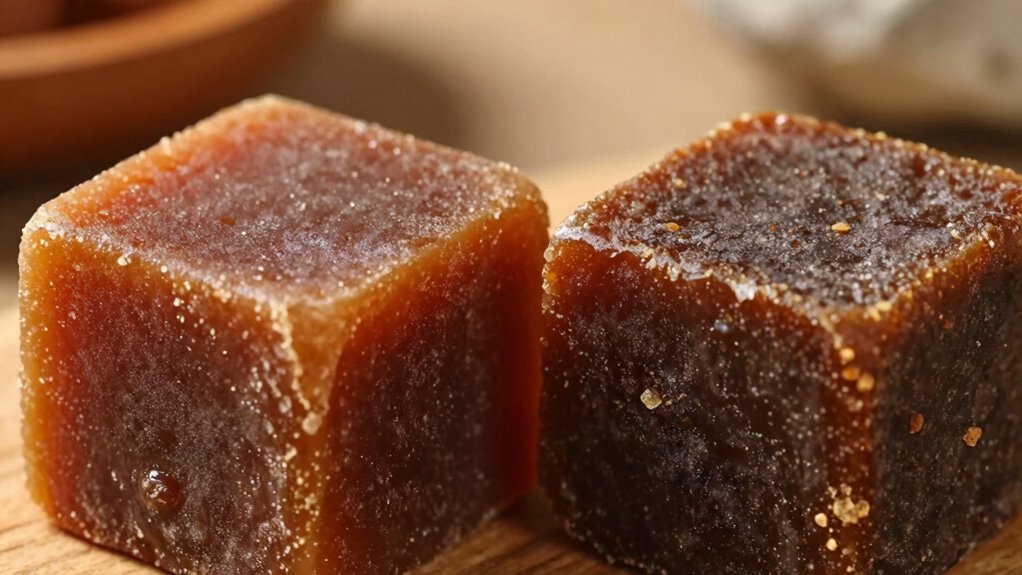

Palm sugar and jaggery both offer similar sweetness, but their flavors are quite different. Palm sugar has a caramel or butterscotch taste with earthy notes, making it versatile for sauces and drinks. Jaggery has a rich, molasses-like flavor with smoky undertones, ideal for traditional sweets and stews. Your choice depends on your culinary need and flavor preference—exploring further reveals how these differences shape their use in various dishes.

Get kitchen staples and gadgets delivered free — and shop member deals
- Fast, free delivery on millions of items
- Access to Prime Big Deal Days deals on October 6–7
- Prime Video, Amazon Music and more included
Key Takeaways
- Both palm sugar and jaggery provide similar levels of sweetness but differ significantly in flavor profiles.
- Palm sugar has a caramel or butterscotch flavor with earthy undertones, while jaggery offers a robust, molasses-like taste.
- Palm sugar melts easily and adds subtle depth to dishes, whereas jaggery’s bold flavor suits traditional sweets and stews.
- The flavor differences influence their culinary uses, with palm sugar favoring sauces and drinks, and jaggery being ideal for Indian sweets.
- Despite similar sweetness, their distinct flavors reflect cultural origins and impact the overall taste of recipes.
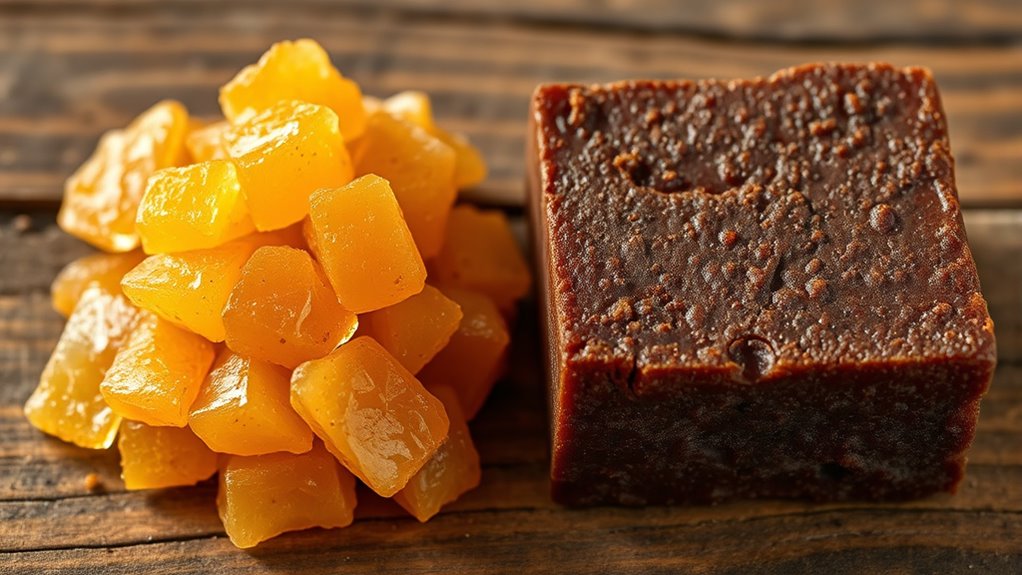
When choosing between palm sugar and jaggery, understanding their differences can help you make healthier and more informed decisions. Both are natural sweeteners with a rich history rooted in various cultures, and knowing their cultural significance can deepen your appreciation for these ingredients. Palm sugar, derived from the sap of palm trees like date palms or coconut palms, holds a special place in Southeast Asian cuisine. It’s often used in traditional dishes and rituals, symbolizing prosperity and hospitality. Jaggery, on the other hand, is made from concentrated sugarcane juice or palm sap in Indian and South Asian cultures, where it’s considered a wholesome, nourishing food that carries spiritual and medicinal importance. Recognizing the cultural significance behind each sweetener can guide you toward choices that align with your culinary traditions or health goals.
In terms of health benefits, both palm sugar and jaggery are considered less processed alternatives to refined sugar, retaining some natural nutrients. You might find that jaggery contains small amounts of minerals like iron, magnesium, and potassium, which can support your overall health. It’s often praised for its potential to aid digestion, boost immunity, and provide a gentle energy lift without the sharp sugar crashes associated with refined options. Palm sugar, meanwhile, has a slightly lower glycemic index, making it a better choice for those monitoring blood sugar levels. It also retains trace minerals from the sap, which can contribute to electrolyte balance and overall wellness. However, you should remember that these benefits depend on the amount consumed and the quality of the product. Neither sweetener is a miracle health food, but selecting them over refined sugar can reduce your intake of empty calories and additives.
Flavor is another key difference that influences how you might incorporate these sweeteners into your dishes. Palm sugar has a subtle caramel or butterscotch flavor, with a hint of earthiness that enhances both sweet and savory recipes. It melts easily and lends a rich depth, making it ideal for sauces, desserts, and beverages. Jaggery offers a more robust, complex flavor profile—think molasses or brown sugar with a hint of smoky richness. Its bold taste is perfect for traditional sweets, stews, or teas, especially in Indian cuisine. Both sweeteners provide similar levels of sweetness, but their unique flavors can change the character of your dishes considerably. Your choice will depend on the flavor profile you desire and the cultural context of your cooking. By understanding these differences, you can select the right sweetener to elevate your recipes while honoring their cultural roots and health benefits.
As an affiliate, we earn on qualifying purchases.
Frequently Asked Questions
Which Is Healthier: Palm Sugar or Jaggery?
You might find jaggery slightly healthier because it retains more nutrients and offers better health benefits, such as aiding digestion and boosting immunity. However, palm sugar has a lower glycemic index, making it a better option for blood sugar control. Consider the environmental impact too; jaggery production often involves less energy, making it more eco-friendly. Ultimately, moderation and choosing minimally processed options are key for health and sustainability.
Can Palm Sugar Substitute Jaggery in All Recipes?
You can substitute palm sugar for jaggery in many recipes, but it’s not a one-size-fits-all switch. Palm sugar offers different flavor compatibility and cooking versatility, so it might alter the taste and texture of your dish. Think of it as swapping a key ingredient; while it works in some cases, it’s not suitable for all. Adjust your recipe accordingly to get the best results.
Are There Any Allergy Concerns With Palm Sugar or Jaggery?
You might experience allergy symptoms if you’re sensitive to allergen sources in palm sugar or jaggery. While rare, allergic reactions can include swelling, itching, or difficulty breathing. Always check labels and consult with a healthcare professional if you have known food allergies. It’s best to be cautious, especially if you have a history of allergies, as cross-contamination or specific allergen sources could trigger symptoms.
How Do Storage Requirements Differ Between the Two?
You should store palm sugar and jaggery differently to maximize shelf life. Keep palm sugar in an airtight container in a cool, dry place to prevent moisture absorption, which can cause clumping. Jaggery, on the other hand, is best stored in a sealed container away from humidity and sunlight. Follow these storage tips to prevent mold and spoilage, ensuring both retain their flavor and quality for as long as possible.
Which Has a Lower Glycemic Index?
Imagine a gentle ripple on a calm pond—this is how palm sugar’s glycemic impact compares to jaggery’s. You’ll find that palm sugar has a lower glycemic index, meaning it causes a slower rise in blood sugar. If you’re mindful of blood sugar levels, choosing palm sugar helps keep your energy steady and avoids sharp spikes, making it a better option for managing your overall health.
As an affiliate, we earn on qualifying purchases.
Conclusion
Ultimately, whether you choose palm sugar or jaggery, you’re inviting a burst of nature’s sweet symphony into your kitchen. Think of palm sugar as a gentle, golden whisper, while jaggery sings with rich, caramel notes. Both are treasures from the earth’s bounty, offering unique flavors that dance on your palate. So, pick your partner in sweetness and let your culinary creations bloom with their distinctive charm—each one a flavorful adventure waiting to unfold.
As an affiliate, we earn on qualifying purchases.
As an affiliate, we earn on qualifying purchases.
Fall Picks
fall essentials
As an affiliate, we earn on qualifying purchases.