

To fix over-salted food without potatoes, start by adding acidity with lemon juice, vinegar, or diced tomatoes to balance the saltiness. You can also incorporate a touch of sweetness using honey or sugar to mellow strong flavors. Dilute the dish by adding more liquid or ingredients like broth or vegetables to lessen the salt concentration. Enhancing flavor with herbs and umami-rich condiments can also help. If you want more tips, you’re about to discover effective ways to salvage your dish.

Get kitchen staples and gadgets delivered free — and shop member deals
- Fast, free delivery on millions of items
- Access to Prime Big Deal Days deals on October 6–7
- Prime Video, Amazon Music and more included
Key Takeaways
- Add a splash of acid, like lemon juice or vinegar, to counteract excessive saltiness.
- Incorporate umami-rich ingredients such as soy sauce or miso sparingly to mask saltiness.
- Mix in a small amount of sweetness, like honey or sugar, to balance salty flavors.
- Dilute the dish by adding more vegetables, broth, or rice to reduce salt concentration.
- Enhance flavors with herbs and spices to distract from saltiness and create a more balanced taste.
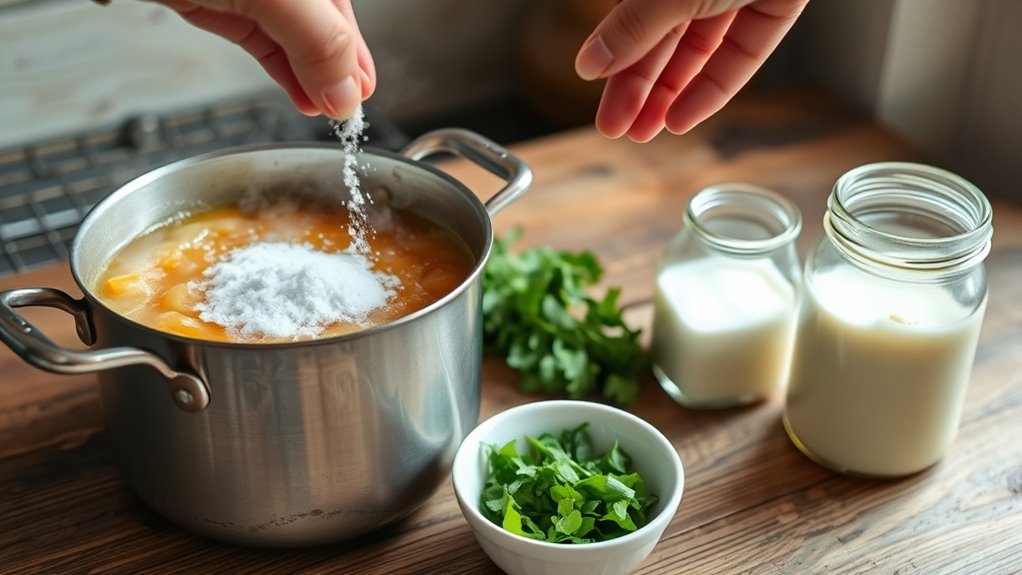
If your dish turns out too salty, don’t worry—there are simple ways to fix it. One effective method is to balance out the saltiness by using salt alternatives or enhancing the dish’s flavors. Instead of adding more salt, focus on introducing ingredients that naturally counteract the salty taste and boost overall flavor. This approach helps you salvage your dish without compromising its intended taste.
Start by adding a splash of acidity, like a squeeze of lemon juice or a dash of vinegar. Acidic elements cut through saltiness and refresh the palate, making the dish seem less overpowering. If you don’t have lemon or vinegar on hand, a small amount of tomato paste or diced tomatoes can also work, as their natural acidity helps tone down excess salt. Incorporate these gradually, tasting as you go, to find the right balance.
Add lemon juice, vinegar, or tomato paste gradually to balance salty flavors.
Next, consider incorporating salt alternatives that provide depth and complexity without increasing sodium. Ingredients like herbs, spices, or umami-rich condiments can markedly enhance flavor. For example, adding fresh herbs such as parsley, cilantro, or basil can elevate the dish’s aroma and taste, diverting attention from the saltiness. Similarly, a sprinkle of garlic powder, onion powder, or smoked paprika can add layers of flavor that overshadow the excess salt. Soy sauce or miso paste are also good options—they’re rich in umami and can help mask salt overtones if used sparingly. Incorporating umami-rich ingredients can further enhance your efforts to fix over-salted dishes.
Another trick is to incorporate ingredients with natural sweetness, which can balance out saltiness. A small amount of honey, sugar, or maple syrup can help mellow the salty flavor. Be cautious with these, as you don’t want to make the dish overly sweet—start with a tiny pinch, then adjust until you reach the desired taste. Coconut milk or cream can also add creaminess and subtle sweetness, especially in savory dishes like curries or stews, helping to diminish the perception of saltiness. Incorporating flavor balancing techniques can further enhance your efforts to fix over-salted dishes.
Additionally, understanding how contrast ratio influences the overall perception of flavors can guide you in making effective adjustments. Incorporating ingredients with umami can also help to balance flavors and reduce the perception of excess salt. Finally, consider diluting the dish slightly by adding more of the main ingredients, such as vegetables, broth, or rice. This technique reduces the concentration of salt per serving, making the dish more palatable. If your dish is a stew or sauce, simmering it longer can also help meld flavors and decrease salt intensity.
As an affiliate, we earn on qualifying purchases.
Frequently Asked Questions
Can Adding Sugar Help Balance Out Too Much Salt?
Adding sugar can help balance out too much salt, but it’s best to use sweetener options like honey, maple syrup, or a small amount of brown sugar for flavor balancing. Start with a tiny amount and taste as you go to avoid making the dish too sweet. Sugar counteracts saltiness by adding a contrasting sweetness, creating a more harmonious flavor profile without overpowering the dish.
Are There Any Natural Remedies to Reduce Saltiness?
Ever wonder if natural remedies can tone down saltiness? You can try dilution techniques by adding more ingredients like vegetables or broth to balance the flavor. Herbal remedies, such as a splash of lemon juice or vinegar, can also help mask excess salt. These options don’t involve adding extra salt, making your dish more palatable without compromising its natural taste. Give them a shot to restore harmony to your meal!
How Long Does It Take to Fix Over-Salted Stew?
It takes about 10 to 15 minutes of simmering your stew for salt absorption to occur. As the stew simmers, the salt gradually dissolves and evenly distributes, reducing the overall saltiness. Stir frequently to promote even salt absorption and prevent sticking. Keep tasting periodically, and if needed, add a splash of water or broth to help dilute the saltiness further while the stew continues to simmer.
Does Adding Lemon Juice Neutralize Excess Salt?
A little citrus acidity can be your secret weapon—adding lemon juice might help, but it’s not a guaranteed fix. Think of it as trying to mask a bad smell with perfume; it might help temporarily, but it doesn’t eliminate the problem. Lemon juice can reduce perceived saltiness through flavor masking, but it won’t neutralize excess salt entirely. Use it sparingly and combine with other methods for better results.
Is It Better to Start Over or Try Fixing the Dish?
If your dish is too salty, it’s generally better to start over unless you can salvage it with quick tips. Salvage tips like adding acidity, sugar, or more liquid can help, but they might not fully rectify the problem. Consider starting fresh if your current dish is too far gone, especially if it’s essential to taste balanced. Sometimes, starting over ensures better flavor and saves time in the long run.
As an affiliate, we earn on qualifying purchases.
Conclusion
So, next time your dish turns out too salty, remember there are simple tricks to fix it without throwing in potatoes. Whether you add a splash of water, a squeeze of lemon, or a dollop of sugar, you can rescue your meal and save dinner. Don’t let one mistake ruin your effort—after all, isn’t cooking about creativity and problem-solving? With these tips, you’re equipped to turn salty setbacks into delicious successes.
As an affiliate, we earn on qualifying purchases.
cooking broth for flavor enhancement
As an affiliate, we earn on qualifying purchases.
As an affiliate, we earn on qualifying purchases.
Fall Picks
fall essentials
As an affiliate, we earn on qualifying purchases.