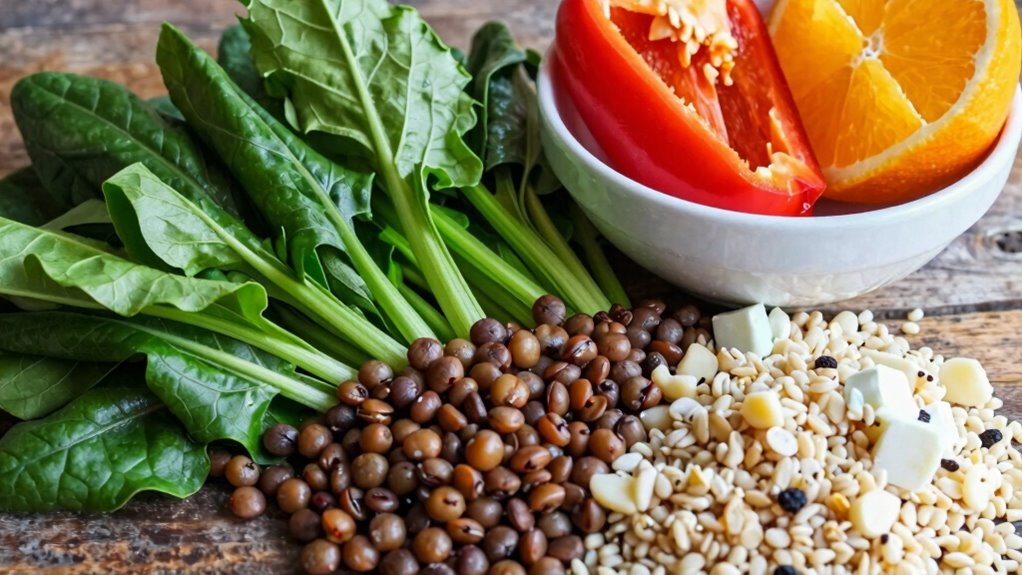

To boost iron absorption on a vegetarian diet, combine iron-rich foods like lentils or spinach with vitamin C sources such as peppers or oranges, which considerably enhance uptake. Avoid drinking tea, coffee, or consuming dairy near mealtime, as tannins, phytates, and calcium can block absorption. Proper food prep like soaking or fermenting reduces inhibitors. Knowing these strategies helps guarantee you get the most from your plant-based iron sources—discover more tips below.

Get kitchen staples and gadgets delivered free with Prime
- Fast, free delivery on millions of items
- Prime Video, Amazon Music and more included
- Member-only deals all year
Key Takeaways
- Consuming vitamin C-rich foods (e.g., peppers, oranges) alongside plant-based iron sources enhances absorption.
- Avoid drinking tea or coffee immediately before or after meals to prevent tannins from blocking iron uptake.
- Preparing legumes and grains through soaking, sprouting, or fermenting reduces phytates that inhibit iron absorption.
- Calcium-rich foods and supplements can hinder iron absorption; space them out from iron-rich meals by at least an hour.
- Including a variety of iron sources and optimizing meal timing helps vegetarians maintain healthy iron levels.
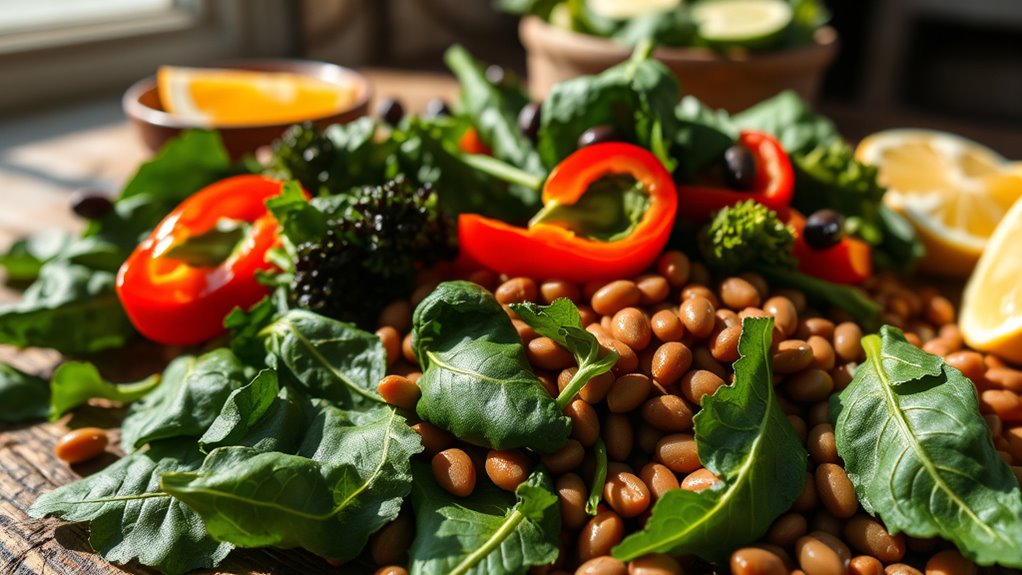
Iron is an essential mineral that plays a key role in producing energy and supporting your immune system. If you’re following a vegetarian diet, understanding how to optimize your iron intake is crucial, especially since plant-based iron sources can be less readily absorbed than animal products. Plant-based iron sources include foods like lentils, chickpeas, spinach, tofu, quinoa, pumpkin seeds, and fortified cereals. While these foods are rich in iron, the type of iron they contain—non-heme iron—is not absorbed as efficiently by your body compared to heme iron from animal sources. That’s why focusing on iron absorption enhancers is vital.
Vitamin C is one of the most effective iron absorption enhancers. Including foods high in vitamin C like bell peppers, oranges, strawberries, and tomatoes alongside your iron-rich meals can significantly increase the amount of iron your body absorbs. For example, adding sliced peppers or citrus to a spinach salad boosts iron uptake. Conversely, certain compounds can inhibit iron absorption, so being mindful of these can make a difference. Tannins found in tea and coffee, phytates in whole grains and legumes, and calcium in dairy products all interfere with non-heme iron absorption. To maximize your iron intake, try to avoid drinking tea or coffee immediately before or after meals and limit high-calcium foods when consuming iron-rich plant foods.
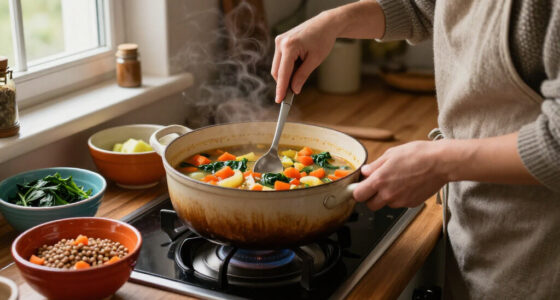
Timing also matters. Consuming iron-rich plant foods with vitamin C-rich ingredients boosts absorption, while spacing out your tea, coffee, or calcium-rich foods from these meals. For example, enjoy your lentil stew with a side of bell peppers or citrus fruit, and wait at least an hour before having tea or coffee. Additionally, cooking methods can influence iron bioavailability. Soaking, sprouting, and fermenting legumes and grains reduce phytate levels, making more iron available for absorption. Incorporating these practices into your cooking routine can help you get more from your plant-based iron sources. Being aware of iron absorption factors can empower you to make better dietary choices and improve your overall iron levels. Moreover, understanding the role of the gut microbiome can further support nutrient absorption from plant foods. Incorporating food preparation techniques like soaking and fermenting can further enhance iron bioavailability from plant sources. Recognizing individual differences in absorption can also help tailor dietary strategies to meet your specific needs and optimize nutrient uptake. Paying attention to these dietary strategies can make a significant difference in maintaining healthy iron levels.
Vitamin C supplement for iron absorption
As an affiliate, we earn on qualifying purchases.
As an affiliate, we earn on qualifying purchases.
Frequently Asked Questions
Can Plant-Based Iron Sources Meet All Daily Iron Requirements?
Yes, plant-based iron sources can meet your daily requirements if you include a variety of iron-rich foods like beans, lentils, tofu, spinach, and fortified cereals. To maximize absorption, pair these with vitamin C-rich foods such as citrus or peppers. Be mindful of inhibitors like tea or coffee, which can block iron absorption. With careful planning, your plant-based diet can provide enough iron for your needs.
How Does Vitamin C Intake Influence Iron Absorption?
Did you know that vitamin C can boost iron absorption by up to 30%? When you include vitamin C-rich foods like oranges or peppers, it enhances iron absorption through vitamin C enhancement. However, be cautious of iron absorption blockers such as tea and coffee, which can hinder this process. To maximize iron uptake from plant foods, pair them with vitamin C sources and limit intake of blockers during meals.
Are There Specific Foods That Inhibit Iron Absorption?
Certain foods can block iron absorption, especially those high in phytic acid and tannin content. For example, whole grains, legumes, and tea contain these compounds, which bind to iron and prevent your body from absorbing it effectively. To optimize iron absorption, try to limit these foods during iron-rich meals or consume them separately. Incorporating vitamin C-rich foods can also help counteract these inhibitors and boost your iron uptake.
Is Iron Supplementation Necessary for Vegetarians?
If you’re experiencing iron deficiency, you might need a supplement, but it’s not always necessary for vegetarians. You should consult your healthcare provider to assess your iron levels first. If your levels are low, a supplement may be recommended to prevent deficiency symptoms. However, focusing on iron-rich plant foods and enhancing absorption through vitamin C can often reduce the need for supplements, making them unnecessary for many vegetarians.
How Do Cooking Methods Affect Iron Bioavailability?
Coincidence often reveals that cooking techniques considerably boost iron bioavailability. Steaming or soaking foods reduces oxalates and phytates, improving nutrient interactions and making iron easier for your body to absorb. Conversely, frying can diminish iron content through heat degradation. By choosing methods that preserve or enhance iron’s bioavailability, you optimize absorption, ensuring your vegetarian diet provides maximum benefit from every meal.
As an affiliate, we earn on qualifying purchases.
Conclusion
Now that you know what boosts and blocks iron absorption, you’re armed with everything to conquer your vegetarian diet like a nutritional superhero. By choosing vitamin C-rich foods and avoiding tea and coffee during meals, you can release the full power of iron in your body. Don’t let poor absorption steal your energy—take control and make these simple changes. With this knowledge, you’ll be unstoppable, fueling your body with iron’s incredible strength every day!
Soaking and fermenting legumes kit
As an affiliate, we earn on qualifying purchases.
As an affiliate, we earn on qualifying purchases.
As an affiliate, we earn on qualifying purchases.
Halloween Picks
halloween
As an affiliate, we earn on qualifying purchases.