
TL;DR
A Good Housekeeping report gathers professional organizers’ advice on items that donation centers may reject or that could pose safety, privacy or hygiene concerns. They recommend discarding some goods and finding direct reuse options for others, while checking local charity rules before dropping anything off.
A Good Housekeeping report says people clearing out their homes should not automatically send every unwanted item to a charity: organizers advise against donating goods such as stained clothing, worn bedding, open cosmetics and used car seats, citing hygiene, safety, privacy and resale concerns. The report instead recommends discarding some items and considering direct reuse for others, while noting that acceptance rules vary among donation centers.

Get kitchen staples and gadgets delivered free with Prime
- Fast, free delivery on millions of items
- Prime Video, Amazon Music and more included
- Member-only deals all year
Professional organizer Mindy Godding, co-founder of Abundance Organizing, says donation centers often do not accept VHS tapes because few people have the equipment to play them. Godding also notes that magnetic tape degrades over time. She cautions against donating used car seats: charities may avoid them because of product-safety requirements, possible recalls and liability concerns, and seats can be difficult to assess for spills or other contamination.
Organizer Lucy Milligan Wahl, owner of LMW Edits, advises discarding or otherwise keeping out of donation channels clothing marked with a full name that could connect a person or family to a place or activity. She also says threadbare linens and pillows are poor donation candidates. Shops may refuse them, and pillows can absorb biological material that is difficult to clean, she says.
The advice also covers used children’s toys when a donation center cannot readily verify that all parts are present and safe, plus open toiletries or cosmetics that centers may have to discard. The report says stained, ripped, stretched-out or odorous clothing should not be donated. Damaged furniture may be offered directly to someone who wants it; organizer Robyn Reynolds suggests Buy Nothing groups as one possible route.
Keep Unusable Goods Out of Donation Bins
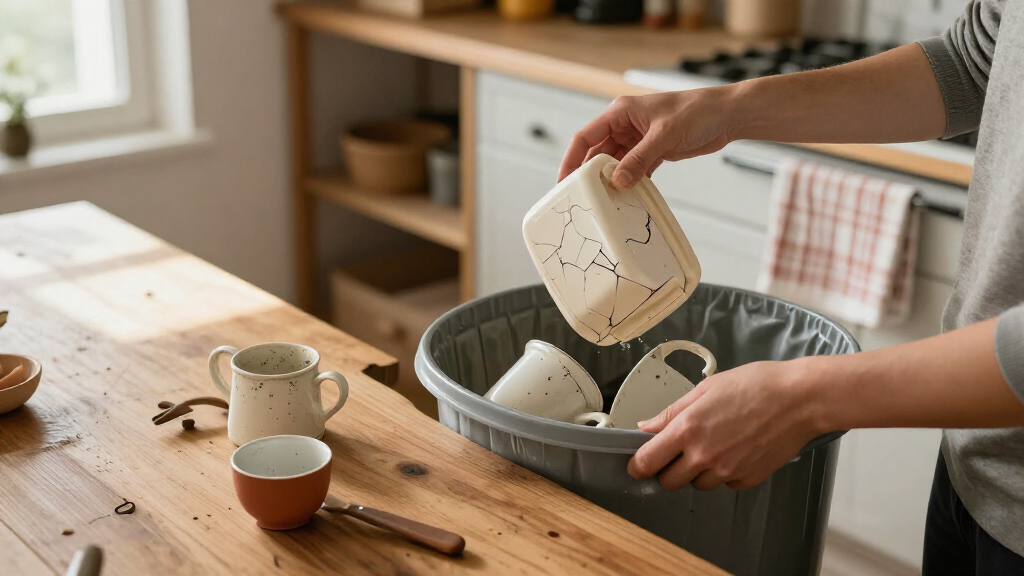
The guidance addresses a common problem during home cleanouts: donation is not a substitute for disposal. Items a charity cannot sell or distribute can create extra sorting and disposal work, while goods with hygiene or safety concerns may be unsuitable for another household. Checking condition before donating can reduce the chance that an item is rejected at drop-off or discarded by the organization afterward.
Some cases involve more than resale value. A car seat’s history and safety status may not be apparent to a secondhand recipient, while identifying information on clothing can expose personal details. The report’s practical distinction is between goods that should be discarded and usable items that may be better passed directly to someone who wants them.
Products Worth Considering

Weber Q 1400 Portable Electric Grill, Gray

Vitamix VX1 Professional-Grade Blender, 64 oz, Black

Le Creuset Enameled Cast Iron Rectangular Roaster, 5.25 qt, Riviera
As an affiliate, we earn on qualifying purchases.
Donation Depends on Condition and Rules
The report presents advice from professional organizers rather than a single nationwide donation policy. Charity acceptance rules differ, and organizations may set limits based on storage, resale demand, safety requirements or the condition of goods. The article says centers commonly reject some of the listed items, but does not provide a survey of charities or quantify how often each category is refused.
For damaged furniture, Reynolds says an individual recipient may still find value in an item that a donation shop would not accept. A local Buy Nothing group is one option named in the report. Godding and Wahl’s comments on tapes, linens, pillows and car seats explain why an item’s apparent usefulness at home does not necessarily make it suitable for resale or redistribution.
““I would never donate an item with identifying information on it.””
— Wahl, on clothing with identifying information
Local Acceptance Rules Still Vary
The report does not name specific donation centers or confirm that every organization rejects each item category. Policies vary by charity and location, so readers should check with the intended recipient before making a drop-off. It also does not provide detailed local disposal instructions for products such as car seats, cosmetics or electronic media.
The safety advice about car seats is general; the report does not assess any particular seat’s age, crash history, recall status or condition. Likewise, it does not set a universal threshold for when linens or furniture are too worn to reuse. Those decisions depend on the item and the receiving organization’s requirements.
Check Before You Drop Off
Before donating, inspect items for stains, damage, odors, missing parts and personal information, then review the organization’s current list of accepted goods. Contact the charity if its rules are unclear, especially for children’s products, bedding or opened personal-care items.
For a clean, usable item a donation center will not take, consider offering it directly to someone who wants it, as Reynolds suggests for furniture. Items that are damaged, unhygienic or unsuitable for reuse should be handled through appropriate local disposal options. The report does not specify what any particular community accepts for recycling or waste collection.
Key Questions
Which household items does the report say are generally poor donation choices?
It identifies VHS tapes, clothing with identifying details, worn linens and pillows, used toys that cannot be checked, car seats, damaged furniture, open toiletries or cosmetics, and stained or odorous clothing. Acceptance rules depend on the organization.
Can damaged furniture still be reused?
Possibly. Organizer Robyn Reynolds says donation shops can reject furniture that is not in pristine condition and suggests offering suitable pieces directly through a Buy Nothing group or to someone who wants them.
Why does the report caution against donating car seats?
Mindy Godding says charities may be wary because of safety standards, recalls and liability. A seat’s history and condition may be difficult to verify, and it may have spills or other contamination.
Should I check with a charity before dropping items off?
Yes. The report does not establish one policy for all charities. Check the intended organization’s current acceptance rules before taking items, particularly children’s products, bedding and opened personal-care goods.
Source: goodhousekeeping.com