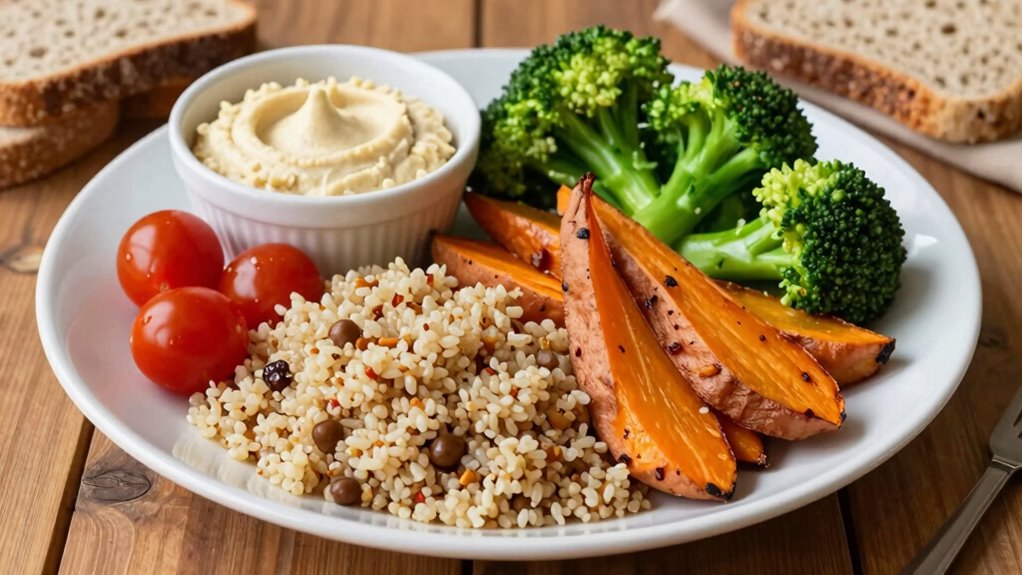

Carbs aren’t the enemy; they’re a essential source of energy that can lead to satisfying, balanced meals. Focus on quality carbs like whole grains, fruits, and veggies, and keep portion sizes in check to prevent blood sugar spikes. Pair carbs with proteins and fiber-rich foods to extend satiety and support digestion. With mindful choices and smart portions, you’ll fuel your day healthfully—keep exploring to discover how to create meals that nourish and satisfy.

Get kitchen staples and gadgets delivered free with Prime
- Fast, free delivery on millions of items
- Prime Video, Amazon Music and more included
- Member-only deals all year
Key Takeaways
- Choose nutrient-dense carbs like whole grains, fruits, and vegetables to ensure quality and support health.
- Incorporate appropriate portion sizes of carbs to provide energy without causing blood sugar spikes.
- Pair carbs with lean proteins and fiber-rich vegetables for balanced, satisfying meals.
- Prioritize high-fiber foods to promote digestion, fullness, and stable blood sugar levels.
- Focus on mindful eating and smart portion control to enjoy carbs without overdoing it.
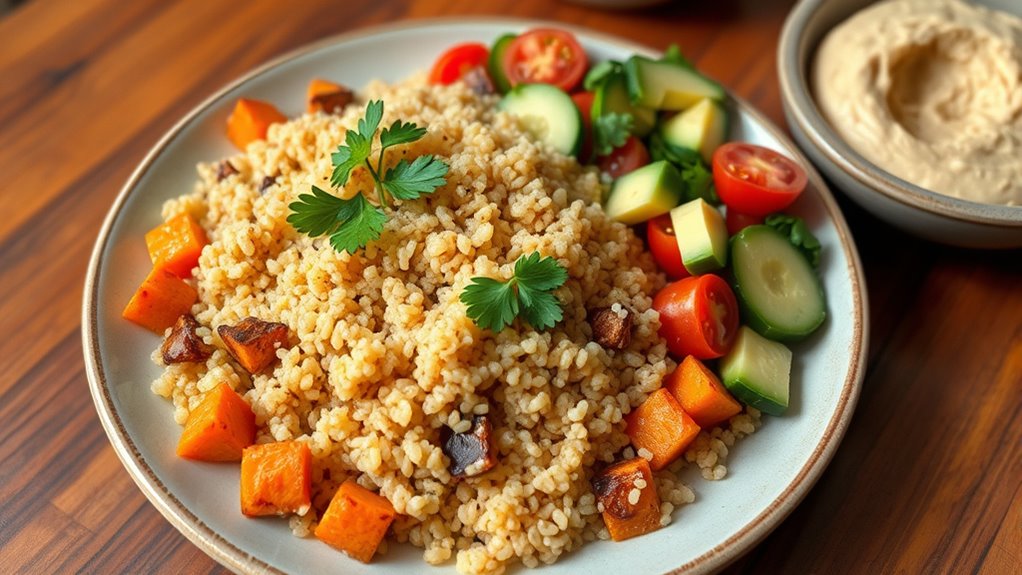
Carbohydrates are vital for creating a satisfying meal because they provide quick energy and help you feel full longer. When you’re planning your plate, it’s important to focus on the quality of the carbs you choose. Foods rich in fiber, like whole grains, fruits, and vegetables, are your best options. Fiber focus isn’t just about adding bulk; it also slows digestion, stabilizes blood sugar, and keeps hunger at bay. By choosing high-fiber carbs, you guarantee your meal remains satisfying without feeling heavy or bloated afterward. Incorporating smart home automation features to remind you of portion sizes can further support mindful eating habits. Portion control plays a critical role in making carbs work for you, not against you. Instead of loading up on large servings of starchy foods, be mindful of how much you’re eating. A moderate portion of whole grains or starchy vegetables can provide the energy you need without overwhelming your system. Remember, even healthy carbs can cause issues if you overdo it. By controlling portions, you help regulate blood sugar spikes and prevent that sluggish, overly-full feeling. Keep in mind that a balanced meal isn’t about eliminating carbs but about choosing the right ones and consuming them in appropriate amounts. When building your meal, it’s helpful to understand that glycemic index plays a role in how quickly carbs affect your blood sugar. Incorporating nutrient-dense carbs can also enhance your meal’s health benefits. For example, pair grilled chicken or fish with a serving of quinoa or brown rice, and add a side of roasted vegetables. This combination not only provides sustained energy but also helps you feel satisfied for longer periods. Incorporating fiber focus into your meals makes a significant difference; it’s what keeps your digestive system functioning smoothly and your appetite in check. Selecting refined carbs like white bread or sugary snacks can lead to quick energy crashes and increased hunger soon after. Choosing minimally processed, whole foods supports better blood sugar stability and overall health. Additionally, focusing on whole foods supports your body’s natural nutrients and reduces intake of empty calories. Ultimately, building a satisfying meal with carbs involves smart choices and portion awareness. Don’t shy away from carbs altogether, but focus on quality and quantity. When you prioritize fiber-rich foods and control your portions, you create a meal that fuels your body properly, keeps hunger at bay, and supports your overall health. It’s about making conscious decisions that align with your goals, so you enjoy your meals without guilt or discomfort. By understanding the role of carbs and managing how much you eat, you set yourself up for success in maintaining a nutritious, satisfying diet.
As an affiliate, we earn on qualifying purchases.
Frequently Asked Questions
Can I Include Carbs in a Low-Carb Diet?
Yes, you can include carbs in a low-carb diet. Focus on fiber-rich, nutrient-dense carbs like vegetables, nuts, and seeds to help curb sugar cravings and promote satiety. These carbs provide fiber benefits, supporting digestion and steady energy levels. By choosing quality carbs, you satisfy your taste buds without overdoing it, making your low-carb journey more enjoyable and sustainable.
Are All Carbs Equally Healthy?
Did you know that only about 5-10% of your daily calories should come from refined carbs? Not all carbs are equally healthy. Refined carb choices, like white bread and sugary snacks, offer little fiber and can spike blood sugar. Instead, opt for fiber-rich options like whole grains, fruits, and vegetables. These provide essential nutrients and help keep you full longer, making your meals both healthier and more satisfying.
How Do I Balance Carbs With Protein and Fat?
To balance carbs with protein and fat, focus on fiber intake and portion control. Include high-fiber carbs like vegetables, whole grains, and legumes, which help you feel full longer. Pair them with lean proteins and healthy fats to stabilize blood sugar levels and keep hunger at bay. Keep portions moderate to avoid overeating, and aim for a colorful, balanced plate that satisfies your taste buds and supports your health goals.
What’s the Best Time to Eat Carbs?
Timing your carbs is like hitting two birds with one stone—you get energy and better results. The best time depends on your goals; eat carbs around workouts for fuel and recovery, or incorporate carb cycling to optimize fat burn. Meal timing varies, so listen to your body and plan your carbs accordingly. Whether morning or evening, consistency helps your body adapt and thrive.
Do Carbs Cause Weight Gain?
Carbs don’t directly cause weight gain; it’s all about carb timing and portion control. If you eat large portions of carbs without balancing your meals, you might gain weight over time. Focus on spreading your carb intake throughout the day and pairing them with protein and fiber to keep your blood sugar stable. Moderation and mindful eating are key to enjoying carbs without the risk of weight gain.
As an affiliate, we earn on qualifying purchases.
Conclusion
Remember, carbs aren’t the enemy—they’re the foundation of a satisfying meal. Embrace them, and you’ll discover that nourishing your body can also feed your soul. When you choose wholesome carbs, you invite joy, energy, and balance into your life. So, don’t fear the plate; instead, see it as a canvas for delicious, fulfilling possibilities. After all, isn’t life too short not to enjoy every bite? Let carbs be your ally, not your foe.
meal prep containers for portion control
As an affiliate, we earn on qualifying purchases.
As an affiliate, we earn on qualifying purchases.
As an affiliate, we earn on qualifying purchases.
NFL season / tailgating Picks
team gear
As an affiliate, we earn on qualifying purchases.