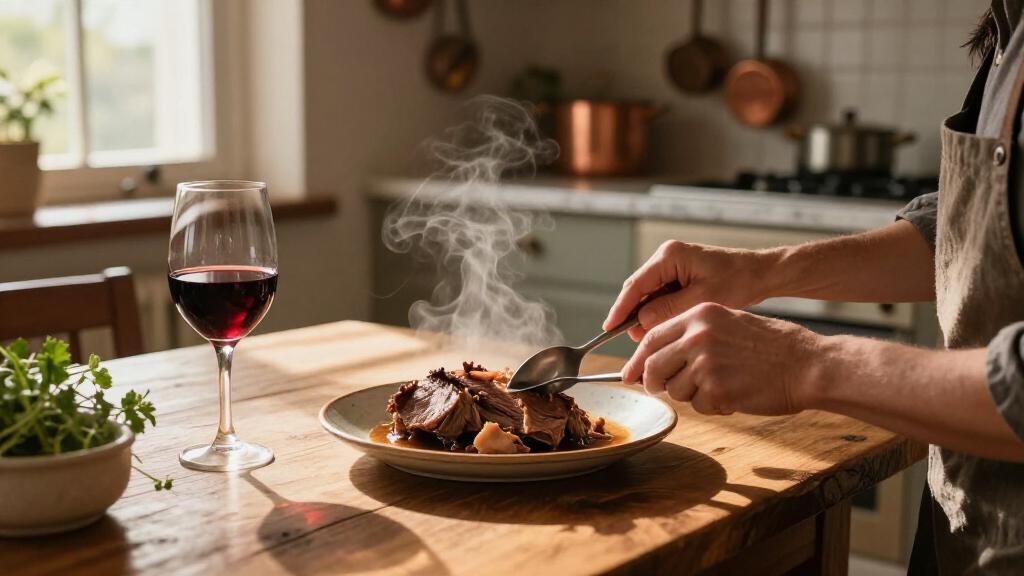

🔍 Read the full analysis: Ossobuco: The Braise That Deserves Your First Cool Evening on Mad Tasting

Get kitchen staples and gadgets delivered free — and shop member deals
- Fast, free delivery on millions of items
- Access to Prime Big Deal Days deals on October 6–7
- Prime Video, Amazon Music and more included
TL;DR
Mad Tasting’s seasonal cooking guide presents ossobuco as a northern Italian braise made from bone-in veal shanks and cooked slowly until tender. It recommends serving the dish with saffron risotto and fresh gremolata, while noting that beef shank and tomato variations are options.
Mad Tasting has published a guide to ossobuco, the northern Italian braise made from cross-cut veal shanks, recommending it as a dish for the first cool evening of the season. The guide explains how to choose the bone-in cut, braise it slowly and serve it with saffron risotto and gremolata.
The guide identifies the defining ingredient as a veal shank cut crosswise, about 1½ to 2 inches thick, with the bone and marrow left in place. The name “ossobuco” means “bone with a hole,” referring to the marrow at the center of each slice. Mad Tasting says the bone-in cut distinguishes the dish from a stew made with cubed meat.
Its method calls for browning the shanks, then braising them gently with wine, stock and vegetables. The guide estimates two to three hours of cooking for veal, allowing connective tissue to soften and the meat to become tender. Beef shank is offered as an alternative; the source says it may need another 30 to 45 minutes.
For a Milanese-style meal, the guide pairs the braise with saffron risotto and finishes it with gremolata, a mixture of lemon zest, parsley and garlic. It describes tomato as optional: some classical preparations use little or none, while many modern versions include some.
Mad Tasting · Seasonal Cooking Guide
Ossobuco: The Braise That Deserves Your First Cool Evening
A northern Italian classic built around bone-in veal shanks, a patient wine-and-stock braise, and a bright finish of gremolata.
Why this cut belongs in the pot
Ossobuco means “bone with a hole”—a name that points straight to the marrow at the center of every slice.
Keep the bone
Choose cross-cut veal shanks with the marrow left in place. The bone-in slice is what distinguishes ossobuco from a stew of cubed meat.
Give it time
Brown the shanks, then cook them gently with wine, stock and vegetables. Slow, moist heat softens connective tissue and gives the sauce body.
Let tenderness lead
Beef shank is an option and may need another 30–45 minutes. Use the timing as a guide; the meat’s tenderness tells you when it is ready.
From butcher to braising pot
A simple sequence, with the quiet time doing most of the work.
Prepare
Season and lightly flour bone-in shanks. Kitchen twine can help each slice hold its shape.
Brown
Build color on the shanks before adding the braising liquid and vegetables.
Braise gently
Cook with wine, stock and vegetables until the meat turns tender and yielding.
Finish fresh
Serve over a starch and scatter gremolata over the finished braise.
The Milanese plate
Rich, slow-cooked sauce meets a comforting starch and a sharp, fragrant finish.
Ossobuco alla Milanese
Ossobuco is closely associated with Milan and Lombardy. The guide connects saffron risotto to local rice from the Po Valley and saffron arriving through trade routes.
Saffron risotto
The Milanese companion, ready to catch the braising sauce.
Polenta or potatoes
Polenta or mashed potatoes make a satisfying base, too.
Gremolata
Mix lemon zest, parsley and garlic; add just before serving to keep it bright.
Fresh against rich
The citrus and herbs lift the deep, savory braise with a sharp final note.
Little or no tomato
Some classical preparations keep tomato minimal, letting the wine-driven sauce take the lead.
Some tomato
Many modern versions include it for added acidity and sweetness. Both approaches are established.
What the guide leaves open
The method is a useful starting point, but the supplied guide is not a complete, measured recipe.
Exact quantities
No full ingredient list or precise amounts are provided for wine, stock or vegetables.
Heat and doneness
The braising temperature is not stated. Treat the time estimates as guidance and check that the meat is tender.
Tomato and starch
Choose a tomato style and serving base to suit your table; the core remains bone-in shank and a slow braise.
Five questions, answered
Quick guidance for planning a first cool-evening braise.
What cut is used?
Cross-cut veal shanks, about 1½–2 inches thick, with bone and marrow intact. Beef shank is an alternative.
How long does it take?
About 2–3 hours for veal. Beef may need another 30–45 minutes; tenderness is the better guide.
What is gremolata?
A fresh mix of lemon zest, parsley and garlic, scattered over the finished dish.
Must it include tomato?
No. Some classical versions use little or none; many modern preparations add some.
What should I serve with it?
Saffron risotto is the Milanese pairing. Polenta and mashed potatoes are also suggested.
What makes it ossobuco?
The defining feature is the cross-cut, bone-in shank—the slice, marrow and all.
A Slow Cut for Cooler Weather
The guide makes a practical case for cooking a cut that takes time but does not require constant attention. Shank contains connective tissue that benefits from a long, moist cook; the source says that process gives the braising liquid body. That makes ossobuco a fitting meal for a cool evening when a low, slow braise is appealing.
The serving suggestions also explain how to balance the dish. Risotto, polenta or mashed potatoes catch the sauce, while gremolata adds a fresh, sharp finish to a rich braise. Readers can adapt the plate without losing the core method: use the bone-in shank and allow enough time for it to become tender.
As an affiliate, we earn on qualifying purchases.
The Milanese Plate
Ossobuco is closely associated with Milan and Italy’s Lombardy region. The source links its traditional pairing with saffron risotto to local ingredients and trade: rice is grown in the surrounding Po Valley, while saffron reached Milan through trade routes. It also describes veal shanks as a less prized cut from a dairy-focused livestock economy, made appealing through patient cooking.
The guide calls gremolata a finishing touch, added after cooking so the lemon and garlic remain bright. It notes a difference among recipes on tomato: versions with little or none are more wine-driven, while tomato can add acidity and sweetness. The source presents both as established approaches rather than declaring one definitive.
““the first evening cool enough to close the windows is the evening you should be braising.””
— Mad Tasting
As an affiliate, we earn on qualifying purchases.
Choices the Guide Leaves Open
The source does not provide a complete ingredient list, exact quantities or full cooking instructions in the supplied material, so readers cannot reproduce a precise recipe from it alone. It describes a general sequence and timing, but the exact braising temperature and amounts of wine, stock and vegetables are not specified.
It also leaves room for personal preference on tomato and the choice of serving starch. The source offers beef shank as an alternative to veal but does not give a tested recipe or exact timing for every cut. Its estimates should be treated as guidance, with tenderness determining when the braise is ready.
As an affiliate, we earn on qualifying purchases.
From Butcher to Braising Pot
The guide’s next steps for a home cook are to ask a butcher for bone-in veal shanks cut 1½ to 2 inches thick, season and lightly flour them, then brown them before the slow braise. It says tying each slice with kitchen twine can help it hold its shape. After cooking, serve the shanks over a starch and add gremolata just before serving.
Readers choosing beef shank can allow extra cooking time, according to the source. The guide gives no publication date or follow-up schedule, and no further developments are reported.
As an affiliate, we earn on qualifying purchases.
Key Questions
What cut of meat is used for ossobuco?
Mad Tasting recommends cross-cut veal shanks, about 1½ to 2 inches thick, with the bone and marrow intact. It also names beef shank as an alternative.
How long does ossobuco take to braise?
The guide estimates two to three hours for veal. It says beef shank may need another 30 to 45 minutes; actual timing depends on the cut and whether the meat has become tender.
What is gremolata?
Gremolata is a fresh mixture of lemon zest, parsley and garlic. The guide recommends scattering it over the finished braise.
Does ossobuco have to include tomato?
No. The source says some classical Milanese preparations use little or no tomato, while many modern versions include some. It describes the choice as a matter of the sauce’s flavor.
What should ossobuco be served with?
The Milanese pairing is saffron risotto. The guide also suggests polenta or mashed potatoes as starch-rich alternatives.
Source: Mad Tasting
NFL season / tailgating Picks
team gear
As an affiliate, we earn on qualifying purchases.