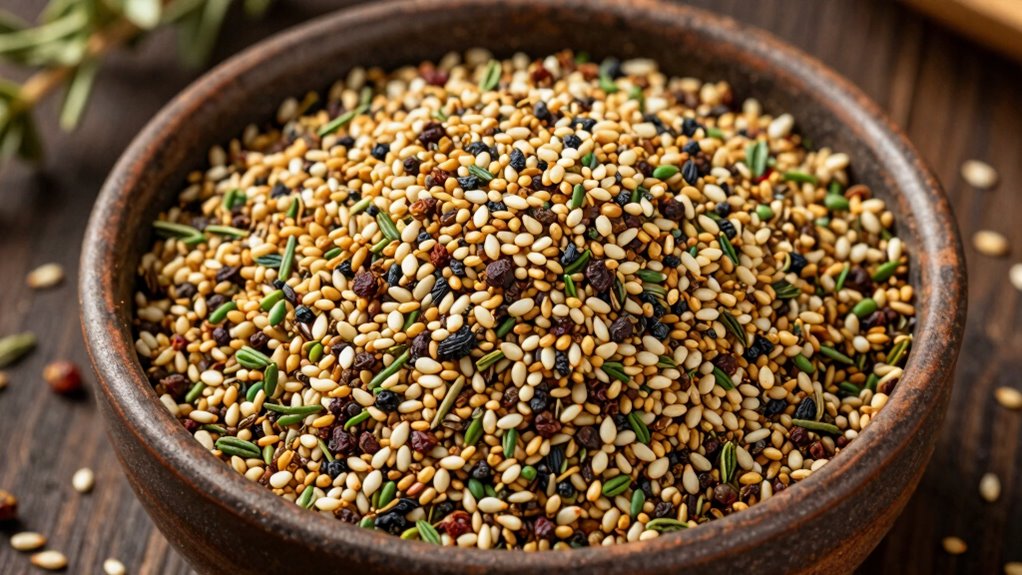

Za’atar is a traditional Middle Eastern spice blend made with aromatic herbs like wild thyme or oregano, tangy sumac, toasted sesame seeds, and salt. Its unique combination creates a fragrant, tangy, and nutty flavor that’s both addictive and versatile. You can sprinkle it on bread, mix it into yogurt, or add it to grilled dishes. Want to uncover more about its rich history and culinary uses? Keep exploring to discover its full potential.

Get kitchen staples and gadgets delivered free — and shop member deals
- Fast, free delivery on millions of items
- Access to Prime Big Deal Days deals on October 6–7
- Prime Video, Amazon Music and more included
Key Takeaways
- Za’atar is a Middle Eastern spice blend traditionally made with wild thyme, sumac, sesame seeds, and salt.
- Its unique flavor combines herbal, tangy, and nutty notes, making it highly aromatic and addictive.
- The blend’s versatile use includes sprinkling on bread, salads, yogurt, and roasted vegetables.
- Its ingredients carry cultural significance and are passed down through generations, adding authenticity.
- Proper preparation and storage maximize flavor, aroma, and culinary versatility.
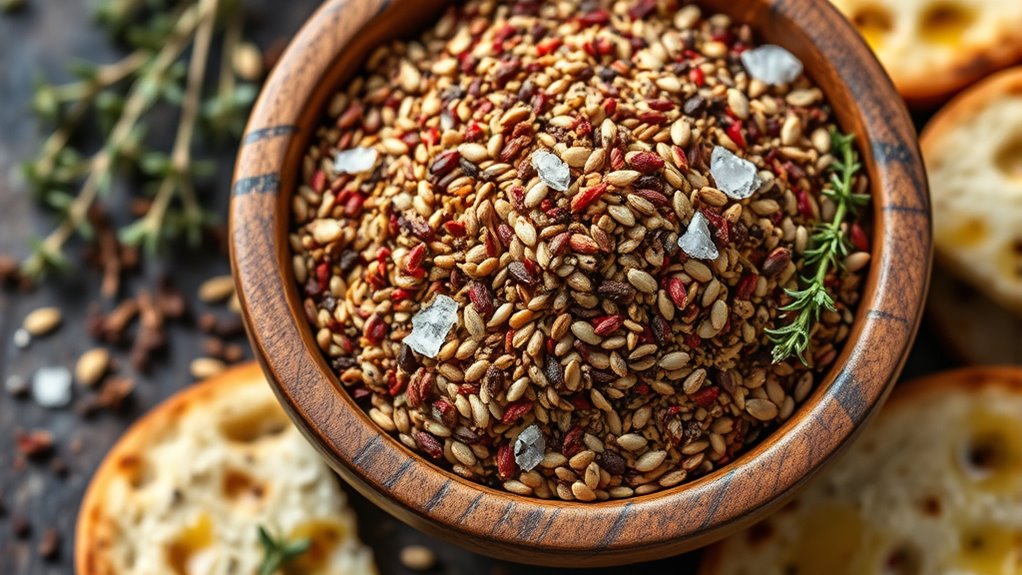
Have you ever wondered what makes za’atar so popular across Middle Eastern cuisine? The answer lies in its fascinating historical origins and incredible culinary versatility. For centuries, za’atar has been a staple in Middle Eastern kitchens, dating back to ancient times. Its roots trace to the Levant region, where it was valued not just for its flavor but also for its medicinal properties. Traditionally, za’atar was made using wild thyme, sumac, sesame seeds, and salt, with each ingredient carrying cultural significance. Over time, recipes evolved, but the essence of za’atar remained rooted in tradition, passed down through generations. Its long-standing history gives it a sense of authenticity and deep cultural resonance, which continues to captivate food lovers today.
You’ll find that za’atar’s culinary versatility is truly remarkable. It can be used in countless ways, making it a go-to seasoning for both simple and elaborate dishes. You might sprinkle it generously over warm pita bread brushed with olive oil, creating a fragrant snack that’s both satisfying and addictive. Toss it into salads for a tangy, herbal lift or mix it into yogurt to make a flavorful dip. Chefs and home cooks alike incorporate za’atar into roasted vegetables, grilled meats, or even bread doughs, leveraging its ability to enhance flavors naturally. Its earthy, tangy profile lends itself well to both savory and snack foods, making it a flexible ingredient that can adapt to various culinary styles. Additionally, culinary versatility allows chefs to experiment and create innovative dishes that highlight za’atar’s unique qualities.
What sets za’atar apart is its unique blend of flavors. The aromatic wild thyme or oregano provides a fragrant herbal note, while sumac offers a bright, lemony acidity that balances the earthiness. Sesame seeds add a subtle nuttiness and texture, enriching every bite. This balanced combination makes za’atar not only flavorful but also addictive, as it awakens your palate with each taste. Its versatility extends beyond traditional Middle Eastern dishes; chefs worldwide now experiment with za’atar in fusion cuisine, showcasing its ability to complement diverse ingredients.
Additionally, the preparation techniques of za’atar can influence its flavor profile, making it important to understand how to select and store it properly for maximum freshness and aroma.
In essence, za’atar’s historical origins imbue it with cultural depth, while its culinary versatility ensures it remains relevant in kitchens everywhere. Whether you’re seasoning bread, flavoring salads, or adding a twist to grilled dishes, za’atar’s complex, addictive flavor makes it a must-have in your pantry. Its enduring popularity is no surprise, given how effortlessly it elevates simple ingredients into something extraordinary.
As an affiliate, we earn on qualifying purchases.
Frequently Asked Questions
Can Za’Atar Be Used in Sweet Dishes?
Yes, you can use za’atar in sweet dishes. Its unique, herbal flavor pairs well with sweet flavor pairing ideas like honey, figs, or yogurt. You might sprinkle it over desserts like ice cream, pastries, or fruit salads for an unexpected twist. Za’atar adds a savory, aromatic depth to dessert applications, balancing sweetness with its distinctive taste. Experimenting with it can elevate your sweet creations in exciting, flavorful ways.
Is Za’Atar Gluten-Free or Suitable for Gluten Sensitivities?
Like a secret map guiding your taste buds, za’atar is generally gluten-free, making it a safe choice for those with gluten sensitivities. Its simple blend of herbs and spices offers gluten-free benefits, so you can enjoy its savory flavor without worry. Always check the label, though, as some brands might add gluten-containing ingredients. With za’atar, you get authentic flavor and peace of mind, satisfying your cravings safely.
How Long Does Homemade Za’Atar Last?
If you make homemade za’atar, it typically lasts about 3 to 6 months when stored properly. To preserve its freshness, keep it in an airtight container in a cool, dark place away from moisture and direct sunlight. Regularly check for any signs of spoilage or loss of aroma. Proper storage duration helps guarantee your za’atar stays flavorful and fresh for as long as possible.
Are There Regional Variations of Za’Atar?
Sure, regional differences make za’atar more exciting than your average spice blend. You’ll find ingredient variations from Lebanon to Jordan—sometimes sumac is shy, other times it’s bold; thyme may be replaced with oregano or wild herbs. Each region adds its twist, turning za’atar into a culinary chameleon. So, next time you see it, remember: it’s not just one recipe, but a delicious, ever-evolving mosaic of flavors.
Can Za’Atar Be Used as a Medicinal Remedy?
Yes, you can use za’atar as a medicinal remedy. It’s been part of herbal healing and traditional medicine for centuries, thanks to its antibacterial and anti-inflammatory properties. Incorporate it into your diet to boost immunity and aid digestion. Many believe its ingredients, like thyme and sumac, help with coughs, colds, and gut health. Just remember, while beneficial, it shouldn’t replace professional medical treatment when needed.
middle eastern za’atar seasoning
As an affiliate, we earn on qualifying purchases.
As an affiliate, we earn on qualifying purchases.
Conclusion
So, next time you reach for za’atar, remember—you’re not just seasoning your food, you’re embracing a secret weapon of addictive herbs and spices. It’s the magical blend that turns humble bread into a feast, and perhaps, makes you forget about your diet entirely. Who knew that a sprinkle could wield such power? So go ahead, indulge—just don’t be surprised if you find yourself craving that addictive, herbaceous fix again and again.
As an affiliate, we earn on qualifying purchases.
As an affiliate, we earn on qualifying purchases.
NFL season / tailgating Picks
team gear
As an affiliate, we earn on qualifying purchases.