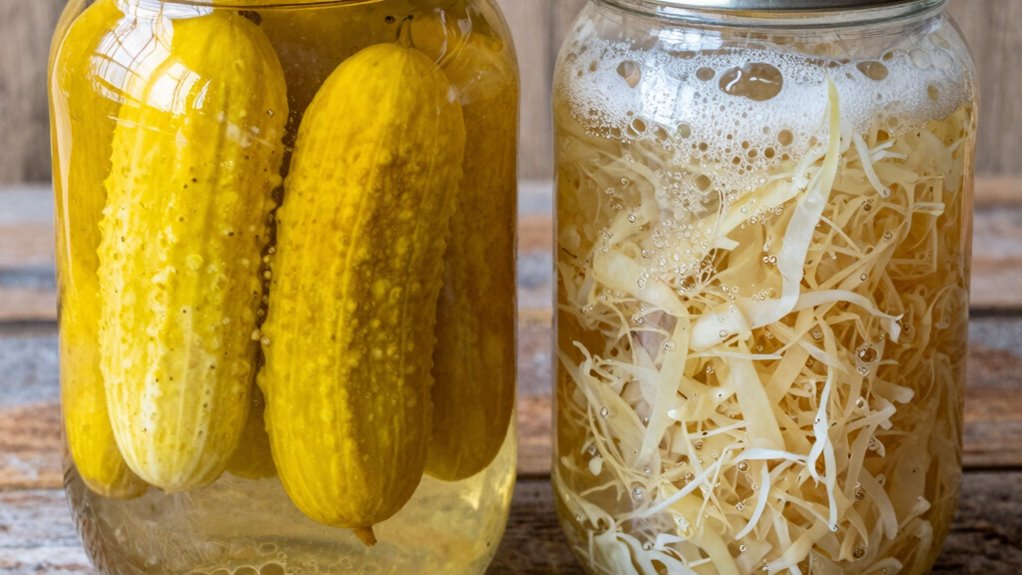
Pickling quickly preserves food by using vinegar or an acid to create an environment that stops spoilage, resulting in a tangy, sharp flavor. Fermentation, on the other hand, relies on beneficial bacteria and enzymes to naturally develop complex flavors over days or weeks, often providing probiotic health benefits. While pickling is fast and straightforward, fermentation emphasizes flavor depth and health perks. If you want to explore how these methods differ even more, keep exploring the details behind each process.

Get kitchen staples and gadgets delivered free — and shop member deals
- Fast, free delivery on millions of items
- Access to Prime Big Deal Days deals on October 6–7
- Prime Video, Amazon Music and more included
Key Takeaways
- Pickling uses vinegar for quick preservation, while fermentation relies on natural bacteria for gradual flavor development.
- Pickling creates an acidic environment instantly, whereas fermentation involves microbial activity over days or weeks.
- Pickled foods have a tangy, straightforward flavor; fermented foods develop complex, layered tastes.
- Fermentation offers probiotic health benefits, unlike quick pickling, which mainly extends shelf life.
- Pickling prioritizes speed and simplicity; fermentation emphasizes natural processes and flavor evolution.
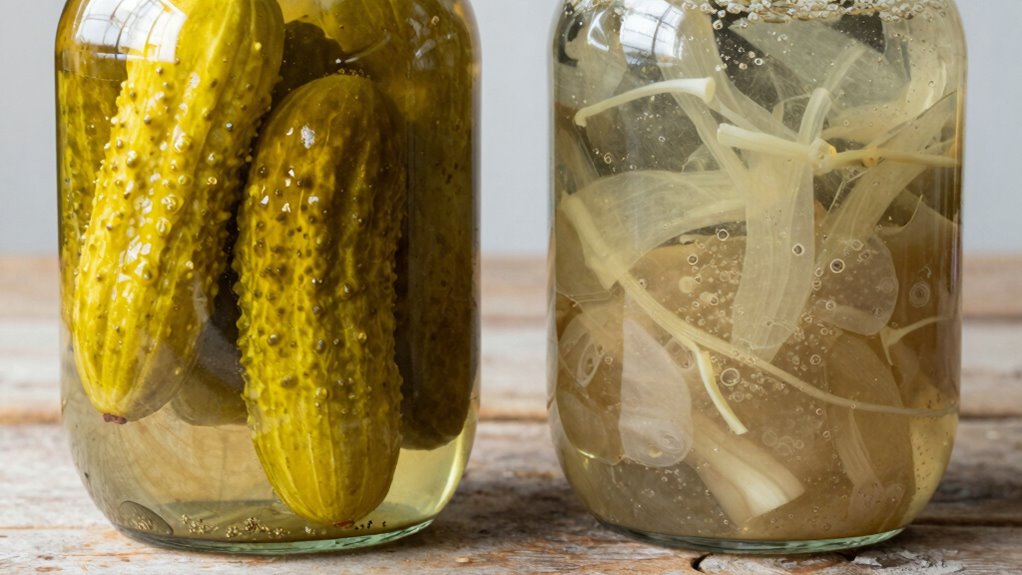
Many people confuse pickling and fermenting because both methods preserve vegetables and other foods, but they actually involve different processes. Pickling typically uses an acidic solution, like vinegar, to instantly preserve foods. This method relies on the acidity to prevent spoilage, making it a quick way to achieve traditional preservation. When you pickle, you’re fundamentally creating a new environment that inhibits bacteria and molds, which might otherwise cause food to rot. The flavor of pickled foods is often tangy and sharp, thanks to the vinegar, and the process doesn’t usually involve much change in the food’s natural taste beyond its acidity.
Fermenting, on the other hand, is a natural process that depends on beneficial bacteria and enzymes. You allow the food to sit in a controlled environment—usually with salt or just water—to encourage these microbes to multiply. This microbial activity leads to fermentation, a process that can take days or weeks. During this time, the food undergoes complex biochemical changes, resulting in flavor development that’s deeply nuanced and often sour or tangy, but with layers of depth that develop over time. Unlike pickling, fermentation is a form of traditional preservation that harnesses natural bacteria, making it a more gradual process with a focus on flavor complexity. This microbial activity is also responsible for probiotic benefits, which are highly valued in health-conscious diets.
Understanding these differences clarifies why fermented foods often have a richer, more complex taste profile compared to the straightforward tang of pickled foods. Fermentation is celebrated for its ability to develop flavors through natural biochemical reactions, which can produce probiotic benefits as well. Pickling, in contrast, offers a quick and reliable way to preserve foods with a consistent flavor, ideal for immediate consumption or for those who want to enjoy a sharp, vinegary taste. Both methods extend the shelf life of foods, but fermentation tends to be more about flavor development and health benefits, while pickling prioritizes speed and simplicity. Additionally, fermentation involves microbial activity, which is essential for the development of probiotics and complex flavors. Furthermore, the controlled environment required for fermentation allows for more intricate flavor profiles that evolve over time.
Frequently Asked Questions
Can You Pickle and Ferment at the Same Time?
Yes, you can pickle and ferment at the same time. When you do, you’ll enjoy flavor enhancement from the fermentation’s tangy notes and the pickling spices. Plus, the texture transformation is fascinating, as the vegetables become crisper yet tender. Just make certain your ingredients and environment support both processes, and you’ll create a unique, delicious blend of flavors and textures that showcase the best of both techniques.
Which Method Preserves Nutrients Better?
Imagine your garden’s harvest—fermenting preserves nutrients better because it relies on natural bacteria that keep food alive longer. You notice fermented sauerkraut retains more vitamin C than pickled versions stored in vinegar. Fermentation’s preservation efficiency helps nutrients stay intact, offering more health benefits. So, if your goal is nutrient retention, fermenting generally preserves nutrients better than pickling, which mainly relies on acidity for preservation.
Are There Health Benefits Unique to Fermenting?
Yes, fermenting offers unique health benefits, primarily through probiotics that boost your gut health. Unlike pickling, which mainly preserves food, fermentation encourages beneficial bacteria growth. These probiotics can improve digestion, enhance immune function, and even support mental well-being. So, by choosing fermentation, you’re not just preserving food but actively enriching your diet with live cultures that promote overall health.
How Long Does Each Process Typically Take?
Imagine you’re a medieval alchemist—fermentation takes about one to four weeks, depending on the product, offering rich flavor enhancement and increased storage longevity. Pickling, on the other hand, is quicker, often done within a day or two, providing immediate preservation and crispness. Both processes transform your produce, but fermentation develops complex flavors over time, while pickling delivers quick, tangy results perfect for instant enjoyment.
Can You Switch From Pickling to Fermenting Midway?
Yes, you can switch from pickling to fermenting midway, but you should do so carefully. Guarantee pickling safety by rinsing the items thoroughly to remove any vinegar or brine residues. Then, introduce natural fermentation flavors by adding salt and allowing the environment to foster beneficial bacteria. Keep an eye on the process, as fermentation develops unique flavors over time, and adjust your technique to achieve the desired taste and safety.
Conclusion
Now that you see the subtle dance between pickling and fermenting, you’re like a seasoned explorer uncovering hidden treasures. Remember, pickling’s quick preservation is your fleeting shadow, while fermenting’s slow transformation echoes like a timeless legend, whispering secrets of patience and nature’s wisdom. As you venture into your culinary journey, embrace these methods as chapters in a greater story—one where tradition and innovation intertwine, much like the eternal ebb and flow of the seasons.
NFL season / tailgating Picks
team gear
As an affiliate, we earn on qualifying purchases.