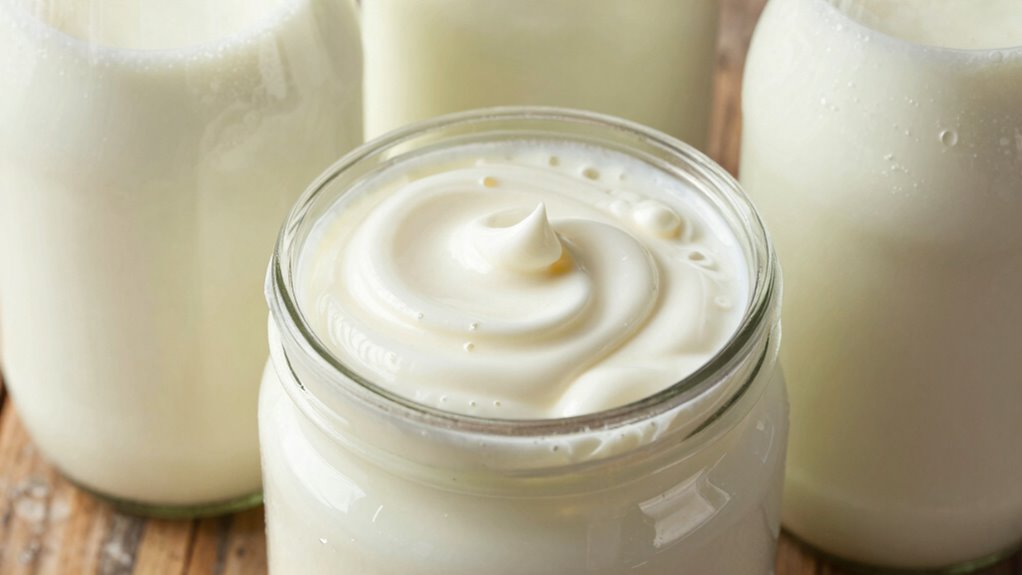
Your homemade yogurt changes with milk, time, and heat because these factors directly affect fermentation. The type of milk you use, its fat content, and freshness influence texture and flavor. Longer fermentation makes yogurt tangier and thicker, but too much can be overly sour. Proper heat guarantees beneficial bacteria stay active, shaping the final result. If you want to understand how to control these variables for the perfect yogurt, keep exploring the details behind each factor.

Get kitchen staples and gadgets delivered free — and shop member deals
- Fast, free delivery on millions of items
- Access to Prime Big Deal Days deals on October 6–7
- Prime Video, Amazon Music and more included
Key Takeaways
- The type and composition of milk influence fermentation, affecting yogurt’s texture, flavor, and consistency.
- Longer fermentation enhances tanginess and thickness, while shorter fermentation results in milder yogurt.
- Different bacterial cultures produce unique flavors and textures, impacting the final product.
- Proper heat management ensures optimal bacterial activity, affecting yogurt’s texture and flavor development.
- Maintaining a clean environment prevents contamination, ensuring consistent quality and safety of homemade yogurt.
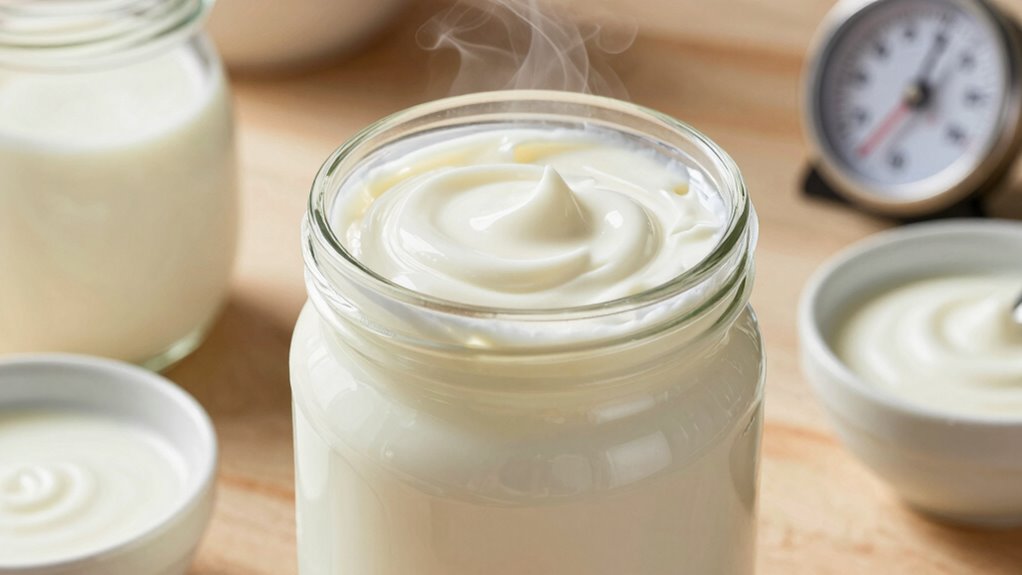
Making your own yogurt at home can lead to noticeable changes in taste, texture, and quality compared to store-bought varieties. One of the key reasons for these differences is the fermentation process, which depends heavily on the bacterial cultures you introduce and how they interact with the milk. When you start, the type of milk you choose — whether whole, skim, or plant-based — influences how the bacteria ferment and develop. The milk’s composition, fat content, and freshness all affect the final texture and flavor of your yogurt. As the fermentation process unfolds, these variables can cause your homemade yogurt to be creamier, tangier, or more runny than commercial options, which often have additives or stabilizers to standardize texture.
Homemade yogurt varies in taste and texture based on milk type and fermentation process.
Time plays a vital role in shaping your yogurt’s characteristics. The longer you allow the fermentation to continue, the more pronounced the tangy flavor becomes, and the thicker the yogurt tends to get. If you prefer milder yogurt, you’ll want to keep the fermentation shorter; for a more sour and dense result, extending the fermentation time is beneficial. However, overdoing it can lead to an overly sour or even slightly fermented taste that might not be appealing. Finding the right balance depends on your personal preference and the specific bacterial cultures you use. The bacterial cultures are the heart of the process, transforming the milk sugars into lactic acid, which thickens the yogurt and imparts that signature tang. Different strains of bacterial cultures produce distinct flavors and textures, so experimenting with various combinations allows you to tailor the yogurt exactly to your liking.
Heat management during incubation is equally essential. Maintaining a consistent, warm temperature ensures the bacterial cultures thrive and do their work efficiently. If the heat is too low, fermentation slows down, resulting in a thinner, less tangy yogurt. If it’s too high, it can kill the bacteria or cause uneven fermentation, creating inconsistencies in texture and flavor. Using a yogurt maker or a warm, draft-free spot helps keep the temperature steady, guaranteeing your bacterial cultures work at their best. As the bacteria multiply and produce acids, the milk begins to thicken, and your yogurt develops its unique taste. Understanding how bacterial cultures function can help you better control the fermentation process and achieve your desired results. Additionally, keeping the incubation environment free from contaminants ensures a safe and high-quality finished product. Moreover, maintaining a clean environment helps prevent unwanted microbial growth that could spoil your yogurt or introduce harmful bacteria. Properly managing these factors can significantly influence the fermentation process and the overall quality of your homemade yogurt.
In essence, the changes in your homemade yogurt are a direct result of how carefully you control these variables. Milk’s initial qualities, the duration of fermentation, and the heat level all interact with the bacterial cultures to produce a yogurt that’s truly your own. This process offers a personalized, dynamic way to enjoy yogurt, with flavors and textures that evolve with your preferences and techniques.
As an affiliate, we earn on qualifying purchases.
Frequently Asked Questions
How Does the Type of Milk Affect Yogurt Texture?
The type of milk you use directly impacts yogurt texture consistency because of its composition. Whole milk creates a richer, creamier yogurt, while skim milk results in a thinner, lighter version. The fat and protein levels influence how thick or smooth your yogurt turns out. So, choosing different milk types allows you to customize your yogurt’s texture, making it either more velvety or more runny based on your preference.
Can Temperature Variations Alter Yogurt Flavor?
Temperature variations can substantially alter yogurt flavor due to its temperature sensitivity. When you keep the yogurt at different temperatures during fermentation, flavor development varies—higher temps may produce tangier, sharper flavors, while cooler temps lead to milder tastes. By controlling the temperature carefully, you influence the yogurt’s flavor profile, ensuring it develops just the way you like. So, paying attention to temperature is key for consistent, delicious homemade yogurt.
What Is the Ideal Incubation Time for Homemade Yogurt?
You’ll find that the ideal incubation time for homemade yogurt is typically 6 to 8 hours, depending on your fermentation duration and temperature control. During this window, the bacteria ferment milk perfectly, resulting in a tangy, creamy texture. If you leave it too long, it may become overly tart; too short, and it might be too mild. Keep an eye on the clock and maintain consistent heat for the best results.
How Does Homemade Yogurt Compare to Store-Bought in Probiotics?
Homemade yogurt often has a higher probiotic count than store-bought because you control fermentation time and conditions, leading to richer probiotic content. This results in better flavor consistency and potential health benefits. However, store-bought yogurt usually offers longer shelf stability due to added preservatives. If you want potent probiotics and fresh flavor, making yogurt at home is a great choice, but it may require quicker consumption for maximum benefits.
Does Using Pasteurized or Raw Milk Change Yogurt Outcomes?
Using pasteurized milk results in a more consistent yogurt, as it’s been sterilized to remove unwanted bacteria, leading to predictable fermentation and flavor development. Raw milk, on the other hand, contains natural bacteria that can influence the fermentation process, creating unique flavors but also potentially causing unpredictable outcomes. Your choice affects the yogurt’s taste, texture, and safety, so consider your preferences and comfort with handling raw milk.
As an affiliate, we earn on qualifying purchases.
Conclusion
As you watch your homemade yogurt transform with each passing moment, remember that it’s a living art—much like a delicate garden that needs your nurturing to flourish. The changes with milk, time, and heat remind you that patience is the secret ingredient. Embrace these shifts as part of the process, knowing that your effort cultivates a delicious, personalized creation. In this dance of science and patience, you’re both the artist and the gardener of your own culinary masterpiece.
starter cultures for homemade yogurt
As an affiliate, we earn on qualifying purchases.
As an affiliate, we earn on qualifying purchases.
As an affiliate, we earn on qualifying purchases.
Fall Picks
fall essentials
As an affiliate, we earn on qualifying purchases.