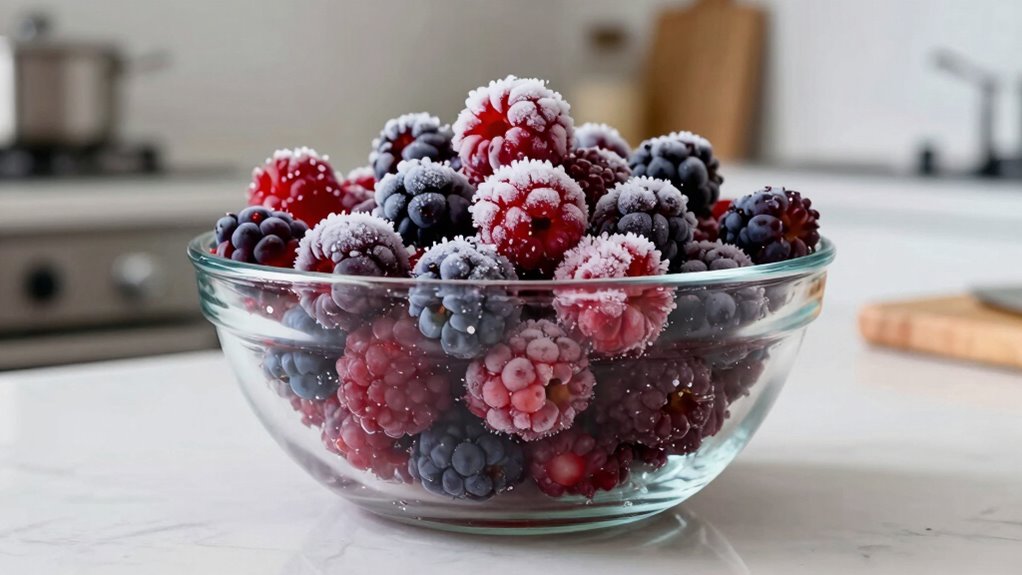
Defrosting food safely is simple when you follow proper methods. You can use the microwave on the defrost setting, ensuring you monitor and rotate the food for even thawing, or submerge sealed items in cold water, changing it every 30 minutes. Avoid thawing at room temperature to prevent bacteria growth. Using these techniques keeps your food safe and fresh. If you want more tips on how to do it right, continue exploring helpful food safety practices.
Listen free for 30 days with Audible
Thousands of audiobooks and originals — cancel anytime.
As an affiliate, we earn on qualifying purchases.
Key Takeaways
- Use microwave, cold water, or refrigerator methods instead of leaving food at room temperature.
- Always place food in microwave-safe containers or leak-proof plastic before thawing.
- Change water every 30 minutes during cold water thawing to keep it safe and cold.
- Cook food immediately after microwave thawing to prevent bacterial growth.
- Avoid thawing foods on the counter to prevent bacteria from multiplying in the “danger zone.”
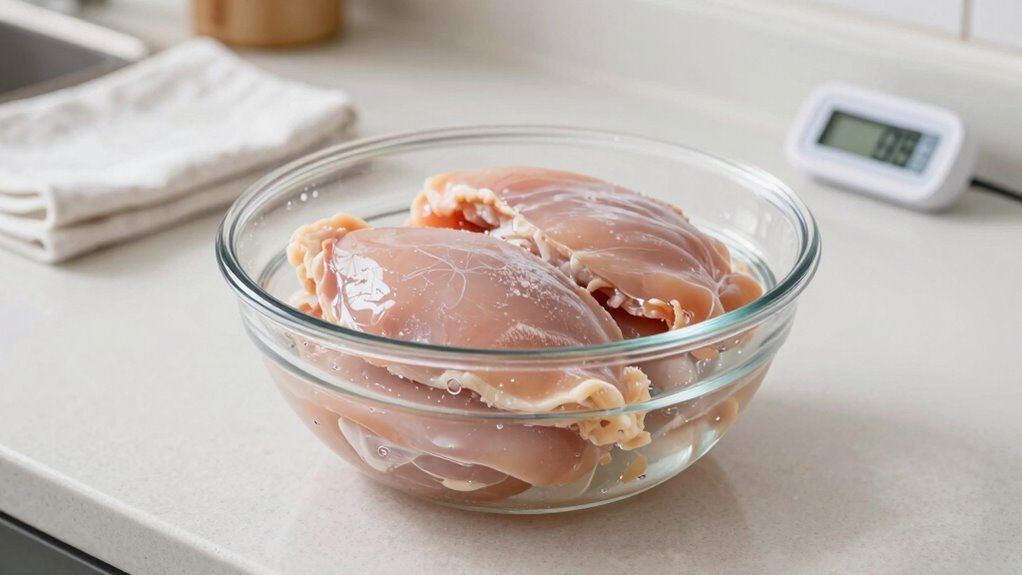
When it comes to thawing food safely, understanding the best methods is essential to prevent foodborne illnesses. You want to avoid leaving food out on the counter, where bacteria can thrive at room temperature. Instead, focus on quick, effective techniques like microwave thawing and cold water methods. These approaches are straightforward and help keep your food safe to eat. Using the correct food safety techniques is crucial to avoid cross-contamination and ensure the food remains safe throughout the process. Microwave thawing is one of the fastest options. You simply place your food in a microwave-safe dish and use the defrost setting. Keep a close eye on it because microwave ovens can heat unevenly, sometimes starting to cook the edges while the center remains frozen. To prevent this, pause periodically to check and rotate or flip the food. Once thawed, cook the food immediately—don’t let it sit around, as bacteria can begin to multiply if the food stays at room temperature for too long. This method works well for smaller portions or when you’re in a rush. Cold water methods are another effective way to defrost food safely. You start by sealing the food tightly in a leak-proof plastic bag, ensuring no water can get inside and contaminate it. Submerge the bag in a bowl or sink filled with cold water. Change the water every 30 minutes to keep it cold and maintain a safe temperature. This method is faster than refrigerator thawing but still safe because the water keeps the surface temperature low. It’s particularly useful for larger cuts of meat or poultry that would take too long to thaw in the fridge. It’s important to avoid thawing foods at room temperature, such as on the countertop, because bacteria can grow rapidly in the “danger zone” between 40°F and 140°F. Proper thawing techniques, like preventing bacterial growth, are essential to maintaining food safety. Ensuring proper temperature control during thawing can significantly reduce the risk of foodborne illnesses. Additionally, understanding air circulation and proper ventilation in your kitchen can help maintain a safer environment during food handling. Good kitchen hygiene practices, such as regular cleaning and avoiding cross-contamination, also play a vital role in food safety. Both microwave thawing and cold water methods are designed to keep the food out of this temperature range, minimizing the risk of bacterial growth. After thawing, make sure to cook the food promptly. If you’re not ready to cook it right away, refrigeration is still the safest way to store it until you’re ready.
As an affiliate, we earn on qualifying purchases.
Frequently Asked Questions
Can I Defrost Food at Room Temperature Safely?
You shouldn’t defrost food at room temperature because it promotes bacterial growth. When food sits out at room temperature, bacteria multiply rapidly, increasing the risk of foodborne illness. Instead, defrost food safely in the refrigerator, in cold water, or in the microwave. These methods keep the food at safe temperatures and prevent bacteria from thriving. Always prioritize safe defrosting to protect your health and enjoy your meal safely.
How Long Can Frozen Food Sit Out Before Spoiling?
You shouldn’t leave frozen food out for more than two hours at room temperature, as temperature control is vital for food safety. Bacteria can multiply rapidly when food stays in the danger zone (40°F–140°F). To keep your food safe, defrost it in the refrigerator, microwave, or cold water, and avoid leaving it out longer than recommended. This helps prevent spoilage and potential foodborne illnesses.
Is It Safe to Refreeze Partially Thawed Food?
Sure, go ahead and refreeze partially thawed food—what’s the worst that could happen? Just kidding. Refreezing safety depends on how long it’s been partially thawed and if it’s been kept at proper temperatures. If the food was only partly thawed and stayed cold, it’s generally safe to refreeze. But if it’s been out too long or shows signs of spoilage, it’s best to toss it.
What Are the Signs of Food That Has Been Improperly Defrosted?
If you notice a sour smell, slimy texture, or discoloration, these are signs of improper thawing and potential spoilage. You might also see ice crystals or frozen spots that haven’t thawed evenly, indicating the food was improperly thawed or refrozen. Always trust your senses—if anything seems off, discard the food to prevent risks. Properly defrosted food should smell fresh, feel firm, and look normal.
Does Microwave Defrosting Affect Food Quality or Safety?
Microwave defrosting might muddle your meal, affecting food quality and safety. You may notice a change in microwave texture, making the food mushy or unevenly thawed. Plus, it can cause food nutrient loss, reducing nutritional value. If you’re in a hurry, microwave defrosting’s quick, but it’s best to follow proper methods to maintain flavor, texture, and safety, ensuring your food remains wholesome and delicious.
As an affiliate, we earn on qualifying purchases.
Conclusion
Remember, when it comes to defrosting food, a gentle touch and patience go a long way. By following simple, safe methods, you’re gently guiding your meals back to their best without any undue fuss. Think of it as giving your food a little time to awaken naturally—trust in these easy steps, and you’ll keep every bite delightful and worry-free. After all, a little care now guarantees delicious moments later.
refrigerator safe food storage containers
As an affiliate, we earn on qualifying purchases.
As an affiliate, we earn on qualifying purchases.
As an affiliate, we earn on qualifying purchases.
Flea & tick season Picks
flea and tick prevention
As an affiliate, we earn on qualifying purchases.