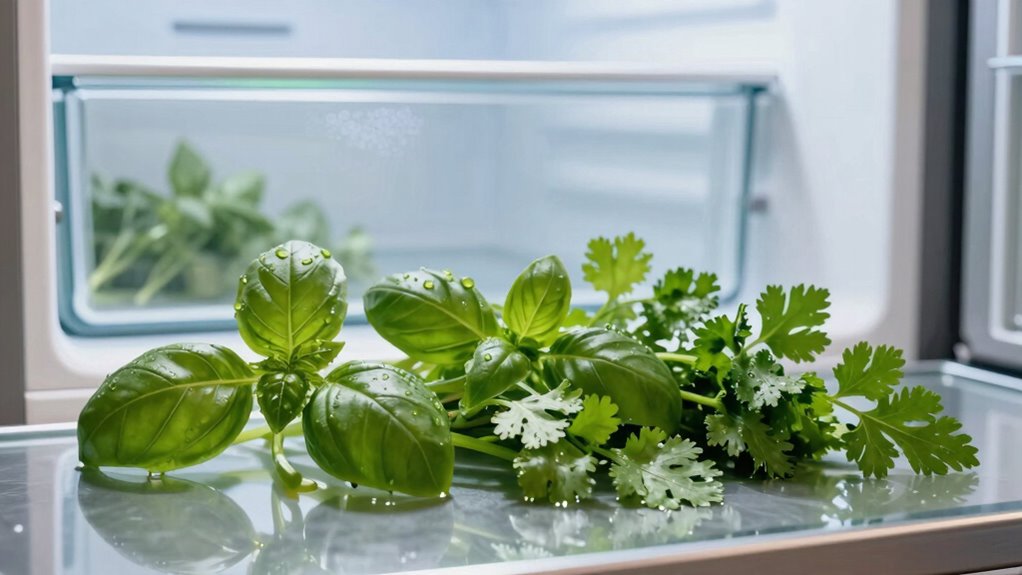

Herbs spoil quickly in the fridge because they’re often stored improperly, losing moisture and getting damaged by cold, especially in the coldest spots. To keep them alive longer, wrap herbs loosely in damp paper towels or store them upright in water, changing it daily. Use breathable containers and avoid overpacking. Controlling humidity and avoiding freezing are key. Want to learn more tips to extend their freshness? Keep going for helpful strategies that make a difference.
Key Takeaways
- Herbs die quickly in the fridge if stored in coldest areas, causing freeze damage.
- Improper wrapping or packaging leads to moisture loss and mold growth, shortening herb lifespan.
- Lack of proper humidity control results in dehydration or mold, harming herb freshness.
- Storing herbs loosely in the fridge without moisture regulation accelerates spoilage.
- Ignoring natural herb environment needs prevents them from maintaining hydration and flavor.
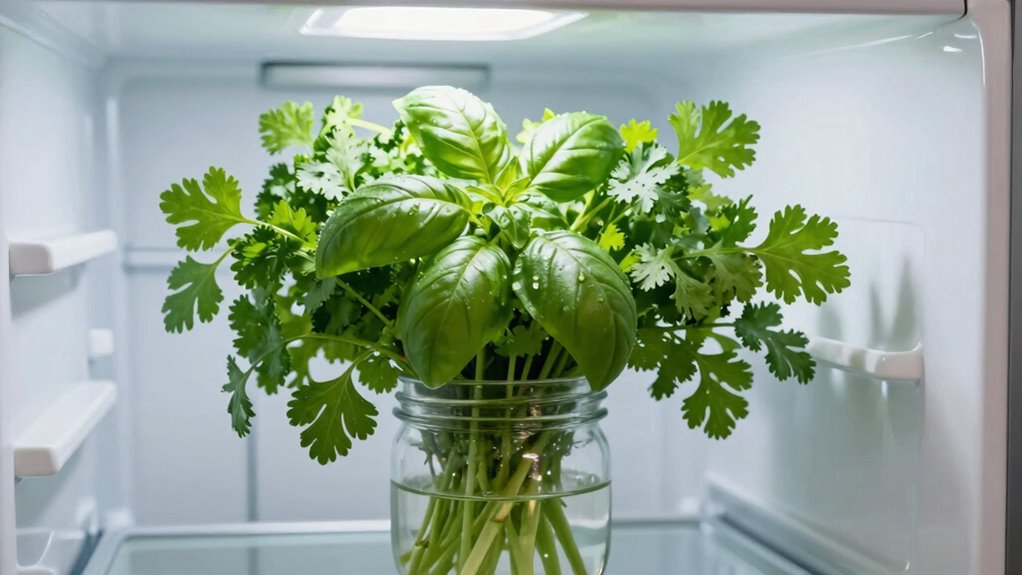
Ever wonder why your fresh herbs often wilt or spoil so quickly in the fridge? The main reason is that many people aren’t using the right methods for storing herbs. When herbs are stored improperly, they lose moisture and flavor fast, leading to quick spoilage. To extend their lifespan, you need to understand how herbs react to different storage techniques and how to keep them fresh longer.
One common mistake is not considering herb drying and kitchen storage practices. Fresh herbs are delicate, and their moisture content makes them susceptible to mold and decay if not stored correctly. Instead of just tossing herbs into the fridge loosely, you should think about how to maintain their freshness. For example, wrapping herbs loosely in a damp paper towel and placing them in a perforated plastic bag can help keep them hydrated. Alternatively, storing herbs upright in a glass of water, like cut flowers, can prolong their life, especially if you change the water daily. The key is to mimic their natural environment and prevent moisture loss. Proper storage techniques can significantly extend the shelf life of your herbs and prevent premature spoilage. Additionally, understanding the moisture content of herbs can help you choose the best storage method for each type. Knowing the ideal humidity levels for storing different herbs is essential to prevent spoilage and maximize freshness.
Your choice of kitchen storage plays a significant role in how long herbs stay fresh. Avoid storing herbs in the coldest parts of your fridge, where they can freeze or become damaged. Instead, put them in the crisper drawer, but keep an eye on humidity levels. Too much moisture can cause mold, while too little dries them out quickly. Using breathable containers or wrapping herbs in paper towels helps regulate moisture. Also, trimming the stems and removing any damaged leaves before storage can prevent rot from spreading. Proper humidity control is essential to prevent mold and dehydration, ensuring your herbs last longer.
As an affiliate, we earn on qualifying purchases.
Frequently Asked Questions
Can Freezing Herbs Help Them Last Longer?
Freezing herbs can definitely help them last longer by reducing herb dehydration. The freezing benefits preserve their flavor and nutrients, making them a great option if you want to extend their shelf life. To maximize freshness, chop herbs, place them in airtight containers or ice cube trays with water or oil, and freeze. This method keeps herbs flavorful and ready to use without the rapid deterioration that happens in the fridge.
Do Different Herbs Require Different Storage Methods?
Yes, different herbs require different storage methods to preserve their flavor. For example, soft herbs like basil and cilantro do better in water with a loose cover, while woody herbs like rosemary and thyme prefer dry, airtight storage containers. You should adjust your approach based on each herb’s herb flavor and storage needs. Proper storage containers help prevent moisture loss and extend freshness, keeping your herbs vibrant longer.
How Do I Revive Wilted Herbs?
Reviving wilted herbs is like bringing a fading painting back to life. Trim the stems and place them in cold water, similar to preparing herbs for herb drying or herbal infusions. Keep them in a damp paper towel or jar with water, then store in the fridge. This method helps revive their energy, extending freshness and flavor, so you can enjoy herbs longer and make the most of your culinary or herbal pursuits.
Is It Better to Store Herbs in Water or Plastic Bags?
Storing herbs in water keeps their flavor fresh longer, especially basil and cilantro, while using storage containers like plastic bags can help retain moisture for herbs like parsley and thyme. For ideal herb flavor, place herbs in water with a loose cover or in a sealed container, changing the water regularly. Plastic bags are convenient but may cause herbs to spoil faster if not properly sealed or if excess moisture isn’t removed.
What Are the Signs Herbs Have Gone Bad?
When herbs go bad, they lose their herb flavor, becoming dull and lifeless like a fading melody. You’ll notice mold development on their surface, and the leaves turn slimy, brown, or wilting. If herbs smell sour or off, it’s a clear sign they’ve expired. Trust your senses—discard herbs that show mold or a foul odor, as consuming them could cause discomfort or illness.
As an affiliate, we earn on qualifying purchases.
Conclusion
So, next time you’re tempted to store your herbs in the fridge, remember they’re a bit like a delicate maiden from a fairy tale—prone to wilting if not cared for properly. Keep them fresh by trimming, storing in damp paper towels, and avoiding the veggie drawer’s coldest spot. With these tips, you’ll turn your herb-storage routine from a Shakespearean tragedy into a happily ever after. Your culinary adventures will thank you!
As an affiliate, we earn on qualifying purchases.
perforated plastic bags for herbs
As an affiliate, we earn on qualifying purchases.
As an affiliate, we earn on qualifying purchases.