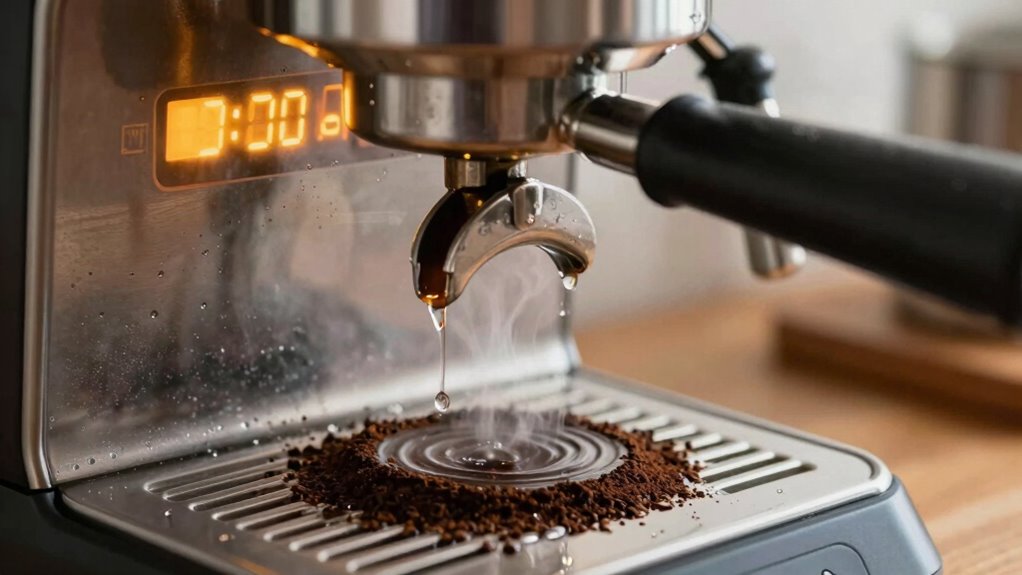

The brew temperature you set can drastically change how fast your coffee develops its flavor, brightness, and clarity. Slightly higher temperatures, around 200°F or more, extract flavors quickly and produce a richer taste, while cooler temps slow down extraction, resulting in a brighter, more delicate cup. Adjusting this temperature by just a few degrees can make a big difference. Keep exploring to discover how perfect temperature control elevates your brewing game even further.

Get kitchen staples and gadgets delivered free with Prime
- Fast, free delivery on millions of items
- Prime Video, Amazon Music and more included
- Member-only deals all year
Key Takeaways
- Slight increases in brew temperature accelerate extraction, revealing more flavor and aroma quickly.
- Maintaining optimal temperature ensures faster, balanced extraction without overdoing bitterness.
- Lowering temperature slows extraction, resulting in a milder, more nuanced coffee profile.
- Precise temperature control helps prevent under- or over-extraction, impacting brew speed and flavor clarity.
- Combining optimal temperature with proper grind size speeds up brewing while preserving flavor integrity.
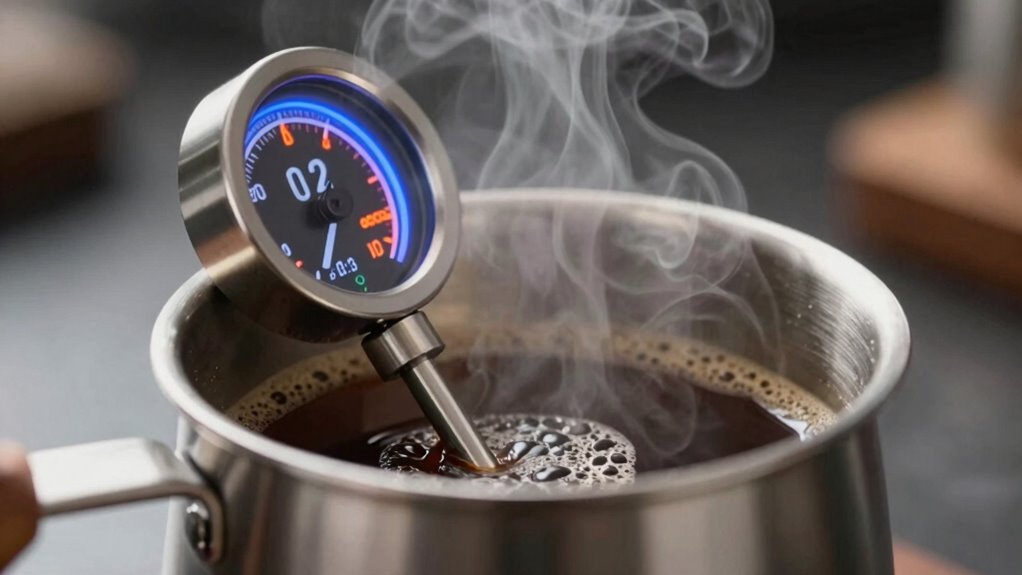
Achieving the perfect brew temperature is essential to releasing the full flavor potential of your coffee or tea. But beyond just temperature, the grind size you choose and the water quality you use play key roles in how your brew turns out. When you focus on these details, you’ll notice a significant difference in flavor and aroma, especially when it comes to that one brew temperature detail that can change everything—extraction speed. Controlling this aspect allows for a more balanced extraction and enhances the overall flavor profile. Your grind size directly influences how quickly water interacts with the coffee grounds. A finer grind increases surface area, allowing water to extract flavors more rapidly, especially at higher temperatures. Conversely, a coarser grind slows down extraction, which can be beneficial if you’re brewing at a slightly lower temperature. The key is to match your grind size to your desired brew temperature and method. For example, if you’re using a high-temperature brew, like espresso, a fine grind ensures quick extraction without over-extracting bitter compounds. On the other hand, for methods like French press, a coarser grind prevents over-extraction, which can be intensified if water is too hot. Water quality also plays an important role in how your brew develops. Water that’s too hard or has impurities can interfere with extraction, dulling flavors or creating off-notes. High-quality, filtered water ensures a cleaner, more vibrant cup. When combined with the right temperature, water quality can dramatically influence how quickly flavors are released. For instance, pure water allows for more efficient extraction at ideal temperatures, making it easier to achieve balanced, flavorful results without needing to adjust brewing time or grind size excessively. Additionally, understanding the water chemistry involved can help you refine your brewing process further. A good understanding of temperature control techniques can also enhance your ability to fine-tune the brewing process and achieve consistent results. What this all boils down to is that the right brew temperature, when paired with suitable grind size and water quality, creates a synergy that allows you to control extraction speed precisely. When you understand this, you can tweak your brewing variables to suit your taste preferences and the specific beans or leaves you’re working with. If your water is of poor quality, no matter how perfect your temperature is, your brew might lack brightness or clarity. Similarly, a grind that’s too fine or too coarse can throw off the extraction, leading to under- or over-extraction, even if your temperature is spot-on. In the end, mastering this one brew temperature detail—how it interacts with grind size and water quality—gives you the power to craft consistently excellent coffee or tea. It’s a small adjustment with a big impact, transforming a good cup into a truly great one almost instantly.
digital coffee temperature controller
As an affiliate, we earn on qualifying purchases.
As an affiliate, we earn on qualifying purchases.
Frequently Asked Questions
How Does Altitude Affect Optimal Brew Temperature?
Altitude affects your brew temperature because higher elevations have lower boiling points, meaning water boils at a cooler temperature. You need to adjust your brew temperature accordingly, often lowering it slightly, to guarantee proper extraction. If you don’t, your coffee might be under-extracted, losing flavor. So, at higher altitudes, pay attention to brew temperature adjustments to craft a balanced, flavorful cup.
Can Brew Temperature Influence Coffee Acidity Levels?
Like a painter choosing vibrant colors, your brew temperature directly influences coffee acidity levels. When you brew at higher temperatures, it can heighten acidity, making flavors sharper and brighter. Conversely, lower temperatures tend to mellow acidity, balancing the flavor extraction for a smoother taste. Adjusting your brew temperature allows you to fine-tune the acidity balance, ensuring each cup delivers the flavor profile you desire.
What Equipment Best Maintains Precise Brew Temperatures?
You should use equipment like precision espresso machines or temperature-controlled kettles to maintain exact brew temperatures. Regular grinder calibration ensures consistent extraction, while monitoring water mineralization helps prevent temperature fluctuations caused by mineral buildup. These tools and practices keep your brewing process stable, allowing you to hit the ideal temperature every time, which preserves flavor and acidity, guaranteeing your coffee tastes just right regardless of external conditions.
Does Brew Temperature Impact Coffee Bean Flavor Differently?
Imagine brewing coffee at a slightly lower temperature, and you notice a dull, under-extracted flavor. Brew temperature significantly impacts flavor extraction—higher temps release more nuanced flavors, while unstable temperatures can lead to inconsistent taste. Maintaining temperature stability guarantees ideal flavor extraction, allowing beans to showcase their true profile. So yes, brew temperature influences how beans’ flavors develop, making precise control essential for a perfect cup.
How Quickly Should Temperature Be Adjusted During Brewing?
You should adjust the temperature gradually during brewing to maintain temperature stability and guarantee brewing consistency. Make small, incremental changes rather than abrupt shifts, which can affect flavor extraction. Monitor your brewing process closely, and if you notice temperature fluctuations, fine-tune your equipment settings promptly. This approach helps you achieve a consistent temperature, preserving the integrity of your beans’ flavors and delivering a balanced, high-quality cup every time.
As an affiliate, we earn on qualifying purchases.
Conclusion
Now that you know how essential brew temperature is, imagine what happens when you tweak those numbers just slightly. That perfect splash of heat could reveal flavors you’ve never tasted before, or leave your brew flat and lifeless. Are you ready to experiment, to discover the secret temperature that transforms your coffee from good to unforgettable? The next cup is waiting—dare to find out what it’s really capable of.
electric kettle with temperature control
As an affiliate, we earn on qualifying purchases.
As an affiliate, we earn on qualifying purchases.
As an affiliate, we earn on qualifying purchases.
NFL season / tailgating Picks
team gear
As an affiliate, we earn on qualifying purchases.