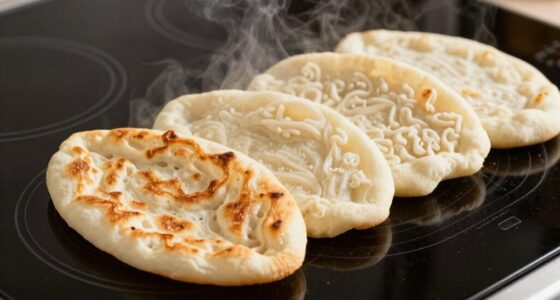

Cooking at high heat might seem faster, but it often leads to uneven results, burnt exteriors, and undercooked insides. Rushing your food can flatten or dull flavors while risking bitterness or charring. Using moderate temperatures allows you to develop deeper flavors, achieve even doneness, and better control texture and color. Patience with gentle heat improves quality and sustainability—plus, it helps ingredients reach their full potential. Keep exploring, and you’ll discover how taking your time transforms your dishes.

Get kitchen staples and gadgets delivered free — and shop member deals
- Fast, free delivery on millions of items
- Access to Prime Big Deal Days deals on October 6–7
- Prime Video, Amazon Music and more included
Key Takeaways
- High heat can cause uneven cooking and burning, compromising flavor and texture.
- Moderate temperatures allow for gradual caramelization and complex flavor development.
- Rushing with high heat risks undercooked interiors and overcooked exteriors.
- Patience during cooking enhances ingredient quality and overall taste.
- Slow, gentle methods preserve ingredient integrity and support sustainable, flavorful dishes.
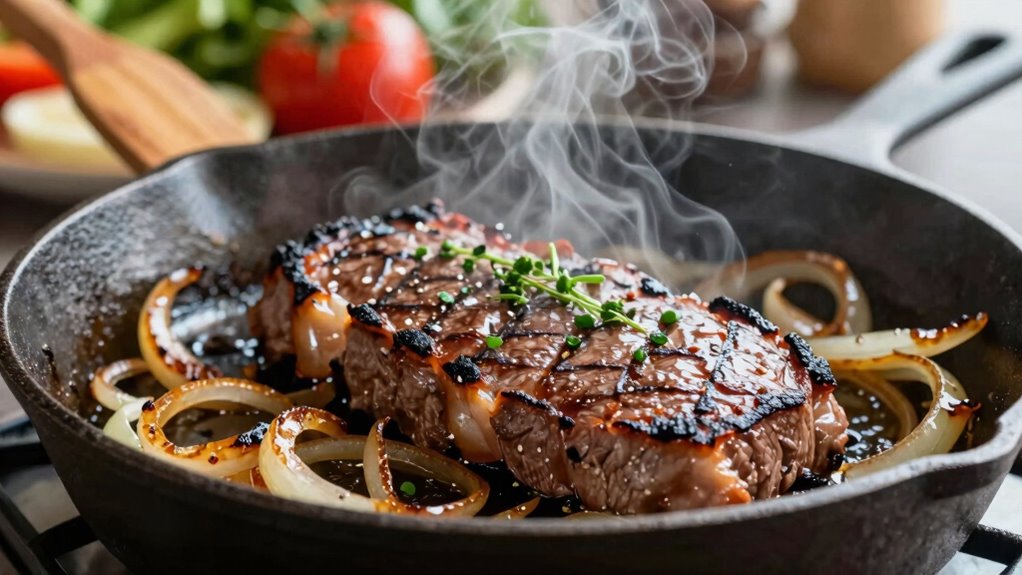
While cranking up the heat might seem like the quickest way to cook, high temperatures don’t always lead to better food. Pushing your stove or grill to maximum can cause food to burn on the outside before it’s properly cooked inside, resulting in a less satisfying meal. Instead, practicing cooking patience can significantly improve your results. When you allow your food to cook at moderate temperatures, you give it time to develop complex flavors and achieve even doneness. Rushing this process often sacrifices flavor development, leaving dishes flat or dull, rather than rich and layered.
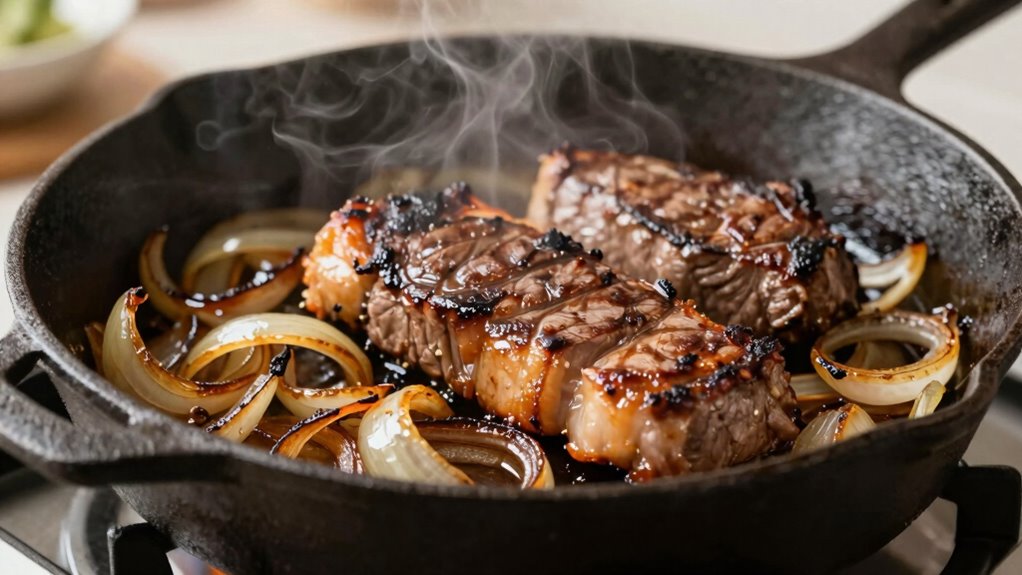
High heat might seem tempting for speed, but it often undermines the nuances that make good food memorable. For example, searing a steak at a very high temperature creates a tempting crust, but if you don’t give it enough time to rest and finish cooking gently, the interior can be undercooked or unevenly done. Similarly, roasting vegetables quickly at high heat can cause them to char and become bitter, whereas slower roasting allows natural sugars to caramelize gradually, enhancing their sweetness and depth. This slow, steady approach encourages flavors to develop fully, transforming simple ingredients into something extraordinary. Additionally, understanding the importance of biodiversity in ingredients can contribute to more sustainable and flavorful cooking, as diverse crops and livestock often bring unique taste profiles that develop better with gentle cooking methods.
When you focus on cooking patience, you’re also giving yourself the chance to better control the outcome. Instead of risking overcooking or burning, you pay attention to subtle cues like color, texture, and aroma. This mindfulness allows the flavors to meld more thoroughly, creating a more balanced and satisfying dish. It’s worth noting that flavor development doesn’t happen in an instant; it’s a process that benefits from gentle heat and time. Whether you’re simmering a sauce, slow-roasting meat, or gently sautéing vegetables, patience pays off with richer, more intricate flavors. Additionally, incorporating sustainable practices into your cooking routine can help preserve the environment and enhance ingredient quality, which in turn contributes to more flavorful results.
induction cooktop with precise temperature control
As an affiliate, we earn on qualifying purchases.
As an affiliate, we earn on qualifying purchases.
Frequently Asked Questions
How Does Low Heat Affect Cooking Time?
Using low heat generally increases your cooking time because it maintains temperature consistency, allowing heat to penetrate food more evenly. This gentle approach helps retain moisture, preventing drying out or burning. While it takes longer, low heat gives you better control over the process, leading to more tender, flavorful results. So, even though it seems slower, it’s often the best way to achieve perfectly cooked, juicy dishes.
Can High Heat Ruin Delicate Ingredients?
High heat can indeed ruin delicate ingredients, like fragile fish or tender herbs, by causing them to overcook or burn quickly. Imagine gentle simmering, where heat softly kisses the surface, preserving delicate textures and flavors. Using high heat risks breaking down these ingredients prematurely, losing their subtle essence. For delicate preservation, it’s best to control the temperature carefully, allowing flavors to develop fully without sacrificing their tender integrity.
What Are the Benefits of Slow Cooking?
Slow cooking offers several benefits, especially through slow simmering and gentle braising. You get tender, flavorful dishes because the low heat allows ingredients to break down slowly, enhancing taste and texture. It also helps retain nutrients and moisture, making your meals more nutritious. Plus, slow cooking reduces the risk of burning or overcooking delicate ingredients, giving you more control and better results with less effort.
How Does Heat Impact Flavor Development?
You might be surprised to learn that, according to food science, the Maillard reactions primarily occur between 280°F and 330°F, creating deeper flavor complexity. High heat accelerates these reactions, but overdoing it can burn your food, ruining flavors. Controlled heat allows these reactions to develop gradually, enhancing taste without bitterness. So, moderate heat often produces richer, more nuanced flavors compared to rushing with high temperatures.
Is There a Safety Risk With Low-Temperature Cooking?
Yes, there’s a safety risk with low-temperature cooking if you don’t follow proper guidelines. You need to guarantee food reaches a safe internal temperature to prevent bacterial growth and reduce food safety risks. Low-temperature cooking can be safe when done correctly, but it requires precision and time to kill harmful bacteria. Always use a reliable thermometer and adhere to recommended cooking times to keep your food safe.
As an affiliate, we earn on qualifying purchases.
Conclusion
Remember, rushing with high heat can turn your culinary masterpiece into a burnt-out shadow of itself. Sometimes, slow and steady wins the flavor race, allowing ingredients to develop their true character and depth. Patience isn’t just a virtue; it’s your secret weapon for creating dishes that dazzle the senses. So next time you cook, don’t chase speed—embrace the gentle, deliberate heat that transforms everyday ingredients into a symphony of deliciousness. Your taste buds will thank you.
cast iron skillet for searing and gentle cooking
As an affiliate, we earn on qualifying purchases.
As an affiliate, we earn on qualifying purchases.
oven roasting pan for vegetables and meats
As an affiliate, we earn on qualifying purchases.
As an affiliate, we earn on qualifying purchases.
NFL season / tailgating Picks
team gear
As an affiliate, we earn on qualifying purchases.