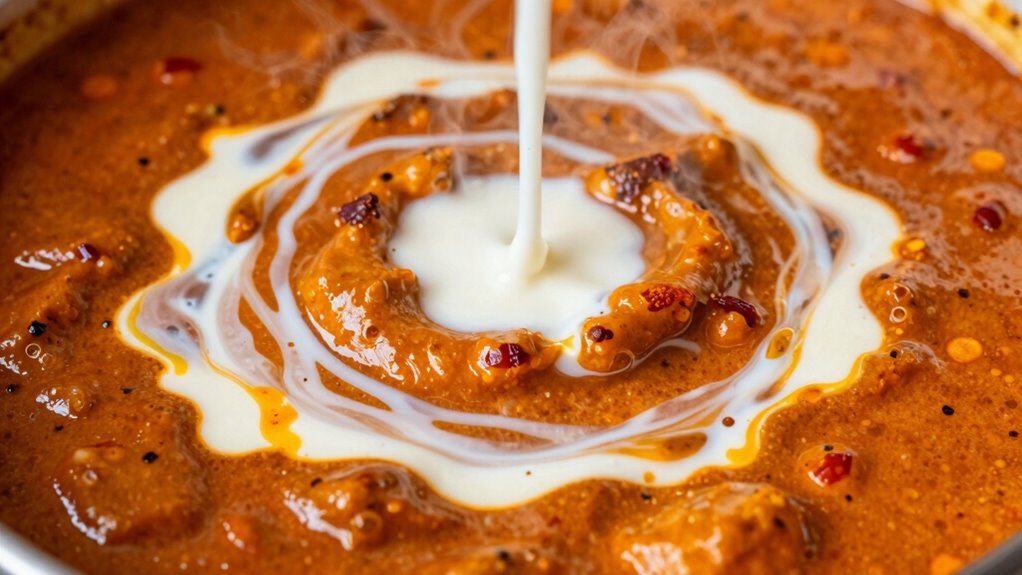

Milk splits in sauces and curries mainly because it’s exposed to high heat, rapid temperature changes, or improper techniques. When you add cold milk to hot dishes or heat it too quickly, proteins and fats coagulate and separate, causing curdling and lumps. To prevent this, you should gradually warm the milk, manage the temperature carefully, and stir gently. If you want to master these tips, you’ll find more helpful details that can improve your cooking results.
Key Takeaways
- Sudden temperature changes cause milk proteins to coagulate and split.
- High heat during cooking leads to cream separation and curdling.
- Adding cold milk directly to hot dishes causes rapid protein coagulation.
- Improper stirring or heat management disrupts the emulsion, causing splitting.
- Using low-fat milk or skipping gradual warming increases the risk of curdling.
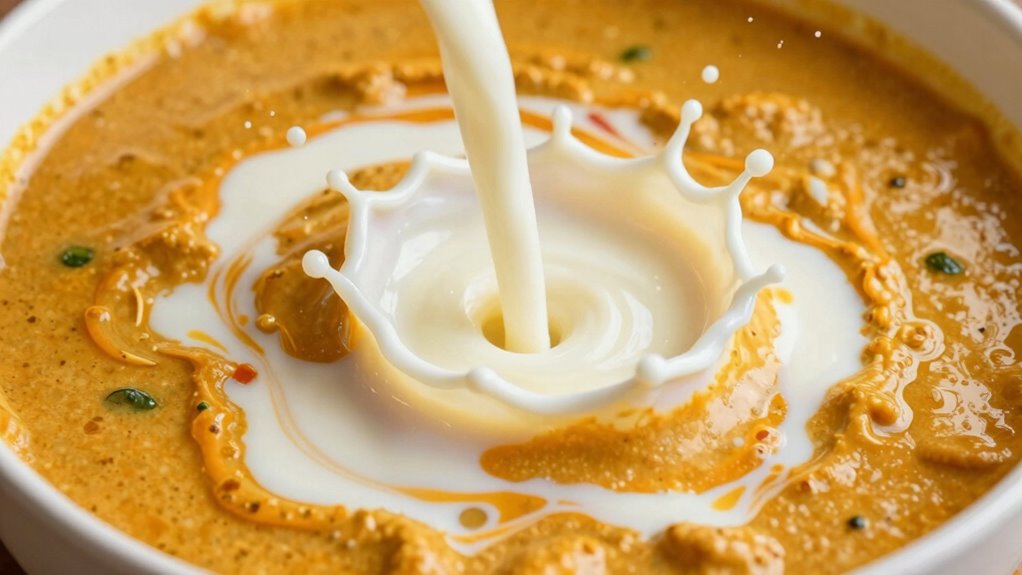
Have you ever added milk to a sauce or curry only to see it curdle and split? It’s frustrating, especially when you’re trying to create a smooth, creamy dish. The main reason for this is cream separation, which happens when the proteins and fats in the milk break apart due to improper cooking conditions. When milk splits, it creates a lumpy, curdled texture that ruins the appearance and taste of your dish. To prevent this, understanding temperature control is essential.
Milk is delicate, and its stability depends heavily on how you manage heat during cooking. If you add cold milk directly into a hot sauce or curry, the sudden temperature change causes the proteins to coagulate rapidly, leading to cream separation. To avoid this, you should temper the milk first. Warm a small amount of your sauce or curry, then slowly whisk in the milk, gradually bringing it up to temperature. This gentle process helps prevent the proteins from curdling. Proper temperature management is also crucial for maintaining the consistency of the dish.
Temperature control plays a critical role throughout the cooking process. Keep the heat on low or medium when incorporating milk. High temperatures cause the milk to cook too quickly, increasing the risk of splitting. As your sauce or curry heats, monitor the temperature carefully. If it starts to boil vigorously, reduce the heat immediately. Gentle simmering allows the milk’s fats and proteins to blend harmoniously into the dish without separating. Proper heat management is crucial for maintaining the emulsion. Additionally, choosing the right type of milk, such as full-fat or whole milk, can also improve stability because of its higher fat content, which helps prevent splitting. Proper stirring techniques can also aid in maintaining a smooth consistency. Using temperature monitoring tools can further assist in maintaining the ideal heat level and avoiding accidental overheating.
Another tip is to avoid adding milk directly after a high-heat cooking stage. Instead, remove your dish from heat, let it cool slightly, then add the warmed milk. This extra step helps maintain a stable emulsion and prevents cream separation. Additionally, if you notice small lumps forming, you can try whisking in a little cornstarch or flour mixed with cold water. This acts as a stabilizer, helping the milk incorporate more smoothly.
As an affiliate, we earn on qualifying purchases.
Frequently Asked Questions
Can Using Non-Dairy Milk Prevent Splitting in Sauces?
Using non-dairy alternatives can help prevent splitting in sauces, especially if you choose options with stable flavor profiles. Non-dairy milks like coconut or cashew often have fats and proteins that behave better under heat, reducing the chance of curdling. Keep in mind, some have stronger flavors, so pick one that complements your dish. Stir gently and avoid high heat to keep your sauce smooth and creamy.
Does the Type of Spice Affect Milk Curdling?
Spice interactions in your sauce act like unpredictable dancers, sometimes causing milk to curdle, impacting flavor impacts dramatically. Turmeric and chili powders contain compounds that can provoke curdling when heated with milk. Spices like cardamom or cinnamon are gentler partners, less likely to disturb the creamy harmony. So, yes, the type of spice influences milk curdling, making your choice essential for a smooth, flavorful sauce.
How Does Cooking Temperature Influence Milk Separation?
When cooking, your heating techniques and temperature control directly influence milk separation. If you heat milk too quickly or at too high a temperature, it causes proteins to denature and curdle. To prevent this, you should gradually heat your sauce or curry, maintaining a gentle simmer. Consistent, moderate temperatures help keep the milk stable, avoiding separation and ensuring your dish remains smooth and creamy.
Are There Specific Ingredients That Cause Milk to Split?
Certain ingredients, like acidic foods or curdling agents, cause milk to split. When you add too much lemon juice, vinegar, or tomatoes, the acidity disrupts milk protein stability, leading to curdling. Additionally, high heat can also trigger protein coagulation. To prevent this, you should add these ingredients gradually and at lower temperatures, ensuring the milk’s proteins stay intact and your sauce remains smooth.
Can Adding Acid Trigger Milk Curdling in Curries?
Yes, adding acid can trigger milk curdling in curries. For example, if you squeeze lemon juice into a creamy curry, the acid causes protein coagulation, leading to curdling. Acidic reactions destabilize milk’s proteins, making them clump together. To prevent this, add acids gradually or temper them with some of the hot sauce first. This way, you control protein coagulation and keep your curry smooth.
As an affiliate, we earn on qualifying purchases.
Conclusion
Think of cooking milk in sauces and curries like tending a delicate garden. When you don’t pay attention, the heat becomes too harsh, and the milk, like fragile blooms, splits and withers away. But with patience and gentle care, it melds smoothly into your dish, creating harmony. Remember, the secret isn’t just in following rules but in nurturing your ingredients with mindful attention—turning a simple recipe into a masterpiece of balance and flavor.
As an affiliate, we earn on qualifying purchases.
As an affiliate, we earn on qualifying purchases.