You should cover a pot when you want to trap heat and moisture, helping foods cook faster and stay tender, like when simmering stews or boiling grains. Avoid covering if you’re trying to reduce sauces or achieve a crispy, caramelized crust, as sealing in moisture can ruin those textures. Knowing when to cover or uncover depends on the dish, so stay tuned to learn how proper timing can make all the difference.
Key Takeaways
- Cover pots during simmering or long cooking to trap heat and moisture, ensuring even, tender results.
- Avoid covering when reducing sauces or broths to prevent over-concentration or burning.
- Leave uncovered when browning or caramelizing ingredients to develop flavor and texture.
- Do not cover pasta or vegetables boiling in water to prevent excess water absorption and sogginess.
- Remove the lid when you need to evaporate excess moisture or thicken sauces for richer flavors.
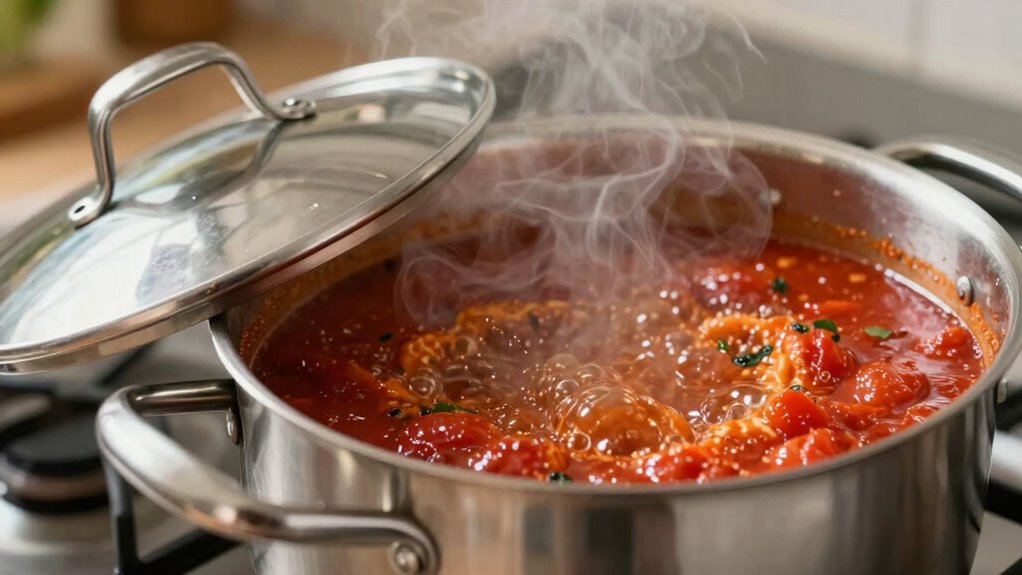
Have you ever wondered when it’s best to cover a pot while cooking? It’s a common question, and the answer depends on what you’re trying to achieve in your dish. Covering a pot affects steam retention and evaporation control, two essential elements that influence how your food turns out. When you cover a pot, you trap heat and moisture inside, which can speed up cooking and help ingredients stay tender. Conversely, leaving it uncovered allows moisture to escape, which can be beneficial for reducing sauces or thickening soups. Knowing when to use each method helps you master your cooking process and prevent ruining your dish.
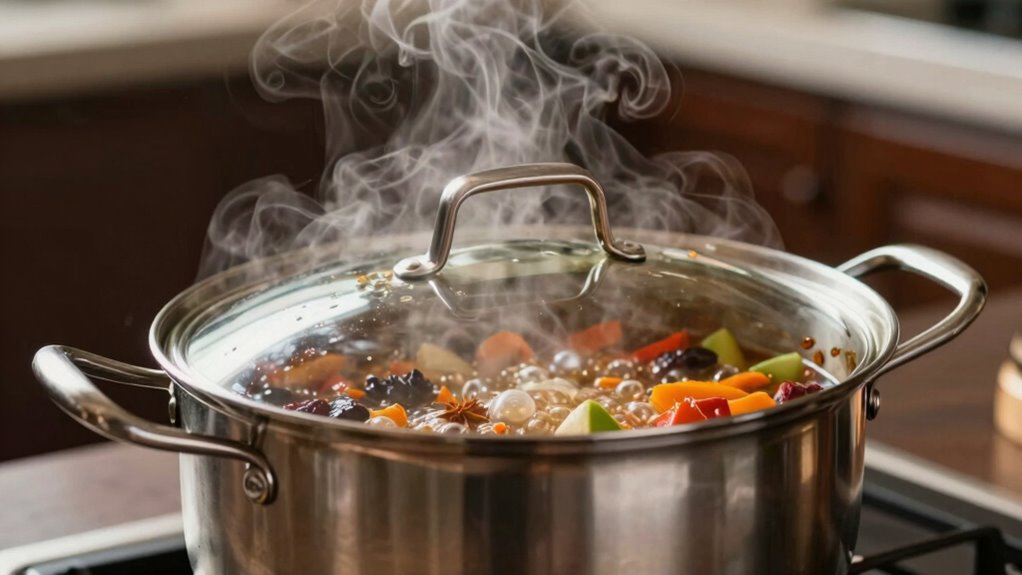
If you’re simmering or boiling something delicate, like rice or grains, covering the pot is usually the way to go. It preserves steam retention, ensuring heat and moisture stay inside, cooking the food evenly. Covering helps control evaporation, preventing your liquid from evaporating too quickly and leading to uneven results. This is especially important for dishes that need to cook for a longer period or where moisture is essential for the texture, such as stews or braises. When you cover the pot, you create a humid environment that keeps ingredients moist and tender, making your dish more flavorful and preventing it from drying out. Additionally, controlling moisture levels is vital for achieving consistent results in various recipes. Properly managing heat transfer is also crucial for cooking food evenly and efficiently.
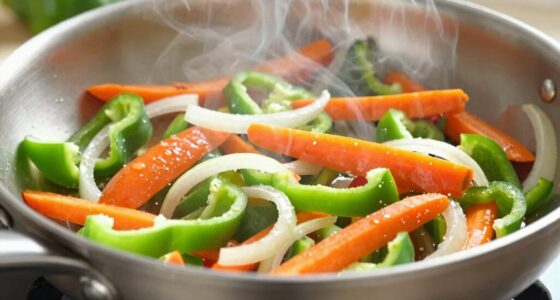
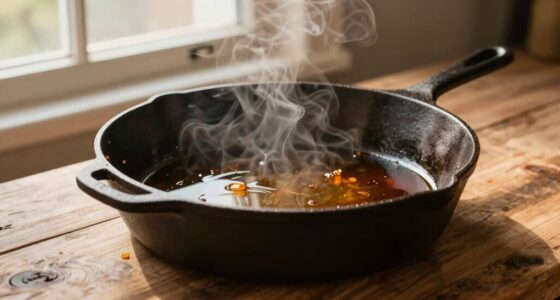
However, there are times when leaving the pot uncovered is the better choice. If you’re trying to reduce a sauce or concentrate flavors, removing the lid lets excess moisture evaporate. This evaporation control helps thicken your sauce or broth, intensifying the taste without diluting it. It’s also helpful when cooking pasta or boiling vegetables—leaving the lid off allows excess water to escape, preventing your dish from becoming waterlogged. Additionally, if you’re aiming for crispy or caramelized textures, such as when sautéing onions or browning meat, keeping the lid off ensures moisture escapes, promoting browning and achieving that desirable crust. Controlling moisture levels is a crucial part of mastering proper cooking techniques.

TrueCraftware- 8 qt. Stainless Steel Stock Pot Lid 10" Diameter x 1/2" Thickness- Heavy Duty Stock Pot Cover Stew Simmering Pot Soup Pot Lid for Soup Pasta Vegetable Oven Safe & NSF Certified
- Durable Stainless Steel Construction: Resists dents and discoloration
- Fingerprint-Resistant Finish: Maintains a professional look
- Snug Fit with Raised Lip: Locks in moisture for cooking
As an affiliate, we earn on qualifying purchases.
As an affiliate, we earn on qualifying purchases.
Frequently Asked Questions
Can Covering a Pot Change the Cooking Time Significantly?
Covering a pot can considerably change cooking time by trapping heat and moisture, speeding up the process. Alternative covering techniques, like partially covering, allow some evaporation, which affects flavor absorption and texture. If you need a quick result, covering is ideal; for richer flavors, leave it uncovered. Remember, the impact on flavor absorption varies based on cover type and dish, so adjust accordingly to get the best results.
Is It Better to Cover or Uncover Pasta While Boiling?
You should leave the pasta uncovered while boiling to maximize flavor retention and nutrient preservation. Covering the pot traps steam and can cause the water to boil over, leading to uneven cooking and potential loss of nutrients. Uncovering allows you to monitor the boiling process, prevent sticking, and guarantee the pasta cooks evenly without losing essential flavors and nutrients. Keep it uncovered for better control and healthier results.
How Does Covering Affect the Evaporation of Liquids?
Covering a pot increases steam retention, which slows down evaporation of liquids. This helps keep the dish moist and can concentrate flavors by trapping volatile compounds. When you cover your pot, expect less liquid loss, making it ideal for stews or braises. However, if you want a thicker sauce or to reduce liquids, uncovering the pot allows more evaporation, preventing over-concentration and ensuring the right consistency.
Should I Cover a Pot When Simmering Stew?
Yes, you should cover a pot when simmering stew to improve flavor retention and heat distribution. Covering traps moisture and heat, helping the ingredients cook evenly and intensify flavors. It also prevents excessive evaporation, keeping the stew rich and hearty. Just remember to occasionally lift the lid to check for doneness or add ingredients. Proper covering guarantees your stew develops deep flavor and maintains a consistent, gentle simmer.
Does Covering Help Prevent Splattering During Cooking?
Think of covering a pot as giving your cooking a gentle shield, helping with temperature control and flavor retention. Covering prevents splattering by keeping the heat contained, which minimizes mess and keeps your kitchen cleaner. It also helps maintain consistent heat, ensuring even cooking. However, remember that sometimes leaving it uncovered allows excess moisture to escape, intensifying flavors. So, use the lid strategically to balance cleanliness, temperature, and flavor during your cooking process.

Glass Cooking Pot – 1.5L/50oz Heat-Resistant Borosilicate Glass Handmade Cookware Set stovetop Pot – Safe for Pasta Noodle, Soup, Milk, Tea (1.5L/50OZ)
- Healthy, Food-Grade Material: Made of high borosilicate glass, lead-free
- Heat-Resistant and Safe: Withstands 0℉ to 400℉, microwave and oven safe
- Large Capacity: Holds 1.5L/50oz, ideal for soups and noodles
As an affiliate, we earn on qualifying purchases.
As an affiliate, we earn on qualifying purchases.
Conclusion
Mastering when to cover your pot transforms you into a culinary wizard—your dishes become legendary, rivaling those from gourmet restaurants. A simple lid can seal in flavors, creating symphonies of taste, or trap steam that turns your stew into a bubbling masterpiece. Get it right, and you’ll wield the power to elevate everyday cooking to an art form so refined, even the most discerning food critics would bow in awe. Your kitchen will never be the same.
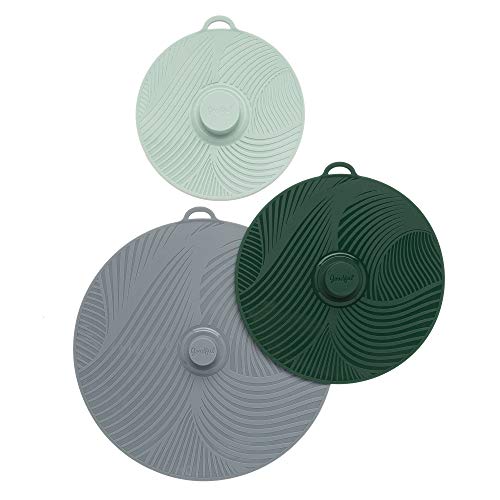
Goodful Universal Silicone Lids for Pots and Pans, Heat Safe, Reusable Suction Seal Covers for Bowls, Pots, Cups- Food Grade, Dishwasher Safe, 3 Piece, Gray, Green and Sage
- Versatile Kitchen Use: Store, cover, and microwave food
- BPA-Free and Heat Resistant: Made with food-safe silicone up to 450°F
- Eco-Friendly Alternative: Replaces plastic wrap and foil
As an affiliate, we earn on qualifying purchases.
As an affiliate, we earn on qualifying purchases.

Lodge Seasoned Cast Iron Lid – 12 Inches – Heavy-Duty Iron Cookware Cover for Heat Retention – Seasoned Skillet or Dutch Oven Cover – Replacement Lid
- Moisture-Locking Design: Seals in moisture for even cooking
- Pre-Seasoned Heavy-Duty Iron: Ready to use, improves with time
- Fits 12-Inch Cookware: Ideal for skillets and Dutch ovens
As an affiliate, we earn on qualifying purchases.
As an affiliate, we earn on qualifying purchases.