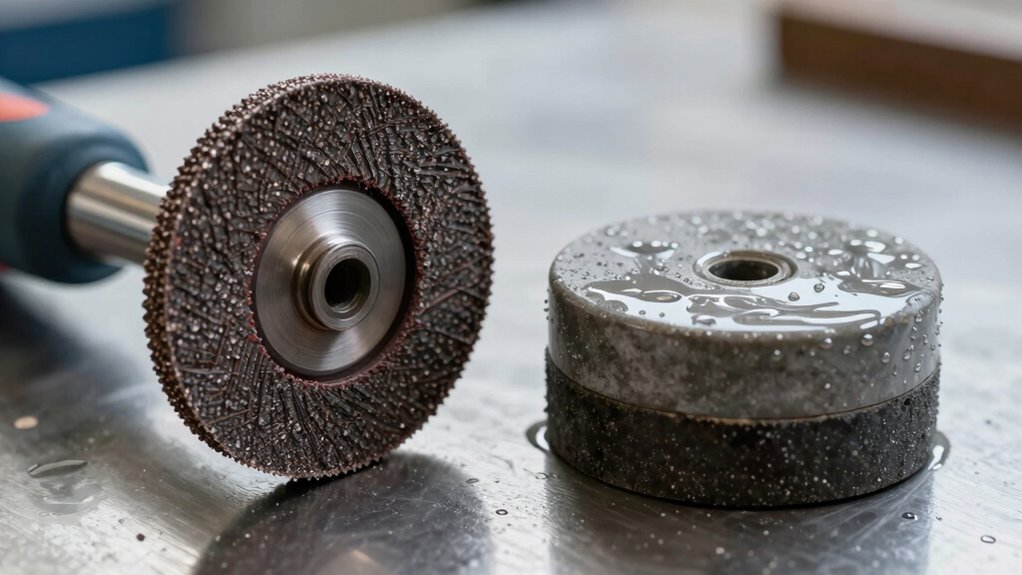

Dry and wet grinding need different tools because each method has unique cooling, abrasive, and safety requirements. Dry grinding tools are built to withstand high temperatures and debris, using tougher abrasives, while wet grinding tools focus on providing better surface finishes with softer bonds and finer grits. The tools also differ in design for dust control and heat management. Continuing will help you understand how these differences impact tool selection and performance in detail.

Get kitchen staples and gadgets delivered free with Prime
- Fast, free delivery on millions of items
- Prime Video, Amazon Music and more included
- Member-only deals all year
Key Takeaways
- Different abrasives are required to withstand heat in dry grinding and provide a smoother finish in wet grinding.
- Tool designs vary to optimize cooling, with dry tools built for high temperatures and wet tools facilitating water flow.
- Heat management methods differ, necessitating tools that can handle thermal stresses in each method.
- Dust control needs in dry grinding influence tool features, unlike wet grinding tools that produce less dust.
- Surface finish quality demands finer, softer abrasive tools for wet grinding, and more aggressive tools for dry grinding.
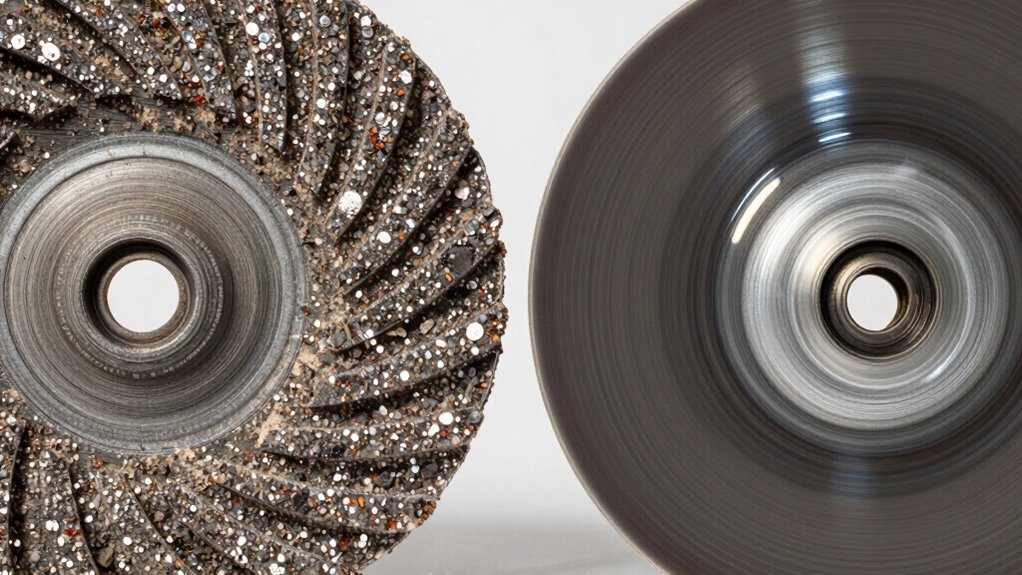
When choosing grinding tools, understanding the differences between dry and wet grinding is essential for achieving the most favorable results. The type of grinding you pursue influences the abrasive selection and cooling methods you’ll need to consider. Dry grinding involves removing material without additional liquids, which means your tools must be capable of handling higher temperatures and dust generation. Wet grinding, on the other hand, incorporates water or coolant to suppress heat and dust, requiring tools designed specifically for that environment. Selecting the right abrasive is crucial because it determines how effectively your tool can cut through the material while managing heat buildup and debris.
Choosing the right grinding tools depends on understanding dry versus wet grinding methods and their impact on safety and efficiency.
In dry grinding, the abrasive must be tough enough to withstand friction and high temperatures without breaking down quickly. You’ll want to choose abrasives like diamond or silicon carbide, which are designed for dry applications. These abrasives are more durable and offer a longer lifespan since they resist degradation from heat and dust. The abrasive selection here is critical because it impacts not just efficiency but also safety, as dust can be hazardous if not properly managed. For dry grinding, tools often feature a more aggressive grit to cut efficiently, but they also need to be balanced with the right cooling methods to prevent overheating. Without the presence of water, cooling relies on airflow or other techniques to dissipate heat, making tool design and material choice vital. Additionally, understanding the abrasive materials used in these tools can help optimize performance and safety. Proper dust management techniques are also essential to maintain a safe working environment, and advancements in dust collection systems can further enhance safety during dry grinding. Moreover, selecting the appropriate cooling methods can significantly influence the effectiveness and safety of dry grinding operations. Incorporating dust suppression technologies can further reduce airborne particles and improve overall safety.
Wet grinding tools, however, are tailored to work with cooling methods that involve water or coolant. These tools often feature softer abrasives or different bonding agents to prevent clogging and maintain cutting efficiency when submerged in liquid. The cooling provided by water reduces heat and minimizes the risk of thermal damage, so your abrasive selection can include finer grits and softer bonds to enhance surface finish. Using the correct tools for wet grinding not only prolongs their lifespan but also ensures consistent results by reducing thermal stresses. The cooling methods in wet grinding also help control dust, making it safer and more environmentally friendly. Because of these differences, tools designed for wet grinding typically have features that facilitate water flow and drainage, which are absent in dry grinding tools. Understanding these distinctions can help in selecting the right equipment for specific applications, ensuring higher quality and safety standards.
Ultimately, choosing between dry and wet grinding tools comes down to understanding these fundamental distinctions. Your decision impacts abrasive selection, cooling methods, safety, and the quality of your finished surface. By matching your tool choice to the specific grinding method, you ensure optimal performance, longer tool life, and safer working conditions. Recognizing these differences allows you to select the right equipment for the job, leading to more precise, efficient, and safe grinding processes.
diamond grinding wheel for dry grinding
As an affiliate, we earn on qualifying purchases.
As an affiliate, we earn on qualifying purchases.
Frequently Asked Questions
Can the Same Tools Be Used for Both Dry and Wet Grinding?
You can’t use the same tools for both dry and wet grinding because of tool versatility and material compatibility issues. Dry grinding tools are designed to handle dust and heat without damage, while wet grinding tools are built to manage water and prevent overheating. Using the wrong tool risks damaging the equipment or compromising the quality of your work. Always choose tools suited specifically for wet or dry conditions to guarantee safety and efficiency.
How Does Moisture Affect Tool Lifespan During Grinding?
Ever notice how moisture impacts your grinding tools? It can considerably reduce their lifespan by causing tool corrosion, especially during wet grinding. The moisture impact accelerates rust formation and weakens the tool’s structure, leading to quicker wear and tear. So, when you’re grinding in damp environments, you need tools designed to resist corrosion, or you’ll find yourself replacing them more often than you’d like, cutting into your efficiency and budget.
Are There Safety Concerns Specific to Dry Versus Wet Grinding?
Yes, there are safety concerns specific to dry versus wet grinding. Dry grinding creates dust accumulation, which can pose respiratory hazards and increase the risk of fires if dust ignites. Wet grinding minimizes dust but introduces thermal hazards from heat generated during the process. You should guarantee proper ventilation for dry grinding and use cooling systems for wet grinding to manage thermal risks effectively and maintain a safe workspace.
What Maintenance Is Required for Tools Used in Wet Grinding?
For wet grinding tools, you need to regularly inspect for tool corrosion caused by constant exposure to water and abrasive materials. Keep the tools properly lubricated to prevent rust and guarantee smooth operation. Clean and dry tools after use to remove residual slurry and debris. Additionally, check lubrication requirements specified by the manufacturer, and apply appropriate lubricants to maintain tool longevity and performance. Proper maintenance minimizes wear and extends tool life.
Do Different Materials Require Different Grinding Tools?
Did you know that using the wrong grinding tool can reduce efficiency by up to 50%? Different materials absolutely require specific tools because of material compatibility; what works for metal might damage stone. Tool customization is essential—choosing the right abrasive or wheel guarantees peak performance and longevity. Always match your grinding tools to the material you’re working with to improve results and extend tool life.
silicon carbide grinding disc for wet grinding
As an affiliate, we earn on qualifying purchases.
As an affiliate, we earn on qualifying purchases.
Conclusion
Understanding why dry and wet grinding require different tools helps you choose the right equipment for your project. Did you know that using improper tools can increase energy consumption by up to 30%? This means you not only risk damaging your materials but also wasting valuable resources. By selecting the appropriate tools, you guarantee efficient, safe, and precise results—saving time and money. So, always match your grinding method with the right tools for peak performance.
As an affiliate, we earn on qualifying purchases.
cooling system for grinding machines
As an affiliate, we earn on qualifying purchases.
As an affiliate, we earn on qualifying purchases.
Fall Picks
fall essentials
As an affiliate, we earn on qualifying purchases.