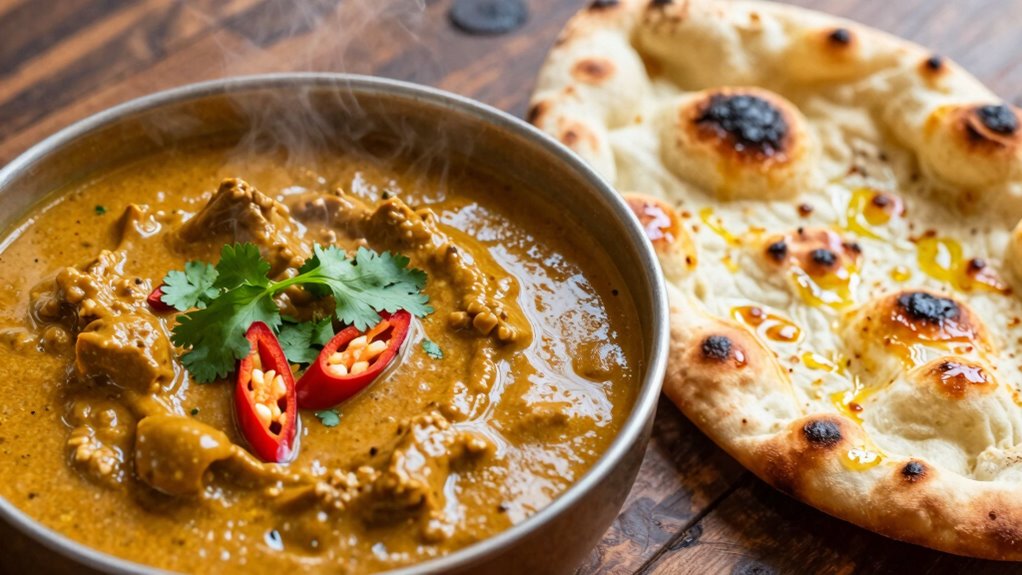

Fat isn’t just about adding richness; it’s a vital carrier of flavor in your cooking. It helps release and amplify the flavors of ingredients during searing, roasting, or sautéing, making dishes more vibrant and satisfying. Different fats interact uniquely with foods, influencing both taste and texture. Understanding how to use fats effectively can elevate your cooking and boost flavor. Keep exploring to discover how mastering fats can transform your culinary creations into something extraordinary.
Key Takeaways
- Fat acts as a carrier, releasing and amplifying flavors of ingredients during cooking.
- Searing and caramelization depend on fat to develop complex, savory flavors.
- Different fats interact uniquely with ingredients, influencing overall taste and texture.
- Proper use of fats in techniques like sautéing and frying enhances flavor and mouthfeel.
- Healthy fats contribute to flavor depth while supporting nutritional benefits.
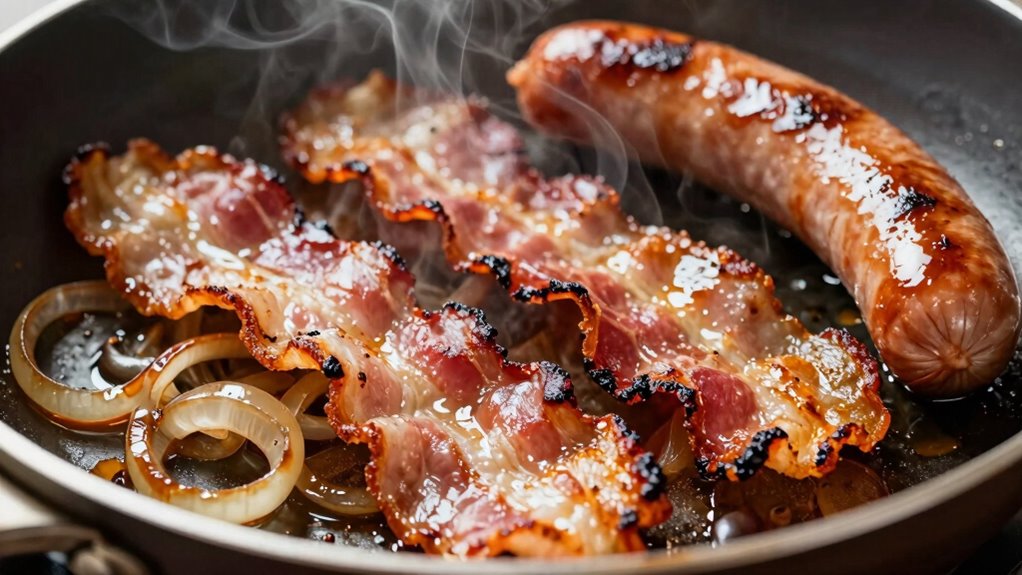
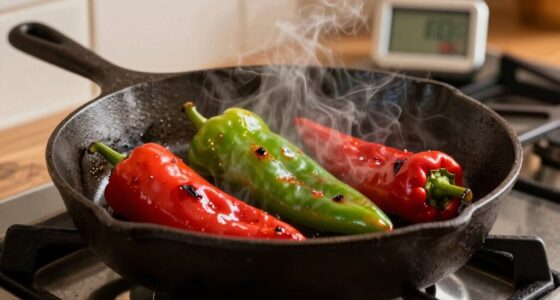
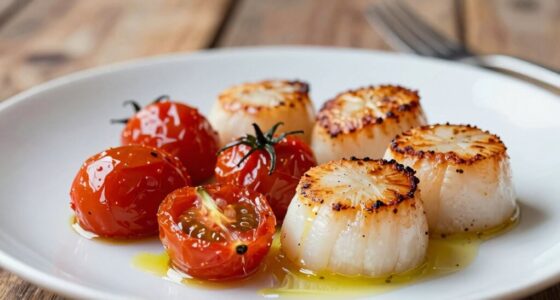
Many people think of fat simply as a source of richness or calories, but it’s so much more than that—fat is a key carrier of flavor in food. When you cook, fat helps release and amplify the flavors of ingredients, making dishes more vibrant and satisfying. This is why understanding the role of fat in cooking is essential for elevating your culinary skills. This knowledge includes how different fats interact with various ingredients, influencing both flavor and texture. This isn’t just about adding butter or oil; it’s about understanding how different cooking techniques utilize fat to bring out the best in your food. Searing a steak in a hot pan creates a caramelized crust because the fat helps develop complex flavors through browning. Slow-rendering pork fat, like in confit, infuses meat with richness and depth. Even roasting vegetables with a drizzle of oil enhances their natural sweetness and flavor profile, thanks to the way fat interacts with their surface. Recognizing the chemical properties of fat can help you select the right fat for each technique, ensuring optimal flavor development. Additionally, understanding fat composition can guide you in choosing healthier options without sacrificing taste. There’s a lot of nutritional myths surrounding fat, often fueled by outdated advice that demonized all fats as harmful. The truth is, not all fats are created equal. Healthy fats, like those found in avocados, nuts, seeds, and olive oil, are essential for your body’s functions, including hormone production and cell health. When you understand how to incorporate these fats into your diet correctly, you’re not just improving flavor—you’re also supporting your wellbeing. This knowledge helps you move beyond the misconception that all fats lead to weight gain or health problems. Instead, you recognize that choosing the right types of fat, and using them properly in cooking techniques, can make your meals both delicious and nutritious.
Using fats skillfully in the kitchen involves more than just pouring oil into a pan. It requires understanding their role in different cooking methods—like sautéing, frying, or braising—and how they influence taste and texture. For example, starting a dish with a bit of fat to sauté aromatics releases their flavors more effectively. When you fry foods, fat forms a crispy exterior that traps juices and enhances taste. These techniques aren’t just about convenience—they’re about elevating your dishes by leveraging fat’s flavor-carrying properties. Recognizing the various types of fats and their specific uses can further refine your cooking techniques, allowing you to tailor each dish for maximum flavor and health benefits.

Pompeian Smooth Extra Virgin Olive Oil – 68 fl oz (2 L)
- Size: 68 fl oz (2 L) bulk bottle
- Olive Oil Type: Extra Virgin, Cold Pressed
- Taste Profile: Smooth and delicate
As an affiliate, we earn on qualifying purchases.
As an affiliate, we earn on qualifying purchases.
Frequently Asked Questions
How Does Fat Influence the Texture of Different Foods?
Fat influences food texture by melting smoothly and creating a tender or flaky consistency. As fat melts, it coats ingredients, enhancing their mouthfeel. It also aids in flavor absorption, making each bite richer and more satisfying. You’ll notice this in pastries, where fat creates flakiness, or in meats, where it keeps things moist and tender. Overall, fat’s melting properties and ability to absorb flavors considerably improve food texture.
Are Some Types of Fat Healthier Than Others for Flavor?
Imagine you’re a health-conscious foodie in the Roaring Twenties, and yes, some fats are better for flavor and health. Unsaturated dietary fats, like those in olive oil and avocados, are healthier choices because they support heart health. Conversely, trans fats and excess saturated fats may harm your health. So, opt for fats that enhance flavor without compromising your well-being, and remember, moderation is key.
Can Reducing Fat Affect the Overall Flavor Profile of a Dish?
Reducing fat can markedly affect the overall flavor profile of a dish because fat plays a key role in flavor enhancement and culinary richness. When you cut back, you may notice less depth and intensity in taste, as fat helps carry and amplify flavors. To maintain the dish’s appeal, consider using healthier fats or alternative methods to preserve that richness and guarantee your dish remains flavorful and satisfying.
How Does Fat Interact With Spices and Herbs in Cooking?
Imagine fat as a sponge soaking up spices and herbs, amplifying their aroma and aroma. You notice how a splash of oil helps garlic and herbs release their scent in a sauté? Fat interacts with spices and herbs, balancing acidity and enhancing aroma, making flavors pop. Without enough fat, those vibrant flavors might fall flat, like a cake missing its frosting—lacking that rich, full-bodied taste you crave.
What Role Does Fat Play in Preserving Food Flavors Over Time?
Fat plays a vital role in preserving food flavors over time by trapping and retaining aroma compounds, which helps maintain freshness. It also extends shelf life by creating a barrier against moisture and oxygen, slowing spoilage. When you use fat in your dishes, you’re not just adding richness—you’re protecting the flavors and aroma, ensuring your food stays tasty longer and retains its original character.

Lodge Pre-Seasoned Cast Iron Skillet with Silicone Handle Holder, 12 Inches
- Versatile Cooking Use: Suitable for searing, sautéing, baking, frying, and camping
- Pre-Seasoned & Non-Toxic: Pre-seasoned with natural vegetable oil, PFAS-free
- Even Heat Distribution: Heavy-duty cast iron for consistent cooking
As an affiliate, we earn on qualifying purchases.
As an affiliate, we earn on qualifying purchases.
Conclusion
Understanding that fat isn’t just about richness but also about flavor, you realize its true culinary value. Did you know that fat enhances over 80% of the flavors in your dishes? By appreciating fat’s role, you uncover a new level of taste and texture that transforms ordinary meals into extraordinary ones. So next time you cook, don’t shy away from using healthy fats—they’re essential for depth, complexity, and that irresistible flavor you crave.
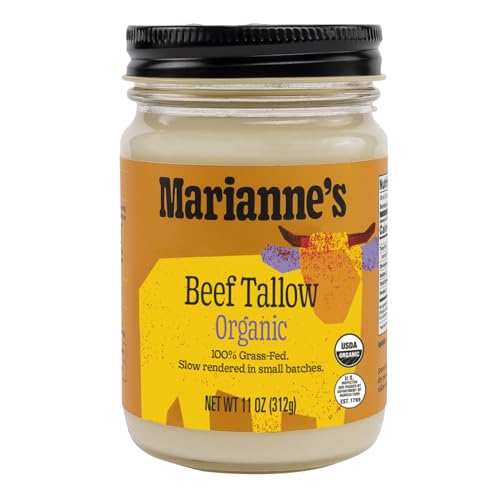
Marianne’s Organic Beef Tallow: 100% Grass-Fed Cooking Fat for Roasting, Frying & High-Heat Cooking, Rich Savory Flavor, Pasture-Raised USA Cattle, USDA Organic
- Pure Organic Beef Tallow: Made from 100% grass-fed beef
- High Smoke Point: Suitable for roasting and frying at high temperatures
- Rich Savory Flavor: Enhances taste of vegetables, meats, and potatoes
As an affiliate, we earn on qualifying purchases.
As an affiliate, we earn on qualifying purchases.

Mantova Grand’Aroma Flavored Extra Virgin Olive Oils, Variety Gift Set, made in Italy, cold-pressed, 100% natural, heart-healthy, for grilling, barbequing, smoking, and cooking, 8.5 oz
- Flavor Variety Set: Tuscan Herb, Garlic, Basil, Truffle
- Made in Italy: Authentic, cold-pressed extra virgin olive oil
- All-Natural & Healthy: Non-GMO, trans fat-free, cholesterol-free, gluten-free
As an affiliate, we earn on qualifying purchases.
As an affiliate, we earn on qualifying purchases.