When deciding between garlic paste and chopped garlic, consider your dish’s texture and flavor intensity. Use garlic paste for sauces, marinades, or when you want a smooth, evenly distributed flavor that infuses quickly. Chopped garlic is better for stir-fries, roasting, or when you prefer a milder, chunkier texture. Each method releases aroma and flavor differently, shaping your dish’s final taste and texture. Keep exploring to discover how to perfect your garlic prep every time.
Key Takeaways
- Garlic paste offers a stronger, smoother flavor ideal for sauces and marinades, while chopped garlic provides a milder, chunkier texture for stir-fries and roasting.
- Use garlic paste early in cooking to maximize flavor infusion; add chopped garlic later to preserve aroma and control pungency.
- Minced garlic releases flavor quickly, making it suitable for quick dishes; larger chopped pieces develop flavor more slowly, ideal for longer cooking.
- Proper tools like a sharp knife or mortar and pestle help achieve the desired mincing style, impacting flavor release and dish texture.
- Store garlic paste in airtight containers in the fridge for up to a week; chopped garlic should be used within a few days to maintain freshness.

PP Imitation Wood Garlic Mincer and Pestle Set – Thickened Drop-Resistant Grinding Bowl for Baby Food, Spices, and Medicine with Cleaning Brush
- Durable Material: Thickened drop-resistant PP construction
- Multi-Use Grinder: Perfect for garlic, spices, baby food, and medicine
- Easy to Clean: Smooth interior surface with cleaning brush
As an affiliate, we earn on qualifying purchases.
As an affiliate, we earn on qualifying purchases.
When Should You Use Garlic Paste or Chopped Garlic?
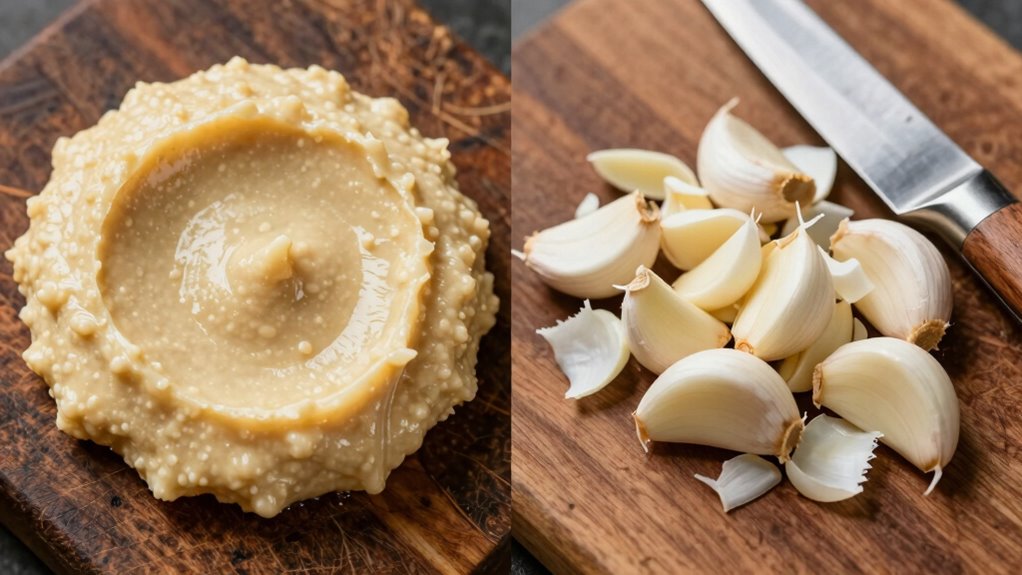
Choosing between garlic paste and chopped garlic depends on the flavor and texture you want in your dish. Garlic paste offers a more intense garlic flavor because it releases oils and compounds more quickly, making it ideal for sauces, marinades, or dishes where a strong garlic presence is desired. The texture differences are notable: paste creates a smooth, uniform consistency that blends seamlessly into liquids, enhancing overall flavor without adding noticeable pieces. Additionally, garlic extraction methods influence the intensity and application of garlic in various culinary contexts. Chopped garlic, on the other hand, provides a milder flavor and a chunkier texture, which can add depth and bite to stir-fries, sautés, or roasted recipes. Your choice hinges on whether you prefer a more subtle, textural element or a robust, evenly distributed garlic flavor.
Hamilton Beach 3 Cup Electric Vegetable Chopper & Mini Food Processor
- Easy to Use: Stack and press design for simple operation
- Compact Size: Chops up to 3 cups for daily use
- Versatile Blades: Stainless steel blades for chopping, pureeing, emulsifying
As an affiliate, we earn on qualifying purchases.
As an affiliate, we earn on qualifying purchases.
How to Mince Garlic Into a Paste: Step-By-Step Guide

To turn garlic into a smooth paste, start by peeling the cloves to remove the papery skins. Use garlic peeling techniques like smashing the cloves with the flat side of a knife or shaking them in a jar to loosen the skins. Proper garlic storage methods, such as keeping bulbs in a cool, dark place, help maintain freshness and flavor. Once peeled, chop the garlic roughly and sprinkle a pinch of coarse salt to act as an abrasive. Use a chef’s knife to mash the garlic and salt together, pressing and rocking until it forms a smooth paste. For quicker results, a mortar and pestle can be used, applying steady pressure to grind the garlic into a fine, uniform paste. Additionally, ensuring color accuracy during preparation can help you better gauge the consistency and quality of your garlic paste. Paying attention to best practices for garlic handling can also improve the overall flavor and safety of your garlic preparation. Incorporating proper garlic storage techniques can further enhance the freshness and potency of the garlic used in your paste.

Home Hero 2 Pcs Santoku Knife with Sheath – High Carbon Stainless Steel Chopping Knife with Ergonomic Handle – Razor-Sharp Multi-Purpose Kitchen Knife for Chopping Vegetable and Cooking (Black)
- Sharp Stainless Steel Blade: High-quality 3Cr13 stainless steel
- Protective Sheath Included: Safe storage and blade protection
- Versatile Multi-Purpose Knife: Cuts meat, fish, vegetables, sushi
As an affiliate, we earn on qualifying purchases.
As an affiliate, we earn on qualifying purchases.
When to Opt for Chopped Garlic Instead of Paste in Cooking
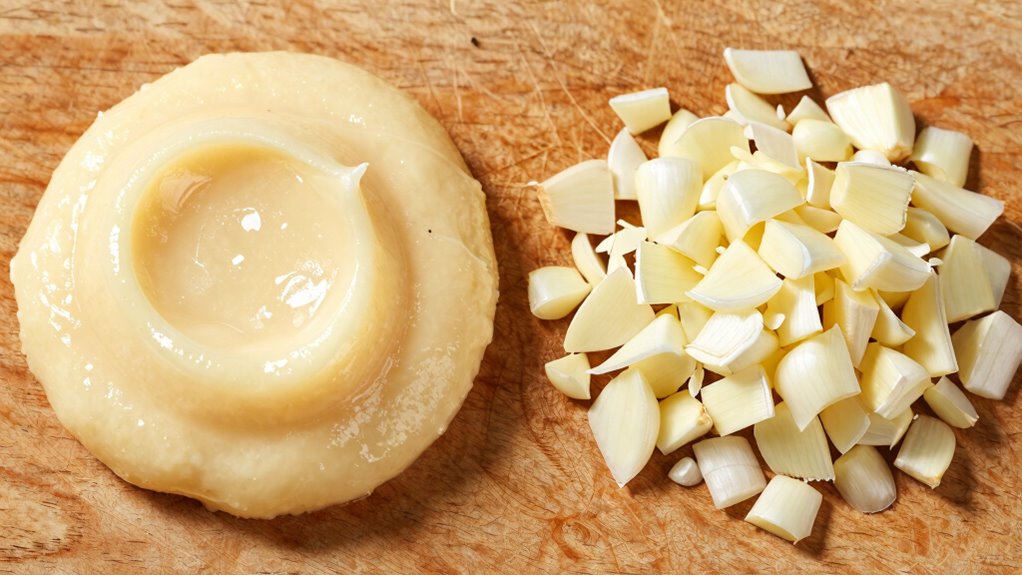
Sometimes, using chopped garlic is the better option when you want a milder, more textured flavor in your dish. Chopped garlic releases a subtler garlic aroma, allowing other ingredients to shine without overpowering the dish. It’s ideal when you want visible pieces that add texture and a gentle garlic flavor. Opt for chopped garlic when cooking delicate dishes, like salads or quick sautés, where a strong garlic aroma might be too intense. Additionally, chopping garlic can be safer; it minimizes the risk of garlic paste splattering or getting stuck under your nails, promoting better kitchen safety. By choosing chopped over paste, you control the intensity and ensure a balanced garlic presence, especially in recipes where subtlety and texture matter most.

DAYYET Garlic Keeper for Counter, Ceramic Garlic Keeper with Non-Sealed Acacia Wood Lid, Garlic Holder Storage Container to Keep Your Garlic Cloves Fresh Longer, Garlic Saver for Kitchen, White
- Large Capacity: Holds 3 garlic bulbs easily
- Easy Access Opening: Wide opening for easy removal
- Versatile Storage: Suitable for garlic, onions, potatoes, ginger
As an affiliate, we earn on qualifying purchases.
As an affiliate, we earn on qualifying purchases.
How Garlic Consistency Affects Flavor, Aroma, and Texture
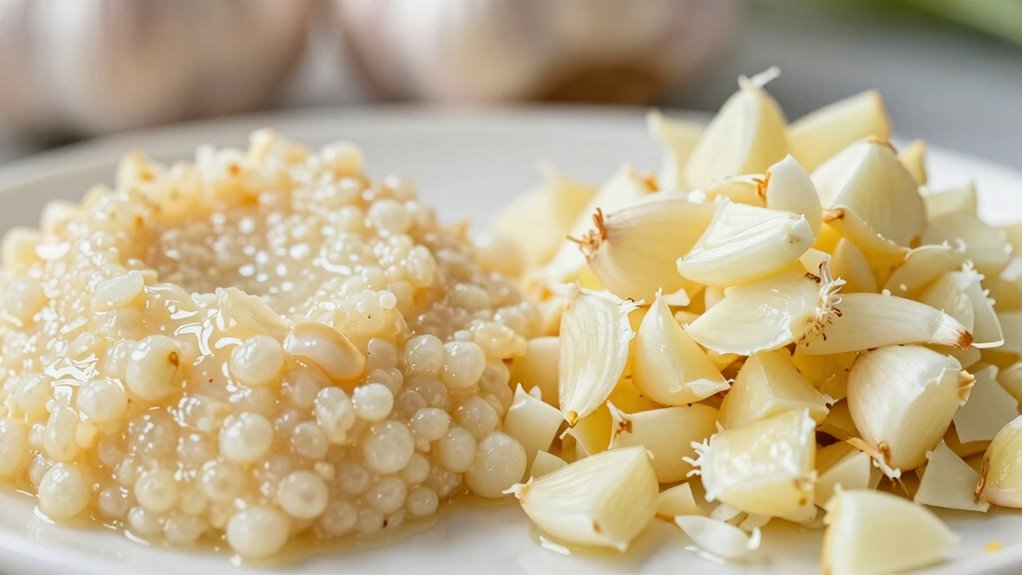
The consistency of garlic—whether minced, crushed, or pureed—directly influences its flavor, aroma, and texture in your dishes. When you crush garlic, it releases more garlic aroma, creating a stronger, more pungent flavor. Minced garlic offers a balanced flavor, providing aroma without overwhelming the dish. Pureed garlic delivers a smooth texture, making it ideal for sauces and dressings, with a more uniform garlic flavor. The texture enhancement varies depending on preparation; crushed garlic adds a bit of grit, while pureed creates a silky feel.
Garlic’s texture and flavor vary with preparation: crushed for pungency, minced for balance, pureed for smoothness.
- Garlic aroma intensifies with crushing or pureeing.
- Texture enhancement depends on the size and form of the garlic pieces.
- Mincing offers a moderate flavor, suited for dishes needing subtle garlic notes.
- Pureeing provides a consistent, mellow garlic presence throughout your dish.
Essential Tools for Perfect Garlic Paste and Chopped Pieces
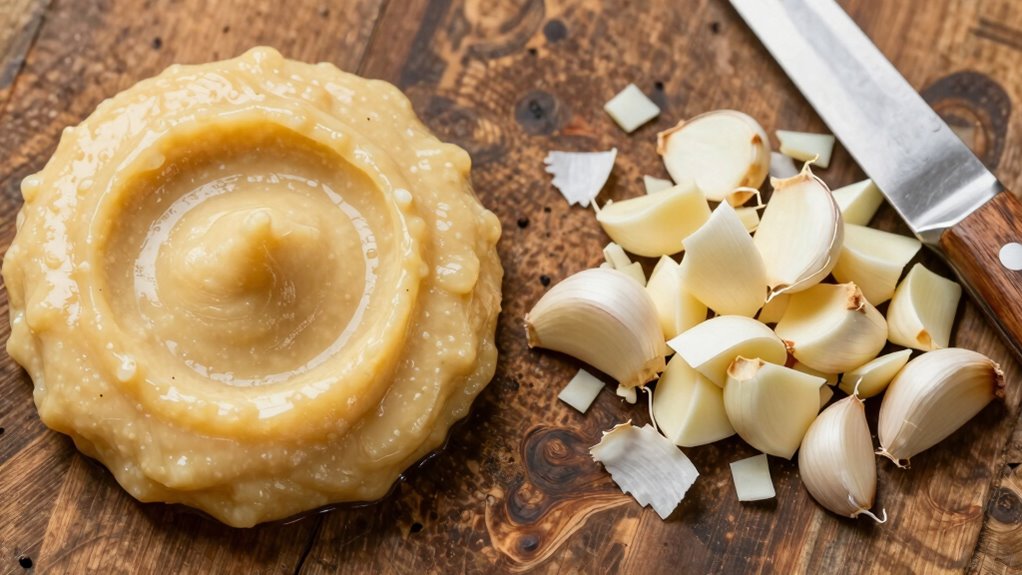
Achieving perfect garlic paste and chopped pieces requires the right tools that make the process efficient and consistent. A sharp chef’s knife or a garlic press helps you quickly mince or crush garlic, ensuring even texture. For garlic peeling techniques, a silicone garlic peeler or shaking cloves in a jar can save time. Proper garlic storage methods, like keeping bulbs in a cool, dark place, prevent sprouting and spoilage, maintaining freshness for longer. Using a mortar and pestle allows you to create smooth garlic paste or coarse chopped pieces, depending on your needs. Here’s a quick comparison:
| Tool | Best Use | Maintenance |
|---|---|---|
| Chef’s knife | Chopping and mincing | Regular sharpening |
| Garlic press | Quick paste preparation | Easy to clean |
| Mortar & pestle | Custom texture control | Hand wash, dry thoroughly |
How Mincing Style Changes Cooking Time and Dish Texture
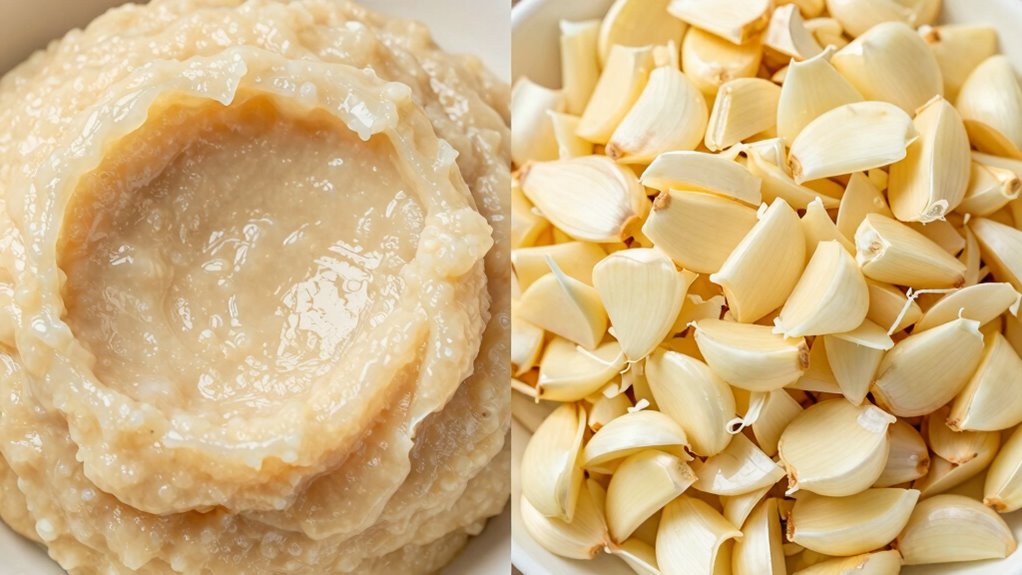
The way you mince garlic affects how quickly its flavor releases and how long it needs to cook. Finer pieces tend to mellow faster but may cook quicker, impacting your dish’s texture. Understanding these differences helps you control both taste and consistency in your cooking. Using the appropriate mincing style for each recipe ensures optimal flavor extraction and desired dish outcomes. Additionally, the sticking wall decor techniques can help you keep your kitchen organized, making it easier to prepare garlic efficiently. Incorporating body jewelry measurements into your kitchen setup can inspire innovative storage solutions that optimize space and accessibility. Recognizing the flavor release dynamics of garlic mincing methods allows cooks to better tailor their approach to different culinary applications.
Flavor Release Speed
Mincing garlic finely increases the speed at which its flavors are released during cooking, impacting both the dish’s aroma and taste. Smaller pieces expose more surface area, releasing strong, pungent flavors quickly, which enhances the overall flavor profile. This rapid release can also influence the garlic’s health benefits, as more allicin is formed sooner, boosting its medicinal properties. Additionally, finely minced garlic can be more sensitive to cooking duration, requiring careful timing to prevent bitterness. Understanding garlic cultivation techniques helps you select fresher, more aromatic garlic, which further affects flavor release. Proper mincing maximizes garlic’s health benefits, and using garlic cultivation techniques can ensure you choose the freshest garlic for optimal flavor and aroma. Texture and aroma vary considerably with mincing style.
Cooking Duration Impact
How you cut your garlic directly influences how long it takes to cook and the texture of your dish. Finely minced garlic, like a paste, releases its garlic aroma quickly, reducing overall cooking time and enhancing flavor infusion. This increases cooking efficiency, especially in quick dishes or sauces. Chopped garlic, with larger pieces, takes longer to soften and develops a subtler aroma, requiring more cooking time to fully release its flavor. The size of your garlic pieces affects how quickly they cook and how the dish’s texture will turn out—smaller pieces blend seamlessly, while larger chunks offer a more textured bite. Additionally, mincing techniques can be optimized through modern kitchen technology to achieve consistent results. Adjusting your mincing style based on your desired cooking duration ensures ideal flavor release and the perfect dish consistency.
Dish Texture Variations
The size of garlic pieces you choose directly impacts the texture of your finished dish. Finely minced garlic creates a smoother, more integrated flavor, perfect for sauces or quick-cooked dishes. Coarsely chopped garlic offers a chunkier texture, adding bursts of flavor and mouthfeel. When you garlic roast, larger pieces develop a sweeter, softer texture, less intense in flavor. Garlic freezing preserves the garlic’s integrity, allowing for quick use in different textures—minced for pastes or chopped for crunch. Your choice influences cooking time; minced garlic cooks faster and blends more thoroughly, while larger pieces require longer to soften. Proper garlic preparation ensures optimal flavor and texture in your cooking process. Additionally, understanding cooking techniques can help you choose the best mincing style for each recipe, enhancing overall dish quality. Knowing the impact on flavor of different garlic preparations can help you tailor your dishes to achieve specific taste profiles. Incorporating the right culinary tools can also make your garlic preparation more efficient and precise.
Best Practices for Incorporating Garlic Paste and Chopped Garlic Into Recipes
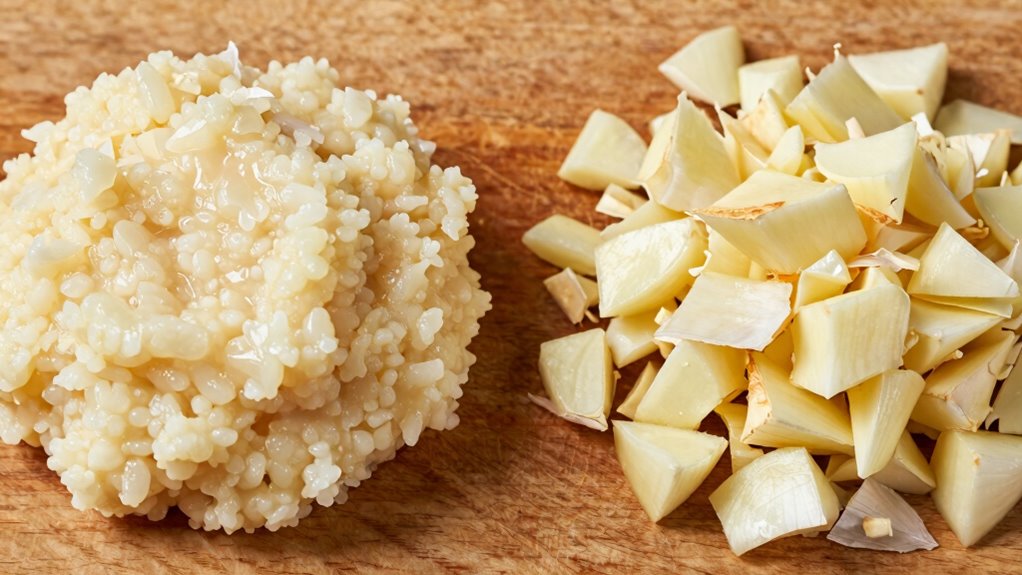
Timing is key when adding garlic paste; you should incorporate it early to build flavor without overpowering the dish. Chopped garlic works best when added later in cooking to retain its texture and aroma. Knowing when and how to use each form guarantees your recipe turns out just right.
Timing for Garlic Paste
Adding garlic paste at the right moment during cooking can make a significant difference in flavor. Timing affects how well the garlic’s aroma and health benefits develop. For garlic paste, add it early in the process, such as when sautéing onions or spices, to maximize garlic health benefits and infuse the dish deeply. This allows the garlic’s compounds to meld with other ingredients and soften its pungency. If you prefer a milder taste, add it later, near the end of cooking. Remember, proper garlic growing tips can ensure fresh, potent garlic, enhancing both flavor and health benefits. Overcooking garlic paste can diminish its aroma and nutrients. Use garlic paste strategically to balance flavor, health, and aroma in your dishes, and understanding flavor development can help you achieve the perfect taste.
Best Uses for Chopped Garlic
Chopped garlic offers a quick and versatile way to boost flavor in many dishes, making it ideal for adding depth at various stages of cooking. Its fresh aroma enhances sautéed vegetables, stir-fries, and marinades, allowing you to control the intensity of garlic’s pungency. Incorporate chopped garlic early to develop a mellow, savory base, or add it later for a sharper, more vibrant taste. Understanding garlic cultivation techniques can help you select fresher, healthier cloves, maximizing garlic health benefits like antioxidants and immune support. Using chopped garlic also guarantees you preserve more of these benefits compared to processed forms. Keep in mind that properly stored garlic maintains its flavor and health properties longer, so buy quality bulbs to get the most out of your culinary and health benefits.
Common Mistakes to Avoid When Preparing Garlic for Cooking
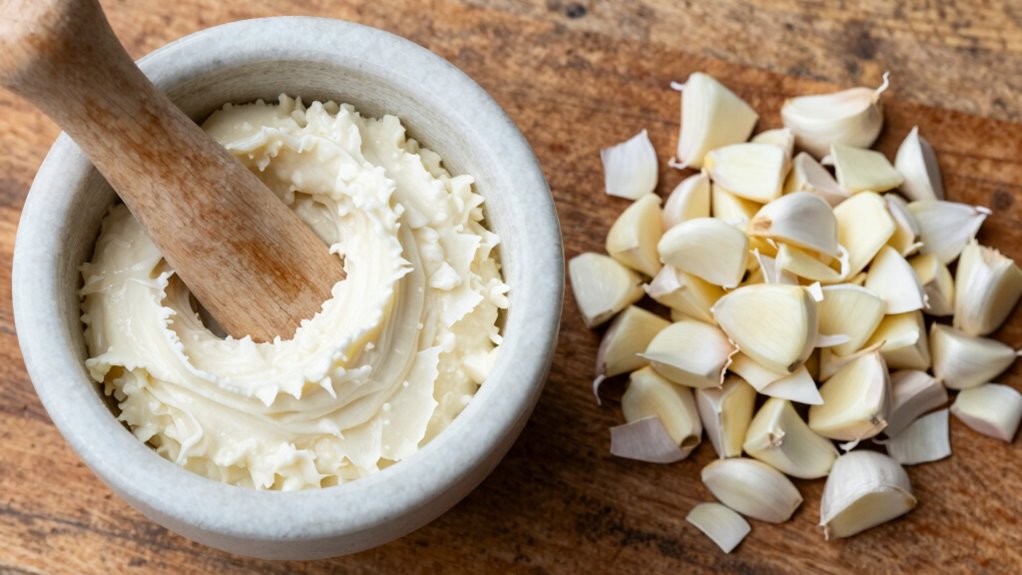
One common mistake when preparing garlic is crushing or mincing it too early, which can cause it to lose its flavor and aroma quickly. Over-handling garlic reduces its ability to develop the best garlic flavor profiles, diminishing its culinary impact. Additionally, improper prep can affect garlic nutrition facts, as exposing garlic to air too soon can degrade beneficial compounds. To avoid these pitfalls, consider these tips:
- Mince garlic just before adding it to dishes for maximum flavor.
- Use a sharp knife to prevent crushing and preserve texture.
- Avoid pressing garlic too hard, which can release bitter compounds.
- Remember that different preparations, like paste versus chopped, serve different cooking needs.
- Proper storage and handling can help maintain garlic freshness and its flavor integrity.
- Being aware of tax implications of garlic-related home businesses can help ensure compliance if you’re selling garlic products.
- Choosing the right garlic preparation method can enhance both flavor and nutritional benefits.
- Recognizing the importance of freshness preservation can significantly impact the overall quality of your garlic.
- Using the appropriate essential oil for specific health needs can maximize benefits and avoid adverse effects.
How to Store and Preserve Minced Garlic: Paste vs. Chopped
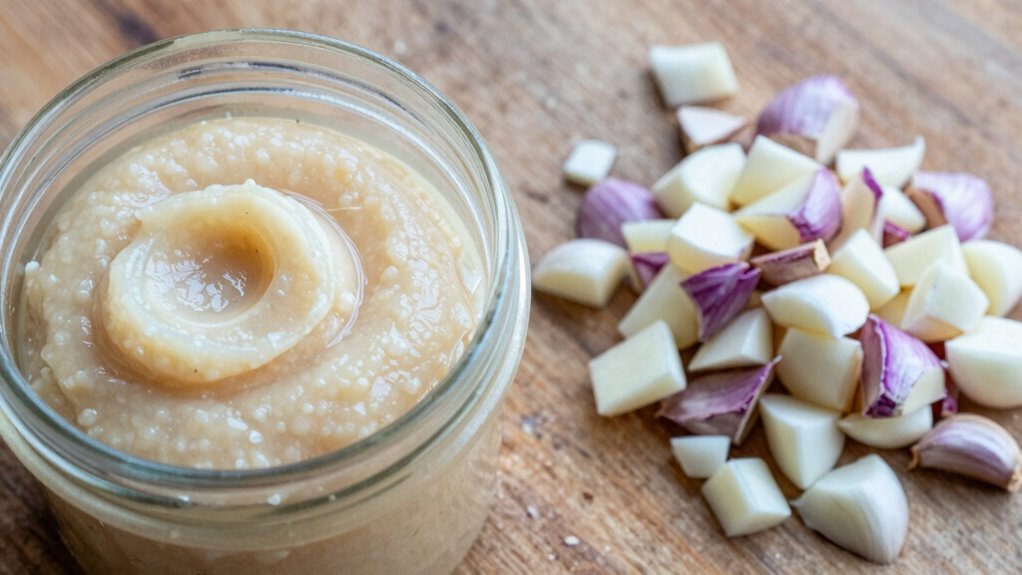
Storing and preserving minced garlic properly guarantees its flavor and nutritional benefits last. For both paste and chopped garlic, airtight containers are essential to prevent moisture and air exposure, which can diminish garlic’s flavor intensity over time. Paste tends to have a longer minced garlic shelf life when refrigerated, often lasting up to a week, because its oil content helps preserve freshness. Chopped garlic, however, should be used within a few days to retain ideal flavor. For extended storage, consider freezing garlic in small portions—ice cube trays work well—so you can thaw only what you need. Proper storage guarantees your garlic maintains its flavor strength and prevents spoilage, no matter which prep style you choose. Additionally, understanding water retention techniques can help maintain garlic’s moisture and freshness during storage. Incorporating proper storage methods can further extend the quality and usability of your minced garlic.
Choosing the Right Garlic Mince Style to Achieve Your Flavor Goals
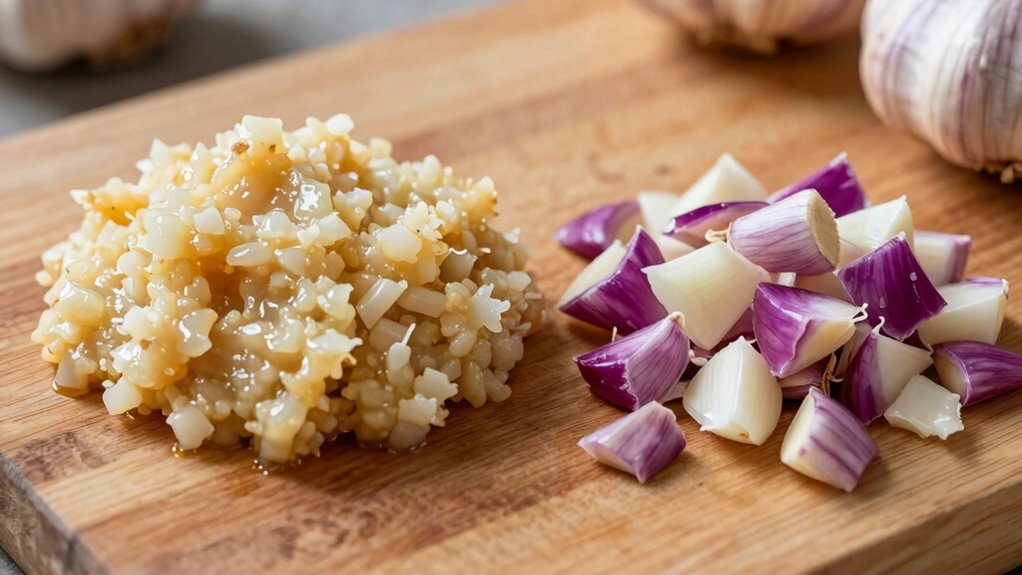
Choosing the right garlic mince style depends on your flavor goals and cooking methods. If you want a strong, pungent flavor that infuses quickly, opt for minced garlic in a paste. For milder, more nuanced flavor, chopped garlic works better. Consider how much garlic health benefits matter; finely minced garlic releases more allicin, boosting its health benefits. When selecting garlic, use quality bulbs and follow garlic cultivation tips to ensure fresh, flavorful cloves.
- Use paste for quick, intense flavor in sauces or marinades
- Chop for a subtle, layered garlic flavor in sautés
- Mince finely to maximize garlic health benefits
- Coarse chopping is ideal for roasting or grilling
Frequently Asked Questions
Can Garlic Paste Be Used as a Marinade or Spread?
Yes, you can definitely use garlic paste as a marinade or spread. Its smooth texture allows it to evenly coat meats, vegetables, or bread, making it perfect for flavorful marinades or spreads. When you want a quick garlic boost, just spread it directly on bread or mix it into dressings. Its concentrated flavor enhances dishes efficiently, so don’t hesitate to incorporate garlic paste whenever you need a quick garlic punch.
How Does Garlic Mincing Affect Cooking Times for Different Dishes?
When you mince garlic, it releases more oils and flavors, which can speed up cooking efficiency. Finely minced or paste garlic tends to cook faster, often needing less time to soften or caramelize, while chopped garlic takes longer to release its full flavor. So, if you want quicker results, opt for minced or paste garlic; for slower, more nuanced flavor development, chopped garlic works best.
Is There a Flavor Difference Between Fresh and Stored Minced Garlic?
Yes, there’s a flavor difference between fresh and stored minced garlic. Fresh garlic typically offers a stronger aroma and more intense flavor, while stored garlic can lose some of its aroma strength and flavor intensity over time. When you use fresh minced garlic, your dishes will have a more vibrant, pungent taste. Stored garlic might be milder, but it still adds good flavor, especially if it’s been properly kept.
What Are the Health Benefits of Garlic in Paste Versus Chopped Form?
You get similar health benefits from garlic in both paste and chopped forms, but paste may offer better garlic nutrient preservation and higher antioxidant levels because it’s processed soon after crushing, releasing beneficial compounds quickly. Chopped garlic still retains nutrients, but the antioxidant levels can diminish over time. Using garlic in paste form ensures you maximize its health benefits, especially if you want to boost immunity or reduce inflammation.
How Does Garlic Mincing Style Influence the Visual Presentation of a Dish?
Did you know dishes with chopped garlic often look more rustic and textured? Your garlic texture directly affects the visual appeal, making the dish appear more hearty or refined. Mince garlic finely into a paste for a smooth, uniform look that enhances elegance, while chopped garlic adds visual interest with chunky pieces. The style you choose can elevate your presentation, making your dish more inviting and aligned with your culinary aesthetic.
Conclusion
Just like a painter chooses the right brush for their masterpiece, selecting between garlic paste and chopped garlic shapes your dish’s character. Each method reveal different layers of flavor, aroma, and texture—think of it as your culinary palette. Remember, the right choice can turn a simple dish into a symphony of taste, much like a composer knowing when to crescendo or soften. Trust your instincts and craft with purpose, and your cooking will always sing.