
You should sharpen your knives based on how often and hard you use them, typically every few months for regular home cooking. Pay attention to signs like increased effort or uneven cuts, and consider the type of knife. High-carbon blades may need more frequent attention than ceramic ones. Proper maintenance, including honing and safe storage, also helps extend sharpness. Keep exploring for more tips to maintain your knives effectively over time.

Get kitchen staples and gadgets delivered free — and shop member deals
- Fast, free delivery on millions of items
- Access to Prime Big Deal Days deals on October 6–7
- Prime Video, Amazon Music and more included
Key Takeaways
- Sharpen knives when they become dull or require increased effort, typically every few months for home use.
- Regular honing after every few uses helps maintain edge sharpness and extends sharpening intervals.
- The frequency depends on knife type, material, and task intensity; high-quality blades need less frequent sharpening.
- Use visual and performance indicators, like uneven cuts or difficulty slicing, to determine when sharpening is needed.
- Proper storage and cutting techniques reduce dulling, decreasing the need for frequent sharpening.
As an affiliate, we earn on qualifying purchases.
How Often Should You Sharpen Your Kitchen Knives?
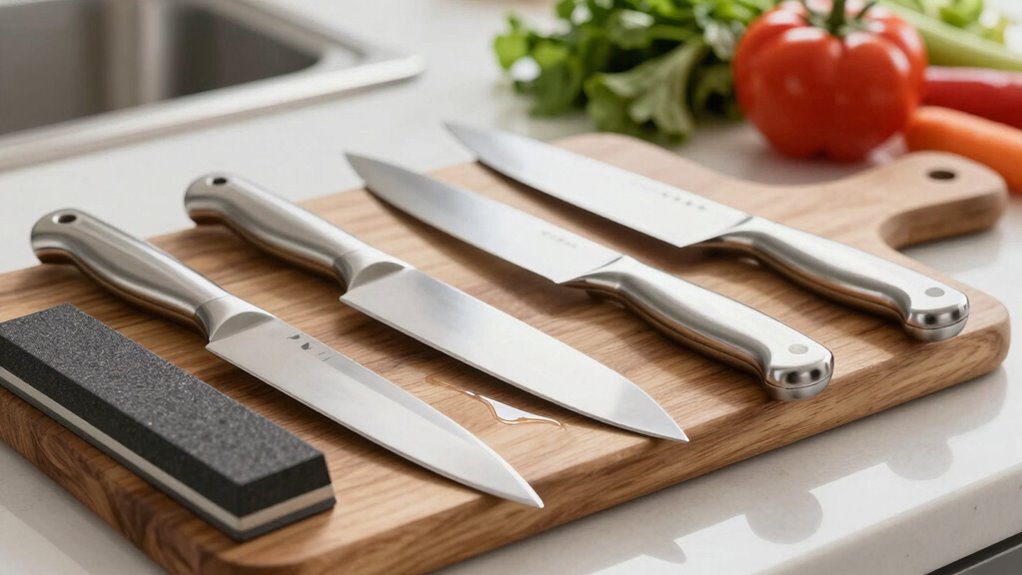
While there’s no one-size-fits-all answer, knowing how often to sharpen your kitchen knives depends on how frequently you use them. Your cooking preferences play a role—if you chop vegetables daily, you’ll need to sharpen more often than someone who cooks less frequently. Regularly used knives naturally dull faster, affecting both performance and safety. Additionally, knife aesthetics matter; a dull blade can look worn and tarnished, detracting from presentation. To keep your knives in top shape, sharpen them when you notice a decline in cutting efficiency or if they no longer glide smoothly through ingredients. Proper blade maintenance also extends the lifespan of your knives, making regular sharpening an essential part of your kitchen routine. For example, blade consistency ensures your knives perform reliably and safely over time. Incorporating proper sharpening techniques can help maintain their edge without damaging the blade surface. Regular honing helps realign the edge, while advanced sharpening tools can restore a sharper, more durable edge. *Using the right sharpening tools can make all the difference* in achieving a precise and long-lasting edge. Generally, honing after every few uses and sharpening every few months helps maintain both their appearance and function, ensuring your knives stay sharp and attractive for years to come.
As an affiliate, we earn on qualifying purchases.
How Can You Tell When Your Knives Need Sharpening?
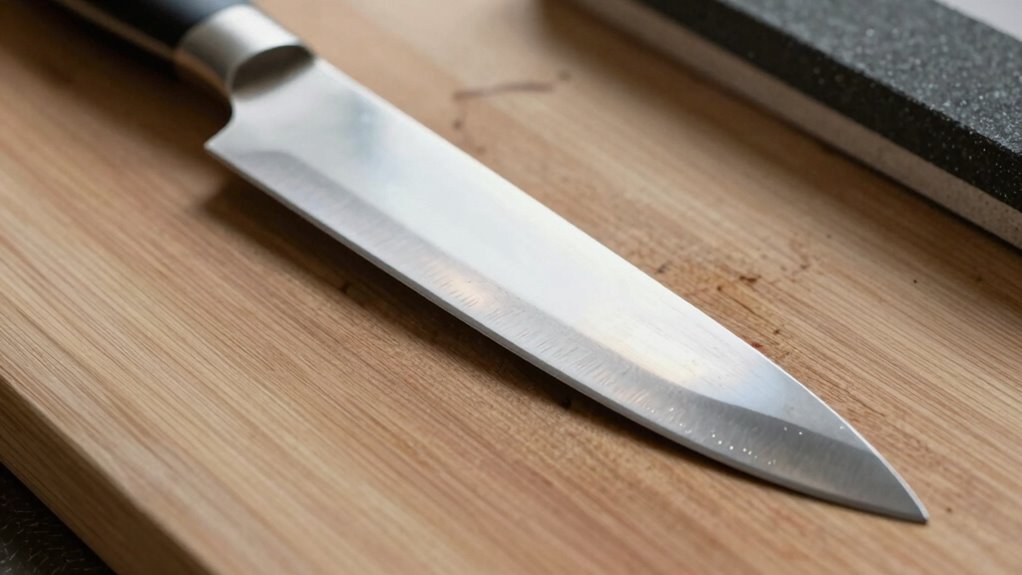
You can often tell your knives need sharpening by paying attention to how they perform during chopping and slicing. If your cuts are uneven or require more effort, your blade may be dull. Additionally, knife aesthetics matter—dull blades can look chipped or worn, signaling it’s time for a touch-up. Beware of sharpening myths that suggest only visibly dull knives need sharpening; sometimes, a knife can look fine but perform poorly. A truly sharp knife glides effortlessly through ingredients, while a dull one drags and tears. Regularly testing your knife’s edge—by slicing paper or a tomato—can help you catch dullness early. Proper maintenance techniques are essential to extend the lifespan of your blades and ensure consistent performance. Monitoring knife edge condition can also help you identify when sharpening is needed before performance degrades further. To optimize your sharpening routine, understanding blade performance indicators is crucial for maintaining cutting efficiency. Keep in mind that worn edges can sometimes be restored through honing, but eventual sharpening is necessary for a truly sharp edge.
As an affiliate, we earn on qualifying purchases.
What Factors Affect How Often You Should Sharpen Knives
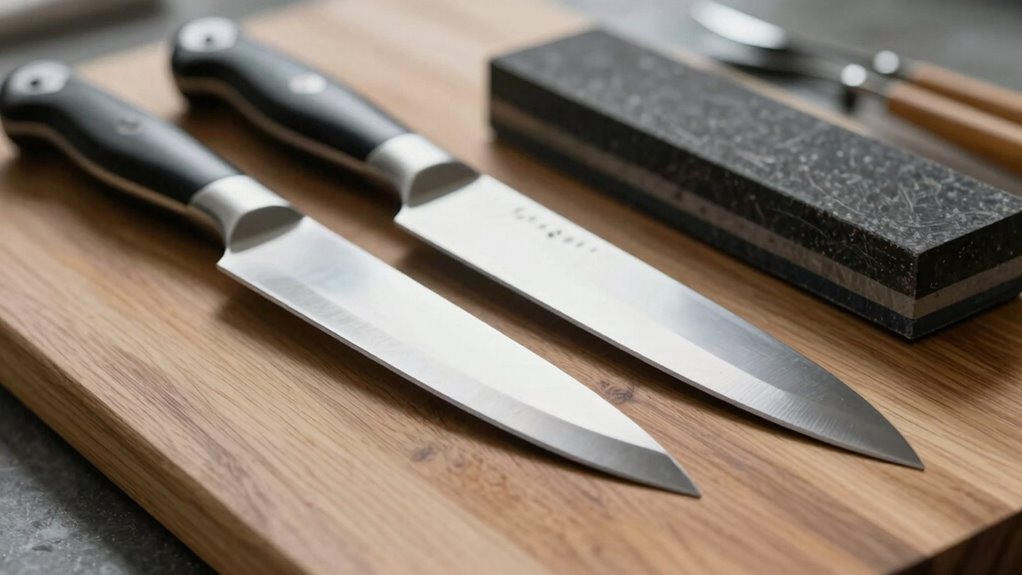
Several factors determine how often you should sharpen your knives, including the type of knife, how frequently you use it, and the tasks you perform. Knife aesthetics can influence your sharpening schedule because a dull blade may look scratched or tarnished, affecting its appearance. Handle comfort also plays a role; if a knife feels uncomfortable or unbalanced, you might grip it less firmly, leading to uneven cuts that damage the edge. The more often you use your knives, especially for tough tasks like chopping or slicing hard foods, the more frequently you’ll need to sharpen them. Additionally, high-quality knives with better edge retention require less frequent sharpening, but neglecting regular maintenance can still compromise their performance over time. Regular Proper maintenance is essential to prolong the lifespan and effectiveness of your knives. In particular, understanding how different cutting techniques impact edge wear can help you develop a more effective sharpening routine. Moreover, understanding the specific auditory processing involved in your tasks can help you develop more efficient sharpening habits, ensuring consistent performance. Developing a keen sense of sound cues can alert you to when your knife needs sharpening before it becomes too dull.
As an affiliate, we earn on qualifying purchases.
Do Different Types of Knives Require Different Sharpening Schedules?

Different types of knives have unique sharpening needs based on their design, materials, and intended use. For example, a high-carbon steel blade may require more frequent sharpening than a ceramic one due to blade materials’ wear. Sharpness retention varies; some knives need regular attention, while others stay sharp longer. Understanding this helps you set appropriate sharpening frequency for each knife type. Consulting sharpening science can provide deeper insights into how different blades respond to maintenance.
Create a Knife Maintenance Routine That Works for You
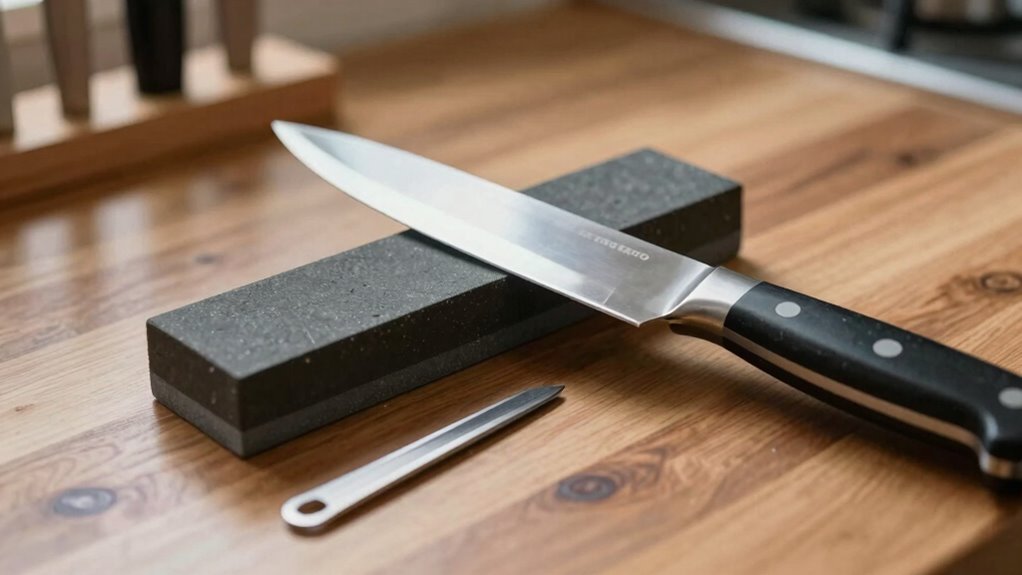
To create a maintenance routine that fits your needs, start by evaluating how often you use your knives and what tasks you perform. Then, pick the right sharpening tools that match your skill level and knife types. Finally, set a consistent schedule to keep your knives in top condition without overdoing it.
Assess Your Cutting Needs
How often you need to sharpen your knives depends on how frequently you use them and the types of tasks you perform. For example, a chef’s knife used daily for chopping vegetables needs more frequent sharpening than a decorative knife. Consider your blade material; high-carbon steel blades tend to require more frequent sharpening due to their hardness, while ceramic blades hold an edge longer. Monitoring the blade’s performance—such as ease of cutting and food release—can help determine sharpening frequency. Use this guide to assess your needs:
| Usage Level | Recommended Sharpening Frequency | Blade Material Impact |
|---|---|---|
| Light | Once every few months | Less frequent |
| Heavy | Monthly or as needed | More frequent |
| Professional | Weekly or after heavy use | Regular sharpening |
Adjust based on your specific tasks to maintain best sharpness. Additionally, understanding piercing care and hygiene can help prevent infections that might compromise your tools or safety.
Choose Suitable Sharpening Tools
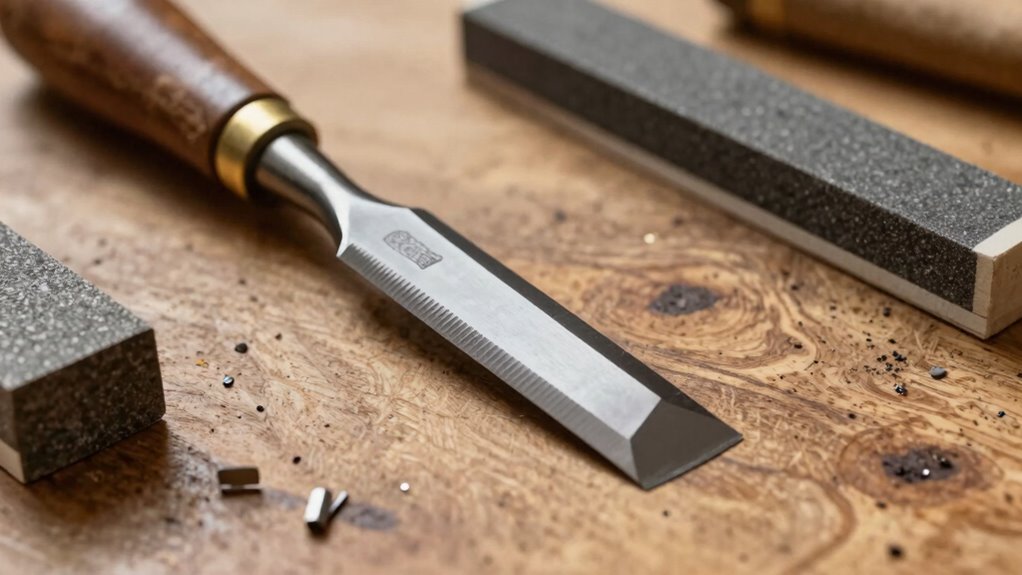
Choosing the right sharpening tools is essential for maintaining your knives efficiently. Start by selecting a stone grit suitable for your needs—coarse grit for dull blades and finer grit for honing. A sharpening stone with varying grits allows you to progress from reshaping to polishing your edge. Using honing oil helps reduce friction and debris buildup, ensuring smooth, consistent sharpening. If you prefer a quick touch-up, a honing rod might suffice, but for more significant dullness, a quality stone provides better results. Always match the tool to your skill level and the knife’s condition. Properly maintaining your tools by cleaning and storing them correctly will extend their lifespan and keep your knives performing at their best. Incorporating the right airless paint sprayer can also make your painting projects more efficient and professional-looking.
Establish Consistent Maintenance Schedule
Creating a consistent maintenance schedule guarantees your knives stay sharp and safe to use. By establishing a routine, you make certain proper knife ergonomics, reducing strain and improving control during use. Regular maintenance also helps dispel sharpening myths, like the idea you need to sharpen your knife every time you use it. Instead, focus on consistent honing and periodic sharpening based on your knife’s condition. Set reminders to check your blades’ sharpness, and stick to a routine that fits your cooking habits. A predictable schedule minimizes guesswork and prolongs the life of your knives. Remember, a well-maintained knife isn’t just about sharpness; it’s about safety and efficiency in your kitchen. Understanding maintenance principles can help you optimize your routine and ensure your knives remain in top condition. Incorporating proper knife care into your routine further enhances durability and performance over time. Additionally, being aware of blade sharpness indicators can guide you on when to sharpen or hone your knives for optimal performance. Recognizing the importance of professional sharpening services can also be beneficial for maintaining truly precision edges when needed. Regularly using correct sharpening techniques ensures your blades keep their edge without unnecessary wear.
Tips to Keep Your Knives Sharp Between Sharpenings
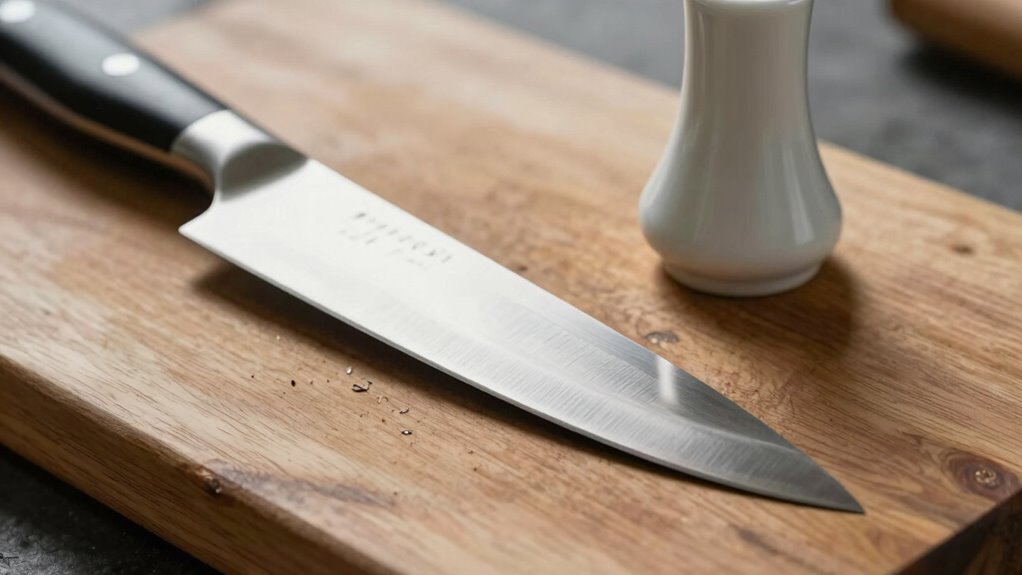
To keep your knives sharp between sharpenings, focus on proper cutting techniques that reduce unnecessary stress on the blade. Regular honing helps realign the edge and maintain sharpness, while safe storage methods prevent dulling and damage. By practicing these tips, you’ll extend the life of your knives and make sure they perform at their best.
Proper Cutting Techniques
Ever wonder how your cutting technique impacts the sharpness of your knives? Maintaining the right blade angle is essential; aim for a consistent, slightly angled position to reduce unnecessary wear. Avoid pressing down with excessive cutting pressure, which can dull the edge faster. Instead, use a gentle, controlled motion, letting the knife do the work. Keep your cuts smooth and steady, especially when slicing through tough ingredients. Proper technique minimizes stress on the blade and helps preserve sharpness between sharpenings. Also, use a cutting board that’s gentle on your knife’s edge—wood or plastic over harder surfaces like glass or stone. Small adjustments in your cutting style can markedly extend the life of your knives and keep them performing at their best. Being mindful of proper cutting techniques can make a significant difference in maintaining your knives’ sharpness over time.
Regular Honing Practices
Regular honing is essential for maintaining your knives’ sharpness between full sharpenings. Proper honing aligns the edge without removing metal, ensuring smoother cuts and reducing the need for frequent sharpening. Focus on knife ergonomics—hold your knife at the correct angle and use a consistent motion to avoid damaging the edge. Many sharpening myths suggest that honing realigns a dull blade, but it actually only straightens the existing edge. Regular honing keeps the edge in prime condition, prolonging the interval between professional sharpenings. Incorporate honing into your routine after every few uses to maintain ideal performance. Understanding the metal removal process involved in sharpening can help you better appreciate how honing preserves your knife’s integrity. By practicing these habits, you’ll preserve your knife’s sharpness longer, making every cut safer and more efficient.
Safe Storage Methods
Are you storing your knives in a way that keeps their edges sharp? Proper knife storage is key to preventing dullness and blade corrosion. Here are four tips to help you maintain sharpness between sharpenings:
- Use a knife block or magnetic strip to prevent blades from knocking against other utensils.
- Avoid tossing knives in drawers, which can cause nicks and dullness.
- Keep knives dry and clean to prevent moisture buildup that leads to blade corrosion.
- Consider knife guards or sheaths for added protection during storage.
Common Mistakes That Dull Your Knives Faster
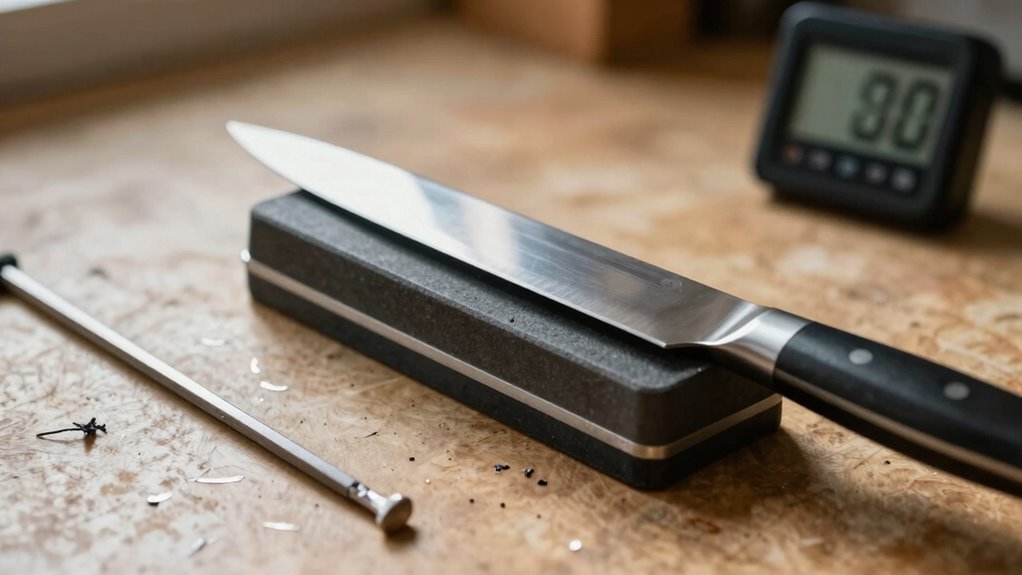
Have you been unknowingly speeding up the dulling process of your knives? Many people fall for dullness myths that lead to improper use, like cutting on hard surfaces or attempting quick fixes. These sharpening myths can cause more harm than good, making your blades dull faster. Avoid using your knife on glass or stone countertops, which damage the edge. Don’t rely solely on household items like ceramic mugs for sharpening; they can worsen dullness. Also, resist the urge to sharpen too frequently, thinking it will prolong their life—over-sharpening wears out the blade faster. Instead, learn proper techniques and follow a realistic sharpening schedule. Correct use and understanding dullness myths help your knives stay sharper longer, saving you time and effort in the kitchen.
Frequently Asked Questions
Can I Sharpen Knives With Household Tools Effectively?
Yes, you can sharpen knives with household tools effectively if you know what you’re doing. Use items like a ceramic mug, a honing rod, or even a smooth, flat stone for basic knife maintenance. Just be careful to maintain the correct angle and apply consistent pressure. While these tools work in a pinch, investing in a proper sharpening stone or tool guarantees your knives stay sharper longer and perform better in your kitchen.
How Does Storage Impact Knife Sharpness Over Time?
Think of your knives as delicate dancers, needing the right stage. Poor storage conditions can turn that stage into a battleground, exposing blades to metal corrosion and dulling their edge over time. Storing knives properly, away from moisture and humidity, preserves sharpness and prevents corrosion. Proper storage keeps your knives dancing gracefully, ensuring they stay sharp longer and perform beautifully every time you need them.
Is It Better to Sharpen or Replace Dull Knives?
You should sharpen your dull knives rather than replace them, especially if the blade material is high-quality. Using proper sharpening techniques, like honing or using a whetstone, restores the edge effectively. Replacing knives can be costly, while sharpening extends their lifespan. Regular maintenance keeps your blades performing well, ensuring safety and precision. So, invest in sharpening your knives consistently, and you’ll save money and enjoy better cooking results.
What Are the Signs of a Dangerously Dull Knife?
You’ll notice your knife is dangerously dull if it struggles to cut through foods, requires extra force, or slips easily, risking injuries. Poor edge maintenance increases this danger, so always pay attention. Use safety precautions like cutting on proper surfaces and keeping your fingers clear. When your knife’s edge isn’t sharp enough to cut smoothly, it’s time to sharpen or replace it, ensuring safer, more efficient food prep.
How Does Frequency of Use Influence Sharpening Needs?
Frequent use fuels your need for frequent knife maintenance and sharpening. The more often you chop, carve, or cut, the quicker your blade dulls. Regular sharpening maintains a crisp edge and prevents damage, saving you time and effort. If you use your knife daily, plan on sharpening it every few weeks. Less frequent use means you can extend the intervals. Stay attentive to dullness signs and sharpen accordingly to keep your knife in prime condition.
Conclusion
So, unless you want your knives to turn into dull, useless scrapers, stay on top of their sharpening schedule. Ignore them at your peril—because chopping with a broken blade is a surefire way to ruin dinner and your reputation. Remember, a sharp knife is a happy chef’s best friend, and a dull one just makes you look like you’re trying to hack your way through life. Stay sharp, literally.
NFL season / tailgating Picks
team gear
As an affiliate, we earn on qualifying purchases.