
To pass knives safely, always hold the handle with a firm grip, pass handle-first, and keep the blade pointed downward or away from others. Maintain a tidy, organized workspace, storing knives securely in blocks or magnetic strips to prevent accidents. Avoid rushing, distractions, or reaching over sharp blades. Good communication and consistent techniques are key to preventing injuries. Keep safety habits in focus; further tips can help you create a safer, more efficient kitchen environment.

Get kitchen staples and gadgets delivered free — and shop member deals
- Fast, free delivery on millions of items
- Access to Prime Big Deal Days deals on October 6–7
- Prime Video, Amazon Music and more included
Key Takeaways
- Always pass knives handle-first, with the blade pointed downward or away, and communicate clearly before passing.
- Keep knives stored securely in designated spots like knife blocks or magnetic strips to prevent accidents.
- Maintain a clean, organized workspace free of clutter to reduce hazards and distractions while handling knives.
- Use proper grip and cutting techniques, tucking fingers and cutting away from your body for safety.
- Avoid rushing or multitasking, and lead by example to foster a safety-conscious kitchen environment.
knife safety storage magnetic strip
As an affiliate, we earn on qualifying purchases.
As an affiliate, we earn on qualifying purchases.
How to Pass Knives Safely: Essential Techniques

Passing knives safely is essential to prevent accidents in the kitchen. You should always hold the knife by its handle with a firm, secure grip, guaranteeing control during passing. When transferring the knife, use clear passing techniques, such as extending your hand with the blade pointing downward or toward your partner, never towards yourself. Always communicate when passing a knife, making eye contact and confirming your partner is ready. Keep your movements smooth and deliberate, avoiding sudden gestures. When receiving a knife, grasp it firmly by the handle, maintaining the same secure grip. Never pass a knife by its blade, and always ensure both hands are clear of the blade’s path. Proper technique not only minimizes the risk of slips and cuts but also promotes a safer kitchen environment. Practicing these safe passing methods ensures consistent safety for everyone in your kitchen. These safety-conscious passing techniques help prevent slips, cuts, and other accidents in your kitchen. Additionally, understanding kitchen safety protocols can further enhance overall safety during food preparation. Remember, safe handling practices are vital to maintaining a secure and accident-free workspace. Developing awareness of your surroundings during knife passing can further reduce the risk of mishaps and enhance overall safety.
professional kitchen knife handle grips
As an affiliate, we earn on qualifying purchases.
As an affiliate, we earn on qualifying purchases.
Setting Up Your Kitchen Workspace for Safety
Creating a safe kitchen workspace starts with thoughtful organization and attention to detail. Begin by arranging your workspace layout so that knives, cutting boards, and utensils have designated spots, reducing clutter and preventing accidents. Keep your knives in a secure knife block or magnetic strip to avoid accidental contact and maintain a safe environment. When handling your knives, use a proper knife grip to ensure control and safety, which also minimizes the risk of slipping. Clear the area of unnecessary items that could interfere with your movements. Maintain a clean, dry surface to prevent slips. Additionally, understanding the thermal behavior of your tools and workspace can help you anticipate and prevent potential hazards. Being aware of the material properties of your kitchen surfaces can further enhance safety and durability. Incorporating visual and auditory cues into your safety practices can also promote better awareness and accident prevention. Being mindful of workplace ergonomics can reduce fatigue and improve safety during prolonged tasks. Understanding the load distribution of your workspace can help you better organize heavy or bulky items for safer handling. By organizing your workspace effectively and practicing a proper knife grip, you create a safer environment that promotes careful handling and reduces the chance of injuries.
knife passing safety training kit
As an affiliate, we earn on qualifying purchases.
As an affiliate, we earn on qualifying purchases.
Common Counter Habits That Increase Knife Risks
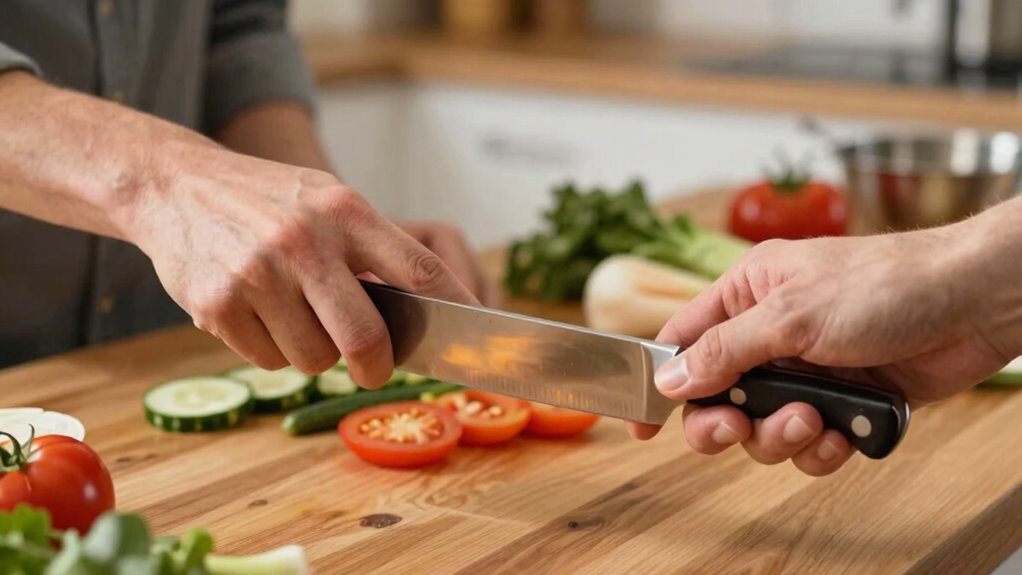
Reaching over a knife blade puts you at risk of accidental cuts, so always move your hands away from the cutting edge. Neglecting proper knife storage can lead to dangerous slips or grabbing the wrong tool in a hurry. Being mindful of these habits helps keep your kitchen safer for everyone. Incorporating energy-efficient solutions into your kitchen tools can also reduce risks and enhance safety. Ensuring your tools are stored in organized knife blocks can prevent accidental injuries and improve overall safety. Proper knife safety practices are essential for maintaining a safe cooking environment. Additionally, choosing high-quality kitchenware can further minimize hazards and improve your overall safety during food preparation. Emphasizing modern safety features in your utensils can provide added protection and peace of mind while cooking.
Reaching Over Knife Blade
One common mistake in kitchen safety is reaching over a knife blade while it’s still on the counter. When you reach over a knife blade, you risk accidentally brushing against it or knocking it off the surface. This can lead to cuts or the knife falling, causing injury or damage. Instead, always move around the knife or pick it up carefully before reaching for something nearby. Keep the knife blade pointed away from your body, and avoid quick, sweeping motions over the counter with a knife in hand. Reaching over the knife increases the chance of slips or accidental contact, which can easily result in a serious injury. Practicing mindful movements and maintaining awareness of the knife’s position helps prevent unnecessary accidents. Always be aware of knife safety and handle tools with care to maintain a safe kitchen environment.
Neglecting Proper Knife Storage
Neglecting proper knife storage on the counter increases the risk of accidents and injuries. When you leave knives out in the open, they become safety hazards, especially if they’re not securely placed. Improper knife storage can lead to accidental cuts if someone brushes against or mishandles the blades. Cluttered countertops with knives lying around also make it harder to keep track of sharp tools, raising the chance of slipping or grabbing the wrong end. To minimize these risks, always store knives in a designated knife block, magnetic strip, or drawer with a knife guard. Proper knife storage not only protects you from potential injuries but also helps preserve the blades’ sharpness and longevity. Prioritize safe storage habits to keep your kitchen safe and organized.
As an affiliate, we earn on qualifying purchases.
Simple Tips for Proper Knife Handling
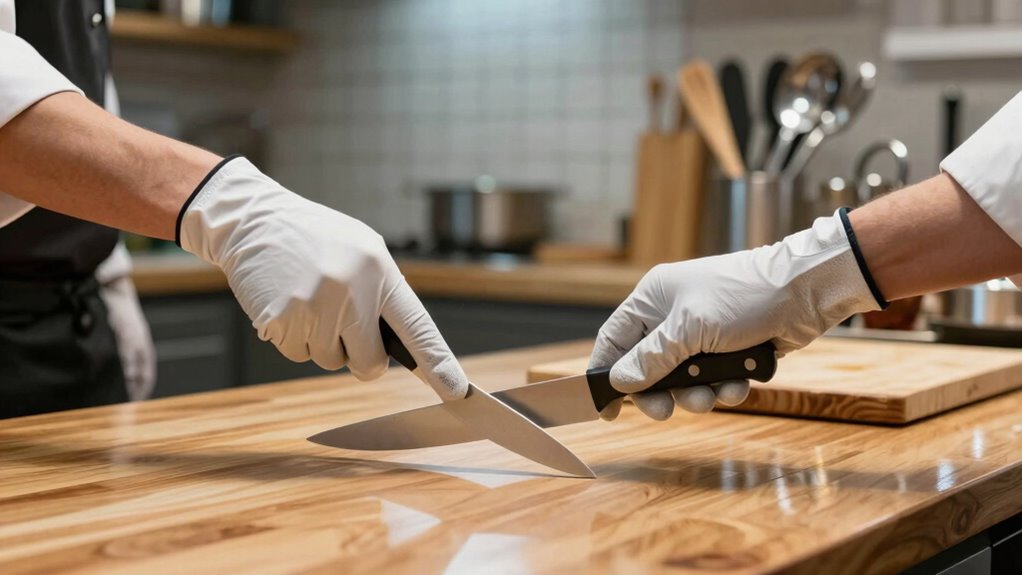
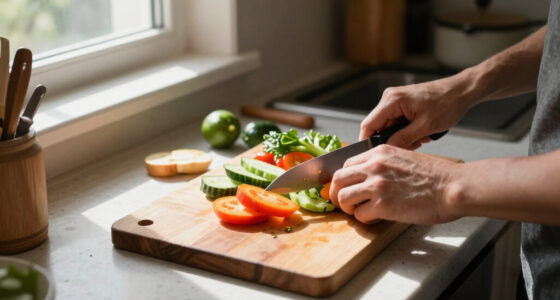
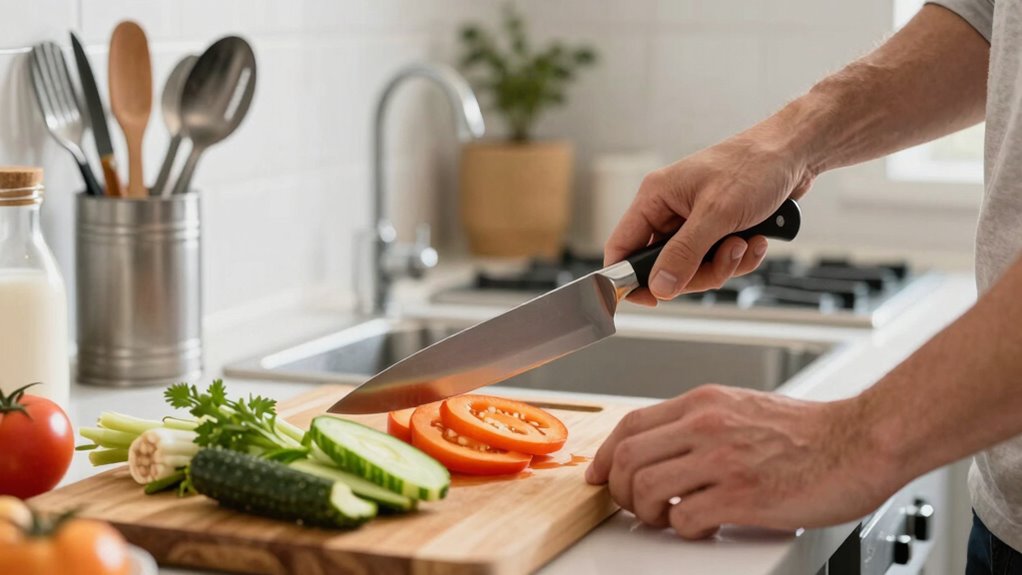
Proper knife handling starts with understanding how to hold and control your blade safely. You should use a firm but comfortable knife grip, ensuring stability without excessive tension. Maintain a consistent cutting angle, typically 20-30 degrees, to improve control and safety. Always keep your fingers tucked under your knuckles to avoid cuts. Focus on your cutting technique and avoid rushing. Here’s a quick overview:
| Knife Grip | Cutting Angle | Safety Tip |
|---|---|---|
| Firm but relaxed | 20-30 degrees | Keep fingers curled inward |
| Pinch grip | Consistent | Use a stable cutting surface |
| Hand position | Proper angle | Always cut away from yourself |
Mastering these tips helps prevent slips and improves your efficiency in the kitchen. Ensuring your workspace is well-lit and free of clutter can also enhance safety and make your cutting more precise.
Recognize and Correct Unsafe Passing Practices

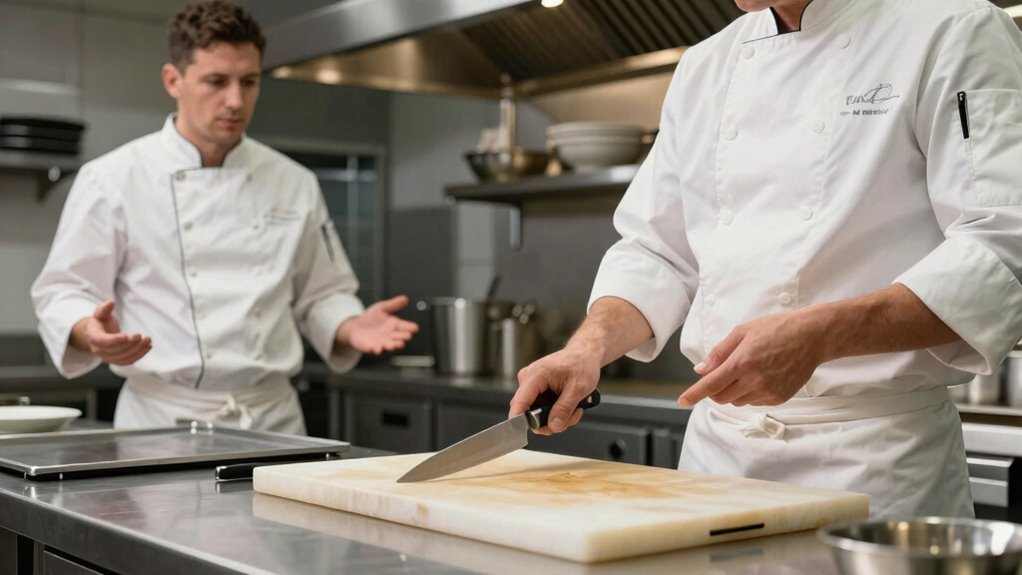
Safe knife passing is vital to prevent accidents and guarantee smooth teamwork in the kitchen. Recognize unsafe passing practices, such as passing a knife with a poor knife grip or too close to the other person, which can cause slips or cuts. Always make sure you maintain a safe passing distance—about arm’s length—to reduce the risk of injury. When passing, hold the knife securely by the handle and avoid grabbing the blade or other risky areas. Look the recipient in the eyes and communicate clearly. If you notice someone rushing or passing too quickly, gently correct their technique by emphasizing proper grip and distance. Consistently practicing these habits helps prevent injuries and fosters a safer, more efficient kitchen environment.
Training Your Team or Family on Safe Knife Passing
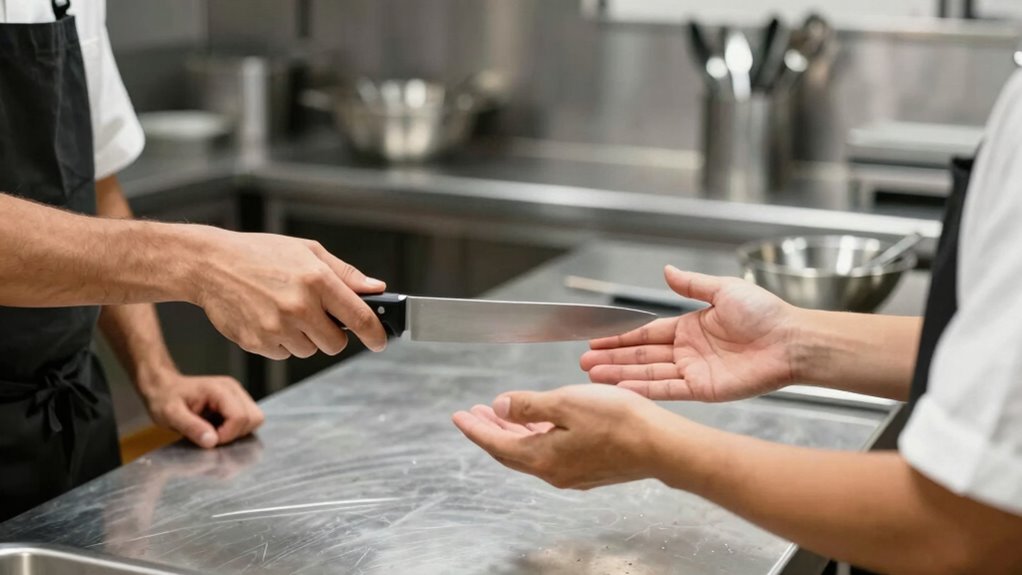
To guarantee everyone handles knives safely, you need to teach clear communication practices that everyone understands. Show your team or family proper techniques so they can pass knives confidently and securely. This way, safety becomes a shared responsibility in your kitchen.
Clear Communication Practices
Effective communication is crucial when passing knives in the kitchen, as it helps prevent accidents and guarantees everyone knows what to expect. Use clear knife hand signals to indicate when you’re ready to pass or receive a knife. Establish a safety zone, typically about an arm’s length apart, so neither person encroaches on the other’s space. Before passing the knife, communicate your intentions loudly and clearly, confirming readiness. Make eye contact and use consistent signals to avoid confusion. Reinforcing these practices with your team or family ensures everyone understands the expected procedures. Regularly review safety zones and signal meanings to keep everyone alert. Clear communication minimizes misunderstandings and keeps the workspace safe for all involved. Additionally, practicing proper handling techniques can further reduce the risk of accidents during knife passing.
Demonstrate Proper Technique
Training your team or family on proper knife passing techniques is essential to prevent accidents and build confidence in the kitchen. Start by demonstrating a safe knife grip, holding the handle firmly but comfortably, ensuring control. When passing the knife, always keep the blade pointed downward and away from yourself and others. Emphasize maintaining a consistent cutting angle, which helps with precision and safety. When handing over the knife, grip it securely at the handle and offer it with the blade facing down or away, so the recipient can grasp it safely. Reinforce the importance of clear communication and steady movements. Practicing these techniques consistently creates a safer environment and helps everyone handle knives responsibly.
Best Ways to Store Knives for Safety and Accessibility
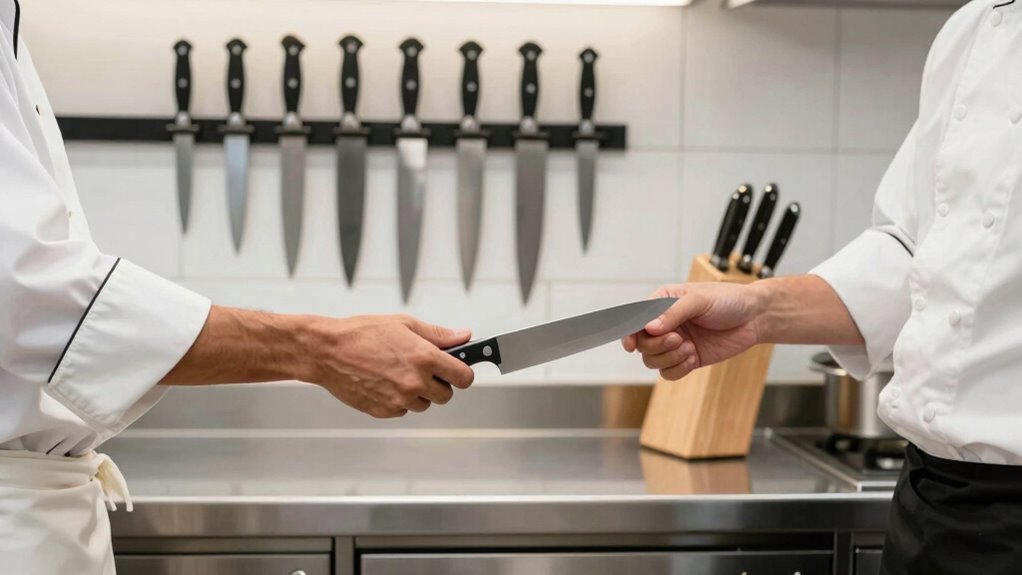
Storing knives properly is essential for both safety and quick access in the kitchen. The best knife storage options keep blades protected while reducing the risk of accidents. Use a knife block, magnetic strip, or drawer insert designed specifically for knives to guarantee safety accessibility. A knife block keeps blades secure and visible, making it easy to grab what you need without searching. Magnetic strips attach to the wall, providing quick access and saving counter space, while keeping blades safely out of reach of children. Drawer inserts with individual slots protect blades and prevent accidental cuts when reaching for a knife. Avoid storing knives loosely in drawers or in cluttered drawers, as this increases the risk of injury. Proper knife storage promotes safety and efficiency during meal prep.
Troubleshooting Unsafe Behaviors in the Kitchen
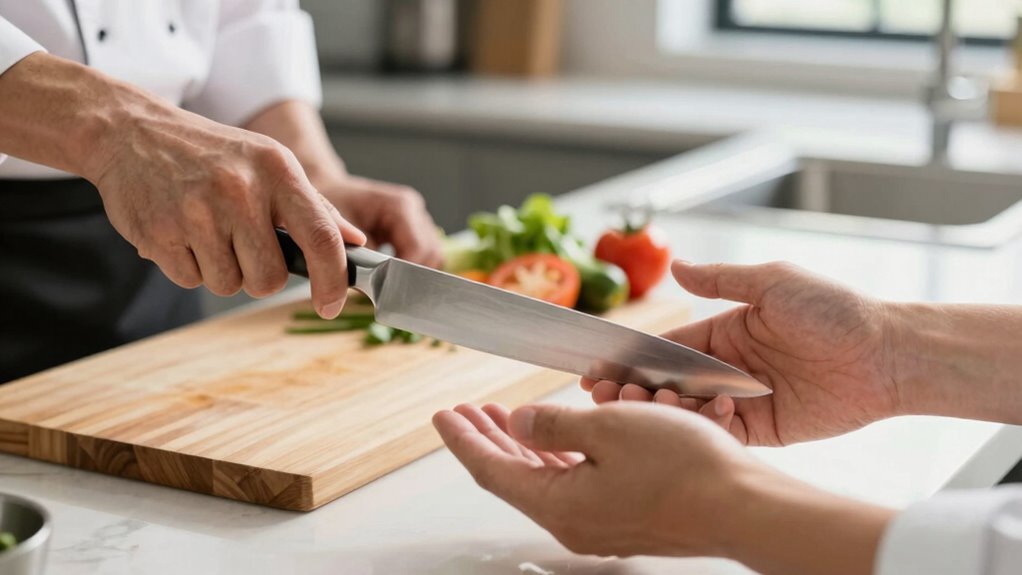
Proper knife storage minimizes accidents, but unsafe behaviors can still put you at risk in the kitchen. When it comes to knife handling, ignoring safety protocols can lead to cuts or injuries. Troubleshooting unsafe behaviors involves recognizing common mistakes, such as rushing while cutting, not paying attention, or improper grip. These habits increase the chance of slips and accidents. To improve safety, focus on:
- Always using a secure grip and controlled movements during knife handling
- Keeping your workspace clean and organized to avoid distractions
- Avoiding multitasking or rushing when working with sharp tools
- Being aware of vetted safety practices and adhering to recommended guidelines to minimize risk, including understanding the importance of safe knife techniques for injury prevention
Building a Culture of Safety in Your Kitchen
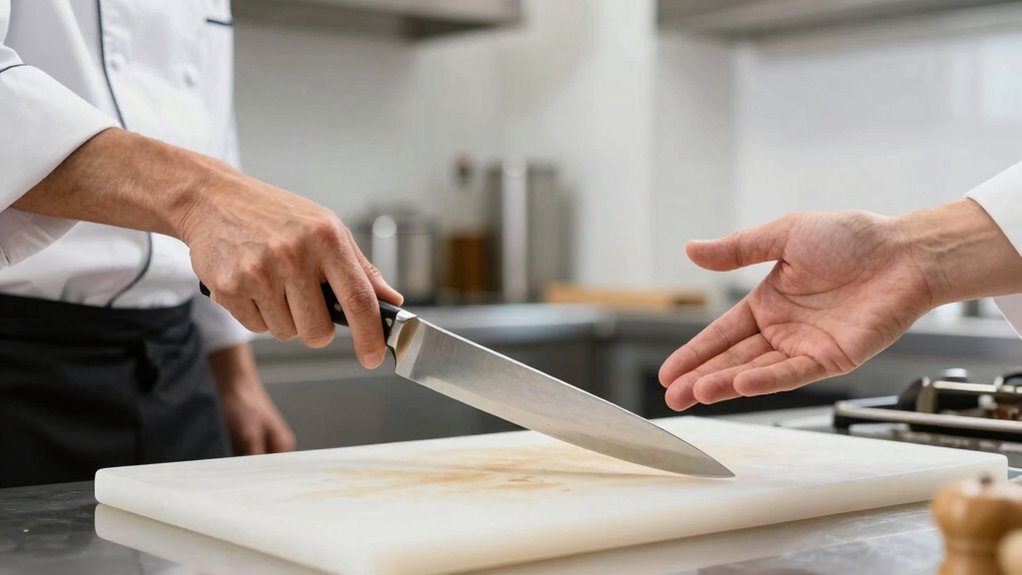
You set the tone for safety when you lead by example and follow proper knife passing and counter habits. Clear rules help everyone stay consistent and know what’s expected. Open communication encourages your team to speak up about hazards and improve safety together.
Lead by Example
Leading by example is one of the most effective ways to foster a culture of safety in your kitchen. When you demonstrate safe habits, you encourage others to follow suit through personal accountability and consistent behavior. Show proper knife handling, keep your workspace organized, and always prioritize safety over speed. Your actions set the tone, making safety a shared value.
To reinforce this, consider:
- Consistently practicing safe passing techniques
- Addressing unsafe habits immediately
- Praising safe behaviors when you see them
Establish Clear Rules
Establishing clear rules is essential for creating a consistent safety culture in your kitchen. You need to set expectations around knife etiquette and safety protocols so everyone understands their responsibilities. Make it clear how knives should be handled, passed, and stored to prevent accidents. Outline specific procedures for passing knives safely—such as always presenting the blade away from your body—and emphasize the importance of keeping work areas organized. Reinforce that following safety protocols isn’t optional; it’s crucial for everyone’s safety. Clear rules help prevent confusion and reduce risks, especially in busy or shared kitchens. When everyone knows and consistently follows these guidelines, you build a safer environment where accidents are less likely to happen.
Encourage Open Communication
Open communication forms the backbone of a safe and efficient kitchen environment. When you foster trust and encourage open dialogue, everyone feels comfortable sharing concerns, asking questions, and offering feedback. This teamwork safety minimizes accidents and builds mutual respect. To strengthen this culture, focus on:
- Regularly checking in with your team to address concerns
- Clearly articulating safety procedures and expectations
- Encouraging questions without judgment to clarify tasks
FAQs About Knife Passing and Kitchen Safety

Ever wonder how to pass a knife safely in the kitchen? The key is using a proper knife grip and ensuring both of you are comfortable. Hold the knife firmly by the handle, keeping your fingers away from the blade, and signal clearly when you’re ready to pass it. When passing the knife, always point the blade down or away from your partner, never towards them. If you’re concerned about safety, consider wearing safety gloves for extra protection. Communicate openly about your intentions, confirming when the knife is received securely. Remember, never rush this process—calm, deliberate movements prevent accidents. Incorporating proper handling techniques and practicing simple safety routines helps create a calmer, more organized kitchen environment. Paying attention to kitchen safety protocols can further reduce the risk of accidents and promote a secure cooking space. Additionally, being aware of knife safety standards can guide best practices for safe handling.
Frequently Asked Questions
What Are the Signs of Unsafe Knife Passing Habits?
You can spot unsafe knife passing habits by noticing poor knife grip and sloppy passing techniques. If you see someone passing the knife with their hand in the blade’s path or not using a secure grip, it’s risky. Also, passing the knife without clear communication or abrupt movements indicates unsafe habits. These behaviors increase the chance of slips or cuts, so always focus on proper passing techniques and maintaining a firm, controlled grip.
How Often Should Knives Be Inspected for Safety?
You should inspect your knives regularly, ideally before each use, to guarantee safety. This includes checking for any signs of damage like chips, rust, or loose handles. Incorporate knife maintenance into your routine safety training so you catch issues early. Visualize your knife as a crucial tool; just like a car needs regular check-ups, your knives need frequent inspections to prevent accidents and maintain prime performance.
Are There Age Restrictions for Handling Knives Safely?
There are generally age restrictions for handling knives safely, especially for youth safety. Kids under a certain age shouldn’t use sharp knives without supervision, as their coordination and judgment are still developing. Usually, children aged 8 and older can handle knives with proper guidance and safety training. Always prioritize supervision and teach responsible knife handling to guarantee safety for young users, reducing the risk of accidents.
What Safety Gear Is Recommended When Passing Knives?
When passing knives, you should wear protective gloves to prevent cuts and guarantee a firm grip. Use a cutting board to stabilize the knife and keep surfaces safe. Always pass knives handle-first to your partner, keeping the blade pointed away from your hands. These safety gear and habits help prevent accidents, making kitchen work safer for everyone involved. Stay alert and handle knives with care at all times.
How Can I Train Children to Pass Knives Safely?
Imagine teaching children to be tiny chefs with careful hands. Start with close supervision, showing them how to hold knives properly. Use knife training techniques like guiding their grip and practicing passing with a stick or toy knife first. Remind them that safety is their secret ingredient, and always supervise closely. With patience and clear instructions, you’ll turn young learners into confident, responsible knife passers.
Conclusion
By following these simple but vital safety habits, you’ll turn your kitchen into a fortress against accidents. Remember, a single careless pass can turn your culinary haven into a danger zone overnight. Stay alert, handle knives properly, and communicate clearly with others. With consistent practice, you’ll become a safety superhero—saving yourself from a potential disaster that could rival a seismic event. Keep safety first, and cook confidently!
NFL season / tailgating Picks
team gear
As an affiliate, we earn on qualifying purchases.