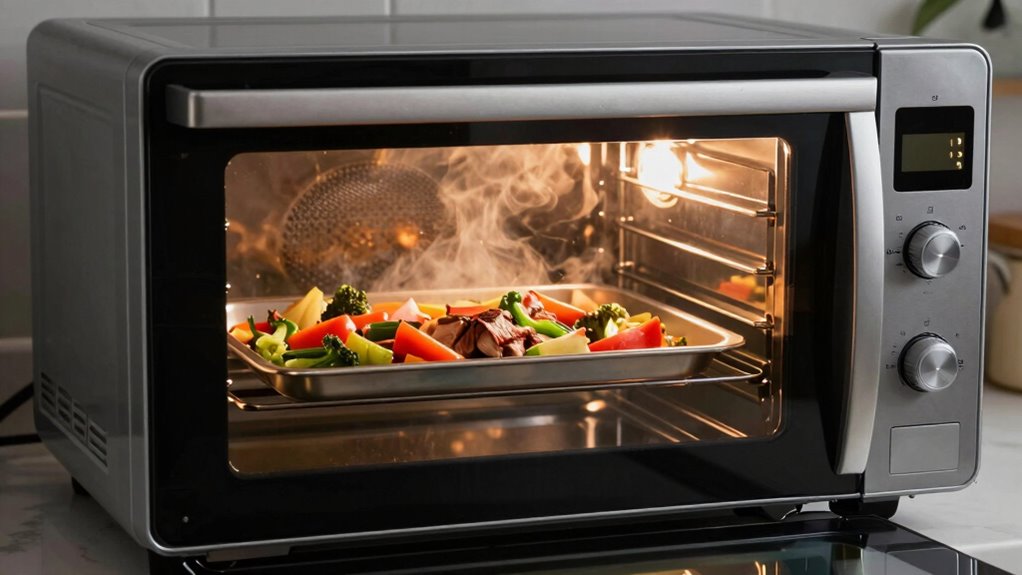

Reheating in a steam oven beats microwaves because it keeps your food moist, tender, and full of flavor. Steam heats food evenly, preventing hot spots and dryness that microwaves can cause. It also preserves nutrients and maintains original textures, making leftovers taste just as fresh as when first cooked. If you want to learn more about how steaming improves leftovers and which dishes reheat best, keep exploring these benefits.
Key Takeaways
- Steam ovens heat food evenly without hot spots, ensuring consistent warmth unlike microwaves’ uneven heating.
- They preserve moisture and texture, preventing dryness or toughness common with microwave reheating.
- Steam ovens retain more nutrients, vitamins, and minerals, making leftovers healthier and tastier.
- Using steam helps maintain the original flavor and delicate structures of various dishes.
- They reheat multiple foods simultaneously with uniform results, ideal for busy kitchens and family meals.
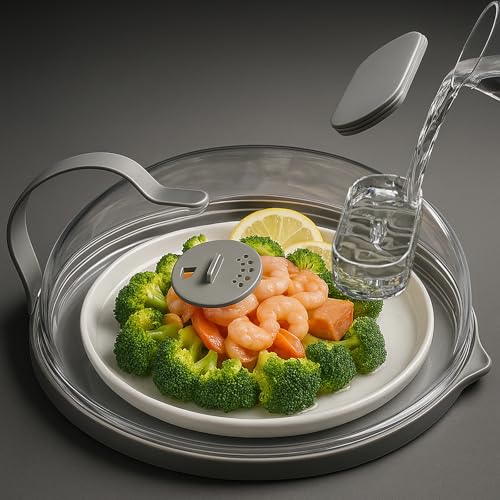
Microwave Splatter Cover with Water Steamer for Food – 10 Inch Steam Microwave Splatter Guard with Handle Plate Covers for Heating Food Splash Oven Lid with Built in Steamer
Microwave Splatter Guard with Steam: This clear microwave cover is a kitchen essential. The built-in steam function keeps…
As an affiliate, we earn on qualifying purchases.
As an affiliate, we earn on qualifying purchases.
How Does Reheating Food in a Steam Oven Work?
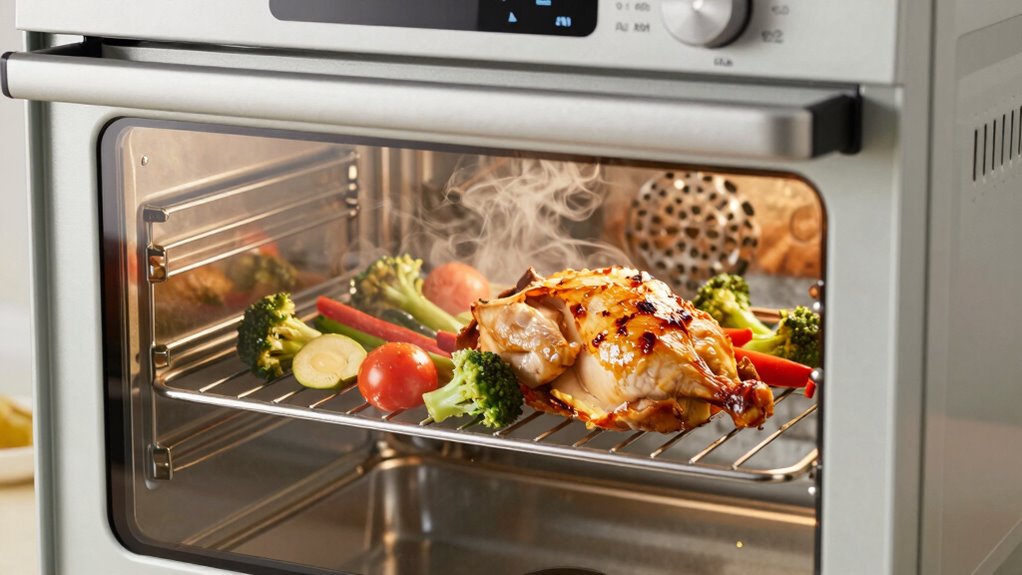
Reheating food in a steam oven works by using hot steam to gently raise the temperature of your leftovers without drying them out. This process relies on steam penetration, which allows heat to evenly distribute through your food. As the steam surrounds the dish, it helps maintain moisture retention, preventing the food from becoming dry or tough. Unlike microwaves, which heat unevenly and can create hot spots, steam heats uniformly, preserving the original texture and flavor. The gentle heat transfer ensures your reheated meal stays moist and tender, making it ideal for delicate items like fish, vegetables, or rice. By using steam, you effectively restore your leftovers to a fresh-like state, with excellent moisture and consistency intact. Additionally, precise temperature control in a steam oven helps prevent overcooking, ensuring consistent reheating results and reducing waste. The even distribution of heat also minimizes the risk of food safety concerns associated with uneven reheating. Steam ovens’ ability to preserve food quality makes them a superior choice for reheating delicate dishes.

FOTILE HYZK32-E3-E ChefCubii 1.1 cu. ft. 4-in-1 Combi-Steam Oven with Steam-Bake, Air Fry, Convection, Dehydrator Functions, and 50 Preset Menus, Beige
All-in-One Functionality: Combines steaming, baking, roasting, and air frying in a single unit. Additional modes include keeping warm,…
As an affiliate, we earn on qualifying purchases.
As an affiliate, we earn on qualifying purchases.
Why Does Steam Keep Food Texture Better Than a Microwave?

Steam keeps your food’s moisture intact, preventing it from drying out like in a microwave. Because of this, the texture remains tender and appealing. You’ll notice that reheated food in a steam oven feels just as fresh as when it was first cooked. Additionally, using a precious metals IRA can help preserve the value of your investment assets while you enjoy your meals. Incorporating energy-efficient technology in your reheating process further enhances sustainability and reduces energy consumption. Furthermore, steam ovens often incorporate precise temperature control, which ensures more consistent reheating results compared to microwaves. Integrating smart home automation can optimize reheating settings for convenience and efficiency, highlighting how modern technology can improve everyday tasks.
Preserves Moisture Content
Because it gently adds moisture to food, steaming helps preserve its original texture much better than microwaving. The key is temperature control, which prevents food from drying out, and superior moisture retention, keeping food juicy and tender. When reheating in a steam oven, you benefit from: 1. Consistent heat distribution, maintaining even moisture levels 2. Gentle reheating that prevents surface drying or overcooking 3. Reduced loss of natural juices, preserving flavor and texture 4. Controlled environment that locks in moisture, avoiding the rubbery or tough results typical with microwaves precise temperature control.
Maintains Food Texture
While microwaves often cause food to become rubbery or soggy, steam keeps the original texture intact by gently reheating without breaking down cell structures. This process guarantees better texture preservation because it heats food evenly and prevents moisture loss that can make dishes dry or tough. Steam’s gentle heat helps maintain the food’s natural firmness and tenderness, avoiding the sogginess or rubberiness common with microwave reheating. With moisture retention at the core of this method, your leftovers stay fresh and appealing, retaining their original mouthfeel. Steam reheating preserves the integrity of delicate textures—crisp crusts remain crisp, and tender foods stay moist. Overall, steam’s ability to gently reheat while maintaining texture makes it a superior choice for keeping food tasting just as good as when first cooked.

Stove Top Steamer for Reheating Food, Steam Tray Food Reheating Pan, Multi-purpose Steaming Rack for Pot, Stainless Steel Kitchen Cooking Steamer Pots, Cooling Baking Racks for Veggies(#A*1)
Gentle Steam Reheating: Designed as a stove top steamer for reheating food, this pan uses steam heat instead…
As an affiliate, we earn on qualifying purchases.
As an affiliate, we earn on qualifying purchases.
What Are the Main Benefits of Using a Steam Oven for Reheating?
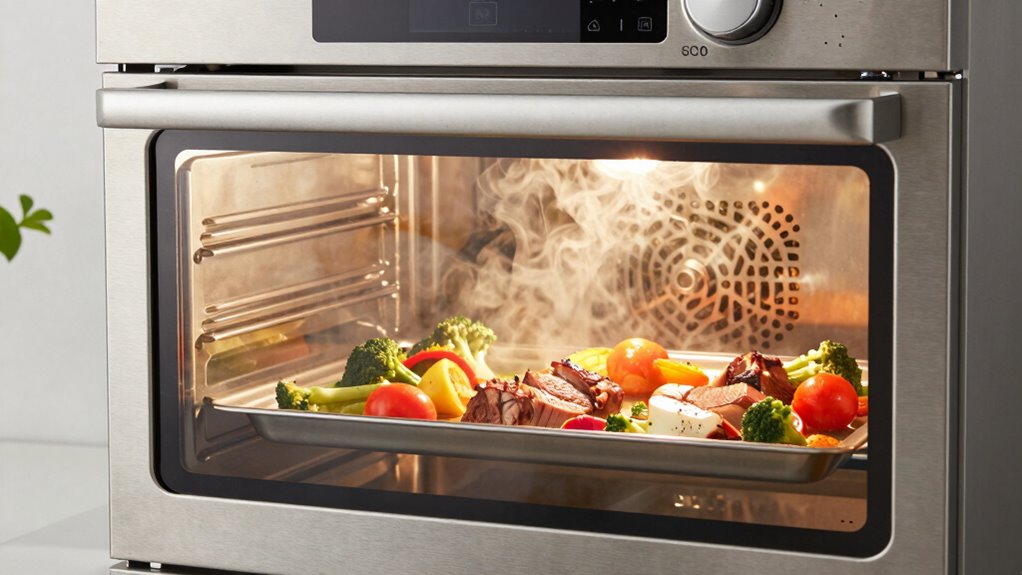
Using a steam oven for reheating helps keep your food’s texture fresh and moist. It also preserves more of the nutrients, making your meals healthier. These benefits make steam ovens a smart choice for reheating leftovers. Additionally, steam ovens can improve indoor air quality by reducing airborne contaminants associated with traditional cooking methods air quality, supporting a healthier home environment. Incorporating a steam oven into your kitchen can also promote more sustainable cooking practices by conserving energy compared to conventional ovens. Moreover, steam reheating can reduce food waste by maintaining the quality of leftovers, encouraging mindful consumption. This method aligns with the broader goal of environmentally friendly cooking habits, further enhancing its appeal.
Enhanced Food Texture Preservation
Reheating food in a steam oven helps preserve its original texture far better than traditional methods. This means your leftovers stay juicy, tender, and true to their initial form. The gentle heat prevents food from becoming dry or rubbery, maintaining ideal textural consistency. Additionally, steam reheating minimizes moisture loss, helping flavors stay vibrant and well-retained. Here are some key benefits:
- Maintains the delicate structure of baked goods and pastries
- Keeps meats moist and tender without becoming tough
- Preserves crispness in vegetables and fried foods
- Ensures even heat distribution, preventing sogginess or uneven textures
- Gentle reheating helps uphold food quality and safety standards.
Retains Nutritional Content
Because steam heating applies gentle, even heat, it helps preserve the natural nutrients in your food that can be lost with higher or more aggressive methods. This results in better nutritional retention, ensuring you get the vitamins and minerals intended for your diet. Unlike microwave reheating, which can cause nutrient breakdown through uneven heating, steam maintains the integrity of your food’s nutritional content. Additionally, steam reheating promotes food safety by reducing the risk of bacterial growth, as the gentle heat evenly warms your meals without creating cold spots. This method not only keeps your food healthier but also minimizes nutrient loss, making it a superior choice for preserving both flavor and nutritional value. Proper air circulation around the food during steaming further enhances heat distribution and nutrient preservation, emphasizing the importance of consistent heat for optimal results. Efficient heat transfer in steam ovens ensures that your food heats evenly, further protecting its nutritional quality. Moreover, the temperature control capabilities of steam ovens allow for precise adjustments that help maintain food’s nutritional integrity throughout the reheating process. Implementing even heat distribution can further improve the overall quality and safety of reheated meals.

Hot Plate Gripper for Instant Pot Accessories, Stainless Steel Non-Scald Plate Gripper Clip Tongs for Microwave Oven Toaster Steamer Air Fryer, Non-Slip Heat-Resistant Kitchen Gripper(Red)
High-Quality Material: Made of premium 304 stainless steel, our gripper is heat-resistant, durable, rust free, and safe to…
As an affiliate, we earn on qualifying purchases.
As an affiliate, we earn on qualifying purchases.
Which Leftovers Reheat Best in a Steam Oven?
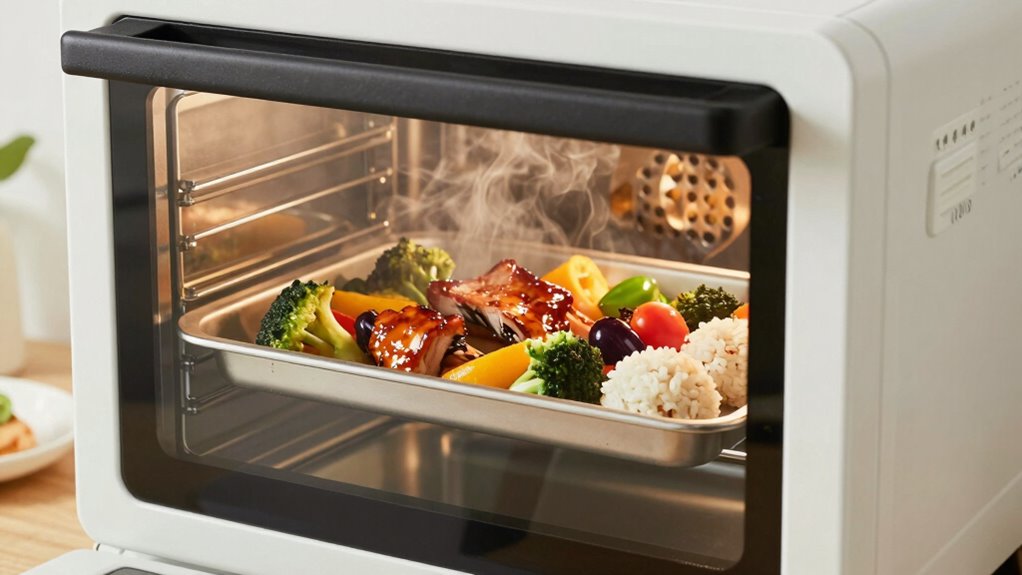
Ever wonder which leftovers come out best after reheating in a steam oven? The answer depends on the food’s texture and moisture needs. Steamed reheating preserves juiciness and prevents dryness, making it ideal for certain dishes. For example:
- Roast chicken stays moist and tender without drying out.
- Frozen pizza regains crispness on the crust while warming evenly.
- Steamed vegetables maintain their crunch and color.
- Soups and stews heat thoroughly without losing flavor or consistency.
- Dishes like bread pudding benefit from gentle reheating to keep their soft, custardy texture intact.
Using a steam oven also helps to maintain the original flavor of leftovers, ensuring they taste as close to freshly cooked as possible. The gentle heat of a steam oven minimizes the risk of overcooking or uneven warming. Additionally, the moisture retention during reheating prevents food from becoming tough or rubbery. These leftovers benefit from the gentle, even heat of a steam oven, ensuring they taste freshly made. Unlike microwaves, steam keeps foods moist, making leftovers like roast chicken and frozen pizza far more appealing.
How Do You Reheat Food Properly in a Steam Oven?
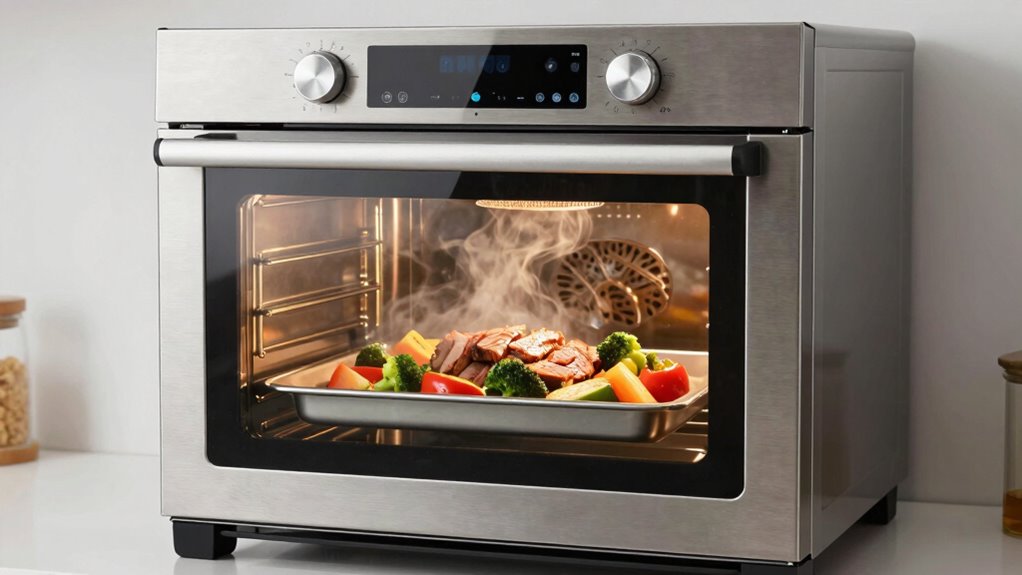
To reheat food properly in a steam oven, start by adjusting the temperature and setting the appropriate steam level for your dish. Proper plate arrangement ensures even heat distribution; avoid stacking or overcrowding. Place leftovers in a shallow dish, spreading them out evenly. Keep an eye on reheating time—too long can dry food out, too short won’t heat thoroughly. Use the table below to help guide your reheating process:
| Food Type | Reheating Time |
|---|---|
| Soups and Stews | 5-7 minutes |
| Rice and Grains | 4-6 minutes |
| Vegetables | 3-5 minutes |
| Meats and Poultry | 6-8 minutes |
| Baked Goods | 3-4 minutes |
This technique ensures your leftovers stay moist, tasty, and perfectly reheated.
What Are the Downsides of Reheating With a Steam Oven?
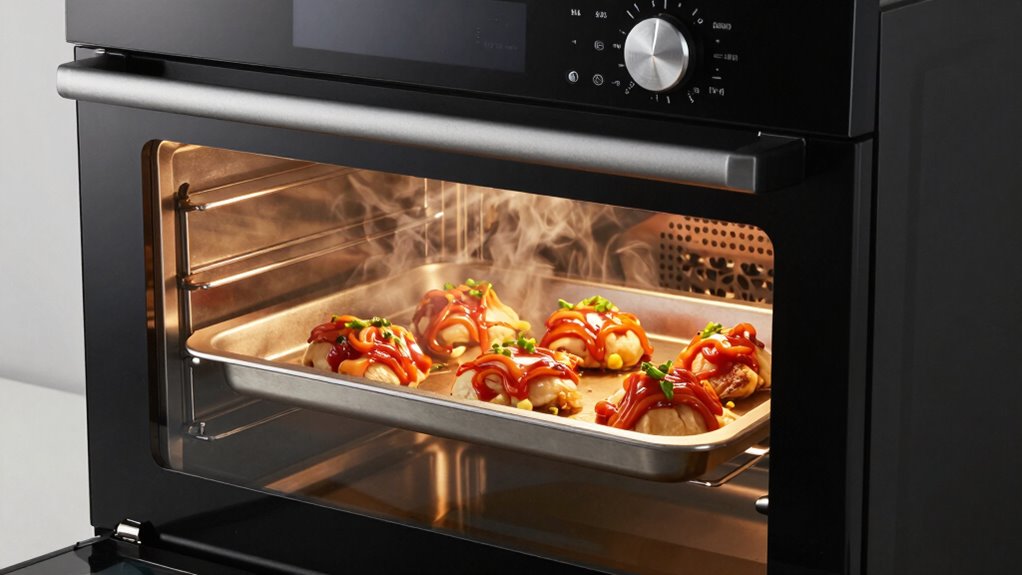
While reheating with a steam oven helps retain moisture and improve texture, it also presents some drawbacks. First, it tends to consume more energy than microwave reheating, leading to higher utility bills. Second, the initial appliance cost can be significant, making it a less budget-friendly choice. Third, steam ovens often take longer to reheat food compared to microwaves, which might be inconvenient when you’re in a hurry. Fourth, they require more space and can be bulky, limiting kitchen counter or storage options. Additionally, maintenance and cleaning can be more involved due to the water reservoir and steam generation components. Overall, while the benefits are clear, these downsides may influence your decision depending on your priorities and kitchen setup.
Can You Reheat Multiple Dishes at Once in a Steam Oven?
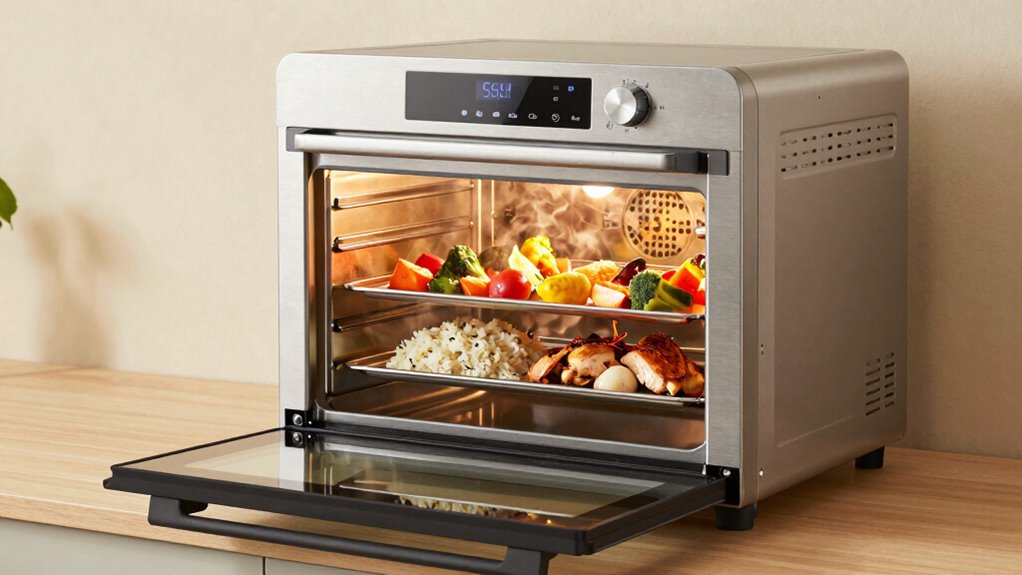
You can definitely reheat multiple dishes at once in a steam oven, thanks to its spacious interior and even heat distribution. This feature enhances cooking efficiency by allowing you to prepare several items simultaneously without sacrificing quality. Reheating multiple dishes together also reduces energy consumption since the oven operates efficiently without needing multiple cycles. Unlike microwaves, which may struggle to evenly reheat several plates, a steam oven ensures each dish is heated uniformly, maintaining moisture and flavor. This makes it ideal for busy kitchens or when serving a family meal. Additionally, reheating multiple dishes at once saves time, helping you get everything ready faster. Overall, a steam oven offers a practical, energy-efficient way to reheat multiple dishes simultaneously while preserving their taste and texture.
Frequently Asked Questions
Can Reheating in a Steam Oven Affect Food’s Nutritional Value?
Reheating in a steam oven preserves your food’s nutritional value better than microwaves because it enhances nutrient retention. The gentle heat helps retain vitamins and minerals, maintaining the food’s cooking quality. You won’t experience the nutrient loss common with microwave reheating, so your meals stay healthier and more flavorful. Plus, the consistent heat guarantees even reheating, improving the overall cooking quality and making your leftovers taste just as good as fresh.
How Long Does It Typically Take to Reheat Different Foods in a Steam Oven?
Reheat time in a steam oven varies depending on the food variety, typically ranging from 5 to 15 minutes. For delicate items like fish or vegetables, it takes about 5-7 minutes, while denser foods like casseroles or meats may need 10-15 minutes. You can easily adjust the time based on the dish’s thickness and moisture, ensuring even reheating without sacrificing quality.
Is a Steam Oven More Energy-Efficient Than a Microwave?
Yes, a steam oven is more energy-efficient than a microwave. It uses less energy for reheating because it heats food more evenly and quickly, reducing overall energy consumption. This contributes to better energy savings and lowers your environmental impact. Plus, the gentle steaming process preserves food quality, making it a smarter choice for eco-conscious households looking to minimize their carbon footprint while enjoying delicious, evenly heated meals.
Are There Specific Types of Dishes That Shouldn’t Be Reheated in a Steam Oven?
You should avoid reheating delicate desserts and crispy fried foods in a steam oven. Think of delicate desserts as fragile glass, easily losing their structure or texture when exposed to moisture. Crispy fried foods, on the other hand, are like brittle leaves that turn soggy and limp with steam. To keep their integrity, use alternative methods like the oven or skillet, which better preserve their crispy or delicate nature.
How Does Steam Reheating Impact Food Safety and Bacteria Elimination?
Steam reheating enhances food safety by effectively increasing internal temperatures, which aids bacterial elimination. Unlike microwaves, steam heats food evenly, reducing cold spots where bacteria can survive. This method minimizes the risk of foodborne illnesses, ensuring you enjoy reheated dishes safely. The gentle, thorough heat from steam not only preserves texture and flavor but also provides peace of mind knowing bacteria are being properly eliminated.
Conclusion
So, next time you’re tired of soggy leftovers turning into sad, rubbery messes, give a steam oven a try. It’s like giving your reheated food a spa day—gentle, caring, and oh-so-effective. Say goodbye to microwave mishaps and hello to perfectly textured bites. Who knew that warming up leftovers could become such a luxurious experience? Your taste buds will thank you, and your kitchen will secretly envy your fancy new reheating secret.