Your stir-fry turns watery because you’re not controlling the heat properly, causing ingredients to release excess moisture and preventing sauces from thickening. To avoid this, make sure your wok is very hot before adding ingredients, so they sizzle immediately and moisture evaporates quickly. Maintaining high heat throughout cooking helps lock in flavors and keeps sauces glossy and thick. Keep practicing these techniques, and you’ll discover how restaurants consistently achieve perfect, non-watery stir-fries.
Key Takeaways
- Using insufficient heat causes ingredients to release moisture slowly, making the stir-fry watery.
- Adding ingredients before the wok is properly hot results in excess moisture and soggy dishes.
- Not patting vegetables dry introduces extra water, diluting sauces and reducing stir-fry quality.
- Tossing ingredients quickly at high heat ensures even cooking and prevents moisture buildup.
- Preparing sauces separately and adding them at the right stage helps control consistency and prevents thinning.
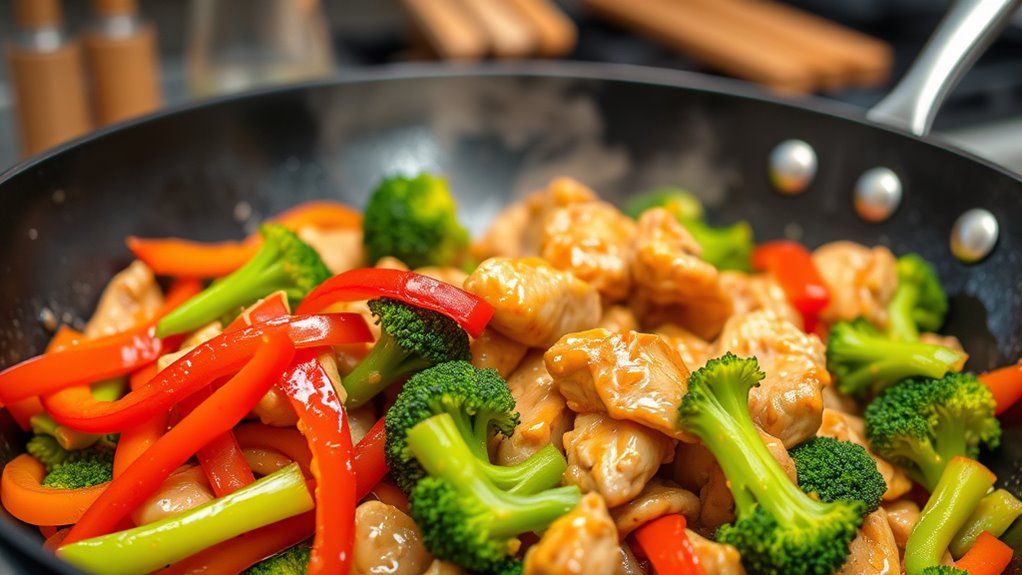
Stir-frying is a quick and versatile way to prepare flavorful meals, but mastering it takes a few key tips. One of the most common issues home cooks face is ending up with a watery sauce that detracts from the dish’s overall appeal. To avoid this, understanding sauce thickening and wok temperature control is essential. When your wok isn’t hot enough, ingredients release moisture slowly, and the sauce remains thin and runny. Proper wok temperature ensures rapid searing, which helps lock in flavors and prevents excess water from diluting your sauce. Ideally, your wok should be hot enough that a splash of water evaporates almost instantly upon contact. This high heat creates a quick sear, sealing in juices and vegetables’ crunch, while also helping sauce components thicken efficiently.
A hot wok ensures quick searing, locking in flavors and preventing watery sauces.
A key step in preventing watery stir-fries is to pay close attention to sauce thickening. Many recipes call for cornstarch, arrowroot, or other starches to achieve a glossy, clingy consistency. Before adding these thickeners, make sure your sauce is simmering and has reduced slightly. When you pour in the slurry, do so gradually, stirring constantly to evenly distribute it. As the sauce heats, it will thicken quickly, creating that desirable coating that clings to your ingredients. If your sauce remains thin, it’s often because it wasn’t heated enough or the wok wasn’t hot enough to activate the starch’s thickening power immediately. Recognizing the correct temperature is essential for activating thickening agents effectively. Additionally, maintaining a consistent high wok temperature throughout cooking helps keep moisture levels in check and prevents the sauce from becoming watery. Using a kitchen thermometer can help you gauge the right heat level until you develop a good sense of your stove’s power. Remember, controlling moisture release from ingredients is equally important, so patting vegetables dry before cooking can make a noticeable difference.
Restaurants avoid watery sauces by maintaining a consistently high wok temperature throughout the cooking process. They work swiftly, adding ingredients in stages and constantly tossing to ensure even heat distribution. This rapid cooking prevents moisture from accumulating and diluting the sauce. Additionally, chefs often prepare their sauces separately and add them at the right moment, giving them more control over thickness. They also pay attention to ingredient moisture — patting vegetables dry before cooking helps minimize water release, which can otherwise dilute the sauce. Developing a stir-fry technique that emphasizes quick, high-heat cooking is essential to achieving restaurant-quality results at home.
In your home kitchen, managing wok temperature might seem tricky at first, but with practice, you’ll learn to recognize the right heat level. Keep your burner high, wait for the wok to smoke slightly, and then start stir-frying. When the wok is hot enough, ingredients will sizzle immediately, and your sauce will thicken nicely without becoming watery. Remember, the key to a perfect stir-fry lies in balancing heat and sauce techniques. With these tips, you’ll achieve restaurant-quality results and enjoy flavorful, well-textured dishes every time.
Frequently Asked Questions
Can Adding Too Much Sauce Cause a Watery Stir-Fry?
Yes, adding too much sauce can cause a watery stir-fry. When you pour in excess sauce, it disrupts the sauce balance and overwhelms the ingredients, making it difficult for them to absorb moisture properly. This excess moisture prevents proper moisture absorption and results in a soggy, watery dish. To avoid this, add sauce gradually and keep an eye on consistency, ensuring your stir-fry maintains a perfect, flavorful texture.
Should I Pre-Cook Vegetables Before Stir-Frying?
Pre-cooking vegetables, like vegetable blanching, isn’t necessary for a perfect stir-fry. In fact, it can make your veggies soggy and overcooked. Instead, add fresh vegetables directly to the hot wok or skillet and cook quickly. This method preserves their texture and color. If you prefer softer veggies, lightly pre-cook or blanch them briefly, but avoid overdoing it to keep your stir-fry crisp and flavorful.
How Does the Type of Oil Affect Moisture in Stir-Fry?
Choosing the right oil affects moisture in your stir-fry because oil selection and smoke point influence how ingredients cook. Use oils with high smoke points, like peanut or canola oil, to prevent burning and excess moisture. Low smoke point oils, like olive oil, can break down and release water, making your stir-fry watery. Opt for high smoke point oils to keep your stir-fry crisp and flavorful.
Is It Better to Cover the Pan During Stir-Frying?
You should avoid covering the pan during stir-frying because it creates a steaming effect that traps moisture, making your dish watery. When you leave the lid off, steam escapes quickly, helping vegetables stay crisp and meats sear properly. The suspense lies in whether you’ll miss out on tender results or risk excess liquid—trust us, leaving the pan uncovered delivers a better, drier stir-fry every time.
What Role Does Ingredient Temperature Play in Moisture Retention?
Your ingredient temperature plays a vital role in moisture retention during stir-frying. If ingredients are too cold, they release more water, making your dish watery. To prevent this, make certain ingredients are at room temperature before cooking. This helps them sear quickly, locking in juices and moisture. Properly heated ingredients retain moisture better, resulting in a flavorful, less watery stir-fry that mimics restaurant-quality dishes.
Conclusion
So, next time you’re frustrated with a watery stir-fry, remember that the secret isn’t just in the sauce. It’s in the careful cooking techniques restaurants have perfected—like controlling moisture and timing. Ironically, all those tips seem simple, yet many of us overlook them. So maybe, just maybe, the trick to a perfect stir-fry isn’t magic but paying attention. Who knew that avoiding excess water could be the real culinary magic?