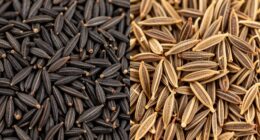
White pepper offers a subtler, warmer flavor than black pepper, with a gentle heat that doesn’t overpower your dishes. Its milder profile makes it perfect for light-colored sauces, soups, and creamy recipes where visual presentation matters. You’ll notice it adds warmth and a delicate spice without the sharpness of black pepper. Curious to know how this sneaky spice gets its unique taste? Keep exploring to discover more about its rich history and versatile uses.
Key Takeaways
- White pepper has a milder, less pungent flavor than black pepper, offering a subtle heat.
- Its preparation involves soaking ripe berries to remove outer layers, resulting in a smoother, warmer taste.
- Commonly used in Asian cuisines and light-colored dishes to add warmth without visual specks.
- Provides a gentle, refined heat that enhances dishes without overpowering other flavors.
- Its subtle spiciness makes it ideal for creamy sauces, delicate soups, and spice blends seeking a warm note.

Have you ever wondered what sets white pepper apart from its black counterpart? At first glance, they might seem similar, but once you explore their history and culinary uses, you’ll see how distinctive white pepper truly is. The origins of white pepper trace back thousands of years to ancient India and China, where it was highly prized for its unique flavor and medicinal properties. Unlike black pepper, which is harvested when the berries are still green and then dried to turn black, white pepper is made from fully ripe berries. These berries are soaked in water to loosen their outer layers, which are then removed, revealing the pale seed inside. This process not only alters its appearance but also influences its taste, making it milder and more delicate in comparison.
Throughout history, white pepper has been a staple in Asian cuisine, especially in Chinese, Thai, and Indonesian dishes. It was also a valued commodity along trade routes such as the Silk Road, spreading its influence across Europe and the Middle East. Its popularity grew because it offered a subtler heat and aroma, which suited certain dishes better than its black version. Over time, chefs and home cooks alike adopted white pepper for its ability to blend seamlessly into light-colored sauces, soups, and creams, where black specks could be visually distracting. Its culinary uses are extensive: it’s often used in delicate dishes like white sauces, mashed potatoes, and seafood, where its warmth enhances rather than overpowers the overall flavor.
In the kitchen, you’ll find white pepper to be a versatile spice. Its milder, less pungent profile makes it ideal for recipes that require a gentle heat—think creamy dressings, delicate pastries, or subtle spice blends. It’s also favored for its ability to bring a consistent flavor without the visual interruption of black pepper specks. Many chefs prefer white pepper when they want to maintain a clean, elegant appearance in their dishes, especially in white or light-colored sauces and soups. Its distinctive warmth isn’t as sharp as black pepper’s, but it offers a smoother, more refined heat that can surprise your palate. Whether you’re aiming for a traditional Asian dish or a sophisticated European sauce, white pepper’s unique history, origins, and culinary versatility make it an essential spice in your kitchen arsenal.
Frequently Asked Questions
How Does White Pepper Differ From Black Pepper in Culinary Uses?
You’ll notice white pepper has a milder, less pungent flavor compared to black pepper, making it ideal for delicate dishes. Its spice flavor profile is subtler, so it’s often used in light-colored sauces, soups, and seafood to maintain visual appeal. While black pepper offers more robust, bold flavor and culinary versatility, white pepper’s gentle warmth suits recipes where a less noticeable spice is preferred.
What Are the Health Benefits Associated With White Pepper Consumption?
White pepper can boost your digestive health by stimulating enzyme production, helping your stomach process food better. It also has anti-inflammatory properties that may reduce swelling and discomfort in your body. Including white pepper in your meals might support immune function and overall well-being. Just remember to use it in moderation to enjoy these health benefits without any adverse effects.
Can White Pepper Be Used as a Substitute for Black Pepper in Recipes?
You can use white pepper as a spice substitution for black pepper, but be prepared for a different flavor comparison. White pepper offers a subtler, less pungent heat with a slightly earthy tone. Imagine your dish transforming, the aroma hinting at something familiar yet unexpectedly refined. While it can stand in for black pepper, it introduces a unique twist that might surprise your taste buds—perfect for those seeking a delicate, warmer spice note.
How Should White Pepper Be Stored to Maintain Freshness?
You should store white pepper in an airtight container, away from light, heat, and moisture to preserve its freshness. Keep it in a cool, dark place like your pantry or spice drawer. Proper storage tips help prevent the spice from losing flavor or becoming stale. Regularly check the container for any signs of clumping or spoilage, and reseal tightly after each use to maintain its potency and guarantee your dishes stay flavorful.
Are There Any Allergies or Sensitivities Linked to White Pepper?
You should be aware that some people experience spice sensitivities or allergy symptoms when consuming white pepper. Studies show that about 1-2% of the population may have allergic reactions, including sneezing, skin irritation, or digestive issues. If you notice symptoms like itching or swelling after eating, it’s best to avoid it and consult a healthcare professional. Always check ingredient labels if you have known sensitivities to prevent unexpected reactions.
Conclusion
Don’t let its subtlety fool you—white pepper packs a warm, complex flavor that can elevate any dish. You might worry it’s just a milder alternative, but once you experience its unique depth, you’ll realize it’s a sneaky spice that transforms your cooking. Embrace the warmth it brings; your palate will thank you. Give it a try and discover how this unassuming spice can make your meals unforgettable. Trust me, you’ll wonder how you ever cooked without it.