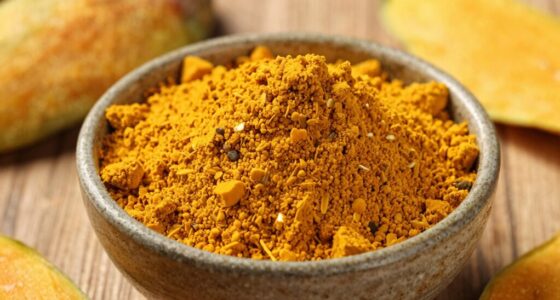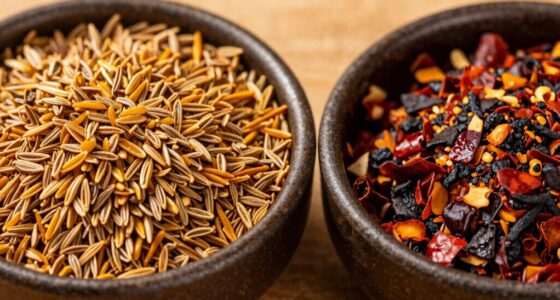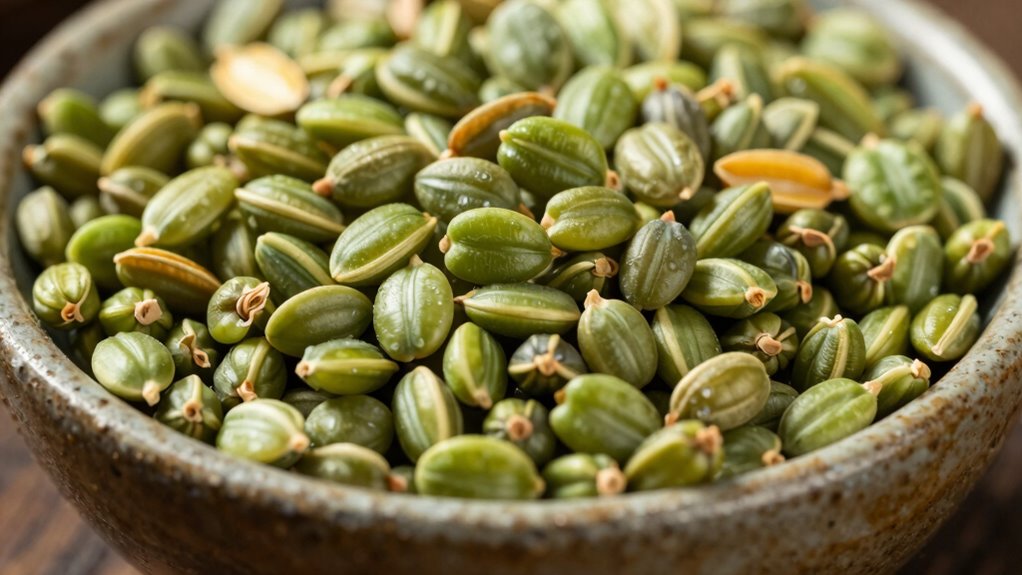

Fenugreek can turn bitter quickly if you overheat, store it improperly, or add it too early in cooking. To avoid this, toast seeds lightly, store them in airtight containers away from heat and light, and add fenugreek later in the cooking process. Overcooking or using stale spices also increases bitterness. Keep these tips in mind, and you’ll stay ahead of fenugreek’s pitfalls—more useful advice is just ahead.
Key Takeaways
- Overheating or toasting fenugreek seeds excessively can quickly release bitter compounds.
- Grinding fenugreek increases surface area, making it more prone to bitterness during cooking.
- Adding fenugreek early in high-heat cooking can cause rapid bitterness development.
- Improper storage exposes fenugreek to light and humidity, accelerating flavor deterioration and bitterness.
- Cooking fenugreek for too long or at high temperatures intensifies its bitterness.
Why Does Fenugreek Turn Bitter So Quickly?

Fenugreek can turn bitter surprisingly fast once it’s exposed to heat or air. Proper fenugreek storage is key to maintaining its flavor; keep it in an airtight container away from light and humidity. When it comes to cooking techniques, adding fenugreek too early or subjecting it to high heat can cause bitterness to develop quickly. Toasting or roasting seeds before using can bring out a nutty flavor, but overdoing it accelerates bitterness. Also, grinding fenugreek too finely exposes more surface area, increasing its vulnerability to heat and air. To avoid bitterness, add fenugreek later in the cooking process and keep it covered when not in use. Proper storage methods are essential to preserving its rich aroma and prevent it from becoming bitter too fast. Additionally, being aware of spice handling can significantly impact its flavor retention. Using proper spice storage can further prevent loss of flavor and freshness over time. These steps help preserve its spice freshness and prevent it from becoming bitter too fast. Incorporating flavor preservation practices can further enhance flavor longevity and ensure your dishes remain flavorful.
What Common Mistakes Lead to Bitter Fenugreek?
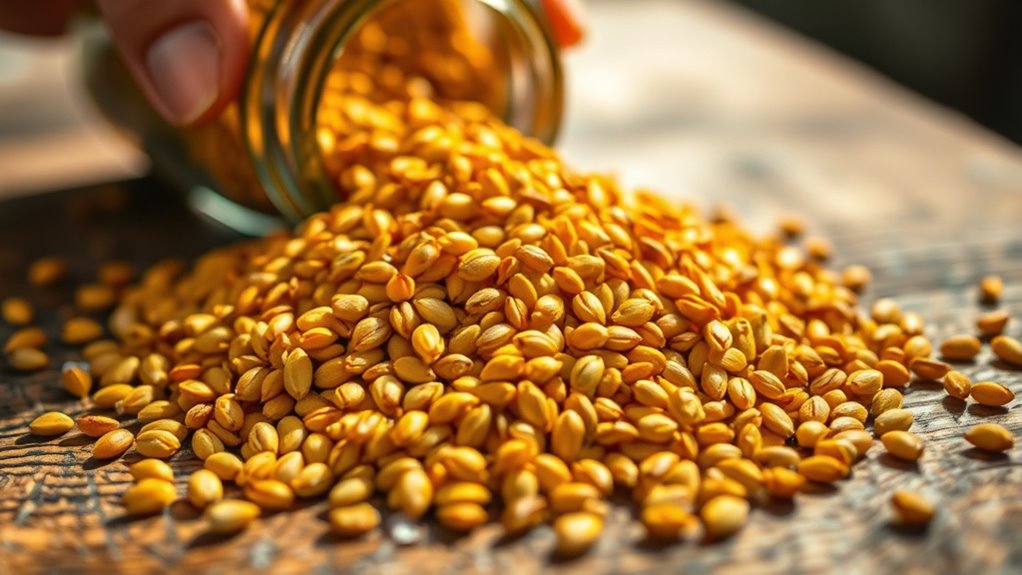
One common mistake that leads to bitter fenugreek is adding it too early in the cooking process, especially when exposed to high heat. When you cook fenugreek for too long or at high temperatures, it releases bitter compounds, diminishing its flavor. Poor fenugreek storage can also cause bitterness; if stored improperly, it loses spice freshness and develops off-flavors. Always keep fenugreek in an airtight container away from sunlight and moisture to maintain its quality. Using stale or old fenugreek increases the chance of bitterness. To avoid this, add fenugreek later in cooking and ensure your spice storage preserves its freshness. Proper handling and storage are key to keeping fenugreek flavorful and free from unwanted bitterness. Additionally, understanding water retention in spices can help you better preserve fenugreek’s flavor and prevent bitterness caused by moisture exposure. Proper storage conditions help maintain the spice’s flavor profile and prevent the development of bitterness over time. Being aware of spice freshness can also guide you in selecting the best fenugreek for your dishes. Incorporating storage best practices into your routine can extend the shelf life and maintain the quality of your spices.
How Can You Properly Prepare and Cook Fenugreek to Keep It Delicious?
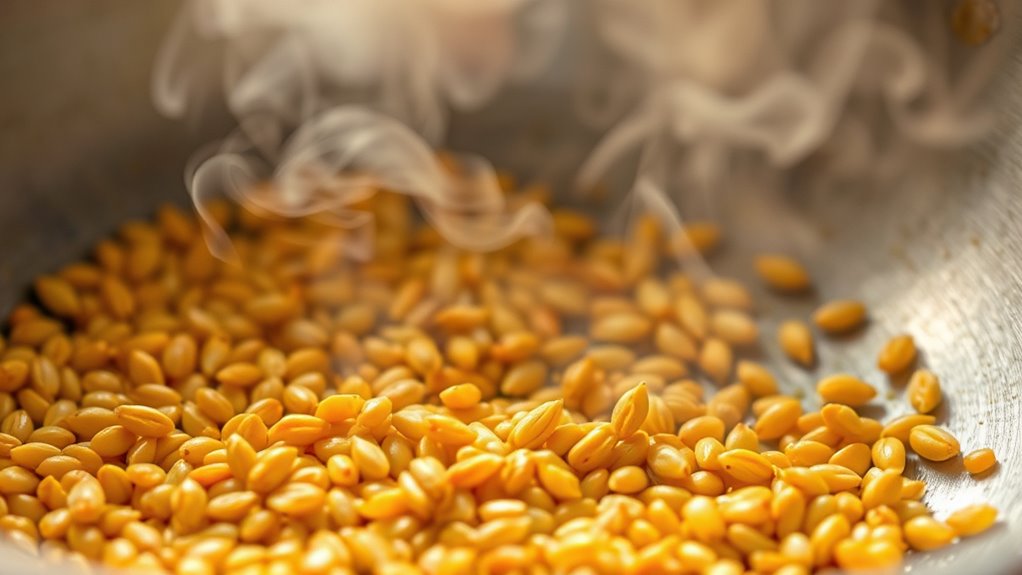
To guarantee fenugreek remains flavorful and delicious, it’s important to prepare and cook it properly from the start. Using the right cooking techniques enhances its flavor and prevents bitterness. First, toast the seeds lightly to release their aroma without burning. Soaking fenugreek seeds for 30 minutes can soften them, making cooking easier and flavor richer. When adding fenugreek to dishes, cook it over medium heat, stirring consistently to avoid burning. Incorporate it during the initial stages of cooking to maximize flavor enhancement. Additionally, understanding the European cloud servers can help in selecting the best fenugreek varieties for cooking, as different seed sources may have varying flavor profiles. Being aware of the culinary processing methods used for different fenugreek products can also impact flavor and bitterness.
How to Use Fenugreek Without Turning It Bitter in Recipes?
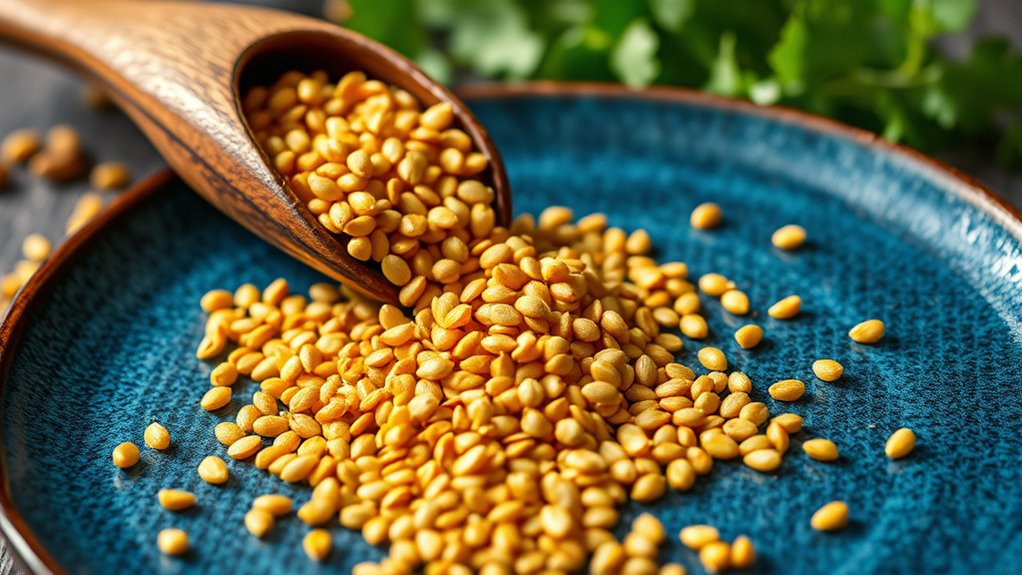
Since fenugreek can become bitter if not used properly, it’s essential to add it at the right stage in your cooking. Typically, add fenugreek seeds early in the process for flavor extraction, but avoid overcooking them. Proper fenugreek storage, in an airtight container away from heat and moisture, helps preserve its flavor without bitterness. If you want to prevent bitterness, consider using fenugreek powder sparingly, as it’s more concentrated. When fenugreek risks turning bitter, you can substitute with alternatives like mustard seeds, ground coriander, or a pinch of maple syrup to mimic its aroma without bitterness. These fenugreek alternatives work well in recipes, giving you flexibility without compromising flavor. Additionally, be mindful of piercing care and hygiene, as ensuring your kitchen tools and storage areas are clean can prevent contamination that might lead to off-flavors. Maintaining proper spice storage also helps keep fenugreek fresh and reduces the risk of bitterness developing over time.
What Are Quick Fixes If Fenugreek Turns Bitter Unexpectedly?
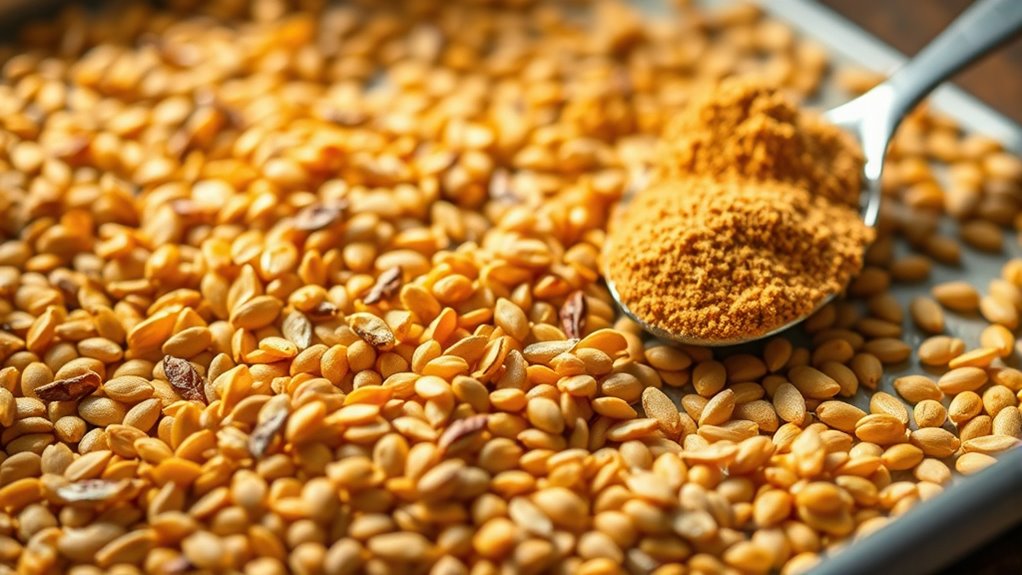
If your dish takes an unexpected turn with bitterness due to fenugreek, quick fixes can help salvage the flavor. First, try balancing the bitterness with a touch of sweetness, like honey or sugar, to offset the bitter notes. Adding acidity, such as lemon juice or vinegar, can also help neutralize the bitterness and restore flavor harmony. If the problem stems from herb storage, make certain you store fenugreek properly in airtight containers away from heat and light to prevent it from becoming overly bitter in the future. You can also dilute the dish slightly with broth or coconut milk to smooth out the bitterness. These simple steps focus on flavor balancing and can save your dish without starting over. Additionally, understanding ventilation considerations can help in preparing dishes that are visually appealing by balancing lighting and presentation, although it’s more relevant for home cinema setups.
Frequently Asked Questions
Can Fenugreek Be Stored to Prevent Bitterness?
Yes, you can store fenugreek to prevent bitterness by using proper storage techniques. Keep it in an airtight container in a cool, dark place to control moisture and light exposure. Make sure it’s completely dry before storing, as moisture accelerates bitterness. Regularly check for any signs of spoilage, and avoid storing near strong odors, which can also affect its flavor and quality over time.
Does the Freshness of Fenugreek Affect Its Bitterness?
Yes, the freshness impact considerably affects fenugreek’s bitterness. When you use fresh fenugreek, it’s less likely to turn bitter quickly. To prevent bitterness, always check for freshness before cooking. Store fenugreek properly in an airtight container in a cool, dry place to maintain its freshness. Using fresh fenugreek not only prevents bitterness but also enhances its flavor and aroma, giving your dishes a better taste.
Are There Specific Varieties of Fenugreek Less Prone to Bitterness?
Finding fresher, milder varieties of fenugreek is possible with diligent selection. Some fenugreek cultivation techniques yield varieties less prone to bitterness, making your spice trade more reliable. You’ll notice that specific strains, cultivated with care, retain their sweet, subtle flavor longer. By choosing these varieties, you guarantee delightful dishes instead of bitter surprises, turning your spice experience into a savory success story.
How Does Cooking Duration Influence Fenugreek’s Flavor?
Cooking duration directly impacts fenugreek’s flavor; shorter cooking times preserve its bright, nutty notes, while longer durations can deepen bitterness. You should pay attention to cooking temperature and spice blending, as high heat accelerates flavor changes. To keep fenugreek flavorful, add it later in the cooking process or toast it lightly beforehand. This way, you control bitterness and enhance your dish’s overall aroma and taste.
Can Adding Other Ingredients Mask Bitterness in Fenugreek Dishes?
You can definitely mask fenugreek bitterness by using clever herb pairing and flavor balancing. Adding ingredients like honey, tomatoes, or coconut milk helps mellow its sharpness. Spices like cumin or coriander also complement fenugreek’s flavor, making the dish more harmonious. Don’t worry—experimenting with these elements transforms the bitterness into a well-rounded, flavorful experience, ensuring your dish stays delicious even if fenugreek initially turns bitter.
Conclusion
Think of fenugreek as a delicate flame—you need to handle it with care. When you know how to prepare and cook it properly, it stays sweet instead of turning bitter like a sudden gust of wind snuffing out a candle. Pay attention to timing and temperature, and you’ll keep its rich flavor shining through. With these tips, you’ll master fenugreek and enjoy its delicious potential without any unexpected bitterness spoiling the dish.