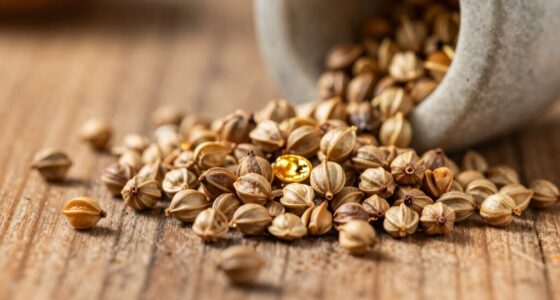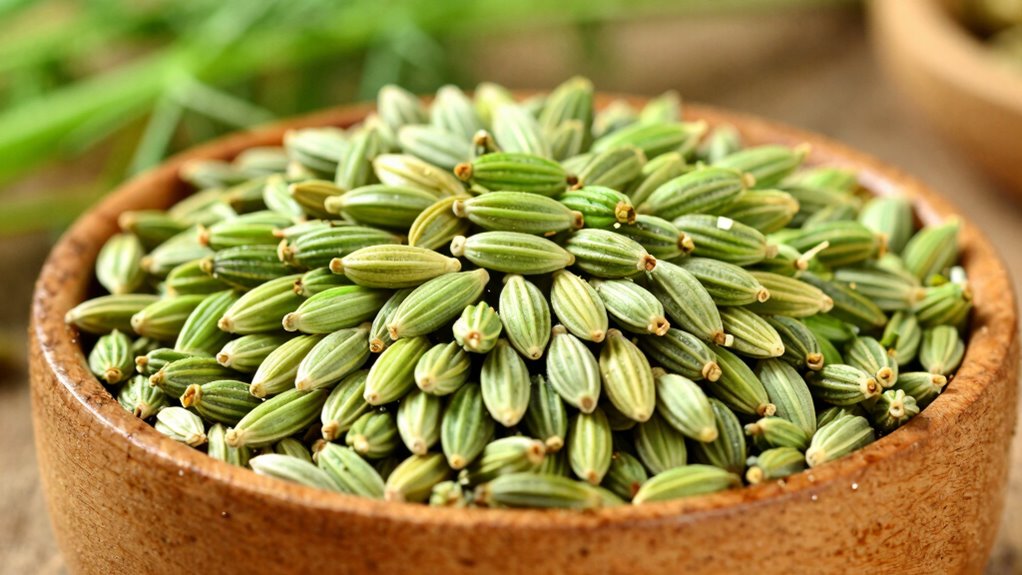

Fennel seeds are a natural way to boost sweetness and flavor in your dishes without added sugars. Their slightly licorice-like taste enhances everything from baked goods to savory curries, while their health benefits support digestion and overall well-being. Toasting them intensifies their aroma, making your recipes more vibrant. If you want to discover simple tips on how to maximize their flavor and benefits, keep exploring—fennel seeds might just become your favorite secret ingredient.
Key Takeaways
- Toast fennel seeds to enhance their natural sweetness and aroma, making dishes more flavorful.
- Incorporate ground fennel into baked goods and desserts for a subtle, sweet licorice-like flavor.
- Use fennel seeds in teas or infusions to naturally sweeten beverages and soothe digestion.
- Pair fennel seeds with honey or citrus to amplify their sweet, aromatic qualities in recipes.
- Add fennel seeds to spice blends and marinades to boost sweetness and depth of flavor.
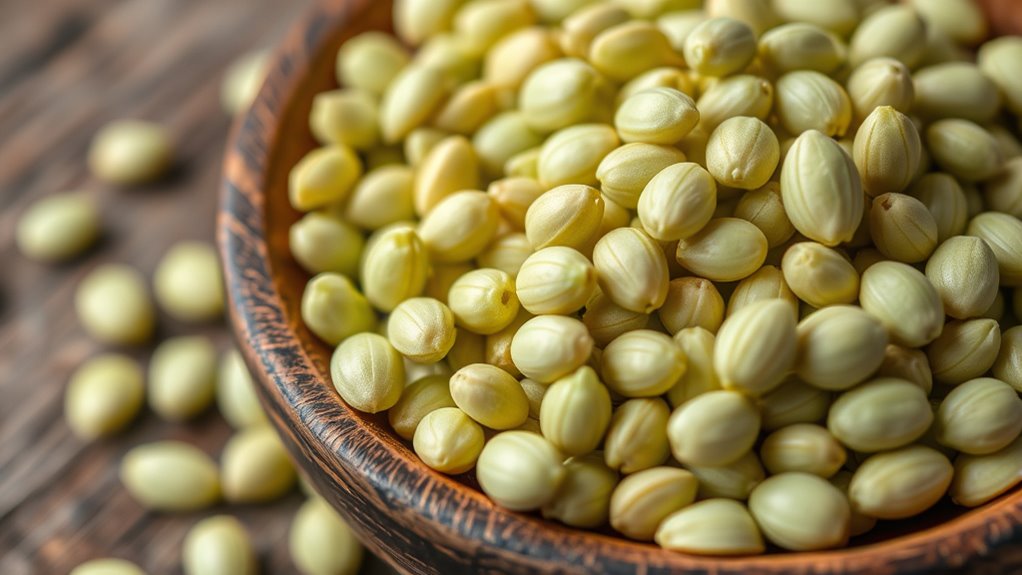
Have you ever wondered why fennel seeds are a popular addition to many dishes and remedies? These tiny seeds pack a punch when it comes to health benefits and culinary uses. They’re a versatile ingredient that can elevate both your meals and your well-being, yet many people overlook their potential. Understanding why fennel seeds are so valued might inspire you to incorporate them more often.
When it comes to health benefits, fennel seeds are nothing short of impressive. They’re rich in antioxidants, which help fight free radicals in your body, reducing oxidative stress and potentially lowering the risk of chronic diseases. Fennel seeds are also known to support digestion, easing bloating, gas, and indigestion. Their natural compounds, like anethole, have anti-inflammatory properties, which can help soothe inflammation and promote overall gut health. Additionally, these seeds may aid in balancing hormones, making them beneficial for women experiencing menstrual discomfort. They’re also a good source of vitamins and minerals, such as vitamin C, calcium, magnesium, and potassium, which play essential roles in maintaining your body’s functions. Incorporating fennel seeds into your diet can be an easy and natural way to boost your immune system and improve your digestive health. Moreover, fennel seeds contain compounds that can act as essential oils for oral health, helping to freshen breath and maintain oral hygiene.
As for culinary uses, fennel seeds are incredibly adaptable and can be used in a variety of dishes. Their sweet, slightly licorice-like flavor adds depth and aroma to both savory and sweet recipes. You’ll find fennel seeds in spice blends, marinades, soups, and stews, where they contribute a warm, aromatic note. They’re commonly used in Mediterranean, Indian, and Middle Eastern cuisines, adding complexity to curries, pickles, and bread. Toasting the seeds enhances their flavor, making them more fragrant and punchy. You can also grind fennel seeds into a powder to sprinkle over salads or incorporate into spice rubs for grilled meats. Beyond cooking, fennel seeds are often used to make teas and infusions to soothe digestion or freshen your breath after a meal. Their subtle sweetness pairs well with honey or citrus, making them an excellent addition to baked goods or beverages.

Fresh Finest Fennel Seeds, Premium Whole Fennel Seed for Cooking, Baking, Digestive Health, Non GMO, All Natural – 370G (13.05oz)
PREMIUM QUALITY: Our fennel seeds are carefully sourced from certified farms, ensuring the highest quality and purity. Experience…
As an affiliate, we earn on qualifying purchases.
As an affiliate, we earn on qualifying purchases.
Frequently Asked Questions
Can Fennel Seeds Help With Weight Loss?
Yes, fennel seeds can aid your weight management efforts. As herbal remedies, they help curb your appetite and boost digestion, making it easier to control your calorie intake. Incorporate fennel seeds into your diet by chewing them after meals or brewing fennel tea. This natural approach supports your weight loss goals and promotes overall digestive health, making fennel seeds a simple, effective addition to your wellness routine.
Are Fennel Seeds Safe During Pregnancy?
Yes, fennel seeds are generally safe during pregnancy when used in moderation, but you should consult your healthcare provider first. As herbal remedies, they can help with digestion and inflammation. However, if you have dietary restrictions or allergies, be cautious, as some women might experience allergic reactions. Always follow recommended amounts and avoid excessive use, especially during pregnancy, to guarantee safety for both you and your baby.
How Long Do Fennel Seeds Stay Fresh?
Ironically, you probably wonder how long fennel seeds stay fresh, even if you forget to store them properly. Typically, they stay fresh for about 1 to 2 years if kept in an airtight container away from heat and light. Look for freshness indicators like a strong aroma and vibrant color. After that, their flavor dulls, and they lose their magic, so don’t wait too long to enjoy their sweetness!
Can Fennel Seeds Interact With Medications?
Yes, fennel seeds can interact with medications, so you should be cautious. They may cause drug interactions, especially if you’re taking blood thinners or hormone-related drugs. Additionally, allergy concerns are important; some people might experience allergic reactions to fennel seeds. If you’re on medication or have allergies, it’s best to consult your healthcare provider before adding fennel seeds to your diet to avoid any adverse effects.
What Are Some Creative Ways to Incorporate Fennel Seeds Into Recipes?
Like adding a secret ingredient, you can elevate your cooking with fennel by sprinkling crushed fennel seeds into salads or roasted veggies for a subtle anise flavor. Mix them into bread dough or cookie batter for aromatic fennel seed desserts that surprise. Infuse your tea with fennel or create a fragrant spice rub for meats. These creative ideas turn simple dishes into memorable culinary adventures, making fennel a versatile spice.

The Spice Way Fennel Seed – bulk whole seeds great for tea and cooking 8 oz
WHOLE FENNEL SEED – flavorful addition to so many dishes with distinctive anise and licorice taste. Used with…
As an affiliate, we earn on qualifying purchases.
As an affiliate, we earn on qualifying purchases.
Conclusion
Don’t overlook fennel seeds next time you’re cooking; they’re a simple way to boost sweetness naturally without extra sugar. Some might think they’re only for digestion or tea, but adding a pinch to your dishes can enhance flavors effortlessly. Plus, they’re versatile—use them in salads, baked goods, or even drinks. So, give fennel seeds a try—you might find they’re your new secret ingredient for that perfect, subtly sweet touch!

Traditional Medicinals Organic Fennel Tea, 16 Count
Promotes healthy digestion.
As an affiliate, we earn on qualifying purchases.
As an affiliate, we earn on qualifying purchases.

The Spice Way Fennel Seed Ground – bulk seeds powder great for tea and cooking 8 oz
FENNEL SEED POWDER – flavorful addition to so many dishes with distinctive anise and licorice taste. Used with…
As an affiliate, we earn on qualifying purchases.
As an affiliate, we earn on qualifying purchases.