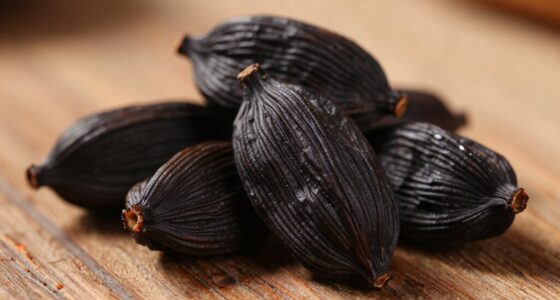
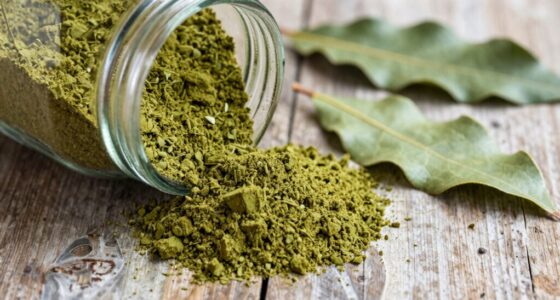
Black cumin (Kala Jeera) and regular cumin might look and taste similar, but you should not mix them up. Black cumin has dark, wrinkled seeds with a smoky, intense flavor, while regular cumin features smooth, light-brown seeds with a warm, nutty taste. They’re used differently in cooking and offer unique health benefits. To understand how to tell them apart and use each correctly, you’ll want to see the details behind their differences.
Key Takeaways
- Black cumin (Kala Jeera) has dark, wrinkled seeds with a smoky flavor, unlike smooth, light-brown regular cumin seeds.
- Black cumin offers a stronger, more intense taste, while regular cumin has a warm, nutty flavor.
- They are used in different cuisines and dishes, with black cumin suited for hearty, smoky dishes and regular cumin for versatile seasoning.
- Black cumin provides antioxidant and anti-inflammatory health benefits; regular cumin aids digestion and boosts iron intake.
- Their botanical origins and appearance clearly distinguish them, preventing culinary and health-related confusion.
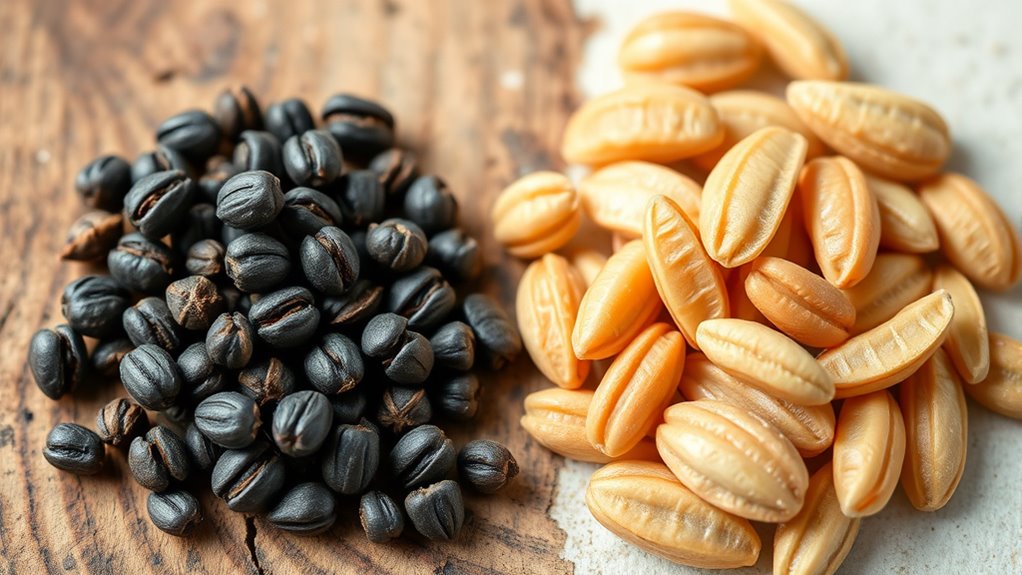
When comparing black cumin and regular cumin, it’s important to understand that although they share similar names and flavors, they are distinct spices with different origins, appearances, and health benefits. Black cumin, also known as Kala Jeera, has a dark, slightly wrinkled seed, while regular cumin features smooth, light-brown seeds. Their flavors are somewhat similar—warm, earthy, and aromatic—but black cumin tends to have a more intense, smoky undertone. Recognizing these differences matters because they influence how you use each spice in cooking and their impact on your health.
In the kitchen, black cumin and regular cumin serve different culinary purposes. Black cumin is often used in Indian, Middle Eastern, and North African dishes, adding depth to curries, stews, and bread. Its robust flavor makes it ideal for seasoning hearty dishes, especially those that benefit from a smoky, slightly bitter kick. Regular cumin, on the other hand, is a staple in spice blends like garam masala or chili powder. It’s versatile and commonly found in Latin American, Indian, and Middle Eastern cuisines, enhancing everything from rice to meat marinades. When cooking, you might toast either spice to release their essential oils, but be mindful of the flavor profile you want—black cumin lends a more pungent, smoky aroma, whereas regular cumin provides a warm, nutty undertone.
Beyond their culinary uses, black cumin and regular cumin also offer notable health benefits, making them more than just flavor enhancers. Black cumin is renowned for its antioxidant and anti-inflammatory properties. It contains thymoquinone, which has been linked to immune support, improving digestion, and even reducing inflammation. Some studies suggest black cumin can help manage allergies and respiratory issues, making it a valuable addition to your diet if you’re aiming to boost overall health. Additionally, European cloud servers are increasingly being used to securely host data related to health research, highlighting the importance of reliable and safe digital infrastructure. Regular cumin also boasts health benefits, including aiding digestion, reducing blood sugar levels, and providing a source of iron. Its antioxidants support immune function as well. While both spices contribute to a healthy diet, black cumin’s concentrated active compounds often make it the preferred choice for specific health concerns.
Frequently Asked Questions
Can Black Cumin and Cumin Be Used Interchangeably in Recipes?
You shouldn’t use black cumin and cumin interchangeably in recipes because their substitution guidelines differ. Black cumin offers a more robust, slightly bitter flavor, enhancing dishes with its culinary versatility, while cumin provides a warm, earthy taste. If a recipe calls for one, consider the flavor profile and adjust quantities accordingly. Substituting directly may alter the dish’s flavor, so use each spice as intended for the best results.
Are There Any Health Benefits Unique to Black Cumin?
Think of black cumin as a tiny warrior with unique armor. It offers antioxidant properties that help neutralize harmful free radicals, boosting your immune system. These health benefits are specific to black cumin, making it a powerful addition to your diet. Regular use may improve your overall health, supporting your body’s defenses and promoting wellness in ways that plain cumin can’t match. Its distinct compounds make it a valuable natural remedy.
How Do Black Cumin and Cumin Differ in Flavor Profile?
Black cumin and cumin have distinct flavor profiles you’ll notice in the kitchen. Black cumin offers a smoky, slightly bitter, and nutty taste, making it ideal for hearty dishes and spice blends. Cumin, on the other hand, provides a warm, earthy, and slightly sweet flavor, perfect for curries and roasted vegetables. Use these flavor distinctions to enhance your culinary creations, choosing black cumin for depth and cumin for a familiar, aromatic touch.
Is Black Cumin More Expensive Than Regular Cumin?
Yes, black cumin is generally more expensive than regular cumin. You’ll notice the price comparison in markets, where black cumin often costs more due to its limited availability, unique flavor, and higher demand. Its rarity and the effort needed to harvest it contribute to the price difference. So, when shopping, expect to pay a premium for black cumin compared to the more commonly available regular cumin.
Can Black Cumin Be Cultivated in Home Gardens?
Yes, you can cultivate black cumin in your home garden. To do so, follow some simple cultivation tips like choosing well-drained soil, ensuring plenty of sunlight, and watering sparingly. Black cumin plants thrive in warm climates, so consider your local weather conditions. With patience and proper care, you’ll enjoy fresh black cumin right from your garden, adding flavor and health benefits to your meals.
Conclusion
So, next time you’re cooking, remember that black cumin and cumin might look alike, but they’re worlds apart in flavor and benefits. It’s funny how a small spice can make such a big difference, isn’t it? Keep an eye on those tiny seeds—they might just surprise you. Whether you’re adding depth or a health boost, understanding the difference guarantees your dishes turn out perfectly every time. Enjoy exploring these flavorful companions!