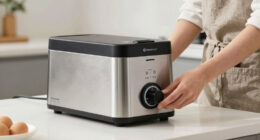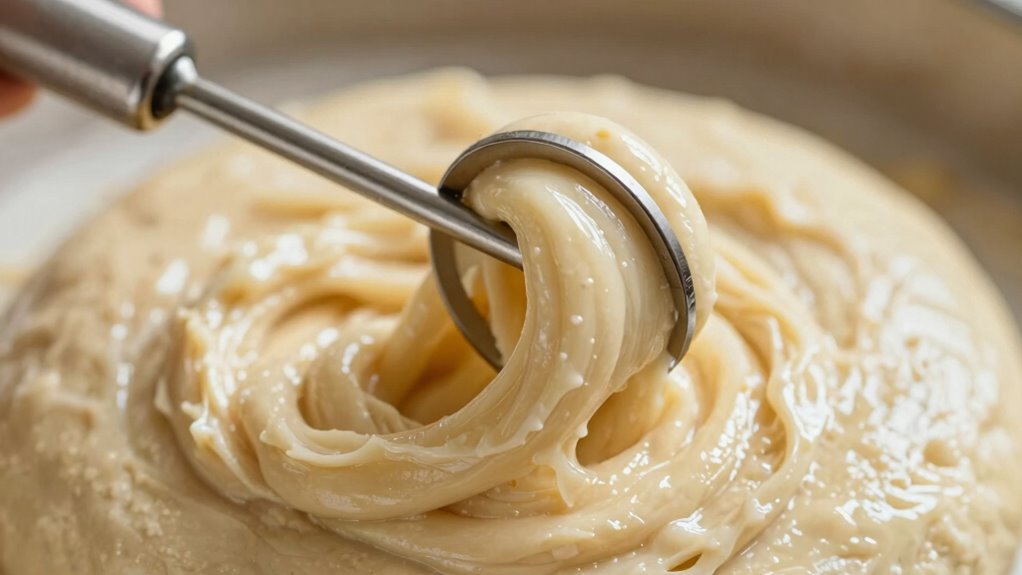
If you over-knead with the dough hook, you risk developing too much gluten, which makes your bread tough and dense. The dough becomes tight, elastic, and less able to trap air, resulting in a heavy loaf instead of light and airy. To avoid this, stop kneading once the dough is smooth, slightly tacky, and elastic. Paying attention to the texture helps prevent overworking. Keep going to discover how proper kneading can make all the difference.
Key Takeaways
- Over-kneading with the dough hook develops excessive gluten, resulting in tough, chewy bread.
- Continuing to knead beyond the optimal point causes the dough to become stiff and less elastic.
- Properly monitoring dough texture prevents overworking and maintains a light, airy crumb.
- Using the dough hook too long can trap less air, leading to dense bread.
- Recognizing when to stop kneading preserves gluten balance and prevents toughness.
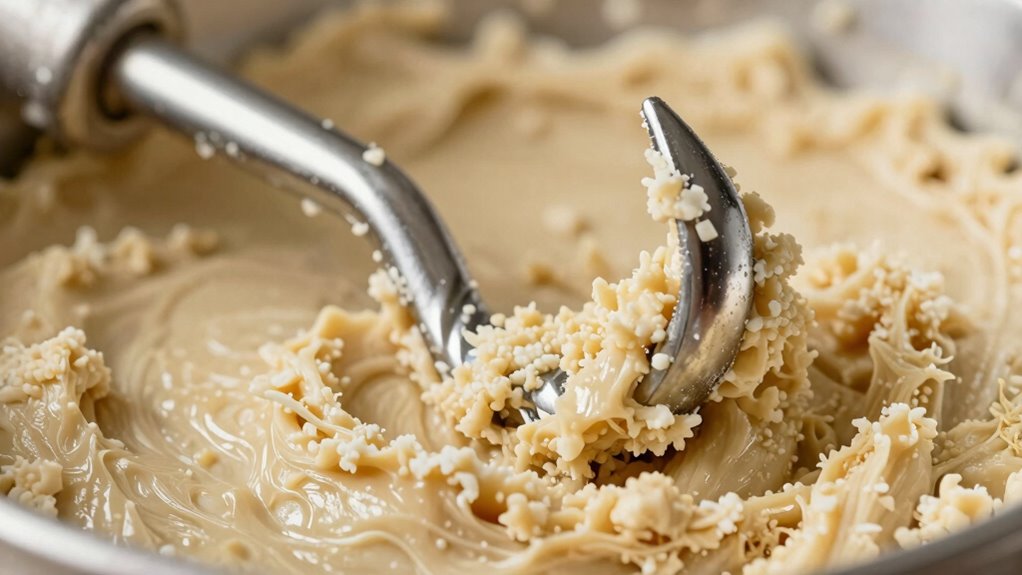
Have you ever experienced a dough that just won’t come together, no matter how long you mix? It’s frustrating, especially when you’re keen to bake fresh bread. One common mistake that leads to tough, dense bread is misusing the dough hook during kneading. Using the dough hook too aggressively or for too long can develop the gluten structure excessively, making your bread tough and chewy instead of soft and airy.
Over-kneading with the dough hook can make your bread dense and chewy instead of soft and airy.
To avoid this, you need to understand how the dough hook works and when to stop. When you first start mixing, the dough hook helps incorporate ingredients and begins gluten development. However, if you keep kneading beyond the ideal point, you risk overworking the dough. Over-kneaded dough becomes tight and elastic, which traps less air and results in a dense loaf. Keep an eye on the dough’s texture; it should be smooth, slightly tacky, and elastic—not stiff or overly firm.
Another essential aspect is how you handle yeast activation and different flour types. Properly activating your yeast is key to a well-risen bread. Make sure your yeast is fresh and activated at the right temperature—warm water (around 100-110°F) helps jump-start the process. When yeast activates correctly, it produces carbon dioxide that creates the lightness and volume in your bread. If your yeast isn’t active, the dough won’t rise properly, and over-kneading won’t fix that.
Flour types also play a significant role in dough consistency and elasticity. Bread flour, with its higher protein content, produces more gluten, which can be more challenging to knead if overdone. All-purpose flour, with less gluten, is easier to work with but still benefits from gentle kneading. Whole wheat or other specialty flours might require adjustments in hydration and kneading time. If you’re using a high-gluten flour, be especially cautious not to overdo it with the dough hook, as this can turn your soft dough into a tough, chewy loaf. Additionally, understanding the biodiversity of wheat varieties can help bakers choose the best types for different bread textures and flavors, as different wheat varieties have unique properties that influence dough behavior. Recognizing the gluten strength of your flour can also guide you in adjusting kneading times to get the perfect bread texture. Proper dough handling techniques are crucial for achieving an ideal rise and crumb structure.

MEET JUICE C-Shaped K45DH Coated Dough Hook, Attachment for KitchenAid Tilt-Head Stand Mixers Only, Fits 4.5–5 Quart Bowls, Compatible with K45, K45SS, KSM90, KSM150
High Quality】Aluminum material with nylon coated to avoid oxidation.
As an affiliate, we earn on qualifying purchases.
As an affiliate, we earn on qualifying purchases.
Frequently Asked Questions
Can Using a Dough Hook Affect Different Types of Bread Differently?
Using a dough hook can affect different types of bread differently because it influences gluten development and texture variation. For denser breads like whole wheat or rye, overmixing with a dough hook might make the texture tough, while for lighter breads like white or French bread, it helps develop gluten without overworking the dough. So, you should adjust mixing times based on the bread’s type to achieve the best texture.
What Is the Ideal Mixing Time With a Dough Hook?
You should mix dough for about 8-10 minutes with a dough hook, as overmixing can toughen bread. Remarkably, proper mixing ensures ideal ingredient ratios and gluten development, which impacts texture. Use your kitchen equipment wisely—avoid rushing or under-mixing. This way, you create a well-incorporated dough with the perfect consistency, resulting in soft, airy bread. Keep an eye on the clock and your dough’s texture for the best results.
Does the Size of the Mixing Bowl Matter When Using a Dough Hook?
Yes, the size of your mixing bowl matters when using a dough hook. A properly sized bowl allows the dough to move freely, ensuring even mixing and kneading. If the bowl is too small, the dough can become overcrowded, leading to uneven development and a tougher bread texture. Using the right-sized bowl helps achieve a consistent, soft crumb by promoting proper gluten formation and even ingredient distribution.
How Do I Prevent Overmixing With a Dough Hook?
To prevent overmixing with a dough hook, keep a close eye on the dough’s texture, stopping as soon as gluten development is just right. Unlike hand kneading, which you control by feel, using a mixer requires watching for signs like the dough pulling away from the sides. Overmixing can toughen your bread, so pause early and switch to hand kneading if needed to make certain of perfect gluten development.
Are There Alternative Tools to a Dough Hook for Kneading?
You might find that hand kneading is a great alternative to a dough hook, especially if you want to feel the dough’s texture firsthand. Traditional tools like a pastry scraper or even a wooden spoon can help, but nothing beats the control of your hands. Sometimes, the best way to master bread is to get in there and knead it yourself, making adjustments as you go for perfect gluten development.
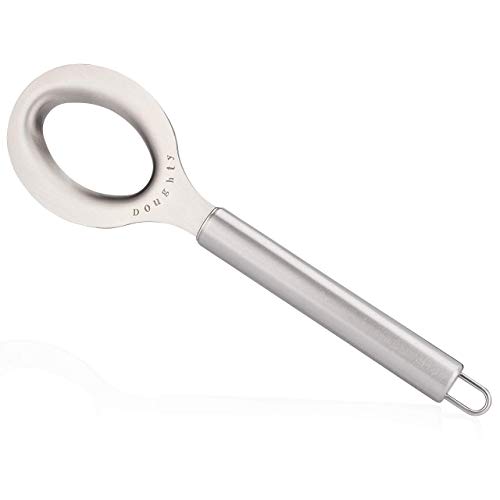
Doughty Stainless Steel Dough Whisk, Mixing and Kneading Tool – Sourdough Stirrer and Danish Dough Whisk Alternative – Rigid Hand Mixing Tool with Comfortable Grip – Gift Box Included
Stainless Steel Whisk for Thick Dough: Our rigid, food-grade dough mixer hand tool makes it easy to mix…
As an affiliate, we earn on qualifying purchases.
As an affiliate, we earn on qualifying purchases.
Conclusion
Remember, even the best bakers make mistakes, but it’s how you learn from them that counts. Using your dough hook correctly guarantees your bread stays soft and tender, not tough. If you rush or overmix, you risk toughening the gluten — don’t let impatience be the thief of good bread. As the saying goes, “Haste makes waste,” so take your time, follow the steps carefully, and enjoy perfectly airy, delicious bread every time.
MEET JUICE C-Shaped K45DH Coated Dough Hook, Attachment for KitchenAid Tilt-Head Stand Mixers Only, Fits 4.5–5 Quart Bowls, Compatible with K45, K45SS, KSM90, KSM150
High Quality】Aluminum material with nylon coated to avoid oxidation.
As an affiliate, we earn on qualifying purchases.
As an affiliate, we earn on qualifying purchases.

26×16 Inch Extra Thick Silicone Baking Mat with Measurements, Non-slip and Reusable – For Cookies, Bread, Pastry
【100% Safe Silicone Baking Mat】: We provide the food grade silicone dough mat sheet which is made of…
As an affiliate, we earn on qualifying purchases.
As an affiliate, we earn on qualifying purchases.