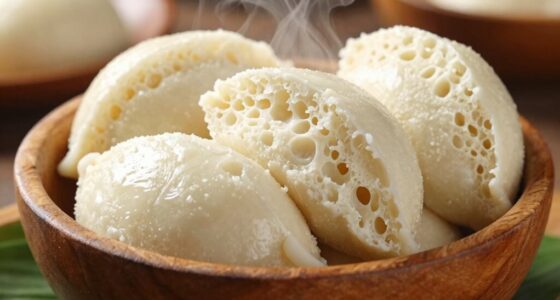
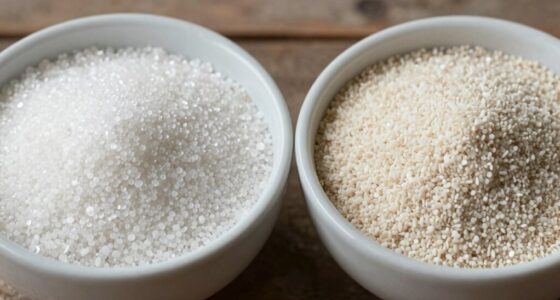
To soak tapioca pearls without becoming mushy, rinse them thoroughly and soak in water twice their volume for 4 to 6 hours or overnight, stirring occasionally. Keep the bowl covered in a cool place to prevent spoilage. Check the pearls; they should be soft, translucent, and slightly chewy. Adjust soaking time based on pearl quality. Continue exploring for more tips on achieving the perfect soaked pearls.
Key Takeaways
- Rinse tapioca pearls thoroughly to remove surface starch before soaking.
- Use twice the volume of water compared to pearls and soak for 4-6 hours or overnight.
- Stir periodically during soaking to prevent clumping and ensure even absorption.
- Keep the soaked pearls in a covered container in the refrigerator and use within 24 hours.
- Avoid over-soaking or freezing; proper timing and storage prevent mushiness and maintain texture.
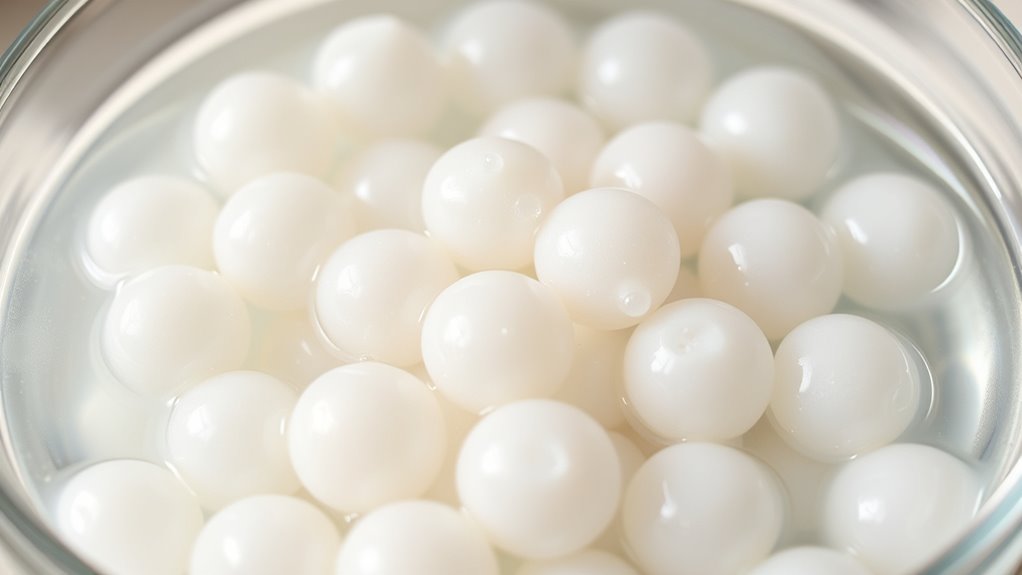
Have you ever wondered how to perfectly soak tapioca pearls for your favorite dishes? The key lies in understanding the right process to guarantee they turn out just right—neither too mushy nor undercooked. Soaking correctly is essential because it impacts the texture, taste, and nutritional benefits of sabudana. Tapioca pearls, or sabudana, offer a good source of carbohydrates and are low in fat, making them a popular choice for various recipes. When soaked properly, they retain their chewy consistency and maximum nutritional benefits, giving you a better overall eating experience.
To start, choose high-quality tapioca pearls, as they tend to soak evenly and cook uniformly. Rinse the pearls thoroughly under cold water to remove surface starches, which helps prevent clumping during soaking. Once rinsed, place them in a large bowl and add enough cold water to cover the pearls generously—about twice the volume of the tapioca. This extra water allows the pearls to absorb moisture evenly. For best results, allow the tapioca to soak for about 4 to 6 hours or overnight. If you’re in a hurry, soaking for at least 2 hours might work, but longer soaking helps achieve the perfect chewy texture without the risk of mushiness.
While soaking, make sure to stir the pearls occasionally to prevent them from sticking together or settling at the bottom. Keep the bowl covered and in a cool place, especially during warm weather, to slow down fermentation and prevent spoilage. Once soaked, the pearls should be soft and translucent, with a slightly chewy texture. If they still feel hard or opaque, give them more time to soak. Proper soaking ensures they cook evenly and maintain their nutritional benefits, which include energy-providing carbs and small amounts of minerals like calcium and iron.
Storage tips are equally important. If you have leftover soaked tapioca, drain the excess water and store the pearls in an airtight container in the refrigerator. Use them within 24 hours for the best texture and freshness. Avoid freezing soaked pearls, as this can alter their structure and make them mushy once thawed. To keep the pearls from sticking together, lightly toss them with a small amount of oil before refrigerating. Proper storage preserves the nutritional value and keeps your tapioca pearls ready for quick cooking whenever you need them.
Mastering the soaking process ensures your sabudana dishes turn out perfect—chewy, delicious, and packed with nutrients. Follow these tips, and you’ll enjoy the ideal texture without the frustration of mushiness or uneven cooking.
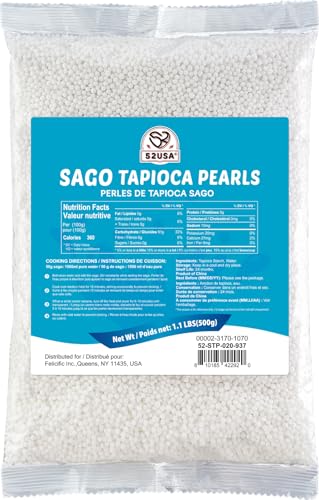
52USA Sago Pearls, Small Tapioca Pearls 1.1 lbs (500g), White Sago for Desserts and Bubble Milk Tea, Summer Beverages, All Natural, Vegan, Non-GMO, Gluten-Free
Authentic Tapioca Pearls: Easy to Cook, Low in saturated fats, great for a gluten-free diet, sago pearls can…
As an affiliate, we earn on qualifying purchases.
As an affiliate, we earn on qualifying purchases.
Frequently Asked Questions
Can I Reuse Soaked Sabudana for Multiple Recipes?
Yes, you can reuse soaked sabudana for multiple recipes if you store it properly. After soaking, store the soaked sabudana in an airtight container in the refrigerator and use it within 24 hours. Keep in mind that reusing soaked sabudana may affect its texture; it can turn mushy or sticky. Always check for freshness and proper consistency before reusing to guarantee your dish turns out perfect.
How Do I Store Soaked Sabudana Overnight?
Storing soaked sabudana overnight is like tucking a delicate pearl into a soft nest. To preserve its texture, drain excess water and place the pearls in an airtight container. Keep it refrigerated to prevent spoilage. This way, you protect the pearls from absorbing unwanted odors or becoming sticky, maintaining their original chewy texture. Follow these storage tips to enjoy fresh, perfectly soaked sabudana for your next recipe.
What Is the Best Water-To-Sabudana Ratio?
For the best Sabudana texture, use a water-to-sabudana ratio of about 1:1.5. Add enough water so the pearls are submerged but not swimming in it. This ratio guarantees they soak evenly and maintain their shape. Keep in mind, ideal soaking time is usually 4-6 hours. Check periodically, and when they turn translucent without sticking together, they’re ready to cook.
How to Prevent Soaking Sabudana From Turning Sticky?
To prevent soaking sabudana from turning sticky, focus on maintaining the right soaking duration and gentle handling. Keep the pearls submerged just enough to soften, avoiding over-soaking that causes stickiness. Rinse them thoroughly after soaking to remove excess starch, which helps preserve the desired chewy texture. Stir gently during soaking, and use cold water to slow down starch release, ensuring your pearls stay fluffy and non-sticky.
Can I Soak Sabudana in Warm Water?
Yes, you can soak sabudana in warm water for quicker results. Warm water soaking helps soften the tapioca pearls faster, reducing soaking time from hours to about 30-45 minutes. Use enough warm water to cover the pearls completely, and stir occasionally to prevent sticking. For quick soaking techniques, you can also rinse the pearls in warm water a few times to speed up the process and achieve the right softness without becoming mushy.

Nail Soaking Bowl, 2PCS Soak Off Gel Polish Dip Powder Remover Manicure Bowl with Triangle Cuticle Peeler and Stainless Steel Cuticle Pusher Nail Art Tool (Pink)
4 in one acetone soak off bowl kit: you will get 2pcs hand soak bowl, 1pcs cuticle peeler,1pcs…
As an affiliate, we earn on qualifying purchases.
As an affiliate, we earn on qualifying purchases.
Conclusion
Mastering the art of soaking sabudana is like revealing a secret recipe passed down through generations. When you soak the pearls just right, they turn out perfectly plump and non-mushy, ready to elevate your dish. Remember, patience is key—think of it as a gentle dance, much like a poet weaving words. With these simple tips, you’ll create culinary magic every time, turning humble tapioca into a star ingredient in your kitchen.
52USA Sago Pearls, Small Tapioca Pearls 1.1 lbs (500g), White Sago for Desserts and Bubble Milk Tea, Summer Beverages, All Natural, Vegan, Non-GMO, Gluten-Free
Authentic Tapioca Pearls: Easy to Cook, Low in saturated fats, great for a gluten-free diet, sago pearls can…
As an affiliate, we earn on qualifying purchases.
As an affiliate, we earn on qualifying purchases.
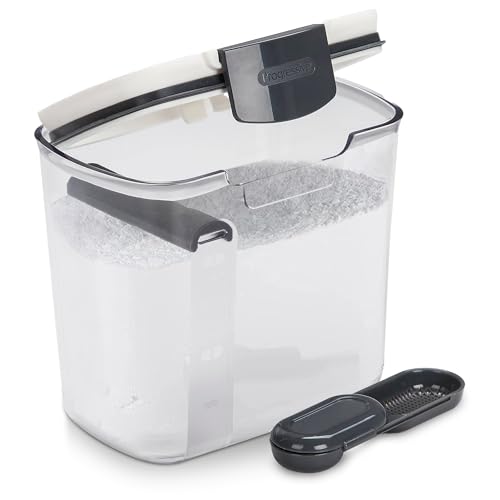
ProKeeper 1 Quart Airtight Powdered Sugar Storage Container – Grey, BPA-Free Plastic
Contains (1) ProKeeper 1.4-Quart Airtight Powdered Sugar Storage Container, Grey
As an affiliate, we earn on qualifying purchases.
As an affiliate, we earn on qualifying purchases.