
To avoid chewing fibers when using lemongrass, first bruise or smash the stalks with the back of a knife to release their flavor. Slice the stalks thinly or chop them into small pieces and steep in hot water for tea, or add bruised pieces directly to soups and curries. Remove the stalks before serving to prevent fibrous bites. If you want to learn more about preparing and using lemongrass effectively, keep exploring the tips below.
Key Takeaways
- Bruise or slice lemongrass stalks thinly to release flavor without encouraging chewing on fibrous parts.
- Remove lemongrass pieces before serving soups, curries, or drinks to avoid fibrous residues.
- Steep sliced or bruised lemongrass in hot water for herbal teas, then strain out the stalks before drinking.
- Use dried or fresh lemongrass for decoctions, simmering and straining to prevent fibrous pieces from being consumed.
- Handle lemongrass carefully by peeling outer layers and trimming roots to ensure smooth, fiber-free usage.
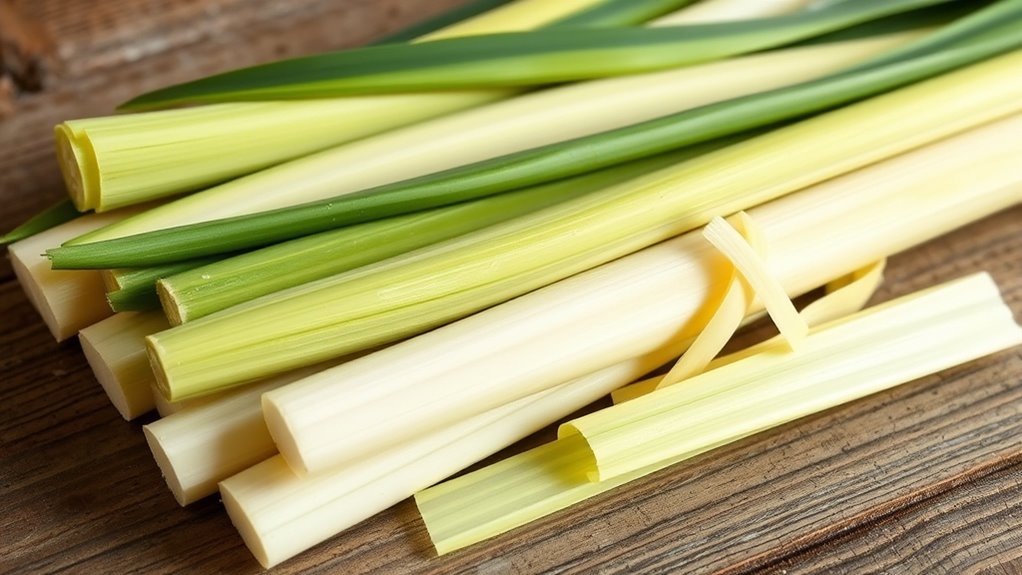
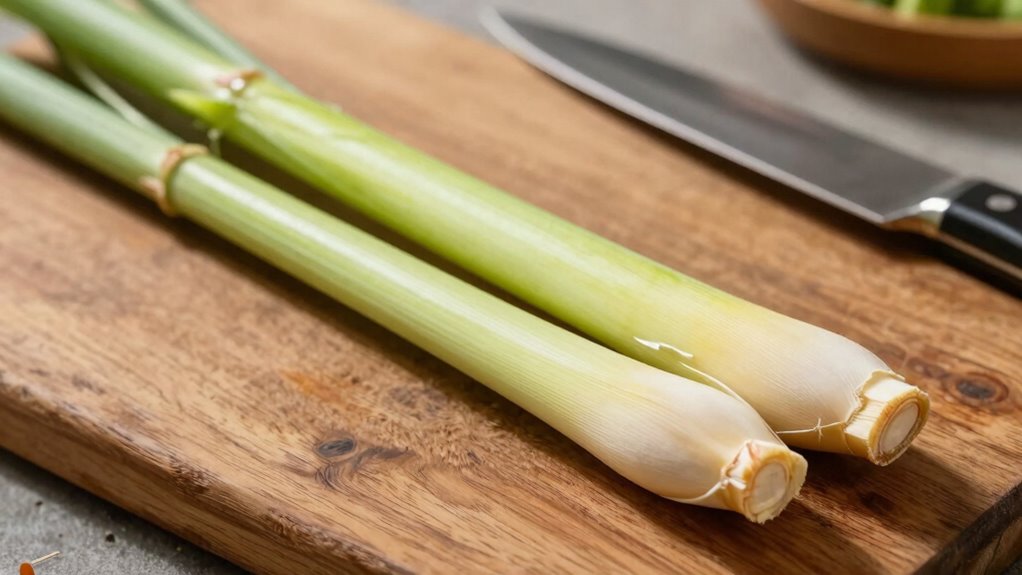
Lemongrass is a versatile herb that adds fresh, citrusy flavor to a variety of dishes and beverages. Its bright aroma and subtle lemon notes make it a popular choice in many cuisines around the world. To get the most out of this aromatic herb, you need to know how to prepare it properly, especially since chewing on the fibrous stalks isn’t ideal. Instead, you can incorporate lemongrass into your culinary applications by preparing it in ways that maximize flavor while avoiding the tough fibers. When using lemongrass in cooking, start by selecting fresh stalks that are firm and fragrant. Trim the root end and peel away any dry outer layers, then cut the stalk into smaller sections. To release its flavor without chewing on fibers, bruising or smashing the stalks with the back of a knife helps release essential oils, infusing your dishes with flavor. You can then add these pieces directly to soups, stews, or curries, removing them before serving. This method ensures you enjoy the herb’s citrus notes without the unpleasant texture of fibers. Incorporating culinary techniques such as bruising or slicing helps optimize flavor extraction and ensures a better dining experience. Additionally, understanding the importance of preparation can help you avoid common mistakes that diminish the herb’s effectiveness in your recipes.
For beverages like teas or infused waters, slice the lemongrass into thin rounds after bruising. Steep these slices in hot water for 10-15 minutes to extract their essence, then strain out the stalks before drinking. This way, you enjoy a revitalizing, lemony drink without any fibrous residues. When it comes to herbal remedies, lemongrass is often used in teas or decoctions to promote relaxation, digestion, and relief from colds. To prepare herbal remedies, you can use fresh or dried lemongrass. For a simple herbal tea, simmer chopped stalks in water for about 10 minutes, then strain and drink. This method ensures you’re capturing its medicinal properties without the hassle of fibrous pieces. If you prefer, dried lemongrass can be used in similar ways, often steeped longer to intensify the flavor and benefits. Additionally, understanding the cultural significance of lemongrass can enhance your appreciation and proper use of this herb in traditional recipes and remedies.
Knowing how to incorporate lemongrass into your cooking and herbal remedies without chewing on fibers allows you to enjoy its full flavor and health benefits. Whether you’re making fragrant soups, revitalizing drinks, or soothing herbal teas, the key is in preparation—bruising, slicing, and straining. With these techniques, you can elevate your culinary creations and herbal remedies, making the most of this vibrant herb while avoiding its tough, fibrous texture.
Frequently Asked Questions
Can Lemongrass Be Used in Skincare Products?
Yes, you can use lemongrass in skincare products. Lemongrass essential oil and lemongrass extract are popular for their antibacterial and invigorating properties. You might find them in cleansers, toners, or serums, helping to soothe skin and control oil. Just make certain the products are formulated properly, as direct application of pure oil can cause irritation. Always do a patch test before full use to avoid any sensitivity.
How Long Does Dried Lemongrass Last?
Dried lemongrass typically lasts about 6 to 12 months when stored properly. To preserve its freshness, keep it in an airtight container in a cool, dark, and dry place. Proper storage duration guarantees you get the most flavor and aroma from your lemongrass. Check for signs of aging, like loss of scent or discoloration, and replace it if it no longer maintains its vibrant qualities.
Is Lemongrass Safe for Pregnant Women?
You might wonder if lemongrass is safe during pregnancy. While it’s generally considered safe in culinary amounts, high doses could pose risks because of potential herbal interactions and pregnancy safety concerns. Always consult your healthcare provider before using lemongrass medicinally or in larger quantities. Stay cautious—what seems harmless might have unexpected effects, so it’s better to prioritize safety and get personalized advice during this delicate time.
What Are the Health Benefits of Lemongrass Tea?
Drinking lemongrass tea offers numerous health benefits. You’ll enjoy its antioxidant properties, which help protect your cells from damage, and its role as a digestive aid, easing bloating and indigestion. Sipping this tea regularly can also boost your immune system and reduce inflammation. Plus, its soothing aroma helps you relax and unwind, making it a delightful addition to your wellness routine.
Can Lemongrass Be Used in Cooking Without Boiling?
Yes, you can use lemongrass in cooking without boiling by making a lemongrass infusion. Simply steep fresh or dried lemongrass stalks in hot water for 10-15 minutes, then strain out the fibers. Use this flavorful infusion as a culinary flavoring in soups, stews, or marinades. This method enhances dishes with the bright, citrusy aroma of lemongrass without the chewy fibers, making it more enjoyable.
Conclusion
Now that you know how to use lemongrass without chewing its fibers, you’re all set to add this fragrant herb to your dishes. Remember, a little prep goes a long way, and “don’t bite off more than you can chew” applies here. By slicing or pounding lemongrass properly, you’ll enjoy its bright, citrusy flavor without any fibrous fuss. Happy cooking—your taste buds will thank you!