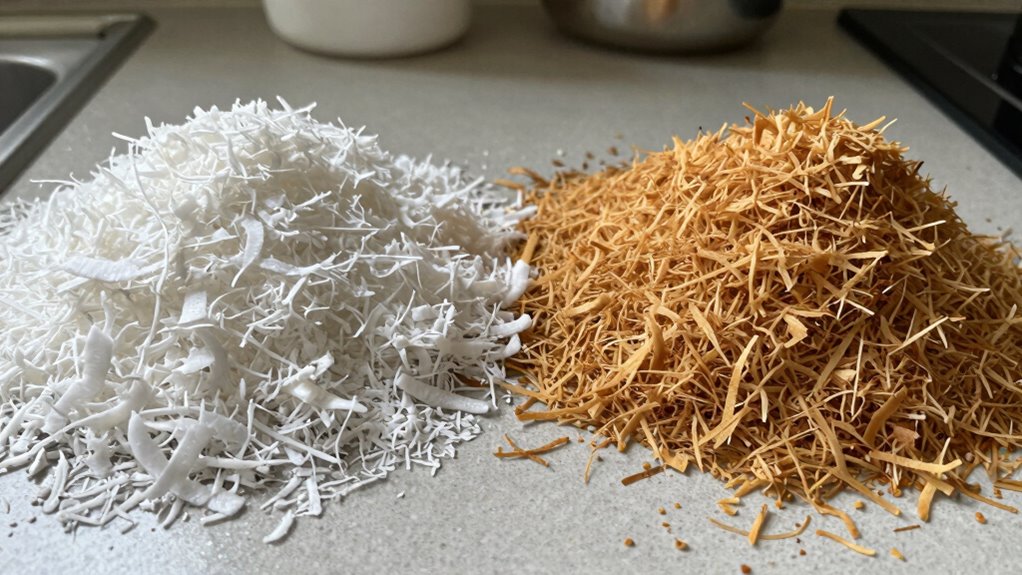

Choose fresh coconut for recipes that benefit from natural moisture, vibrant flavor, and quick consumption, as it’s best used shortly after purchase and needs refrigeration. Desiccated coconut, with its low moisture and longer shelf life, suits baking and long-term storage without spoilage concerns. Understanding their storage needs and ideal uses helps you pick the right kind for each dish. Keep exploring to discover more tips on how to store and use these versatile coconut varieties effectively.
Key Takeaways
- Fresh coconut is ideal for recipes requiring moisture and natural flavor, best used shortly after purchase.
- Desiccated coconut is suitable for baking and long-term storage due to its low moisture content.
- Use fresh coconut within a few days, refrigerate or freeze for extended preservation; desiccated coconut can be stored at room temperature.
- Fresh coconut’s higher moisture makes it more perishable, while desiccated coconut’s dryness extends shelf life.
- Store fresh coconut in sealed containers in the fridge or freezer, and keep desiccated coconut in airtight containers at room temperature.
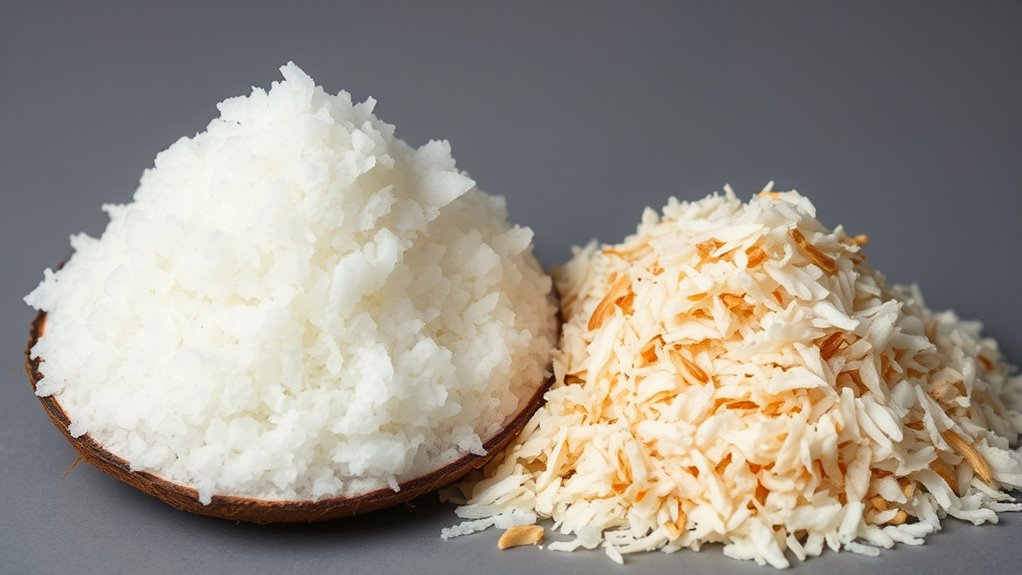
Storage methods are another critical difference that influences when and how you use each type. Fresh coconut needs to be stored carefully to prevent spoilage. You should keep it in the refrigerator, ideally within a sealed container, and consume it within a few days to a week. If you want to store it longer, freezing is a good option—just make sure to wrap it well to prevent freezer burn. Desiccated coconut, however, has a much longer shelf life thanks to its low moisture content. It can be stored in an airtight container at room temperature for several months without spoiling. Once opened, it’s best to keep it in a cool, dark place, but refrigeration can extend its freshness further. Because of these storage differences, desiccated coconut is more convenient for long-term pantry storage and is often used in baking and cooking where moisture content isn’t a concern. Proper storage techniques ensure quality preservation and are essential to maintaining the quality and safety of both types. Additionally, moisture content plays a significant role in determining the suitable storage method for each coconut type. Fresh coconut, though, is more suited for immediate use or short-term storage, making it ideal for recipes that benefit from its natural moisture and flavor. Understanding shelf life helps in planning how to incorporate each type into your cooking. Moreover, food safety considerations are crucial to avoid spoilage and ensure the coconut remains safe to consume over time.
Frequently Asked Questions
Can Desiccated Coconut Be Substituted for Fresh Coconut in Recipes?
Yes, you can substitute desiccated coconut for fresh coconut in recipes, but be aware of flavor and texture differences. Desiccated coconut has a more concentrated coconut flavor and a drier, crumbly texture, which can affect the dish’s overall consistency. Adjust your recipe accordingly, perhaps adding a bit of liquid or oil to mimic fresh coconut’s moisture, ensuring your dish maintains the desired flavor and texture.
How Long Does Desiccated Coconut Last Compared to Fresh Coconut?
Desiccated coconut lasts much longer than fresh coconut, typically up to 6-12 months when stored properly, while fresh coconut only stays good for about 1-2 weeks. To maximize shelf life, store desiccated coconut in an airtight container in a cool, dark place or in the fridge. Keep fresh coconut refrigerated and consume quickly to prevent spoiling. Proper storage tips help you enjoy both coconut types longer and maintain their flavor.
Is Desiccated Coconut Suitable for People With Nut Allergies?
If you have a nut allergy, desiccated coconut might still pose a nut allergy risk, as it’s not technically a nut but can cause reactions in sensitive individuals. Always check the ingredient labeling carefully, as cross-contamination can occur during processing. To stay safe, consult your allergist before consuming desiccated coconut, especially if you’re unsure about its manufacturing process or potential nut allergy risks.
What Are the Environmental Impacts of Producing Desiccated Versus Fresh Coconut?
Did you know that producing desiccated coconut has a higher carbon footprint than fresh coconut? This is mainly due to energy-intensive drying processes. If you’re concerned about environmental impacts, opt for sustainably farmed coconut, which reduces deforestation and promotes eco-friendly practices. Choosing fresh coconut can also lower overall carbon emissions, supporting sustainable farming methods and minimizing environmental harm. Your choices can make a difference in reducing ecological impact.
Does Desiccated Coconut Contain Added Preservatives or Additives?
You should know that desiccated coconut often contains preservatives or additives to extend shelf life and prevent spoilage. These preservative concerns mean you might be exposed to additive risks, especially if you consume large amounts. Always check labels carefully, and opt for products labeled as preservative-free if you want to avoid unnecessary chemicals. Being aware helps you make healthier choices and reduces your exposure to potential additive risks.
Conclusion
Now that you’ve weighed the options, remember that desiccated coconut works wonders in baking or adding a crunch, like a trusty sidekick in your kitchen adventures. Fresh coconut, on the other hand, shines in smoothies or salads, bringing a juicy burst of tropical freshness. Think of it as your modern-day Indiana Jones, steering through the culinary jungle. So, pick your hero wisely and keep your pantry well-stocked, because every ingredient has its own moment to shine!