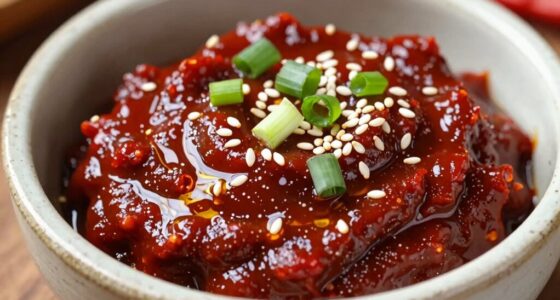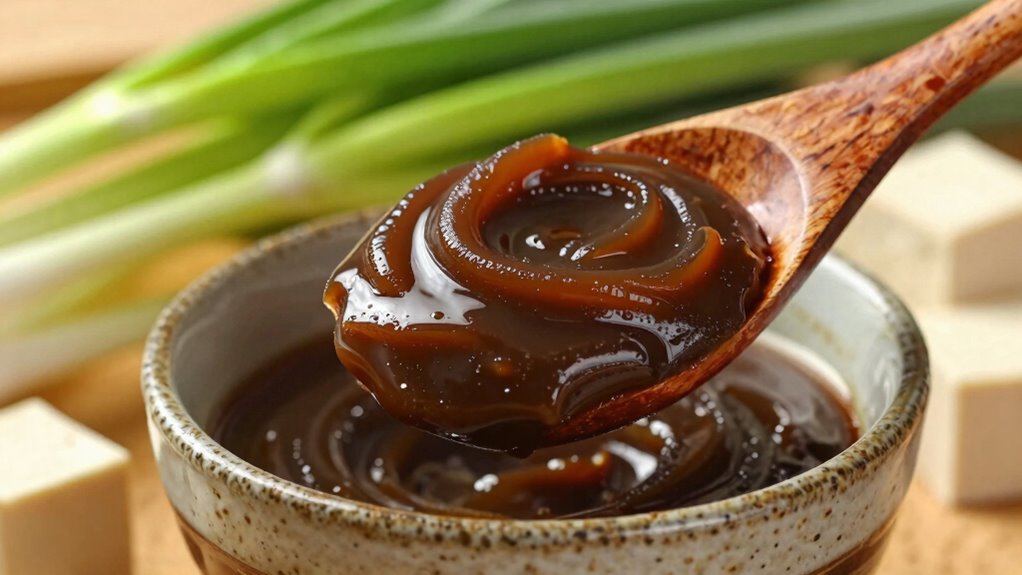

Miso paste is a probiotic-rich ingredient that boosts flavor and health benefits through traditional fermentation, creating rich umami and supporting digestion. To use it correctly, add it to warm, not boiling, liquids like broths or soups, so you don’t destroy its beneficial bacteria. You can also incorporate miso into dressings or spreads for added flavor. Keep in mind, proper storage preserves its probiotic qualities—keep exploring to discover even more ways to enjoy this versatile superfood.
Key Takeaways
- Miso paste is a fermented ingredient rich in umami, enhancing flavor naturally in various dishes.
- To maximize health benefits, avoid boiling miso; add it to warm, not hot, liquids to preserve probiotics.
- Incorporate miso into soups, dressings, or marinades for a flavorful, nutritious boost.
- Proper storage in a cool, airtight container maintains its probiotic qualities and prolongs freshness.
- Traditional fermentation methods ensure miso retains beneficial microbes and complex flavors.

Have you ever wondered what gives miso soup its rich, savory flavor? The answer lies in the fascinating fermentation process that transforms simple soybeans, rice, or barley into the flavorful paste you know as miso. During fermentation, beneficial microbes break down the proteins and starches, creating complex umami compounds that deepen the taste. This natural process not only develops its signature savory profile but also boosts the health benefits associated with miso. Fermentation enhances nutrient availability, introduces probiotics, and supports gut health, making miso more than just a flavor enhancer. The probiotics formed during fermentation can improve digestion, strengthen your immune system, and promote overall wellness. Choosing traditionally fermented miso guarantees you’re getting these health benefits, as rapid or artificial methods often skip or diminish this critical step. Incorporating fermented foods like miso into your diet can also support your body’s natural ability to manage inflammation and improve overall vitality through fermentation.
Understanding the fermentation process can help you appreciate why miso is so versatile and beneficial. When you add miso to your dishes, you’re not just adding flavor—you’re incorporating a living food packed with nutrients. The fermentation also increases the bioavailability of minerals like zinc, manganese, and copper, making them easier for your body to absorb. Additionally, the presence of beneficial bacteria can help balance your gut microbiome, which is essential for digestion, mood regulation, and immune function. The microbial activity during fermentation can generate new bioactive compounds that further support health. Proper storage of miso is crucial to maintain its probiotic qualities and prevent spoilage, especially in warm climates. Because of this, including miso in your diet can contribute to long-term health benefits, especially when consumed regularly. It’s a natural, fermented superfood that supports your wellbeing in multiple ways.
When using miso, it’s important to respect its delicate nature. To preserve its probiotic qualities, avoid boiling it directly, as high heat can kill beneficial bacteria. Instead, stir a small amount of miso into warm, not boiling, liquids, such as broth or soup. This gentle approach ensures you retain most of its health benefits while maximizing flavor. You can also blend miso into salad dressings, marinades, or spreads, adding depth and umami in a way that enhances your dishes without overpowering them. The key is to integrate miso thoughtfully, respecting its fermentation origins and health benefits. When you do, you access not just a rich flavor but a powerful health ally that’s been cultivated through centuries of tradition.

Marukome Organic Broth, Reduced Sodium Miso Paste, 13.2 OZ
Organic
As an affiliate, we earn on qualifying purchases.
As an affiliate, we earn on qualifying purchases.
Frequently Asked Questions
Can Miso Paste Be Used as a Substitute for Soy Sauce?
Yes, you can use miso paste as a soy sauce substitute, but keep in mind the flavor comparison. Miso brings a richer, creamier umami, while soy sauce offers a saltier, sharper taste. Its culinary versatility allows it to enhance soups, marinades, and dressings, but you might need to adjust salt levels. Use miso thoughtfully to achieve the desired umami depth, especially when replacing soy sauce in recipes.
Is Miso Paste Suitable for Vegan or Vegetarian Diets?
Miso paste is totally suitable for vegan or vegetarian diets! It’s made from fermented soybeans, rice or barley, and contains no animal-based ingredients—making it a perfect source of plant-based proteins. Unlike some condiments that hide animal-derived additives, miso keeps it clean. You can enjoy its rich umami flavor without worry, knowing it aligns with your plant-based lifestyle and adds depth to your dishes.
How Long Does Miso Paste Last in the Refrigerator?
You can store miso paste in your refrigerator for about 6 months to a year. Keep it tightly sealed to prevent spoilage. Check for spoilage indicators like an off smell, mold, or discoloration. If you notice any of these signs, discard it. Proper storage in an airtight container helps maintain its freshness and flavor, ensuring you enjoy its umami richness for as long as possible.
Can Miso Paste Be Used in Baking Recipes?
Yes, you can use miso paste in baking recipes. Its fermentation process develops rich umami flavors and offers various flavor variations, from sweet to savory. Incorporate miso into bread, muffins, or cookies to add depth and complexity. Just remember to balance it with other ingredients, as its saltiness can influence the overall flavor. Experimenting with different types of miso can enhance your baked goods uniquely.
Are There Different Types of Miso Paste for Specific Dishes?
Think of miso as a palette of colors, each shade adding unique depth to your dish. Yes, there are different types of miso paste, each rooted in fermentation varieties and regional flavors. White miso offers a mild sweetness perfect for delicate soups, while red miso brings a robust, earthy kick for heartier stews. Exploring these variations helps you craft dishes that truly reflect their cultural origins and flavor profiles.

Get Cultured Box Beef Pho Soup Starter, Authentic Vietnamese Beef Broth Base with Curated Herbs & Spices – Make Fast, Flavorful and Authentic Pho at Home, 3.2 oz (10-12 Servings)
Authentic Vietnamese Soup Flavor – Experience the deep, comforting taste of traditional Vietnamese beef pho, crafted to bring…
As an affiliate, we earn on qualifying purchases.
As an affiliate, we earn on qualifying purchases.
Conclusion
Now that you know how to use miso paste, you’re armed with a secret weapon for boosting flavor. Think of it as a culinary magic wand that transforms ordinary dishes into extraordinary ones, adding depth and umami with just a spoonful. So, don’t be afraid to experiment and let miso be your flavorful compass. With this versatile ingredient, your kitchen adventures will always hit the right note—like a symphony of savory goodness in every bite.

Nodahoro MS-12K White Series Storage Container, Storage Container with Handle, Square L, Seal Lid Included, Made in Japan
Size: 6.6 x 4.9 x 4.6 inches (16.7 x 12.4 x 11.8 cm)
As an affiliate, we earn on qualifying purchases.
As an affiliate, we earn on qualifying purchases.

MARUFUKU From Japan Authentic Shiro White Miso paste, 7.0 OZ- Savory Japanese Seasoning For Cooking Soup Base, Broth, Stew, Salad Dressing, Sauce, Marinade, Ramen
✅Made from Koji Fermented Rice & Soybeans, knowledge passed down from generation to generation, and traditional techniques
As an affiliate, we earn on qualifying purchases.
As an affiliate, we earn on qualifying purchases.