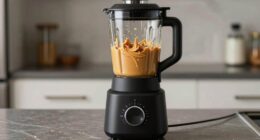
If your wet grinder batter gets hot, it’s mainly due to friction from grinding and the heat from the motor’s continuous rotation. Overheating can affect fermentation and batter quality. To keep batter cool, use chilled water, pause frequently, and avoid overloading or prolonged grinding. Regular maintenance or upgrades can also prevent excessive heat buildup. Stay tuned to learn more tips for maintaining a perfect, cool batter during grinding.
Key Takeaways
- Friction between stones and batter during grinding generates heat, especially with coarse or uneven batter.
- Continuous operation and high motor temperature increase heat buildup in the grinder.
- Overheating causes batter to become sticky, affecting fermentation and flavor.
- Use chilled water, pause grinding, and scrape batter regularly to reduce heat.
- Regular maintenance, replacing worn parts, and ensuring proper ventilation prevent overheating.

Premier Small Wonder Table Top Wet Grinder 1.5 Liter,110 volts with coconut scrapper and atta kneader
Enjoy light and airy Dosa and Idly made from fresh, nutritious ingredients.
As an affiliate, we earn on qualifying purchases.
As an affiliate, we earn on qualifying purchases.
Why Does Wet Grinder Batter Heat Up During Grinding?

When you grind batter in a wet grinder, it naturally heats up due to the friction generated between the stones and the ingredients. The grinder motor drives the stones, creating continuous movement that produces heat. As the stones rotate against the batter, the friction increases, raising the temperature. The batter’s consistency also plays a role; thicker or denser batter tends to generate more heat because it resists smooth movement, causing the motor to work harder. If the batter is coarse or uneven, it may increase friction further, leading to higher temperatures. This heating is a normal part of the grinding process but can become excessive if the motor runs too long or if the batter’s texture isn’t ideal. Additionally, the design of the stones and their material can influence how much heat is generated during grinding.

13PCS 4 Inch Diamond Polishing Pads Set, 5/8’’-11 Backer Pad, 50-8000 Grit Pads, Wet/Dry Granite Stone Polish Pad, Grinder Polishing Kit for Granite, Marble, Tile, Stone, Concrete, Quartz Countertop
【Complete Polishing Kit】This 13-piece diamond polishing pad set includes 11 4-inch polishing pads (grit 50#, 100#, 150#, 200#,…
As an affiliate, we earn on qualifying purchases.
As an affiliate, we earn on qualifying purchases.
How Can I Tell If My Wet Grinder Is Overheating?

If your wet grinder starts making unusual noises, emits a burning smell, or the motor feels excessively hot to the touch, it’s a clear sign that it may be overheating. To detect overheating early, pay attention to temperature monitoring and noise indicators. Here’s a quick guide:
| Indicator | What to Look For | Action Needed |
|---|---|---|
| Noise indicators | Grinding sounds become loud or unusual | Stop use and check for issues |
| Temperature signs | Motor feels hot or smells burning | Turn off immediately |
| Visual cues | Visible smoke or melting parts | Disconnect power immediately |
Recognizing these signs helps prevent damage and ensures safe operation. Regularly monitor your wet grinder to avoid overheating. Additionally, ensuring proper airflow around the unit can help prevent overheating and maintain optimal performance. It’s also beneficial to follow the manufacturer’s maintenance guidelines to keep the motor running efficiently. Being aware of overheating signs can help you take prompt action and extend the lifespan of your appliance. Proper load sizes are crucial, as overloading can cause the motor to overheat and reduce its efficiency.

VEVOR Wet Polisher 800W, 4" Concrete Grinder with 6 Variable Speed and 7 Polishing Kits, Wet Grinder Machine for Marble, Granite, Stone, Rock, Tile, Equipped with a GFCI Switch, (700-3000 RPM)
6 Speeds for Precise Polishing: VEVOR wet stone polisher offers 6 variable speeds from 700 to 3000 RPM,…
As an affiliate, we earn on qualifying purchases.
As an affiliate, we earn on qualifying purchases.
How Excess Heat Affects Batter Quality and Fermentation?

Excess heat during grinding can directly harm your batter’s quality by causing it to become overly warm and sticky. When the temperature gets too high, enzymes responsible for fermentation slow down or stop working effectively, impacting fermentation. This disruption can lead to a batter that doesn’t ferment properly, resulting in poor rise and texture. Additionally, high temperatures can cause the batter to develop a sour or off flavor, reducing overall quality. To guarantee ideal fermentation, keep the batter cool enough to allow enzymes to work efficiently. Proper temperature regulation during grinding is essential to prevent overheating and ensure optimal fermentation. Monitoring the grinding process can help you detect early signs of overheating, allowing for timely adjustments. Maintaining a consistent batter temperature is crucial for preserving enzyme activity and achieving the desired fermentation results. Implementing cooling techniques during grinding can further help maintain the proper temperature and improve batter quality. Using appropriate grinding tools designed to minimize heat generation can also make a significant difference in maintaining batter freshness. This balance helps you achieve the right consistency, flavor, and fermentation, giving you better results in your final dish.

Secura Coffee Grinder Electric, Spice Grinder, Dual Glass Bowls for Wet & Dry Grinding
Multi-Use – Ideal for grinding coffee, spices, herbs, nuts, and even grains—this versatile grinder meets all your kitchen…
As an affiliate, we earn on qualifying purchases.
As an affiliate, we earn on qualifying purchases.
Simple Tips to Keep Batter Cool During Grinding

To keep your batter cool during grinding, start by using chilled water or ice cubes in your wet grinder. This simple cooling technique helps absorb heat generated during the process. Additionally, monitor the grind duration closely; shorter sessions prevent the batter from overheating. You can also pause periodically, scraping down the sides and giving the batter a brief rest to cool down. Using a pulse or intermittent grinding method reduces continuous heat buildup. Ensuring the grinder is clean and free from residue allows for more efficient cooling. Keep the lid on firmly to avoid heat transfer from the environment. By controlling the grind duration and incorporating effective cooling techniques, you’ll maintain batter temperature, preventing it from getting hot and preserving its fermentation quality. Also, paying attention to filtration systems can improve airflow and reduce heat buildup inside the appliance. Incorporating temperature regulation features in your grinder can further help maintain optimal batter temperature during grinding. Proper airflow management within the appliance can enhance cooling efficiency and prevent heat accumulation. Additionally, using ventilation techniques can help dissipate heat more effectively during extended grinding sessions. It is also beneficial to regularly check and clean the cooling vents to ensure proper airflow and heat dissipation.
When Should You Service or Upgrade Your Wet Grinder?

Regularly servicing your wet grinder guarantees it continues to perform efficiently and keeps your batter at the right temperature. You should follow a maintenance schedule, typically every 6 to 12 months, depending on usage. Pay attention to replacement indicators like unusual noise, persistent overheating, or a decline in grinding performance. If the motor feels hot frequently or the batter takes longer to grind, it’s time to service or consider upgrading parts. Worn-out stones or belts can cause overheating and reduce efficiency. Ignoring these signs may lead to motor failure or costly repairs. Upgrading your wet grinder’s components or replacing the unit ensures smooth operation and prevents hot batter issues. Regular maintenance keeps your grinder functioning at its best and extends its lifespan. Additionally, understanding the impact of cookies on your browsing experience can help you make informed decisions about website interactions. Proper body jewelry measurements and materials are essential for safety and comfort during a repair or upgrade process. Monitoring equipment performance metrics can also help identify when your grinder needs attention before issues arise. For optimal performance, consider checking the motor cooling system to prevent overheating during prolonged use. Also, ensuring your power supply and wiring are adequate can prevent electrical issues that contribute to overheating.
Frequently Asked Questions
Can Using Cold Water Reduce Batter Temperature During Grinding?
Yes, using cold water can help reduce batter temperature during grinding. When you add cold water, it aids in temperature control by preventing the batter from heating up too quickly. This keeps the batter cool, ensuring better fermentation and preventing over-heating that can affect the batter’s quality. Just be careful not to add too much cold water at once, and monitor the temperature regularly for ideal results.
Does the Type of Grain Affect Batter Heating?
Yes, the type of grain affects batter heating because different grains have varying impacts on heat generation and moisture retention. Coarser grains or those with lower moisture content can cause more friction, increasing heat during grinding. Conversely, grains with higher moisture help keep the batter cooler by reducing friction. So, selecting the right grain impacts how hot your batter gets, and moisture effects play a significant role in managing temperature.
How Long Should I Grind to Prevent Batter Overheating?
Think of grinding as a gentle dance—move smoothly, don’t rush. To prevent batter overheating, keep your grinding duration brief, around 10-15 minutes, and pause to let heat buildup dissipate. This balance ensures your batter stays cool and fresh. If you notice it getting warm, stop and give it a break. Consistent, mindful grinding maintains your batter perfect and avoids unnecessary heat buildup.
Is It Normal for Batter to Get Warm After Extended Grinding?
It’s normal for batter to get warm after extended grinding, but you should focus on batter cooling to prevent overheating. As you grind, the friction generates heat, so keep an eye on the temperature and avoid long grinding durations without pauses. Taking short breaks allows the batter to cool down, maintaining its quality. If you notice it gets too warm, stopping briefly helps keep the batter fresh and prevents overprocessing.
Can Adding Ice Cubes Help Keep the Batter Cool?
Yes, adding ice cubes can help keep the batter cool. You can put cold water or a few ice cubes into the wet grinder during grinding. This slows down the heat buildup, preventing the batter from warming up too much. Just be sure not to add too much ice or cold water, as it could affect the batter’s consistency. Keep checking and adjust accordingly for best results.
Conclusion
Keeping your wet grinder from overheating is key to perfect batter. Did you know that 60% of users report better fermentation results when they monitor grinder temperature? By following simple tips like adding pauses and cleaning regularly, you can prevent overheating and enjoy fluffy, tasty batter every time. Stay attentive to your grinder’s signals, and it’ll serve you well, ensuring consistent results and extending its lifespan for years to come.