
Steaming generally preserves more flavor and nutrients in vegetables than boiling because it uses gentle heat, minimizes water contact, and reduces nutrient leaching. With steaming, your vegetables stay vibrant, flavorful, and retain their natural textures and colors better. Boiling can cause flavor loss, dull colors, and nutrient depletion due to water immersion. If you want to maximize taste, texture, and nutrition, steaming is often the better choice—continue exploring to learn more about each method’s benefits.
Key Takeaways
- Steaming retains more natural flavors by avoiding direct water contact, preventing flavor dilution.
- Steaming better preserves delicate and volatile aromas, enhancing overall flavor quality.
- Boiling can cause flavor loss due to leaching of soluble compounds into water.
- Shorter steaming times help maintain the food’s original taste and aroma.
- Gentle steaming preserves both flavor and nutrients more effectively than boiling.
Understanding How Steaming and Boiling Work
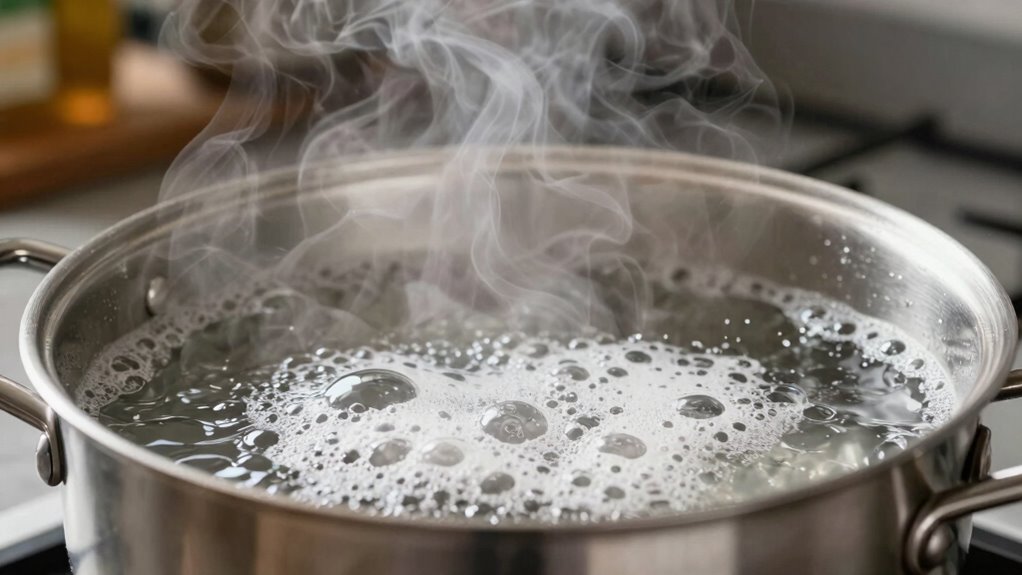
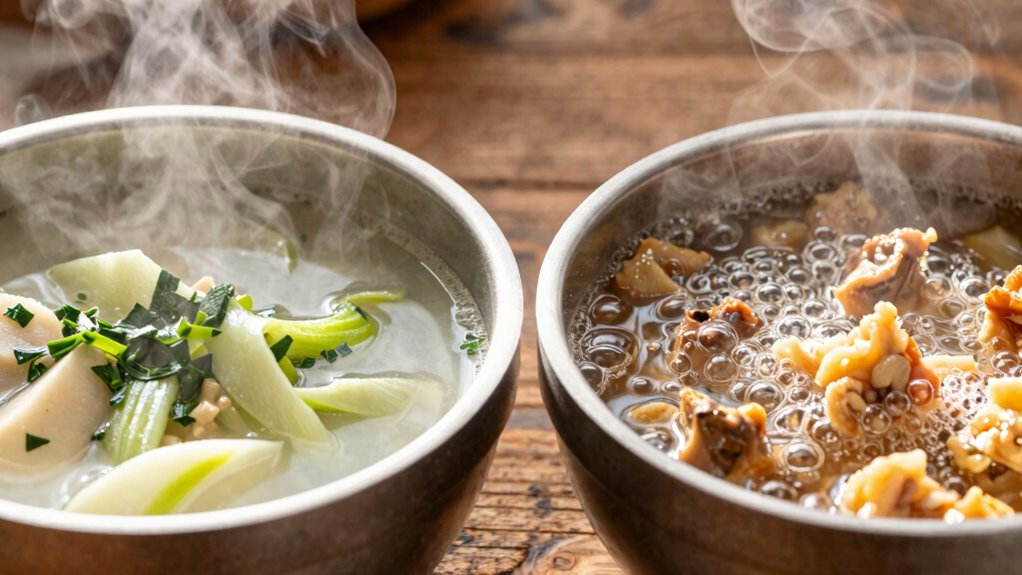
Although both steaming and boiling involve heating food in water, they operate differently. When you steam, you place food above boiling water, using steam to cook. This gentle method helps preserve nutrients and keeps flavors intact because the food isn’t submerged directly in water. As a result, nutrient retention is higher, and flavors remain more natural. Boiling, on the other hand, submerges food directly in boiling water. This process can cause water-soluble nutrients to leach out, reducing nutritional value. However, boiling can enhance flavor in certain dishes by allowing ingredients to meld together quickly. Understanding these differences helps you choose the best method based on whether your goal is to maximize nutrient retention or achieve specific flavor profiles. Additionally, nutrient preservation can be significantly improved through steaming, making it a preferred method for maintaining the health benefits of many foods. Proper cooking techniques also play a crucial role in preserving both flavor and nutrition. For example, controlling temperature and cooking time can prevent nutrient loss regardless of the method used. Moreover, selecting appropriate utensils and equipment can further optimize cooking outcomes and nutrient retention.
How Do Time and Temperature Differ Between Steaming and Boiling?
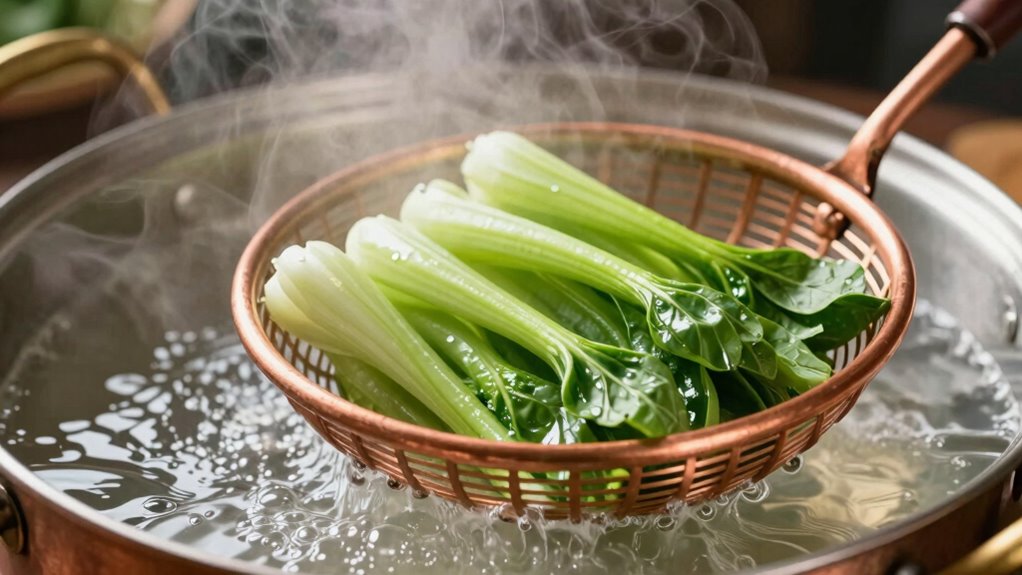
When you steam food, the temperature stays at around 212°F, but you have more control over it, depending on how close the steam is. Boiling also happens at 212°F, but it cooks faster because the direct contact transfers heat more quickly. So, your cooking time and temperature management differ between these methods, affecting the final result.
Temperature Control Differences
The main difference in temperature control between steaming and boiling lies in the maximum heat each method reaches. With steaming, the temperature stays at or just below 212°F (100°C), gently cooking food while preserving delicate flavors. Boiling, however, exposes food to a rolling boil at 212°F, which can sometimes lead to overcooking or loss of subtle flavor nuances. This temperature difference affects seasoning techniques, as gentle steaming helps retain seasonings without washing them away, leading to more vibrant flavors. Additionally, the method influences plating presentation; steamed dishes often look more tender and colorful, while boiled foods can become softer or swollen. Understanding these temperature control differences allows you to choose the best method for flavor preservation and visually appealing presentation. Temperature regulation plays a crucial role in maintaining food quality and texture during cooking.
Cooking Time Variations
Cooking times for steaming and boiling vary considerably due to differences in how heat is transferred and maintained. Steaming generally requires less time because heat penetrates food evenly through vapor, helping preserve nutrient retention. Boiling, on the other hand, often involves longer cooking times, especially for dense or fibrous foods, as heat transfers through direct contact with water. This can lead to nutrient loss if foods are overcooked. Additionally, steaming tends to be more energy efficient since it uses less water and often requires lower temperatures, reducing overall energy consumption. By understanding these time and temperature differences, you can better control cooking processes to maximize flavor preservation and nutrient retention while minimizing energy use. Proper timing is essential for achieving optimal results and preserving food quality during both methods.
How Does Each Method Affect Vegetables’ Texture and Flavor?
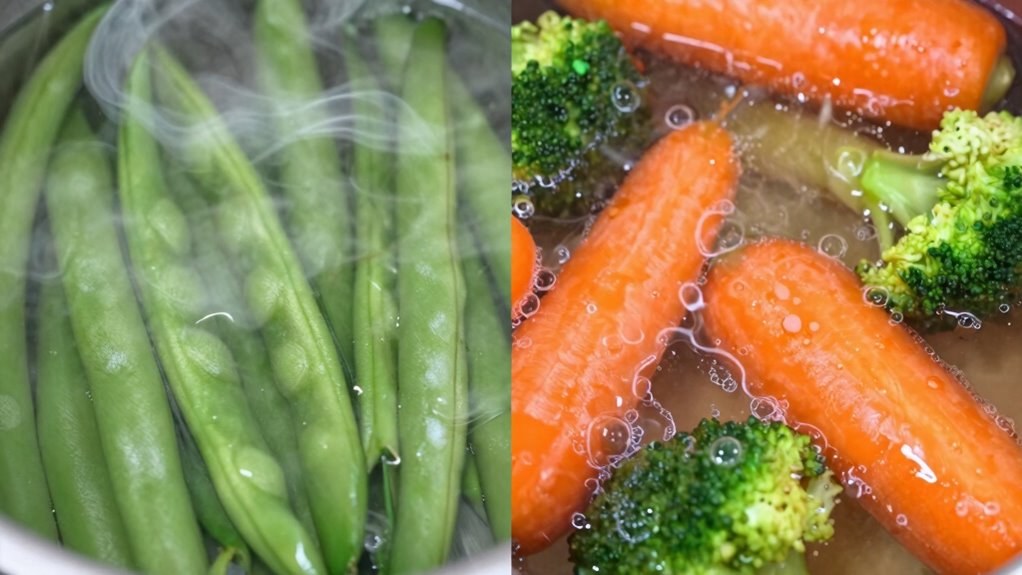
Both steaming and boiling considerably influence a vegetable’s texture and flavor, but they do so in different ways. When you steam seasonal vegetables, they retain a firmer texture and more vibrant flavor because they cook gently and preserve natural juices. This method enhances flavor without leaching out essential oils or nutrients, resulting in a fresher, more pronounced taste. Boiling, on the other hand, tends to soften vegetables more quickly and can cause some flavor loss, especially if cooked too long. The vegetables absorb water, which can dilute their natural flavor and lead to a mushier texture. If you aim for flavor enhancement and a better mouthfeel, steaming generally provides a more delicate, vibrant result, especially with seasonal vegetables. Additionally, using an appropriate air purifier can help maintain a cleaner environment that preserves the freshness of your ingredients. Proper technique and environment are crucial for flavor retention and overall quality when preparing vegetables. Incorporating techniques from high-altitude running gear can also optimize your cooking process, especially in maintaining optimal conditions for flavor preservation. A controlled environment with the right temperature regulation can further improve the outcome of your steaming versus boiling methods.
Which Technique Preserves More Vitamins in Vegetables?

Which method better preserves the vitamins in vegetables? Steaming generally offers superior nutrient retention compared to boiling. When you steam vegetables, they’re exposed to heat for a shorter time and don’t sit directly in water, which helps preserve water-soluble vitamins like vitamin C and B vitamins. Boiling, on the other hand, causes these nutrients to leach into the cooking water, reducing their levels in the vegetables. This process can also diminish flavor preservation since nutrients contribute to overall taste. If your goal is to maximize vitamin content, steaming is the better choice because it minimizes nutrient loss. Additionally, monitoring for nutrient degradation during cooking can help ensure you retain as much of the vegetables’ natural vitamins as possible. Using appropriate cooking techniques can also help preserve the nutritional quality of your vegetables. Understanding the impact of cooking methods on nutrient retention can guide you to make healthier culinary choices.
How Do Steaming and Boiling Change the Color of Vegetables?
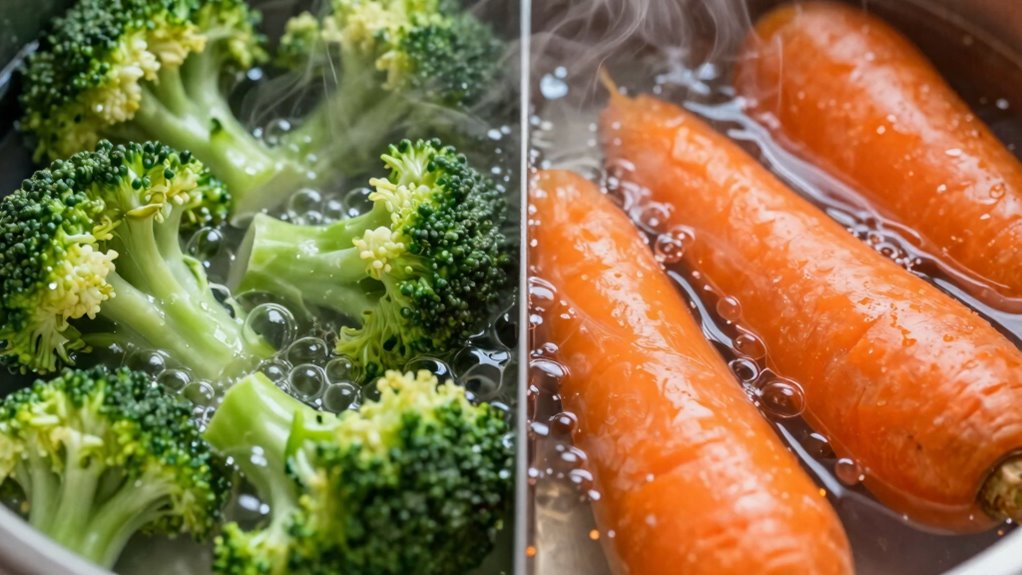
You’ll notice that steaming often keeps vegetables looking vibrant, while boiling can cause their colors to fade. The length of cooking also matters, as longer times may lead to more color loss. Additionally, gentle steaming preserves the vegetables’ freshness and nutrients, helping maintain their appealing appearance. Proper visual cues during cooking can help you monitor color retention in real-time. For example, understanding how cooking methods impact nutrient preservation can guide your choice of preparation. Recognizing the impact of heat on color and nutrient retention allows you to select the best technique for maintaining vegetables’ visual appeal and health benefits. Moreover, understanding the effects of temperature on vegetables can help prevent overcooking and preserve their natural hues. Understanding these differences helps you choose the best method to preserve your vegetables’ appearance.
Color Retention Differences
When you cook vegetables, their vibrant colors can change dramatically depending on whether you steam or boil them. Steaming tends to better preserve the vegetable color because it minimizes direct contact with water, reducing leaching of pigments. Boiling, on the other hand, often causes a loss of color as water-soluble pigments bleed out into the cooking water. This not only dulls the appearance but can also impact nutrient preservation, since some nutrients are sensitive to heat and water. If you want your vegetables to retain their bright, appealing hues, steaming is usually the better choice. It helps keep the vegetable color vivid and maintains the visual appeal of your dish, all while protecting more nutrients from leaching into cooking water. Additionally, using the right cooking methods can further enhance flavor retention and nutritional value. For optimal results, consider gentle cooking techniques that minimize nutrient loss and preserve the natural beauty of your vegetables.
Impact of Cooking Time
Cooking time considerably influences how vibrant vegetables remain during steaming or boiling. Longer cooking times cause vegetables to lose their bright color due to the breakdown of cell walls and pigment degradation. With steaming, you can usually keep vegetables’ color better because the cooking technique uses less direct water contact, allowing for quicker, gentler heat transfer. Boiling, on the other hand, exposes vegetables to water for a longer time, which can accelerate color loss. To maximize flavor retention and visual appeal, you should monitor cooking times carefully, removing vegetables as soon as they reach your desired tenderness. Shorter cooking times preserve more of the natural color and nutrients, making your vegetables more appealing and flavorful. Additionally, understanding the impact of temperature on pigment stability can help you choose the best method for preserving vibrant colors. Using the proper cooking technique can also help minimize nutrient loss and retain the vegetables’ natural hue.
What Is the Best Cooking Method for Vegetables?
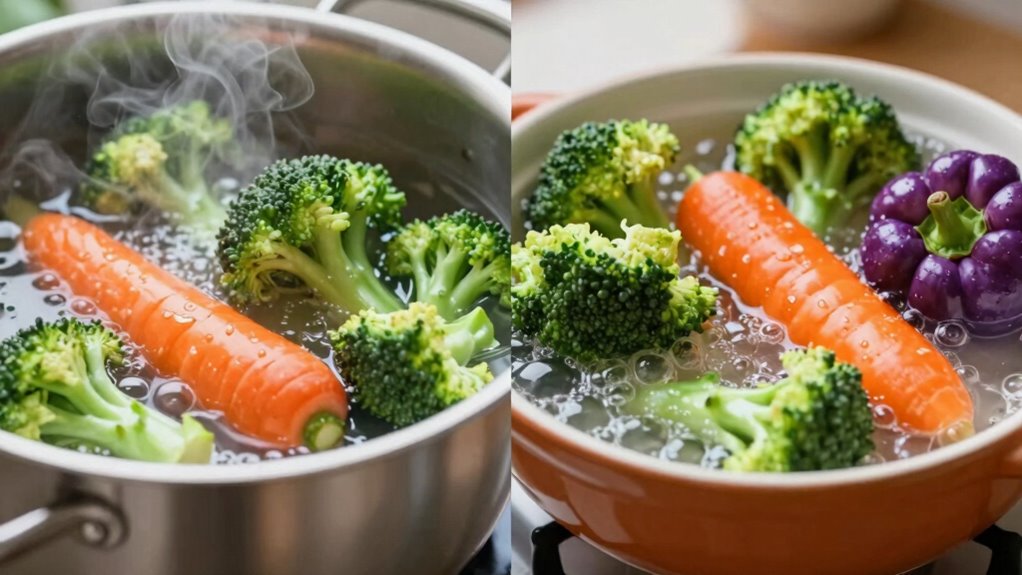
Choosing the best cooking method for vegetables depends on what you value most—whether it’s flavor, texture, or nutrition. Steaming often preserves nutrients and flavor better, making it ideal for delicate or seasonal vegetable selection. Boiling can cause nutrient loss and dilute flavors but is quick and straightforward. When selecting vegetables, consider their freshness and seasonal availability to maximize taste and quality. Always follow kitchen safety tips, like handling hot water carefully and ensuring utensils are clean. For vibrant, nutrient-rich results, steaming is recommended, especially for tender greens and root vegetables. If you prefer softer textures or need to cook large quantities quickly, boiling might suit your needs. Additionally, understanding cooking techniques can help you choose the best method for each vegetable to preserve flavor and nutrients effectively. Ultimately, choosing the right method depends on your priorities and the specific vegetable you’re preparing.
Tips for Maximizing Flavor When Steaming Vegetables
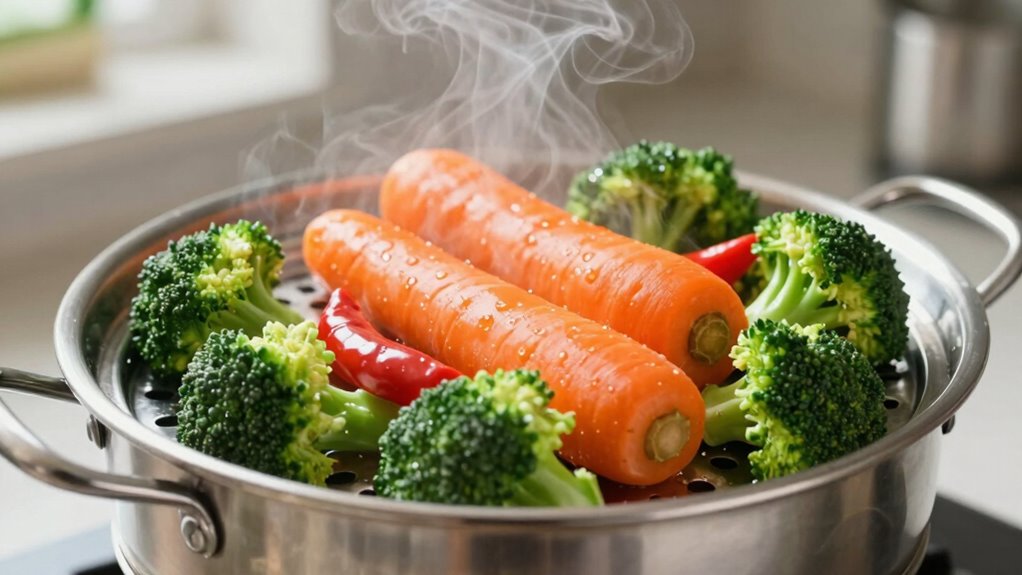
To maximize flavor when steaming vegetables, start by selecting fresh, high-quality produce, as this lays the foundation for vibrant taste. Fresh vegetables naturally retain more nutrients and flavor, making your dish more delicious. Keep the steaming process quick and gentle to improve flavor retention and nutrient preservation. Use a steaming basket that doesn’t touch the water, ensuring gentle heat transfer. Season your vegetables lightly before steaming to enhance natural flavors without overpowering them. Cover the pot to trap steam and heat, helping vegetables cook evenly while conserving flavor. Avoid overcooking, which can lead to flavor loss and nutrient degradation. By following these tips, you guarantee your vegetables stay flavorful, nutrient-rich, and satisfying, making your meal both healthy and delicious.
Common Mistakes When Boiling Vegetables for Better Taste
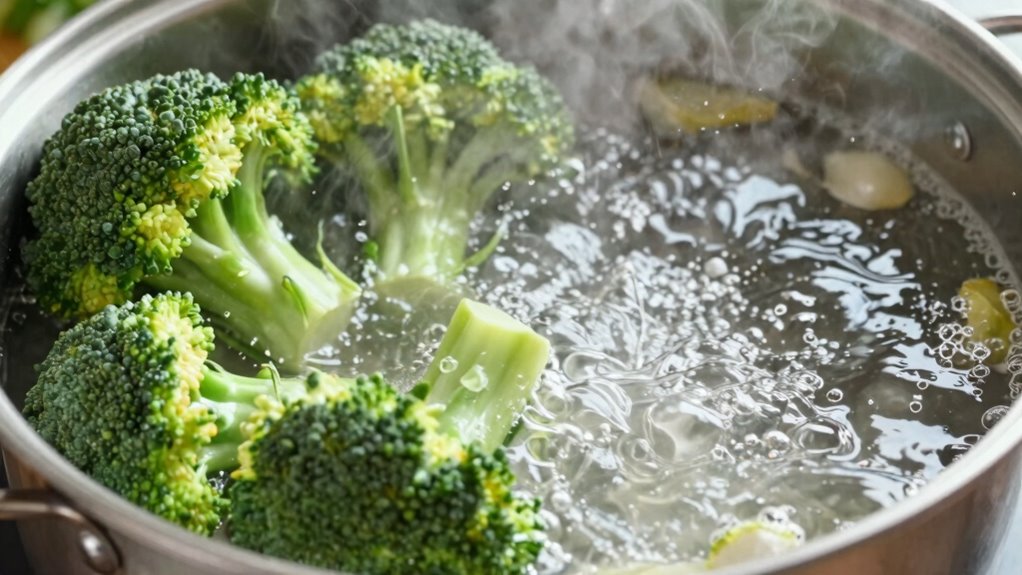
One common mistake is overcooking vegetables, which can make them mushy and lose flavor. Skipping an ice bath after boiling can also cause them to become soggy and dull in color. Paying attention to timing and cooling methods helps preserve their taste and texture.
Overcooking Vegetables Often
Overcooking vegetables is a common mistake that can substantially diminish their flavor and texture. When you leave vegetables in boiling water too long, they lose their vibrant color and develop a mushy, unappealing texture. This over-softening makes it harder to create appealing plating techniques or find suitable sauce pairings, as the vegetables become less capable of holding their shape or absorbing flavors effectively. To avoid this, set a timer and taste test frequently. Properly cooked vegetables should be tender yet firm. Overcooking also washes out delicate flavors, making your dish bland. By paying close attention during boiling, you preserve their natural taste, texture, and visual appeal, ensuring they complement your sauce pairing and enhance your overall presentation.
Skipping Ice Bath
Skipping the ice bath after boiling vegetables is a common mistake that can negatively impact their color, texture, and overall flavor. An ice bath quickly stops the cooking process, helping vegetables retain their vibrant hue and crispness. Without it, vegetables may become overcooked, mushy, and dull in appearance, reducing flavor retention. When you neglect this step, you risk losing that fresh, bright taste you’re aiming for. Imagine a steaming pile of green beans turning dull and limp because they weren’t cooled immediately. To picture it better, think of:
- Bright, vivid colors fading
- Crisp texture turning to mush
- Loss of natural sweetness
- Dull, unappetizing appearance
- Reduced flavor intensity
Taking the time for an ice bath preserves the vegetables’ freshness and flavor, elevating your dish.
When Should You Use Steaming Instead of Boiling?
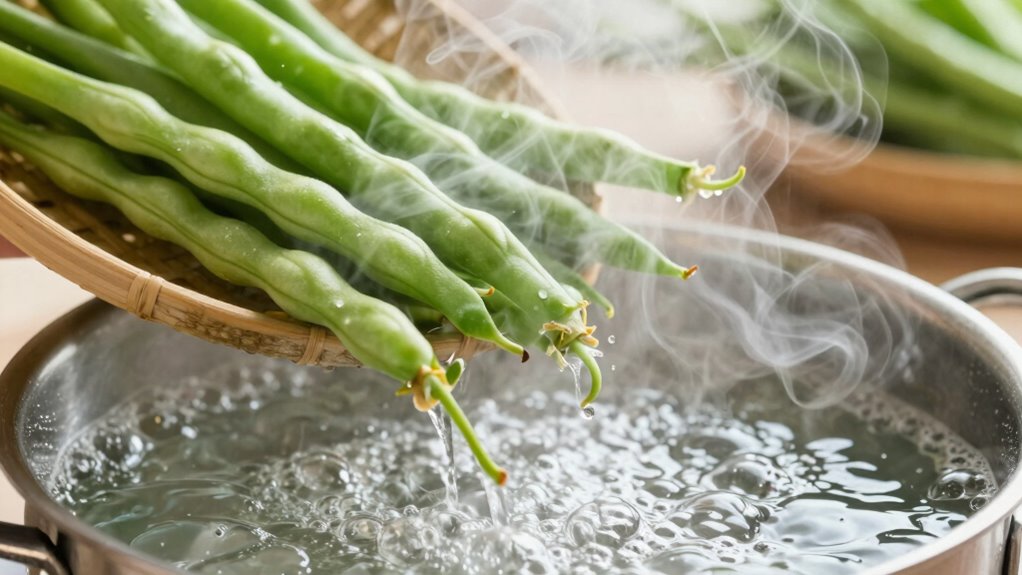
You should choose steaming over boiling when you want to preserve more nutrients and maintain the natural flavor of your food. Steaming is ideal for delicate vegetable varieties like broccoli, spinach, and asparagus, which can lose nutrients in water. Using the right cooking utensils, like a bamboo steamer or a steamer basket, guarantees gentle, even heat without submerging the food. Steaming also helps retain vibrant colors and firm textures. If your goal is to maximize flavor and nutritional value while avoiding overcooking, steaming is the better choice. It’s especially useful for vegetables that are quick to overcook or become mushy with boiling. In these cases, steaming offers a gentle, efficient method that preserves the integrity of your ingredients.
Which Method Preserves Flavor Better: Steaming or Boiling?
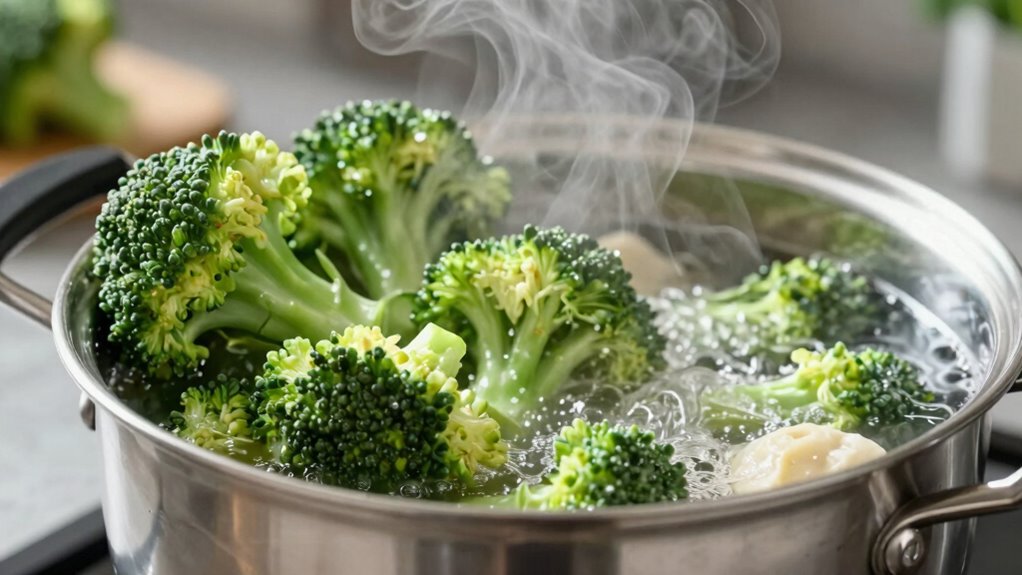
When it comes to preserving the natural flavor of your food, steaming generally outperforms boiling. Steaming maintains better nutrient retention and enhances flavor because it uses gentle heat and avoids direct contact with water. As a result, your vegetables stay vibrant, tender, and full of taste. Imagine biting into a crisp broccoli crown or a sweet carrot that tastes as fresh as when it was picked. The steam surrounds your food, locking in aroma and natural sweetness.
- Bright green beans with a tender snap
- Juicy, flavorful fish fillets
- Vibrant, crisp vegetables
- Rich aroma lingering in the air
- Nutrients intact, offering true flavor enhancement
Frequently Asked Questions
Does Steaming or Boiling Lead to Less Nutrient Loss?
Steaming leads to less nutrient loss than boiling, so it’s better for vitamin preservation and nutrient retention. When you steam, the food isn’t submerged in water, reducing the leaching of water-soluble vitamins like C and B. Boiling causes more nutrients to escape into the water, which you might discard. For maximum nutrient retention and vitamin preservation, steaming is the smarter choice, helping your food stay healthier and more flavorful.
Which Method Is Faster for Cooking Vegetables?
You’ll find steaming is typically faster for cooking vegetables because it offers better timing accuracy, allowing you to prevent overcooking. Plus, equipment convenience matters—you only need a steamer basket or a simple setup, making it quicker to set up and clean. Boiling can be slower since you wait for water to boil and sometimes need more attention to avoid overcooking. Steaming generally saves time and offers more control.
Can Steaming Improve the Overall Taste of Vegetables?
You might find that steaming truly enhances the overall taste of vegetables, especially when you want to preserve their natural flavors. This method improves cooking texture by keeping vegetables tender yet crisp, offering a delightful bite. Plus, steaming boosts culinary versatility—you can easily season or serve vegetables raw afterward. So, next time you want vibrant, flavorful dishes, steaming can be your secret weapon for elevating taste and texture effortlessly.
How Do Flavor Profiles Differ Between Steaming and Boiling?
You’ll notice that steaming preserves flavor retention better than boiling, as it gently cooks vegetables without leaching out essential flavors. Steaming also enhances texture, keeping vegetables tender yet firm, which boosts their natural taste. Boiling, on the other hand, can dilute flavors and soften textures excessively. So, if you want vibrant flavor profiles and better texture, steaming is the way to go.
Is One Method Better for Preserving Natural Sweetness?
You’ll find steaming better for preserving natural sweetness and nutrient retention. When you steam, the gentle heat minimizes leaching of sugars and vitamins into the water, keeping the food’s natural flavors intact. Boiling, on the other hand, causes some of these nutrients and sweetness to escape into the water, reducing overall flavor and nutritional value. So, if you want to maximize natural sweetness and nutrients, opt for steaming.
Conclusion
Ultimately, choosing between steaming and boiling shapes the story of your vegetables. Picture each method as a gentle breeze or a swift current—steaming preserves delicate flavors like a tender caress, while boiling rushes through, risking flavor loss. By understanding their differences, you can craft vibrant, flavorful dishes that nourish both body and soul. Let your cooking be a mindful dance, where each choice enhances the natural beauty and taste of your produce.