
Steam ovens use controlled moist heat to cook food gently and evenly, which helps preserve nutrients, natural flavors, and moisture. They improve texture by making dishes tender and juicy while reducing nutrient loss, especially for vegetables and seafood. Although they don’t brown food like traditional ovens, they excel at keeping baked goods soft and flavorful. Want to discover how steam can transform your cooking and what specific benefits it offers? Keep exploring to learn more.
Key Takeaways
- Steam ovens use moist heat generated by a steam generator to cook food evenly and tenderly.
- They preserve nutrients, flavors, and natural moisture, leading to healthier, more flavorful dishes.
- Steam improves food tenderness, juiciness, and aroma while preventing drying out during cooking.
- Proper water quality and regular maintenance ensure optimal performance and longevity of the appliance.
- They are ideal for vegetables, fish, seafood, and baked goods, though less suitable for browning and crispy finishes.

FOTILE HYZK32-E3-E ChefCubii 1.1 cu. ft. 4-in-1 Combi-Steam Oven with Steam-Bake, Air Fry, Convection, Dehydrator Functions, and 50 Preset Menus, Beige
All-in-One Functionality: Combines steaming, baking, roasting, and air frying in a single unit. Additional modes include keeping warm,…
As an affiliate, we earn on qualifying purchases.
As an affiliate, we earn on qualifying purchases.
What Is a Steam Oven and How Does It Work?

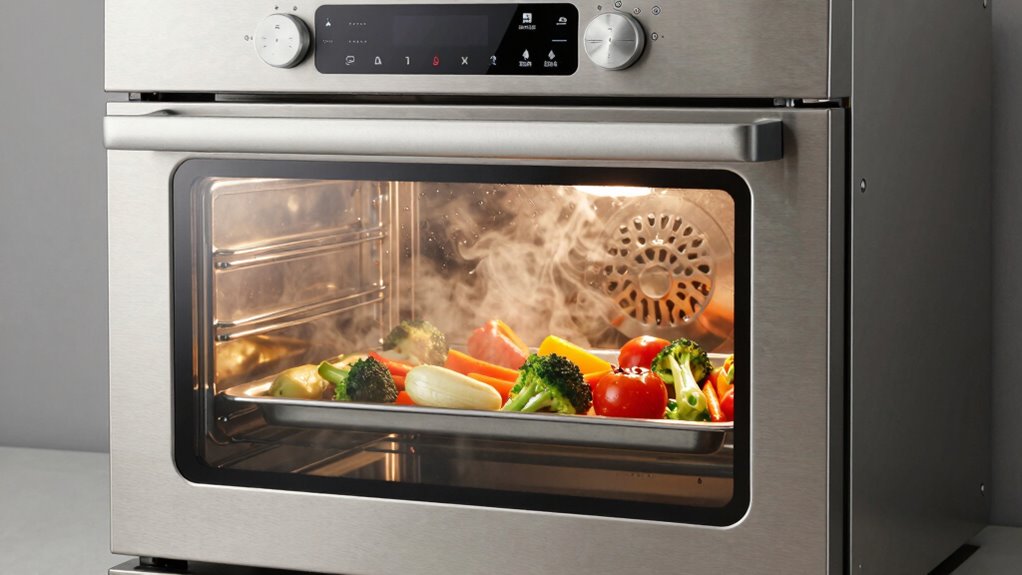
A steam oven uses the power of steam to cook food quickly and evenly. Inside, a steam generator heats water to produce steam, which is then released into the cooking chamber. This process relies on efficient heat transfer, where the steam surrounds your food, tenderizing it while preserving moisture. Unlike traditional ovens, the steam generator ensures a steady supply of hot steam, maintaining consistent temperature and humidity levels. This method speeds up cooking times and helps food retain nutrients and flavors. The heat transfer from the steam directly to your ingredients makes for gentle, uniform cooking that avoids drying out. Overall, the steam generator is the core component that powers the oven, delivering even heat and moisture to achieve perfect results. Additionally, the precise temperature control of steam ovens allows for versatile cooking options, from delicate baking to steaming vegetables. This temperature regulation capability also enhances safety and energy efficiency during operation, making it a smart choice for modern kitchens that focus on efficient cooking technology. Proper steam distribution within the oven ensures consistent cooking results across different types of dishes.

OVENTE 2-Tier Electric Food Steamer, 5 Quart Stainless Steel Stackable Steam Cooker with 400W Power, 60-Minute Timer & Auto Shut-Off, Dishwasher Safe, Healthy Vegetable & Seafood Steamer, Silver FS62S
HEALTHY & OIL-FREE COOKING – Enjoy nutrient-rich meals with steam cooking that preserves vitamins, color, texture, and natural…
As an affiliate, we earn on qualifying purchases.
As an affiliate, we earn on qualifying purchases.
Why Should You Use a Steam Oven in Your Kitchen?

Using a steam oven in your kitchen offers numerous health and culinary benefits. It helps preserve nutrients and natural flavors, making your meals healthier and tastier. Plus, steam cooking keeps food moist and tender, reducing the need for added fats or oils. Beyond that, a steam oven enhances your kitchen aesthetics with sleek, modern design options that blend seamlessly into your space. It also boosts energy efficiency, as steaming typically uses less power than traditional ovens and reduces cooking time. This means you save on utility bills while enjoying perfectly cooked dishes. Incorporating a steam oven not only elevates your cooking game but also creates a more efficient, stylish kitchen environment. It’s a smart choice for anyone wanting better food quality and a more attractive, eco-friendly space. Additionally, many air purifiers can complement steam oven use by improving indoor air quality, creating a healthier cooking environment. Furthermore, choosing energy-efficient appliances aligns with sustainable home practices, reducing your environmental impact. To maximize the benefits, ensure proper air purifier maintenance to maintain optimal indoor air quality while cooking. For optimal results, understanding heat distribution and proper maintenance can further enhance your cooking experience.

OUNIN 24L Steam and Air Fryer Combo Countertop Oven,11-in-1 Convection Baking and Steam,Bake,Broil,Dehydrate,304 Stainless Steel,Fast Cooking with Precise Electronic Temperature Control,for Gifting
【11-IN-1 VERSATILE KITCHEN POWERHOUSE】Replace multiple countertop appliances with one space-saving combo! This all-in-one unit functions as a Convection…
As an affiliate, we earn on qualifying purchases.
As an affiliate, we earn on qualifying purchases.
How Does Steam Keep Food Juicy and Tender?

Steam keeps food juicy and tender by surrounding it with moist heat that penetrates evenly. This guarantees moisture retention within the food, preventing it from drying out during cooking. As a result, your dishes stay succulent and full of flavor, with tenderness preservation at the core of every bite. The gentle heat allows collagen in meats to break down without overcooking, maintaining a perfect texture. Additionally, moist heat transfer helps preserve nutrients and enhances overall flavor. This process is supported by the principles of thermal conduction that optimize heat distribution. Incorporating proper steam techniques ensures consistent results and maximizes the benefits of steam cooking. Understanding cooking principles like these can help you achieve better results every time. For example, controlling steam pressure can further refine the texture and moisture level of your dishes. Here’s how it feels:
| Before Steam | After Steam |
|---|---|
| Dry, tough meat | Juicy, tender bite |
| Overcooked vegetables | Moist, flavorful vegetables |
| Loss of flavor | Rich, preserved taste |
Using steam helps keep your food moist, tender, and bursting with natural flavors every time.

13QT Compact 6-in-1 Steam Oven, Stainless Steel Countertop Convection Oven, Fast Preheat, Air Fry, Bake, Roast, Broil, Reheat & Steam, Perfect for Small Contertop
Light Steam Injection Technology: The unique light steam injection function locks in the moisture of the food, enhancing…
As an affiliate, we earn on qualifying purchases.
As an affiliate, we earn on qualifying purchases.
What Are the Nutritional Benefits of Cooking With Steam?
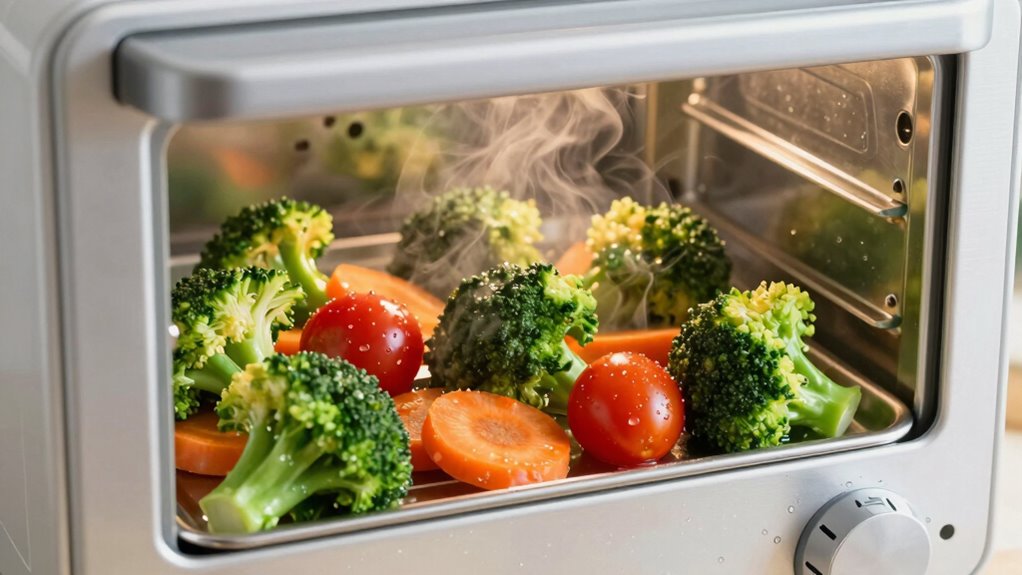
Have you ever wondered why steaming is considered one of the healthiest cooking methods? When you cook with steam, you help preserve the nutritional integrity of your food. Unlike boiling or frying, steaming minimizes nutrient loss, especially water-soluble vitamins like vitamin C and B vitamins. This nutritional preservation means your meals retain more essential nutrients, supporting your overall health benefits. Steaming also reduces the need for added fats or oils, making your dishes lower in calories and healthier. Additionally, because steam cooks food gently, it helps maintain the natural enzymes and antioxidants that contribute to your well-being. Understanding the benefits of gentle cooking methods can further enhance your appreciation for steaming. Overall, choosing steaming as your cooking method ensures you get the maximum nutritional value from your ingredients, promoting a healthier diet without sacrificing flavor or texture.
How Does Steam Enhance the Flavor of Your Dishes?
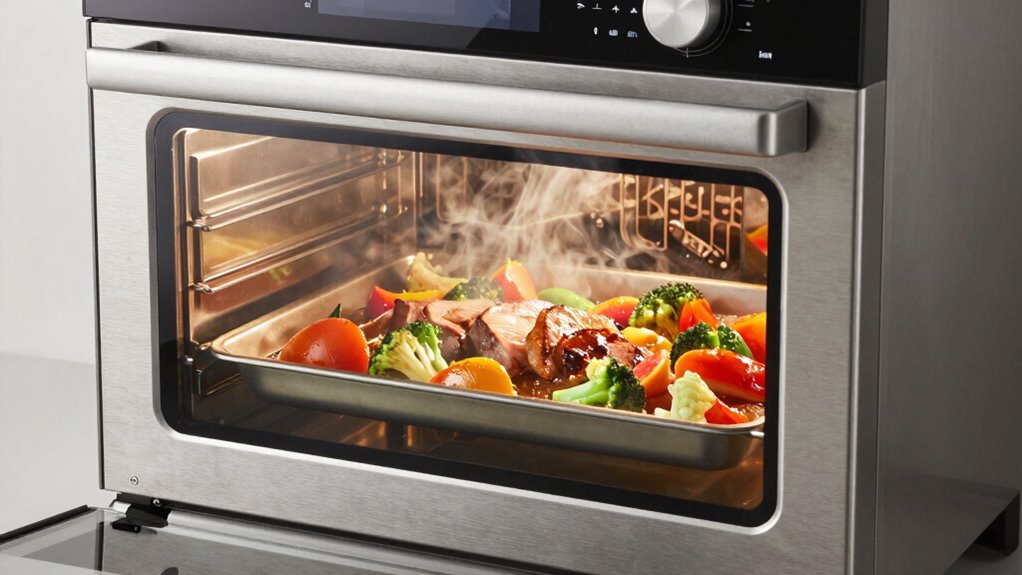
When you cook with steam, the gentle heat helps intensify the natural flavors of your ingredients. Unlike dry heat methods, steam preserves the integrity of the food’s moisture, which boosts flavor enhancement. As the food cooks, the steam locks in juices and essential oils, making each bite more flavorful. This process also preserves the aroma, preventing it from dissipating into the air, so your dishes smell just as appealing as they taste. The even distribution of heat ensures every part of your food is cooked uniformly, allowing the full spectrum of flavors to develop. Additionally, steam cooking helps retain nutrients, making dishes not only tastier but also more nutritious. The preservation of essential oils further enhances the aroma and flavor profile of your meals. By maintaining moisture and aroma, steam cooking results in dishes that are richer, more vibrant, and more satisfying to the palate. Proper temperature control during steaming ensures optimal flavor retention and texture. Incorporating moist heat cooking techniques can also help tenderize tougher cuts of meat and delicate vegetables alike, elevating your culinary results.
Which Types of Food Are Best Cooked With Steam?

Steam is especially great for vegetables because it helps them retain their nutrients. It’s also ideal for cooking fish and seafood, keeping the delicate flavors intact. Plus, soft boulangerie like bread benefits from gentle steaming to achieve the perfect texture. Additionally, steaming can be combined with other at-home kitchen techniques to enhance flavor and texture. Incorporating cooking methods like steaming encourages experimentation and can make home cooking more enjoyable. For example, using electric appliances such as steam ovens can streamline the process and improve consistency in results. Knowing how to properly maintain your water filtration systems can also ensure the highest quality water used in steaming, contributing to better-tasting dishes. Proper equipment maintenance is essential for reliable steaming performance and safety.
Vegetables Retain Nutrients
Why are vegetables among the best foods to cook with steam? Because steaming preserves their nutrients better than other methods like boiling or frying. The gentle heat and moist environment help maintain vitamin C, antioxidants, and fiber, guaranteeing you get maximum health benefits with every bite. Additionally, steaming enhances flavor without adding extra fats or oils, leading to a natural taste that’s fresh and vibrant. This method prevents nutrient loss that often occurs with high-heat cooking, making your vegetables more nutritious. Plus, the even heat distribution in steam ovens ensures vegetables are cooked thoroughly while retaining their texture and color. Furthermore, using natural cooking methods like steaming supports sustainable practices in backyard design. Overall, steaming is an excellent way to enjoy vegetables that are both healthy and flavorful, making it perfect for nutrient preservation and flavor enhancement.
Perfect for Fish and Seafood
Curious about which foods benefit most from steaming? Seafood delicacies, like fish and shellfish, are perfect candidates. Steaming helps preserve the delicate texture and natural flavors of seafood, making it tender and juicy. The gentle heat ensures moisture retention, preventing overcooking and dryness. This method is especially ideal for delicate fish fillets, scallops, and shrimp, as it keeps their moisture locked in without the need for added fats. Plus, steaming requires no oil or butter, making your seafood healthier. The result is a perfectly cooked dish that highlights the freshness and subtle nuances of each ingredient. If you want seafood that’s moist, tender, and bursting with flavor, steaming is your best choice. It’s a simple, effective way to elevate your seafood dishes effortlessly.
Ideal for Soft Boulangerie
Have you ever wondered which baked goods benefit most from gentle steaming? If so, soft boulangerie items like certain bread and pastries thrive with steam. During bread baking, steam keeps the crust tender and moist, allowing the dough to expand fully and develop a light, airy crumb. It’s especially useful for creating crusty artisan loaves or delicate rolls. In pastry preparation, steam helps produce flaky, tender textures, ensuring layers stay moist and well-defined. Gentle steaming prevents drying out the dough, resulting in a softer, more tender final product. Whether you’re baking bread or preparing pastries, using a steam oven elevates your results by maintaining ideal moisture levels, giving your baked goods a desirable softness and refined texture that traditional dry heat can’t always achieve.
Are There Any Downsides or Limitations of Steam Ovens?

While steam ovens offer many advantages, they also come with certain drawbacks. One major concern is costly maintenance, as components like seals and heating elements may need regular replacement or repairs. Additionally, steam ovens have limited browning capabilities, which can be a drawback if you’re used to achieving crispy, caramelized finishes on your dishes. Unlike traditional ovens, they don’t produce the same Maillard reaction, so you might miss out on that rich flavor and appealing appearance. Also, steam ovens tend to be more expensive upfront, and their specialized design can mean limited compatibility with existing kitchen setups. If you enjoy roasting or searing, a steam oven might not fully replace your conventional appliances. These limitations are essential to keep in mind before making a purchase.
Is a Steam Oven Right for Your Cooking Style and Kitchen?
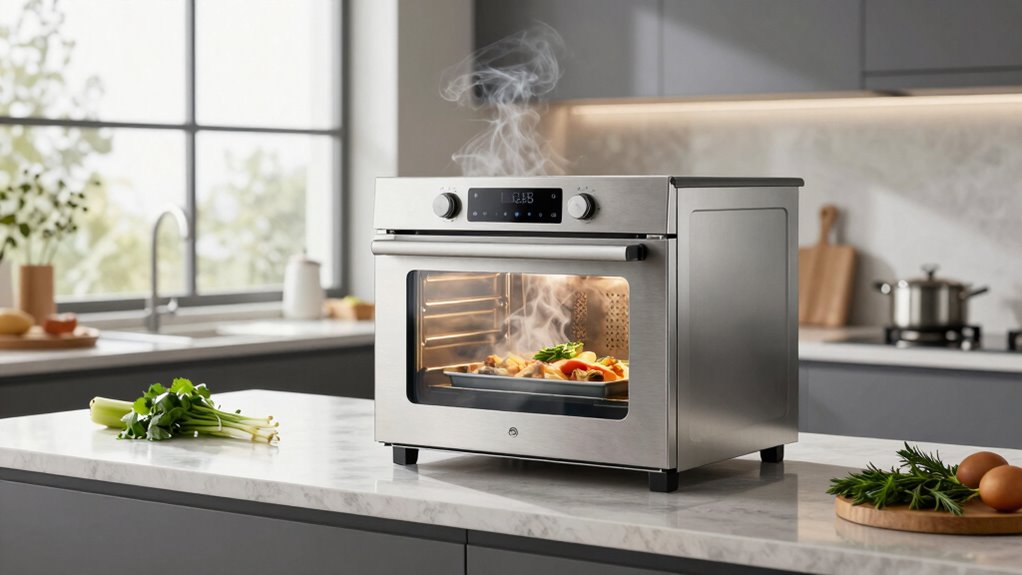
Considering the unique features and limitations of steam ovens, it’s important to evaluate whether they align with your cooking style and kitchen setup. If you value quick, healthy meals and enjoy baking or steaming, a steam oven can be a great addition. Think about kitchen integration—does your space support installing an appliance that might replace or supplement your traditional oven? Also, consider energy efficiency; steam ovens often use less energy because they heat quickly and retain moisture efficiently. However, they may require adjustments to your cooking routine and additional maintenance. If you prefer versatile appliances and are committed to healthier cooking methods, a steam oven could enhance your kitchen. Otherwise, it might not suit your needs if you prioritize conventional baking or have limited space.
Frequently Asked Questions
Can a Steam Oven Replace a Traditional Oven Entirely?
A steam oven can replace a traditional oven entirely if you value its versatility and steam cooking benefits. It handles baking, roasting, steaming, and reheating, often with precise control. However, some cooks prefer a traditional oven for high-temperature baking or broiling. If you embrace steam cooking benefits and want a multifunctional appliance, a steam oven can serve as your main oven, providing healthier, moist, and flavorful results.
How Energy-Efficient Are Steam Ovens Compared to Conventional Ovens?
Think of a steam oven as a sleek, energy-saving sailboat steering the kitchen. It generally uses less energy than conventional ovens because it heats quickly and maintains consistent temperature, leading to energy savings. This efficiency not only cuts your utility bills but also reduces environmental impact. By using steam, you’re making a smarter choice that benefits both your wallet and the planet, making your cooking greener and more economical.
What Are the Maintenance Requirements for Steam Ovens?
You need to follow a regular cleaning schedule to keep your steam oven in top shape, including wiping down interior surfaces and cleaning seals. Descaling procedures are essential if you notice mineral buildup, especially in hard water areas. Always use manufacturer-recommended descaling agents and avoid abrasive cleaners. Regular maintenance guarantees efficient operation, prolongs the oven’s lifespan, and prevents issues like poor steam quality or odors.
Are There Safety Concerns When Operating a Steam Oven?
Like a knight guarding his castle, you should stay vigilant when operating a steam oven. Safety concerns include water safety—avoiding burns from hot steam and spills—and electrical safety, ensuring cords and outlets stay dry. Always follow manufacturer instructions, keep the door sealed properly, and use caution around hot surfaces. Regular maintenance and proper usage minimize risks, so you can enjoy your steam oven safely, just like a well-prepared chef in a bustling kitchen.
How Does Cooking Time With a Steam Oven Compare to Traditional Methods?
Cooking time with a steam oven is generally faster than traditional methods because it uses steam to transfer heat efficiently. You’ll notice improved moisture retention in your dishes, keeping them tender and flavorful. Steam ovens heat up quickly and cook evenly, reducing overall cooking time. So, you get a faster cooking speed without sacrificing moisture, making them a convenient choice for healthy, delicious meals.
Conclusion
Incorporating a steam oven into your kitchen can elevate your cooking, keeping food moist and flavorful. Did you know that steaming retains up to 50% more nutrients than traditional methods? If you value healthy, tender dishes without sacrificing taste, a steam oven might be just what you need. While there are some limitations, its benefits often outweigh them—making it a smart choice for those looking to enhance their culinary skills and enjoy nutritious meals every day.