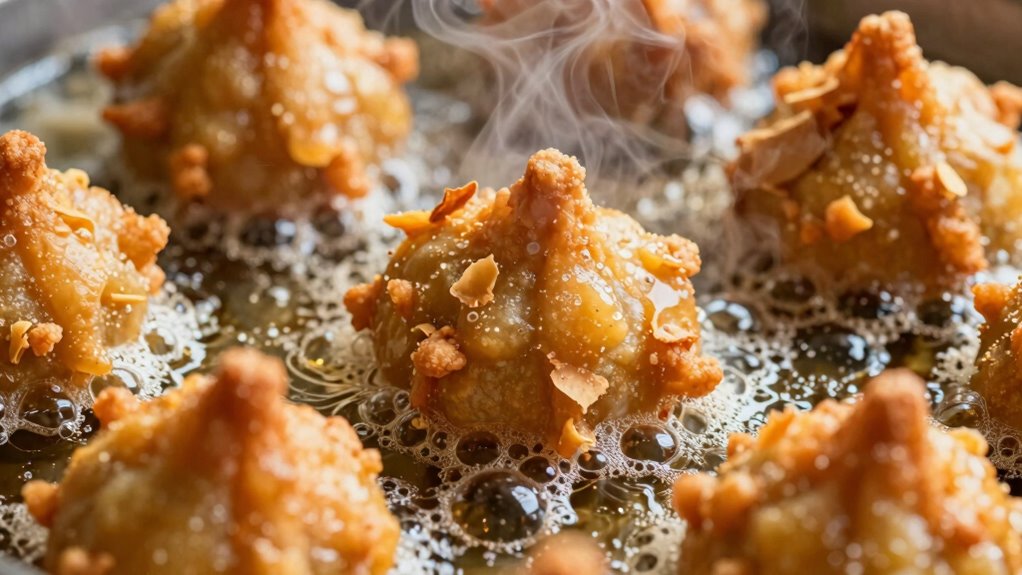
The secret to non-greasy, crispy pakoras is getting your batter consistency just right. Keep it thick enough to coat the back of a spoon but not too dense or runny. Proper moisture control is key—dry ingredients and drained vegetables help prevent excess oil absorption. Adjust water and flour gradually to reach the perfect flow. Mastering this balance guarantees golden, crispy pakoras without greasiness—stick around to discover more tips for perfect results.
Key Takeaways
- Use a thick, smooth batter that coats ingredients without being runny to prevent excess oil absorption.
- Maintain oil temperature around 350°F (175°C) for even, crispy frying and to avoid greasiness.
- Drain vegetables thoroughly to remove excess moisture, ensuring the batter remains properly textured.
- Adjust water and flour incrementally to achieve the ideal batter consistency—neither too thick nor too runny.
- Proper batter consistency creates a barrier that minimizes oil absorption, resulting in crisp, non-greasy pakoras.
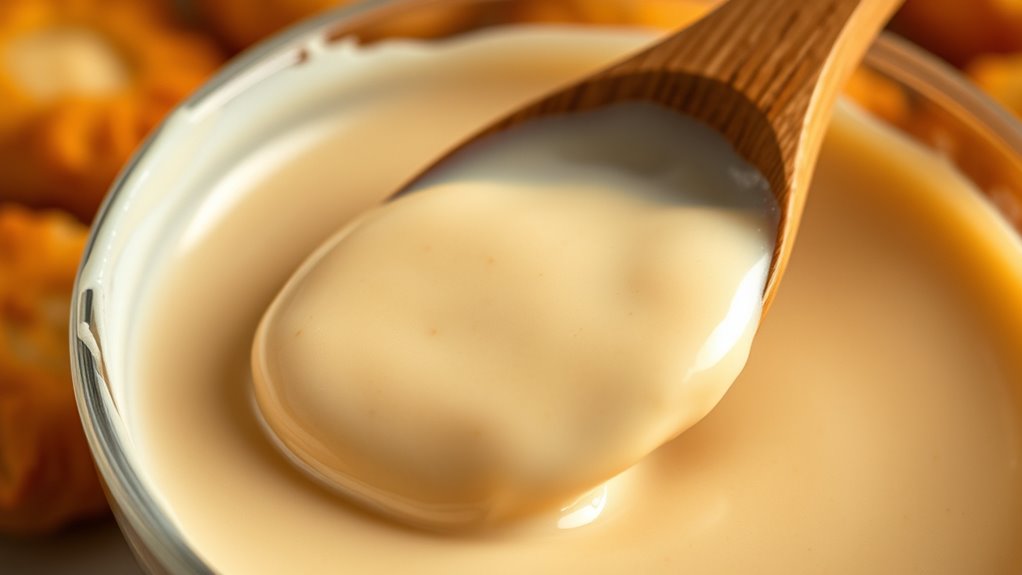
Achieving the perfect batter consistency is vital to making crispy, flavorful pakoras. When your batter hits the right texture, your fritters turn out golden, crunchy on the outside, and tender inside. One of the most essential factors influencing this is oil temperature. If the oil is too hot, the batter will brown too quickly, resulting in burnt edges and undercooked centers. Conversely, if it’s too cool, the pakoras absorb excess oil, becoming greasy and soggy. You want the oil to be around 350°F (175°C)—a steady, moderate heat that allows the batter to cook evenly and develop that irresistible crispness. To test if your oil is at the right temperature, drop in a small piece of batter; if it sizzles gently and rises steadily, you’re good to go.
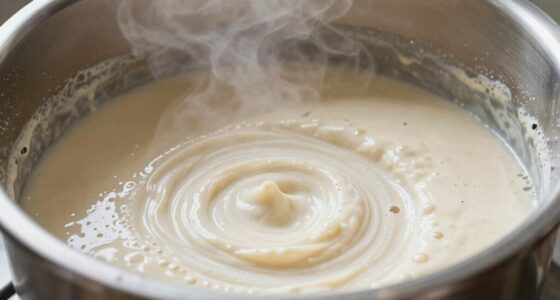
Ingredient substitutions also play a significant role in batter consistency. For instance, if you don’t have chickpea flour (gram flour), you can use rice flour or a mix of all-purpose flour with a bit of cornstarch to achieve a similar crunch. But keep in mind that different flours absorb liquids differently; rice flour tends to make lighter, crispier pakoras, while all-purpose flour results in a slightly denser texture. When substituting ingredients, start with small adjustments—adding a little more water if the batter feels too thick or a touch more flour if it’s too runny. The goal is a batter that’s thick enough to coat the back of a spoon but not so dense that it’s heavy. It should flow smoothly off a spoon but hold together when lifted.
You also want to be mindful of the moisture content of your vegetables or proteins, as excess moisture can make the batter too thin. A quick tip is to pat ingredients dry before adding them to the batter. If you’re using ingredients like cauliflower or spinach, ensure they’re well-drained to prevent the batter from becoming watery. When experimenting with ingredient substitutions, note that different ingredients may require slight adjustments to liquid amounts; for example, adding a splash more water or a touch less flour to reach that perfect consistency.
non-greasy pakora batter mix
As an affiliate, we earn on qualifying purchases.
As an affiliate, we earn on qualifying purchases.
Frequently Asked Questions
Can I Use Gluten-Free Flours for Pakora Batter?
Yes, you can use gluten-free options and flour substitutes for pakora batter. These alternatives, like chickpea flour, rice flour, or cornstarch, work well and give a crispy texture. Just keep in mind that some gluten-free flours might need slight adjustments in liquid or spices to get the right batter consistency. Experimenting with different flour substitutes helps you find the perfect non-greasy pakora batter that suits your taste.
How Does Batter Temperature Affect Pakora Crispiness?
Batter temperature plays a vital role in achieving crispy pakoras. When your batter is cold, it creates a firm coating that crisps up nicely during frying. If the batter is too warm, it can become runny, resulting in soggy or greasy pakoras. To enhance crispiness, keep the batter chilled before frying, and maintain a consistent batter temperature. This small step greatly boosts crispiness, making your pakoras perfectly crunchy every time.
Is It Okay to Reuse Batter Leftovers?
Sure, reusing batter leftovers might seem like a smart move, but don’t fall for the illusion of batter freshness after sitting out. Leftover batter can develop bacteria and lose its crispiness, making your pakoras soggy and unappetizing. To avoid this, store batter in an airtight container in the fridge, and only reuse if it’s fresh and hasn’t been sitting too long. Better safe than soggy!
What Are Alternative Ingredients to Chickpea Flour?
If you’re seeking gluten alternatives or want to try nut flour, you can use rice flour, cornflour, or even almond or cashew flour. These options work well for pakoras, providing a crispy texture without chickpea flour. Nut flours add richness and flavor, but remember they may alter the batter’s consistency. Experiment with small batches to find the perfect balance and guarantee your pakoras stay non-greasy and delicious.
How Can I Prevent Batter From Becoming Too Thick?
To prevent batter viscosity from becoming too thick, add small amounts of water gradually until you reach a smooth, pourable consistency. Use ingredient substitutions like rice flour or cornstarch to adjust thickness without making it runny. Keep in mind, the right batter consistency guarantees your pakoras turn crispy and non-greasy. Test the batter by dropping a spoonful—if it flows easily, you’re good to go!
deep frying thermometer for oil temperature
As an affiliate, we earn on qualifying purchases.
As an affiliate, we earn on qualifying purchases.
Conclusion
Getting your batter just right is the secret to perfectly non-greasy pakoras. When you master the consistency, you’ll avoid the oil-sopping mess and end up with crispy, delicious bites every time. Think of it as finding the sweet spot—like tuning a fine instrument—that makes all the difference. With a little practice, you’ll strike gold and impress everyone with your crispy creations, proving that patience and attention to detail truly pay off in the kitchen.
chickpea flour for pakoras
As an affiliate, we earn on qualifying purchases.
As an affiliate, we earn on qualifying purchases.
batter consistency mixing bowls
As an affiliate, we earn on qualifying purchases.
As an affiliate, we earn on qualifying purchases.