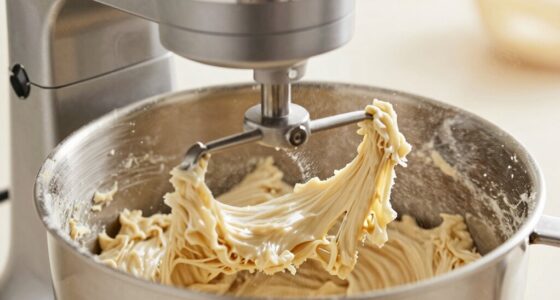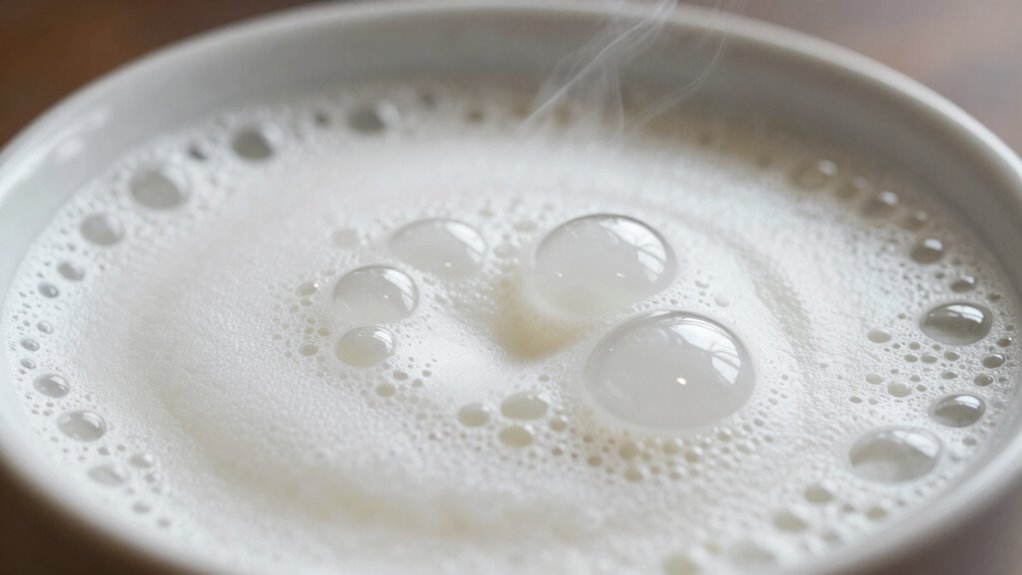

When you steam milk, controlling bubble size is key to creating microfoam versus big bubbles. Microfoam forms when proteins unfold and stabilize tiny air pockets, resulting in a velvety, glossy appearance. Big bubbles happen if the milk’s composition isn’t ideal or if you steam incorrectly, introducing too much air or overheating. Understanding how milk’s fats, proteins, and temperature influence bubble formation lets you perfect your technique and consistently craft smooth, rich microfoam. Keep exploring to master the science behind perfect steamed milk.
Key Takeaways
- Microfoam forms when milk proteins stabilize tiny air bubbles, creating a smooth, velvety texture, while big bubbles result from unstable foam and improper technique.
- Higher milk protein levels and correct steaming temperatures promote microfoam, whereas low protein or overheating cause larger, unruly bubbles.
- Proper steam wand positioning and controlled airflow ensure microbubble formation; aggressive steaming or excess aeration lead to big bubbles.
- Milk composition, especially fat and protein content, influences foam stability; higher fat can hinder microfoam formation, causing larger bubbles.
- Maintaining milk temperature between 140°F-150°F and using fresh milk optimizes microfoam, preventing the formation of big, unstable bubbles.
DREO Milk Frother, All-in-1 Electric Foam Maker for Coffee, 15oz/450ml Automatic Foam Frother for Latte Art-level Microfoam, 30+ Drinks, Easy to Clean, Dishwasher Safe, LED display
𝘼𝙡𝙡-𝙉𝙚𝙬 𝘿𝙍𝙀𝙊 𝙈𝙞𝙡𝙠 𝙁𝙧𝙤𝙩𝙝𝙚𝙧: [Upgraded Version] Completely reengineered to deliver café-quality mastery at home. Create latte art-level microfoam…
As an affiliate, we earn on qualifying purchases.
As an affiliate, we earn on qualifying purchases.
What Is Microfoam and Why Is It Important?
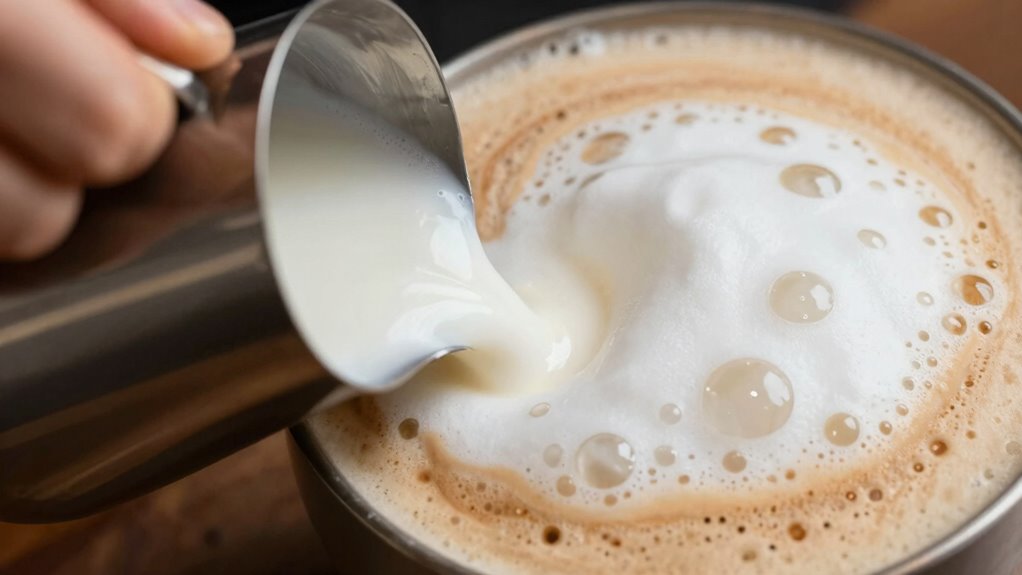
Have you ever wondered what makes a perfectly crafted latte or cappuccino look so appealing? The secret lies in microfoam, which results from specific milk properties. Microfoam is a smooth, velvety layer of tiny bubbles that creates a glossy surface. It’s essential because it blends seamlessly with espresso, enhancing flavor and providing a luxurious texture. The formation of microfoam depends on milk fat and protein interactions; proteins denature and stabilize the tiny bubbles during steaming, preventing them from bursting. Milk fat contributes to the creaminess and richness, supporting the overall mouthfeel. Achieving ideal microfoam involves controlling these interactions, ensuring the foam is fine, shiny, and stable. This delicate balance relies on precise steaming techniques to elevate your coffee experience, making each sip both flavorful and visually stunning. Additionally, understanding sound vibrations can help baristas optimize their steaming techniques for perfect foam consistency. Proper steaming temperature control is also crucial for maintaining the desired microstructure and ensuring the foam’s durability over time.

Milk Frothing Pitcher 350ml/600ml/900ml/1500ml (12oz/20oz/32oz/50oz) Steaming Pitchers Stainless Steel Milk/Coffee/Cappuccino/Latte Art Barista Steam Pitchers Milk Jug Cup with Art Pen,12oz
Perfect Combination Of Milk Frothing Pitcher And Latte Art Pen: The milk frother jug can be used in…
As an affiliate, we earn on qualifying purchases.
As an affiliate, we earn on qualifying purchases.
How to Achieve Perfect Microfoam at Home
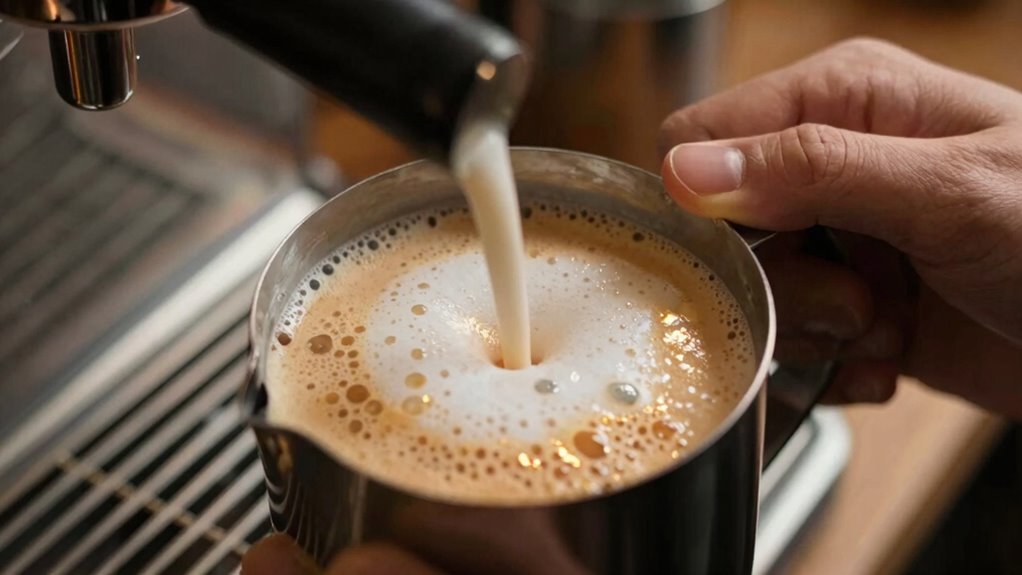
To achieve perfect microfoam at home, you need to focus on using the right technique and equipment. Start with fresh, cold milk, as it froths best when chilled. Use a steam wand or a milk frother designed for microfoam; manual or automatic devices both work well. When milk frothing, keep the wand just below the surface to introduce air gradually, creating tiny bubbles. Aim for a smooth, velvety texture without large bubbles. Temperature control is essential for consistent microfoam quality, as it helps prevent overheating and maintains the perfect texture. Proper airflow management around the unit also plays a role in achieving optimal froth. Achieving consistent results requires understanding how different factors influence microfoam formation, so experimenting with your equipment can lead to better outcomes. Perfect microfoam is essential for latte art, as it allows you to create intricate patterns and designs. Practice consistently, and you’ll develop the skill to produce café-quality microfoam right at home. Additionally, understanding the science of microfoam formation can help you troubleshoot and refine your technique for better results.

SIMPLETASTE Milk Frother, 4-in-1 Electric Milk Frother and Steamer, Automatic Warm and Cold Foam Maker and Milk Warmer for Latte, Cappuccinos, Dark Blue
4-in-1 Multifunctional: Customize your favorite café-style drinks at home with this versatile milk frother. Choose from warm dense…
As an affiliate, we earn on qualifying purchases.
As an affiliate, we earn on qualifying purchases.
The Science of Milk Microstructure and Bubble Formation
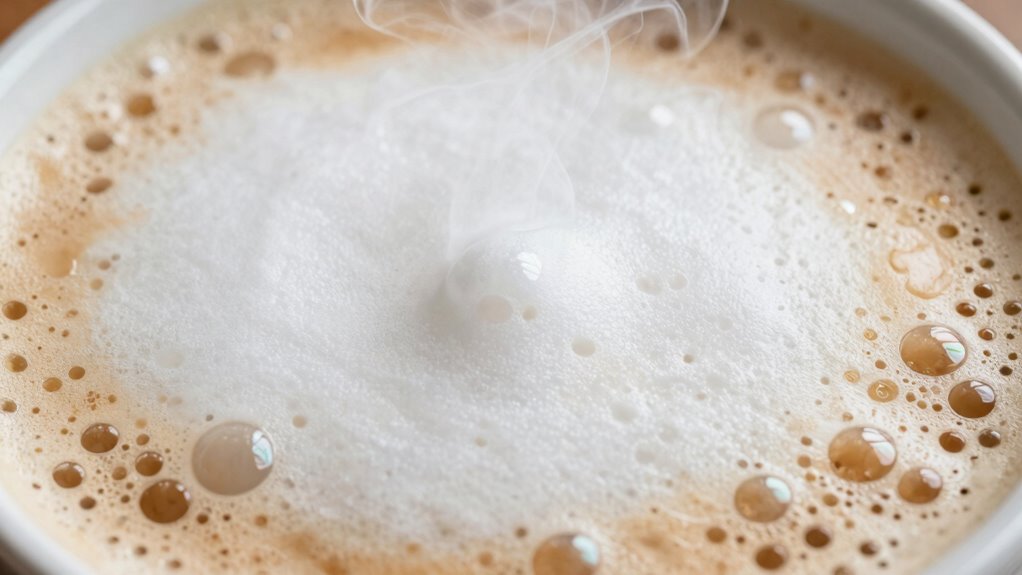
When you create microfoam, understanding the underlying science of milk’s microstructure and bubble formation helps you produce better results. Milk proteins, mainly casein and whey, play a vital role in stabilizing tiny bubbles, creating smooth microfoam. When these proteins unfold under heat and mechanical action, they form a network that traps air, resulting in stable bubbles. The size and consistency of the bubbles depend on how well the milk proteins can surround and support the air pockets. Proper steaming encourages this protein network to develop, which enhances bubble stability and prevents larger, unruly bubbles. Additionally, the microstructure of milk significantly influences how effectively bubbles form and sustain their shape during steaming. A deeper understanding of protein behavior under heat can further optimize your milk steaming technique and improve foam quality. Recognizing how protein interactions impact foam stability allows baristas to fine-tune their technique for consistently better results. Furthermore, the efficiency of equipment maintenance can influence the consistency of the microfoam produced.

Coffee Machine Steam Brush, 36 Inch Silicone Hose Espresso Steam Wand Cleaning Tool with Spoon End for Barista Espresso Maintenance (Black)
【Multi-Use Steam Brush for Espresso Machines】Specifically designed for espresso steam wands and group heads, this steam cleaning brush…
As an affiliate, we earn on qualifying purchases.
As an affiliate, we earn on qualifying purchases.
Frothing Techniques That Control Bubble Size
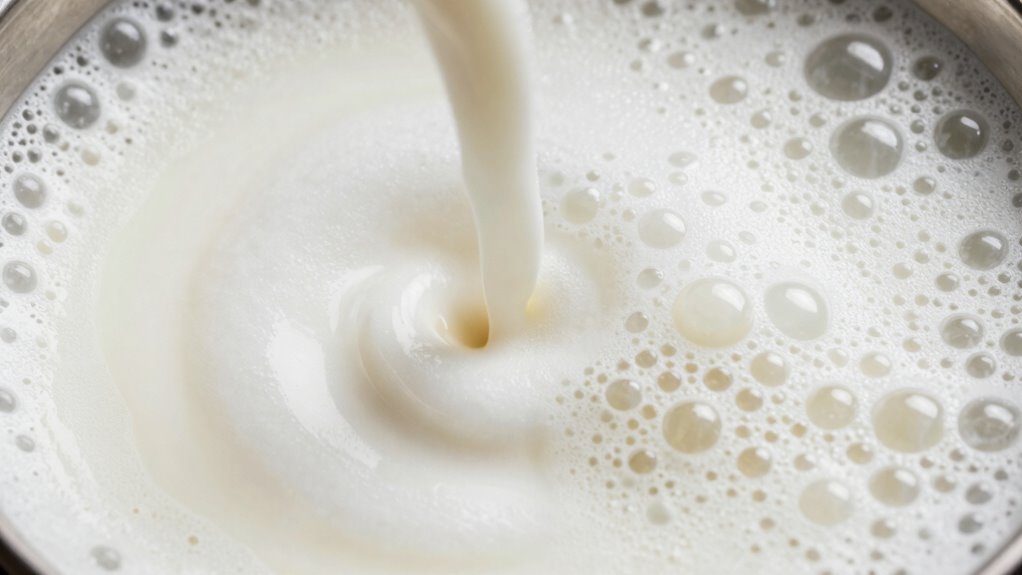
Controlling bubble size during frothing hinges on selecting the right techniques to manipulate the milk’s microstructure. To do this, you need to focus on how milk protein reacts to steam pressure. Using moderate steam pressure allows you to introduce air gently, encouraging the formation of tiny microbubbles. Keep the steam wand tip just below the surface to avoid large bubbles and create a smooth microfoam. Properly stretching the milk by introducing air early on helps align milk proteins, which stabilizes microbubbles and prevents them from merging into larger ones. As steam pressure increases, bubbles tend to grow larger, so maintaining a steady, controlled pressure is key. Mastering these techniques ensures you produce consistent, velvety microfoam with a fine texture. Understanding the microstructure of milk can help baristas optimize their frothing approach for superior microfoam. Additionally, controlling the steam pressure precisely assists in achieving the desired bubble size and texture.
Common Causes of Big Bubbles When Steaming Milk
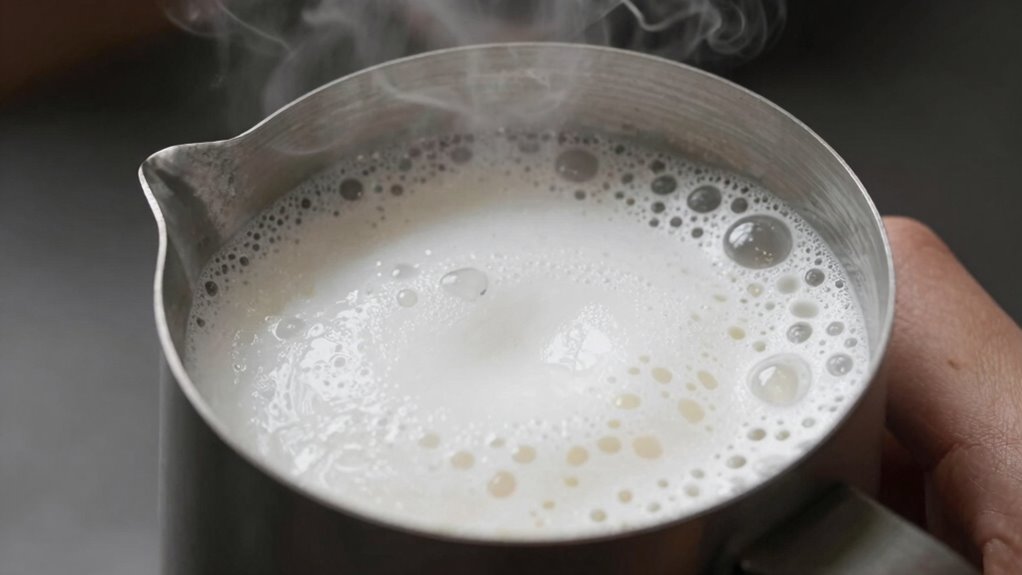
Big bubbles often appear when milk steaming goes off track, and understanding their causes helps you troubleshoot effectively. One common cause is milk with high milk fat, which can create larger bubbles because fat interferes with foam stability. Additionally, milk with low protein content won’t support microfoam formation properly, resulting in big bubbles instead of smooth foam. Properly selecting milk with the right protein levels can significantly improve foam quality. Using milk with an optimal fat content supports finer microfoam formation and reduces the likelihood of large bubbles. Improper steaming techniques, such as too high a temperature or excessive agitation, can also introduce large air pockets. To avoid big bubbles, pay attention to these factors:
- Using milk with appropriate protein content for foam stability
- Ensuring milk fat level supports fine microfoam formation
- Maintaining proper steaming temperature and gentle technique
- Selecting vetted milk quality to ensure optimal foam consistency
- Choosing milk with consistent composition to achieve reliable foam results
- Regularly checking steaming equipment to prevent malfunction-related issues
Troubleshooting Big Bubble Problems in Milk
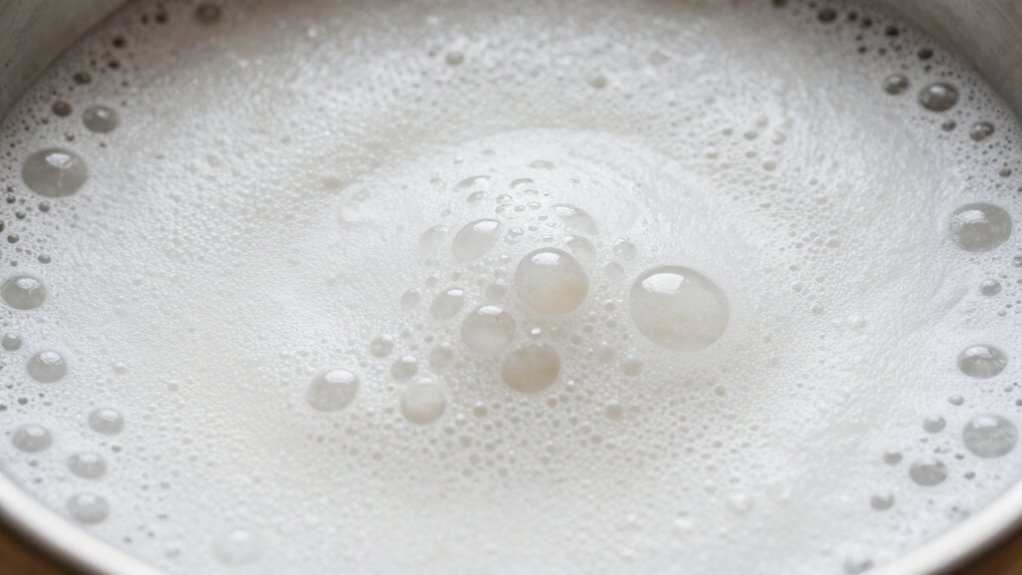
To troubleshoot big bubble problems in milk, start by examining your steaming technique and milk quality. Poor milk foam stability often results from improper steaming methods or using milk that’s not fresh. Guarantee your steaming vessel shape promotes even heat distribution; wide, shallow pitchers help break bubbles and create a smoother microfoam. Avoid over-aerating, which introduces excess air and leads to large bubbles. Also, check your steaming position—placing the tip just below the surface helps incorporate the right amount of air without creating big bubbles. Consistently maintaining the correct temperature and using fresh, high-quality milk markedly improves foam stability. Using the right waterpark amenities can also enhance your overall experience. Additionally, understanding the Gold IRA markets can help you diversify your investments and secure your financial future. By refining your technique and paying attention to these factors, you can minimize big bubbles and achieve a velvety, consistent microfoam.
How Milk Type and Temperature Affect Microfoam
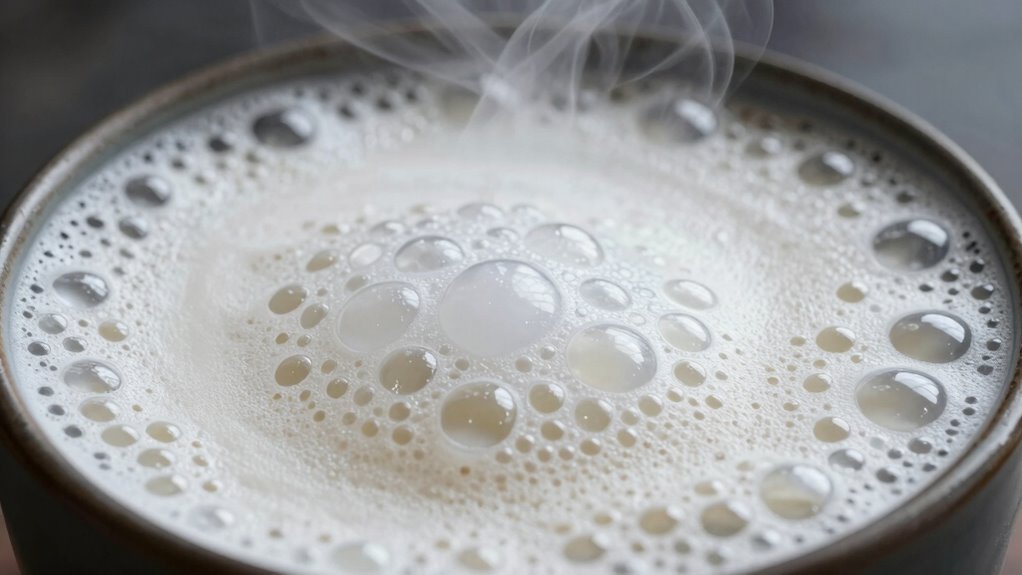
The type of milk you choose and its temperature can considerably influence your microfoam’s texture. Different milk compositions, like whole or skim, respond uniquely when steamed within the ideal temperature range of 140-160°F. Understanding these factors helps you create smooth, glossy microfoam every time. Additionally, paying attention to the science behind milk proteins can enhance your ability to achieve the perfect microfoam consistency and texture. Recognizing the impact of milk fats on foam stability can further improve your steaming technique and final beverage quality. Exploring how milk processing methods affect protein structure can also contribute to better foam formation and durability.
Milk Composition Variations
Different types of milk and their temperatures considerably influence the quality and texture of microfoam. Milk with higher milk fat creates richer, creamier foam, while lower fat varieties produce lighter, more airy microbubbles. Protein content plays a crucial role in stabilizing the foam; higher protein levels help form a sturdy, long-lasting microfoam. Temperature also affects milk’s composition, impacting how proteins unfold and interact during steaming. As milk heats, its fat and protein structure change, influencing foam stability.
- Milk with more milk fat yields creamier, denser microfoam
- Higher protein content enhances foam stability and longevity
- Temperature shifts alter protein behavior, affecting foam quality
Optimal Temperature Range
Have you ever wondered what the ideal temperature range is for steaming milk to achieve perfect microfoam? Generally, aim for between 140°F and 150°F (60°C to 65°C). Milk fat influences how the foam forms; higher fat levels create richer, creamier microfoam, while lower fat milk produces lighter textures. Protein content is essential because proteins stabilize the foam structure; optimal steaming encourages these proteins to unfold and form a stable network. If milk gets too hot, beyond 150°F, proteins can break down, causing the foam to collapse and resulting in larger bubbles. Conversely, too cool milk won’t develop sufficient microfoam. Maintaining this temperature range ensures the balance of milk fat and protein content produces smooth, glossy microfoam perfect for espresso drinks.
Impact on Microfoam Texture
Milk type and temperature directly influence the microfoam’s texture, determining whether it turns out light and airy or dense and velvety. Higher milk fat levels create creamier foam with richer mouthfeel, while lower fat milk produces lighter, more delicate microfoam. Temperature affects protein structures: too hot, and proteins break down, resulting in less stable foam; ideal steaming preserves these structures, yielding smooth microfoam. The balance between milk fat and protein stability is key to achieving your desired texture.
- Different milk fats impact foam density and creaminess
- Proper temperature maintains protein structure for stable microfoam
- Overheating destroys protein bonds, resulting in poor texture
Why Microfoam Elevates Your Coffee Experience
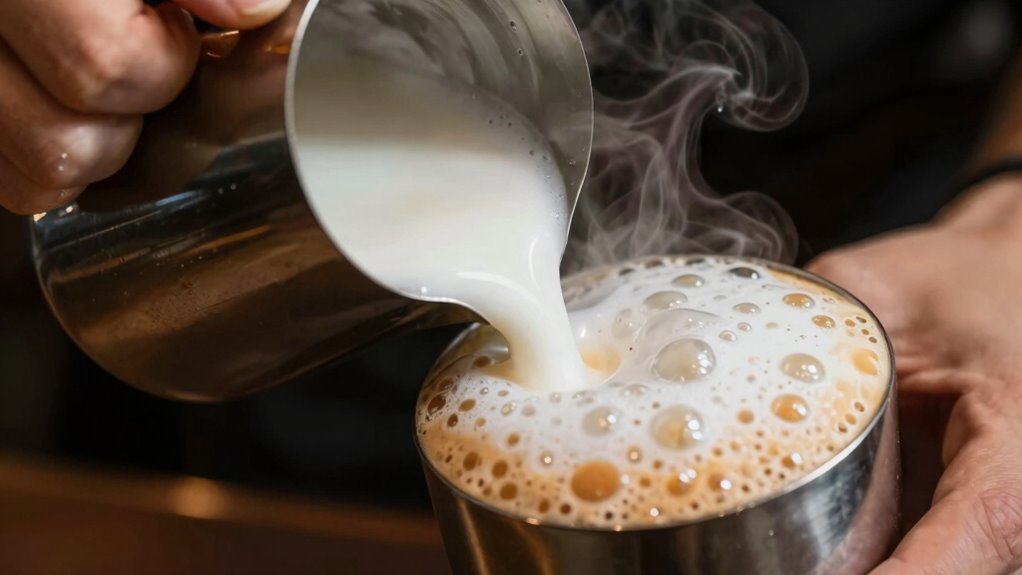
Microfoam transforms your coffee by creating a smooth, velvety texture that enhances every sip. This silky consistency allows the rich coffee aroma to flourish, making each drink more inviting. Microfoam also preserves the delicate balance of milk fermentation, preventing over-oxidation that can dull flavors. When you have well-steamed microfoam, the milk integrates seamlessly with the espresso, amplifying its natural sweetness and aroma. The finer bubbles in microfoam distribute heat evenly, helping your coffee stay warm longer without losing its flavor profile. Overall, microfoam elevates your coffee experience by delivering a creamier mouthfeel, intensifying aroma, and ensuring a balanced, satisfying taste from first sip to last.
Tips for Consistently Creating Barista-Quality Microfoam
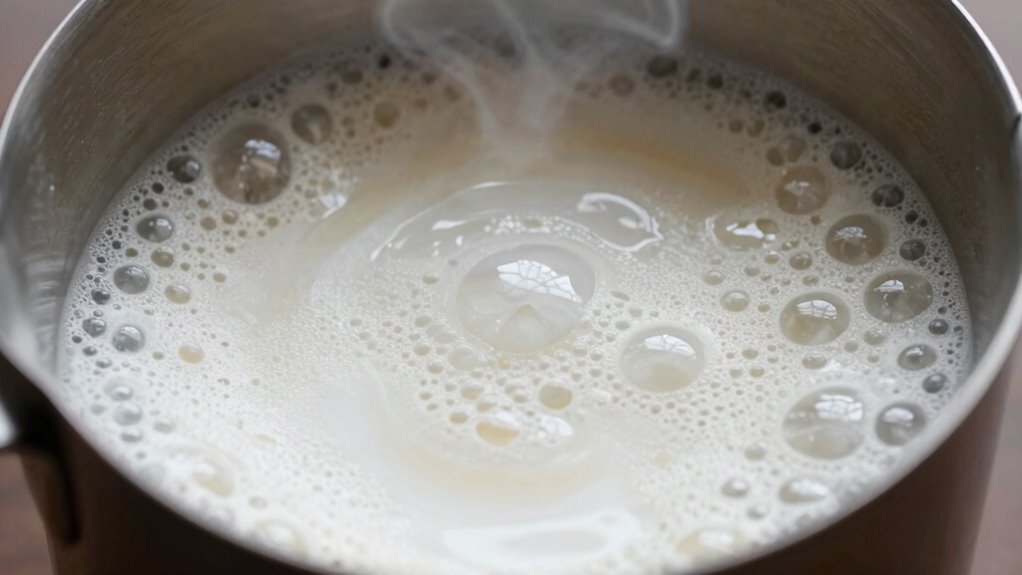
Getting consistent barista-quality microfoam starts with paying attention to milk temperature and steaming technique. If you keep the milk within the ideal temperature range, you’ll avoid burnt flavors and achieve a smooth texture. Mastering the correct steaming motion guarantees your microfoam is velvety and ready to elevate your coffee.
Proper Milk Temperature
Maintaining the correct temperature is essential for creating smooth, velvety microfoam that enhances your coffee experience. When steaming milk, aim for a temperature between 140°F and 150°F (60°C to 65°C). Overheating can scorch the milk and ruin its texture, so monitor the temperature carefully. Proper milk storage guarantees freshness and ideal steaming results, as cold milk produces better microfoam. Use well-maintained steaming equipment to achieve consistent temperature control and texture.
- Keep your milk refrigerated until just before steaming
- Use a thermometer to monitor milk temperature during steaming
- Regularly clean your steaming equipment for prime performance
Correct Steaming Technique
Mastering the correct steaming technique is key to consistently producing barista-quality microfoam. To do this, focus on positioning the steam wand just below the milk surface, creating a gentle whirlpool that incorporates air smoothly. Keep the wand at a slight angle and maintain steady, controlled motion. The goal is to achieve a glossy, velvety texture without large bubbles. Use the following table to understand key steps:
| Step | Tip |
|---|---|
| Positioning the wand | Just below the milk surface for aeration |
| Steady motion | Maintain consistent, gentle movements |
| Temperature control | Stop steaming once milk reaches correct temp |
| Surface tension | Keep the wand close to create fine microfoam |
| Finishing | Tap and swirl to eliminate bubbles |
With practice, your milk frothing and steam wand technique will produce perfect microfoam every time.
Frequently Asked Questions
Can Plant-Based Milks Create Microfoam Like Dairy Milk?
Yes, plant-based milk can create microfoam similar to dairy milk. To achieve good foam stability, choose options like oat or soy milk, which tend to foam better. Make sure to steam at the right temperature and incorporate proper technique. While some plant-based milks may not produce as dense or long-lasting foam, with practice, you can create smooth, velvety microfoam perfect for lattes and cappuccinos.
How Does Altitude Influence Milk Steaming and Bubble Formation?
Did you know that at higher altitudes, the lower boiling point affects milk steaming? Altitude effects cause larger bubble size and make microfoam harder to achieve. You might notice that milk doesn’t froth as smoothly, resulting in bigger bubbles and less stable foam. To get the best microfoam, you’ll need to adjust steaming techniques, like slightly increasing pressure or temperature, to counteract the altitude effects on bubble formation.
What Are the Health Implications of Consuming Microfoam With Large Bubbles?
Consuming microfoam with large bubbles generally poses no significant health risks if you’re healthy. However, the nutritional impact is minimal, as foam mainly contains milk’s nutrients, and large bubbles don’t alter that. If you have allergies to milk or lactose intolerance, be cautious, as foam still contains milk proteins. Always check for added ingredients or allergens, and consult your healthcare provider if you have concerns about allergy considerations.
Does the Type of Espresso Machine Affect Microfoam Quality?
Think of your espresso machine as the maestro conducting a symphony; its quality directly influences your microfoam. A high-quality machine with a powerful steam wand creates smoother, more consistent microfoam, while lower-quality models may produce big bubbles. The steam wand’s design affects how well you can regulate heat and aeration. So, investing in a better machine guarantees your microfoam is velvety, elevating your coffee experience to a professional level.
Can Adding Flavorings Impact the Microstructure of Steamed Milk?
Adding flavorings can impact the microstructure of steamed milk by causing microstructure alteration. When you introduce flavorings like syrups or powders, they may change the milk’s surface tension or introduce particles that disrupt the formation of fine microfoam. This can result in larger bubbles or uneven textures. To preserve microfoam quality, add flavorings after steaming or choose those that blend smoothly without affecting the milk’s delicate microstructure.
Conclusion
Mastering microfoam transforms your coffee into a velvety masterpiece, turning each sip into a silky-smooth symphony that dances on your tongue. When you control bubble size like a barista wizard, your latte art practically paints itself, and your morning brew becomes an artful explosion of flavor and texture. So, keep practicing, because once you conquer microfoam, you’ll elevate your coffee game to legendary heights—making every cup an unforgettable, cloud-like experience!