Indian sweets taste so unique because they use a variety of regional ingredients, special sugar types, and traditional techniques that influence their flavor, texture, and aroma. From caramelization to spice blending, every step adds depth and complexity. Regional dairy, spices like cardamom or saffron, and methods like slow simmering create distinct profiles that set these sweets apart. Explore further to uncover how all these elements work together to craft those unforgettable flavors.
Key Takeaways
- Unique regional ingredients like jaggery, honey, and palm sugar impart distinct flavors and textures to Indian sweets.
- Traditional cooking techniques, such as slow simmering and precise crystallization control, influence taste and mouthfeel.
- The use of regional spices and dairy enhances flavor complexity and regional character in each sweet.
- Caramelization of sugars during cooking develops rich aromas and balances sweetness with spice nuances.
- Variations in sugar types, temperature control, and cultural practices create diverse flavor profiles across Indian confections.
How Sugar Types Shape the Flavors of Indian Sweets
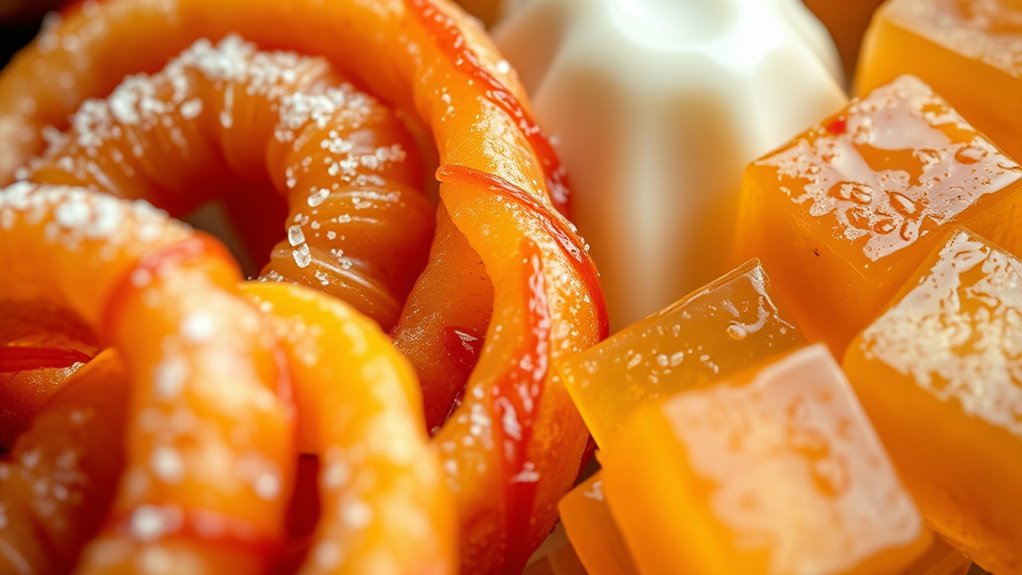
The type of sugar you use can dramatically influence the flavor and texture of Indian sweets. Different sugars affect sugar crystallization, which determines whether the dessert has a smooth or grainy consistency. For example, using finer sugars promotes quick and even crystallization, resulting in a silky texture. Coarser sugars slow this process, creating a more granular feel. Additionally, the choice of sugar impacts flavor infusions; some sugars carry subtle caramel or molasses notes that enhance the overall taste. When you select the right sugar, you can tailor the sweetness and mouthfeel to match traditional recipes or inventive variations. Understanding how sugar crystallization and flavor infusions work lets you craft Indian sweets with the perfect balance of texture and taste. Proper crystallization is essential for achieving the desired quality and consistency in your confections. Maintaining consistent sugar quality in your ingredients can also influence how well the sugar dissolves and crystallizes during preparation. Paying attention to sugar purity can help prevent impurities that interfere with proper crystallization. Proper oil maintenance in your kitchen tools can also influence how evenly the sugar dissolves and crystallizes during preparation.
Traditional Techniques That Make Indian Desserts Unique

You’ll notice that ghee and clarified butter are essential for giving Indian sweets their rich, distinctive flavor. Traditional cooking methods, like slow simmering and hand-stirring, help develop the complex textures and aromas you love. These techniques set Indian desserts apart from other treats around the world.
Use of Ghee and Clarified Butter
Ever wondered what gives Indian desserts their rich, distinctive flavor? The secret lies in the generous use of ghee and clarified butter. When you cook with ghee, the aroma fills the air, creating an inviting atmosphere that heightens your senses. Clarified butter’s deep, nutty flavor enhances the sweetness and adds a luxurious texture. This technique isn’t just about taste; it’s about tradition and craftsmanship. As you stir the mixture, the ghee’s aroma envelops you, making every bite a sensory experience. To evoke emotion, consider this table:
| Sensory Experience | Emotional Connection |
|---|---|
| Rich ghee aroma | Nostalgia of family recipes |
| Smooth, silky texture | Comfort in every bite |
| Deep flavor | Celebration of heritage |
Using ghee and clarified butter truly makes Indian sweets unforgettable.
Traditional Cooking Methods
Indian desserts owe much of their distinctive flavor and texture to traditional cooking methods passed down through generations. One key technique is controlling sugar crystallization, which ensures a smooth, glossy finish and prevents graininess. By carefully simmering sugar syrup, you allow the sugars to dissolve fully, creating a rich base for your sweet. Simultaneously, flavor infusion plays a crucial role; spices, nuts, and herbs are added at specific stages to absorb the syrup’s sweetness, enhancing aroma and taste. These methods require skill and experience, as temperature and timing directly impact the final product. Through these traditional techniques, you achieve the perfect balance of sweetness, texture, and aroma that makes Indian desserts uniquely delightful.
Regional Ingredients That Define Indian Sweet Flavors

Your taste buds are shaped by regional ingredients like unique spices, local dairy, and indigenous sweeteners. These elements give each Indian sweet a distinct flavor profile that reflects its origin. In addition, the use of aromatic essential oils in certain traditional recipes can subtly influence flavor perceptions, adding depth and complexity. For example, saffron, cardamom, and rose water are common flavoring agents that vary across regions, further highlighting local tastes and culinary traditions. Recognizing the regional culinary influences can deepen your appreciation for the diverse flavors found in Indian desserts, especially when understanding how traditional preparation methods impact taste. Furthermore, regional ingredient variation plays a crucial role in creating the unique taste profiles characteristic of different Indian sweets.
Unique Regional Spices
Have you noticed how regional spices give Indian sweets their distinctive flavors? It’s all about regional spice blends that add depth and complexity to each treat. These spices aren’t just added randomly; they’re carefully chosen to create unique flavor layering specific to each region. For example, cardamom in South Indian sweets offers a fragrant sweetness, while saffron in Northern desserts adds a subtle floral note. Cloves, cinnamon, and nutmeg further enhance the richness. These regional spice blends build a complex flavor profile that makes each sweet memorable. The careful combination of spices ensures that no two sweets taste exactly the same, reflecting local traditions and culinary heritage. This regional spice diversity is a key reason Indian sweets stand out worldwide. Additionally, the regional ingredients are often linked to local climate and agriculture, which influence the availability of spices and their distinctive flavors, further shaping the unique taste profiles of each region’s sweets. For instance, the local cultivation practices impact the freshness and potency of these spices, making each region’s sweets uniquely flavorful. Moreover, the cultural significance associated with specific spices enhances their importance in traditional recipes, making each sweet a reflection of regional identity.
Local Dairy Varieties
Regional dairy varieties play a crucial role in shaping the distinct flavors of Indian sweets. Different regions use specific milk varieties, such as buffalo or cow milk, which influence the richness and texture of the final product. Buffalo milk, with its higher fat content, creates creamier, more indulgent sweets like peda and kalakand, while cow milk produces lighter, more delicate textures. Butter types also vary regionally; traditional churned butter, often made from locally sourced cream, adds a unique depth of flavor and smoothness. These regional differences in milk and butter affect the sweetness’s consistency, aroma, and mouthfeel, giving each sweet its characteristic taste. Additionally, the regional climate impacts milk composition, further influencing the flavor profiles of these traditional confections. The processing techniques used in different regions also contribute to the unique textures and flavors of the final sweets. Moreover, variations in dairy fermentation methods can further enhance the distinct regional flavors, adding complexity to the sweets. For example, the fermentation process can develop subtle sour notes that are characteristic of certain regional varieties.
Indigenous Sweeteners
Indigenous sweeteners are the secret behind the vibrant and unique flavors of Indian sweets. They contribute the distinct sweet aroma and depth that set these confections apart. These natural ingredients often result from traditional sugar fermentation processes, which enhance their complex flavors. For example, jaggery and palm sugar offer rich, caramel-like notes, while honey adds floral sweetness. Here’s a quick overview:
| Sweetener | Flavor Profile |
|---|---|
| Jaggery | Deep, caramel, earthy |
| Palm Sugar | Mild, floral, sweet aroma |
| Honey | Floral, fragrant |
| Sugarcane Juice | Fresh, sweet, vibrant |
These regional ingredients define the authentic taste of Indian sweets, making each bite a unique experience. Additionally, biodiversity plays a vital role in maintaining the availability and quality of these regional ingredients, ensuring the continued richness of traditional flavors. Moreover, sustainable practices are increasingly important to preserve these ingredients for future generations. A focus on traditional cultivation methods helps sustain the unique characteristics of these regional sweeteners. Preserving biodiversity also supports ecosystem health, which is essential for the resilience of local agriculture. Sustaining these ingredients also supports local farmers and promotes economic stability in rural communities.
How Caramelization Enhances the Taste of Indian Sweets
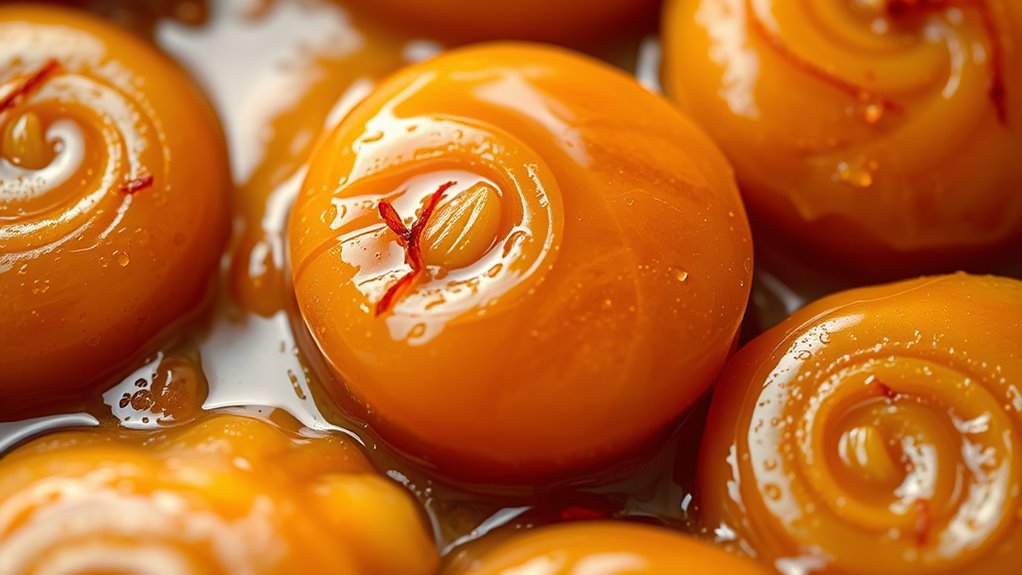
Caramelization plays a crucial role in elevating the flavors of Indian sweets by transforming sugars into rich, complex aromas and tastes. During the caramelization process, heat breaks down sugars, creating new flavor compounds that deepen the sweetness and add a hint of bitterness. This flavor development enhances the overall taste, making sweets more enticing. Here’s how it works:
- The sugar molecules break down, releasing aromatic compounds that add depth.
- The process introduces caramel notes that complement spices and dairy ingredients.
- The resulting flavors provide a warm, toasted undertone, enriching the sweet’s profile.
- Embracing the science behind artistic expression can also deepen appreciation for the intricate flavors created through caramelization.
Balancing Sweetness and Spices in Indian Confections

Balancing sweetness and spices is essential to creating Indian confections that are both flavorful and harmonious. You need to contemplate sugar flavor profiles and how they interact with spices to achieve this balance. Too much sweetness can overpower the spices, while too little leaves the confections bland. Adjusting sweetness balancing ensures each ingredient complements the other. Here’s a simple visual guide:
| Sugar Type | Spices to Pair | Effect on Flavor |
|---|---|---|
| Honey | Cardamom | Adds floral sweetness |
| Jaggery | Cinnamon | Deep, caramel notes |
| Sugar Syrup | Saffron | Rich, aromatic taste |
| Coconut Sugar | Cloves | Warm, earthy flavor |
| Brown Sugar | Ginger | Robust, spicy kick |
Mastering these combinations guarantees a delightful, well-rounded sweet experience.
The Role of Temperature and Timing in Perfecting Indian Sweets
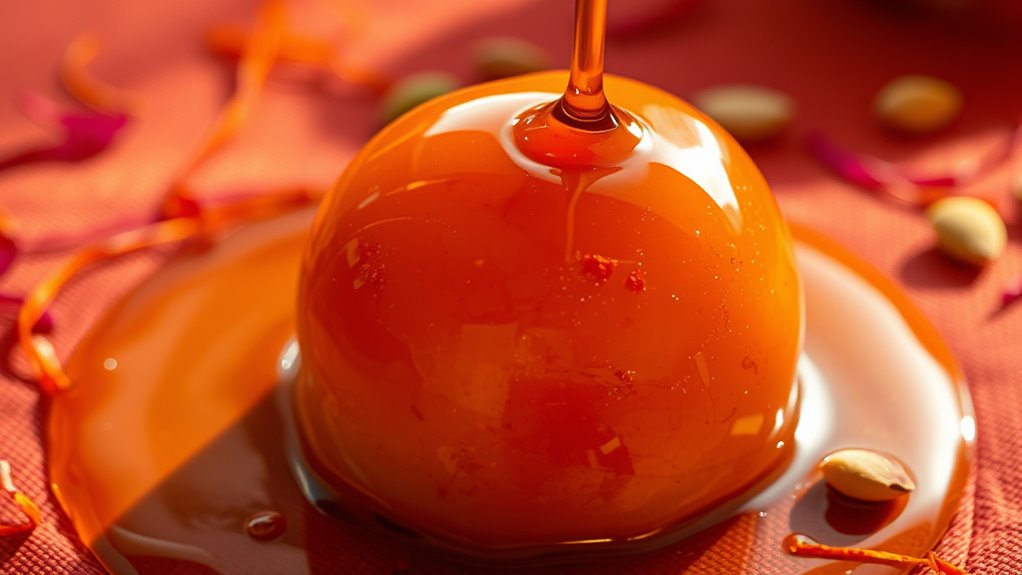
Achieving the perfect texture and flavor in Indian sweets depends heavily on controlling temperature and timing throughout the cooking process. Proper temperature control ensures ingredients cook evenly and develop the desired consistency. Timing precision is equally vital to prevent overcooking or undercooking, which can alter taste and texture. Here’s what you should focus on:
- Maintain steady, moderate heat to avoid burning or caramelizing ingredients prematurely.
- Watch for precise cooking times, as even a few extra minutes can change the sweetness or texture.
- Use a thermometer or visual cues to monitor temperature, especially when making sugar syrups or caramelized bases.
Mastering these elements guarantees your sweets reach that perfect, authentic consistency and flavor every time.
Texture Methods That Influence Flavor Perception

The texture of Indian sweets plays a essential role in how their flavors are perceived, as it influences both mouthfeel and overall enjoyment. Texture techniques like creating a soft, melt-in-the-mouth consistency or a chewy, dense feel directly impact mouthfeel perception. For example, using methods such as slow simmering or beating sugar syrup develops specific textures, enhancing the sensory experience. Achieving the right texture involves balancing moisture, viscosity, and firmness, which can intensify sweetness or complement subtle flavors. By mastering these texture methods, you can elevate the taste and sensory appeal of your sweets. Remember, the way a sweet feels in your mouth shapes how you experience its flavor, making texture a crucial element in traditional Indian confectionery.
Cultural Practices That Influence How Indian Sweets Are Made

Cultural practices deeply shape how Indian sweets are made, reflecting regional traditions, religious beliefs, and community customs. These influences guarantee each sweet has a unique touch tied to local identity and celebrations. During regional festivals and festive traditions, specific sweets are prepared with special ingredients or techniques, reinforcing cultural bonds. For example:
Indian sweets embody regional traditions, religious beliefs, and community customs, making each a unique cultural celebration.
- In South India, coconut and jaggery are commonly used during Pongal celebrations.
- During Diwali, milk-based sweets like kaju katli are prevalent, symbolizing prosperity.
- In Bengal, sweets made with khoya or chhena are central to Durga Puja festivities.
Your choice of ingredients, preparation methods, and presentation are all shaped by these cultural practices, making Indian sweets more than just desserts—they’re expressions of tradition.
What Sets Indian Sweets Apart From Other Confections

Indian sweets stand out from other confections because of their rich use of natural ingredients like ghee, nuts, and dried fruits, which add depth and texture to each bite. Their unique appeal also comes from how sugar crystal structure interacts with flavor compounds during cooking, creating a smooth, melt-in-your-mouth experience. Unlike Western candies that often rely on rapid cooling, Indian sweets involve slow heating and careful crystallization, resulting in a softer texture. This process influences flavor compound interactions, allowing spices, nuts, and fruit extracts to meld seamlessly with the sugar base. The result is a harmonious balance of taste and mouthfeel that’s distinctively Indian, making these sweets not just desserts but a sensory journey through tradition and craftsmanship.
Frequently Asked Questions
How Do Regional Climate Differences Affect Indian Sweet Flavors?
Climate influence plays a big role in shaping Indian sweet flavors. In warmer regions, you’ll find sweets with more robust spices like cardamom and cloves, which help cool the palate. Cooler areas favor milder, sweeter tastes. Regional spices are essential, adding unique aromas and depth. So, your experience of Indian sweets varies based on climate, with each region’s weather helping create distinctive flavors that reflect local traditions and ingredients.
What Role Do Traditional Utensils Play in Flavor Development?
You’ll notice that traditional utensils, made from materials like copper, brass, or clay, markedly influence flavor development in Indian sweets. These craftsmanship techniques allow heat to distribute evenly and can impart subtle metallic or earthy notes. Using these utensils during cooking enhances the aroma and taste, making the sweets more authentic. The unique materials and craftsmanship techniques create a distinctive flavor profile that’s hard to replicate with modern cookware.
How Are Modern Techniques Influencing Traditional Indian Sweet Recipes?
Imagine a time-traveling chef in a modern kitchen—today, you influence traditional Indian sweets with advanced techniques. You control sugar crystallization and flavor infusion, which enhance texture and taste. Modern methods speed up processes and improve consistency, allowing you to experiment more freely. While respecting tradition, you now craft sweets that retain authentic flavors but also incorporate innovative twists, making each bite a perfect blend of old and new.
Why Do Some Indian Sweets Have a Longer Shelf Life?
You’ll notice some Indian sweets last longer because of effective preservation methods and ingredient preservatives. These techniques, like using sugar syrup, dried fruits, or added preservatives, inhibit microbial growth and prevent spoilage. Additionally, packaging methods such as airtight containers help maintain freshness. By combining natural preservation methods with modern packaging, these sweets stay fresh longer without losing their taste or texture, making them ideal for storage and gifting.
How Do Religious Festivals Impact Sweet Ingredient Choices?
When festivals roll around, you notice how sacred ingredient symbolism influences sweet choices. You use festival-specific sweet variations that honor traditions and spiritual meanings, like saffron for purity or jaggery for prosperity. These choices show how religious festivals shape ingredient selection, turning simple treats into meaningful offerings. You realize that every sweet becomes a symbol, embodying the essence of the celebration and emphasizing the deep cultural roots behind each bite.
Conclusion
Now that you know how ingredients, techniques, and regional flavors shape Indian sweets, you’ll appreciate their unique taste even more. Did you know that India produces over 20 million tons of sugar annually, influencing the richness of its desserts? So next time you enjoy a sweet treat, remember the science and culture behind it, making every bite a flavorful journey. Indian sweets truly stand apart because of centuries of tradition and expert craftsmanship.