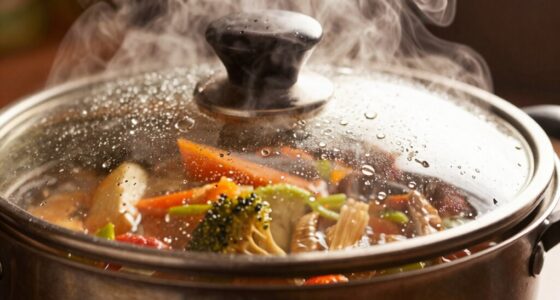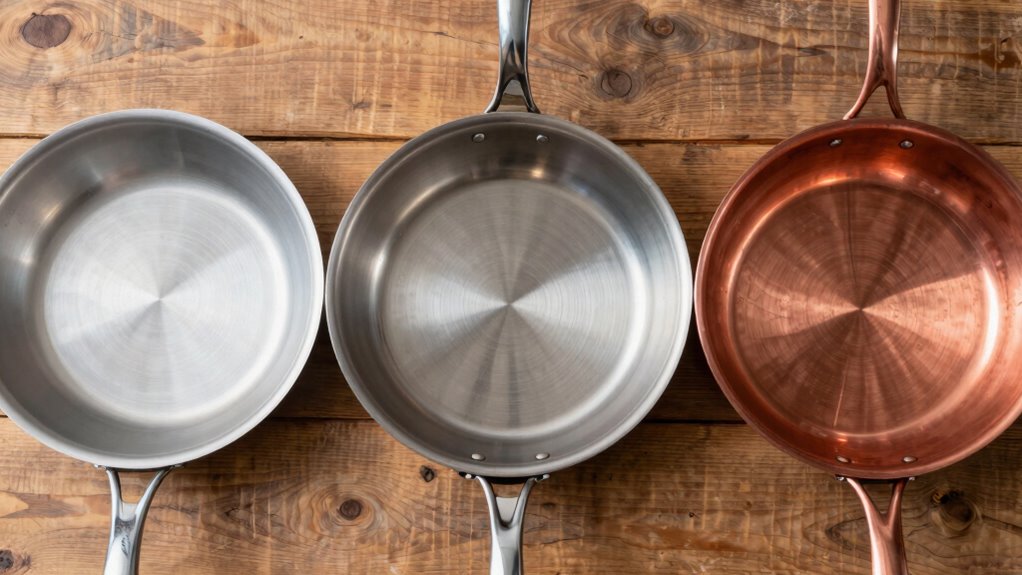

Copper is the best heat conductor, offering quick and even heating that helps you control cooking precisely. Aluminum also conducts heat well, heats quickly, and provides consistent results, especially in thicker pans. Stainless steel, on the other hand, has lower heat transfer, leading to slower, less responsive heating. Knowing how these materials behave can help you choose the right cookware for your style, so keep exploring to find out which suits you best.
Listen free for 30 days with Audible
Thousands of audiobooks and originals — cancel anytime.
As an affiliate, we earn on qualifying purchases.
Key Takeaways
- Copper has the highest thermal conductivity, offering the fastest and most even heat transfer in cooking applications.
- Aluminum conducts heat quickly and evenly, making it ideal for rapid cooking and precise temperature control.
- Stainless steel has lower thermal conductivity, resulting in slower heat transfer and less immediate response during cooking.
- Layered stainless steel pans with aluminum or copper cores improve heat distribution and responsiveness.
- Material choice impacts cooking performance, with copper providing the best heat conduction, aluminum balancing speed and durability, and stainless steel offering durability with moderate heat transfer.
As an affiliate, we earn on qualifying purchases.
How Does Heat Transfer Work in Cookware?
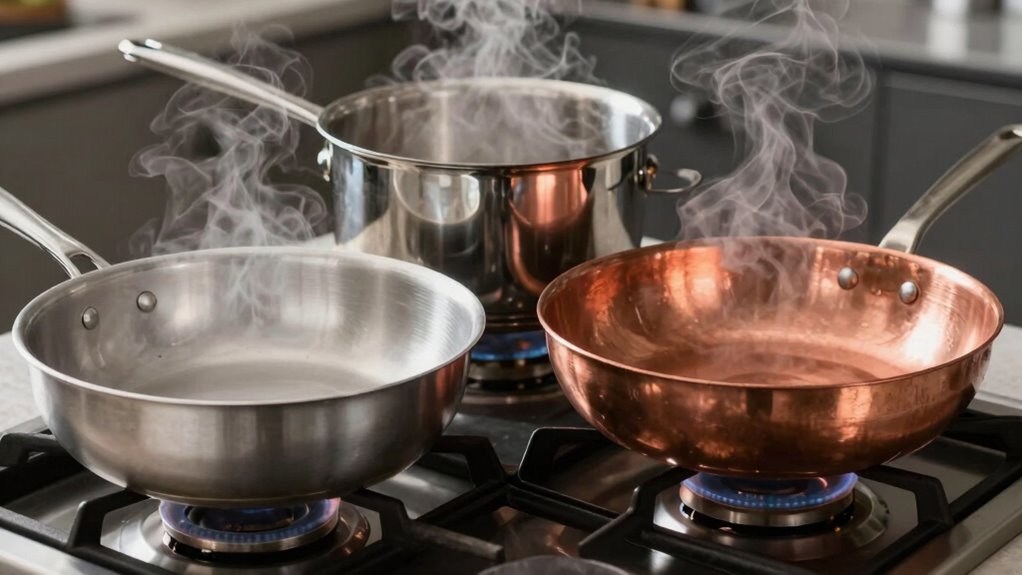
Ever wondered how your cookware heats up so efficiently? It all comes down to thermal conductivity—the ability of the material to transfer heat. When you turn on the stove, heat moves from the burner into the cookware, then spreads across the surface. Materials with high thermal conductivity, like copper, quickly transfer heat, ensuring even cooking. Steel, on the other hand, has lower conductivity, so it heats more slowly. Material durability also plays a role; sturdy metals resist warping and damage over time, maintaining consistent heat transfer. The way heat moves through your cookware affects cooking performance and safety. Choosing the right material means understanding how well it conducts heat and how durable it is under regular use. That’s the foundation of effective, reliable cookware.
As an affiliate, we earn on qualifying purchases.
Which Materials Conduct Heat Best: Aluminum, Steel, or Copper?
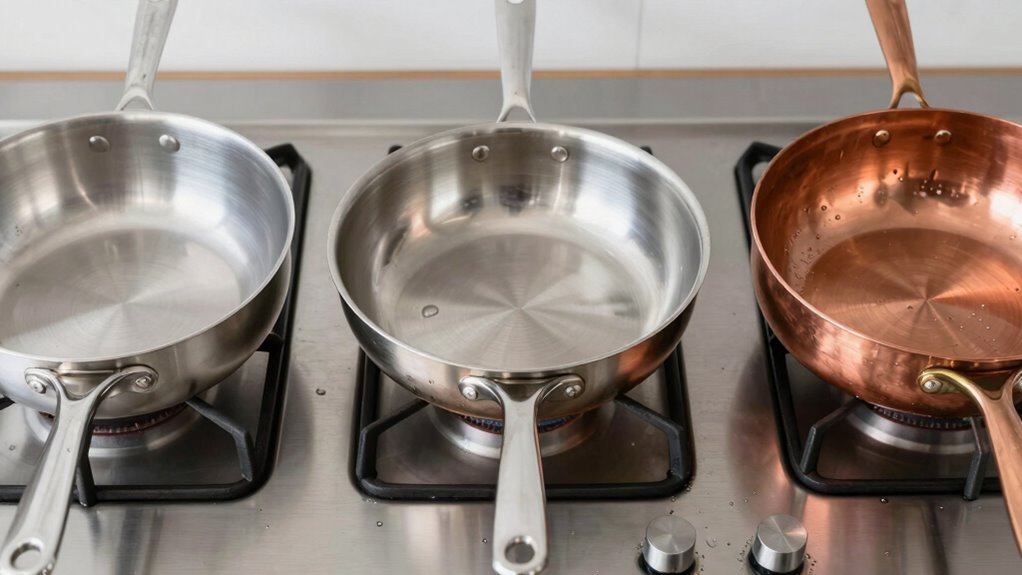
When it comes to conducting heat, copper, aluminum, and steel each have distinct abilities that can markedly impact your cookware’s performance. Copper leads in heat conductivity, allowing for quick and even heat distribution, which enhances control and precision in cooking. Aluminum also conducts heat well, though slightly less efficiently, and is lightweight, making handling easier. Steel, especially stainless steel, has lower heat conductivity but excels in durability and material longevity, resisting scratches and corrosion. Its aesthetic appeal often adds a sleek, modern look to your kitchen.
Copper offers superior heat transfer for precise cooking, while aluminum heats quickly and steel provides durability and a sleek look.
- Copper provides the best heat transfer but requires regular polishing for aesthetic appeal.
- Aluminum heats quickly and evenly, balancing performance and durability.
- Steel offers longevity and a stylish appearance, though it doesn’t conduct heat as efficiently.
As an affiliate, we earn on qualifying purchases.
Why Is Copper the Top Choice for Heat Conductivity?
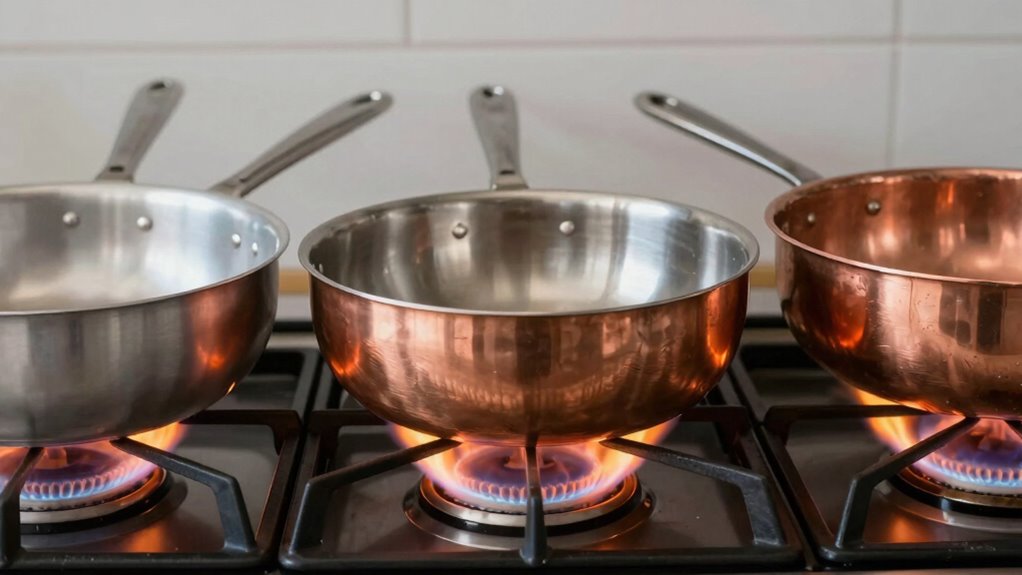
Copper leads in heat transfer efficiency, so your cookware heats up quickly and evenly. Its rapid temperature response means you can adjust heat levels precisely, preventing hot spots. This uniform heat distribution guarantees consistent cooking results every time.
Superior Heat Transfer Efficiency
Copper stands out as the top choice for heat transfer because of its exceptional thermal conductivity. This means it can transfer heat more efficiently, ensuring your cookware heats evenly and quickly. When comparing materials, copper‘s superior heat transfer efficiency helps you cook with precision, reducing hot spots and uneven cooking. Its high thermal conductivity allows for rapid and uniform heat distribution, making it ideal for delicate dishes. Additionally, copper responds quickly to temperature changes, giving you better control over your cooking process. You’ll notice that dishes come out perfectly cooked because heat moves seamlessly across the surface. For anyone serious about ideal heat transfer, copper’s efficiency makes it the preferred material. It’s all about achieving consistent results with less energy and time. Energy-efficient materials are essential for sustainable cooking practices and optimal heat performance. Properly managing heat is also crucial for cooking safety, ensuring that dishes are cooked thoroughly and safely.
Rapid Temperature Response
Because of its exceptional thermal conductivity, copper responds almost instantly to temperature changes, giving you precise control while cooking. This rapid response means you can quickly adjust the heat, preventing overcooking or burning. Copper’s ability to transfer heat swiftly ensures your cookware reacts immediately to your adjustments, helping you maintain best temperatures for delicate dishes. With better temperature control, you can fine-tune your cooking process, achieving consistent results every time. Unlike other metals that lag behind in heat adjustments, copper’s rapid response allows for more accurate and efficient cooking. Whether simmering or searing, copper’s quick thermal reactions give you the confidence to handle precise temperature changes effortlessly. This makes copper an ideal choice when responsiveness is a top priority in your culinary endeavors.
Uniform Heat Distribution
Have you ever noticed uneven cooking or hot spots in your pans? Copper stands out for its excellent uniform heat distribution, thanks to its high thermal conductivity. This allows heat to spread quickly and evenly across the surface, reducing temperature fluctuations. Additionally, copper’s thermal expansion is minimal, helping maintain consistent contact with the cooking surface. Its smooth surface roughness also contributes to better heat transfer and prevents hot spots. Moreover, copper’s high thermal conductivity ensures rapid and even heat transfer, making it a preferred choice among professional chefs. The thermal properties of copper enable precise temperature control, which is essential for delicate cooking techniques. Copper’s ability to respond quickly to temperature changes further enhances its suitability for precise cooking, where even minor adjustments can make a significant difference. This combination makes copper ideal for precise cooking, where even heat distribution is critical for perfect results.
layered stainless steel cookware with aluminum core
As an affiliate, we earn on qualifying purchases.
As an affiliate, we earn on qualifying purchases.
How Do Aluminum Pans Ensure Even Heating?
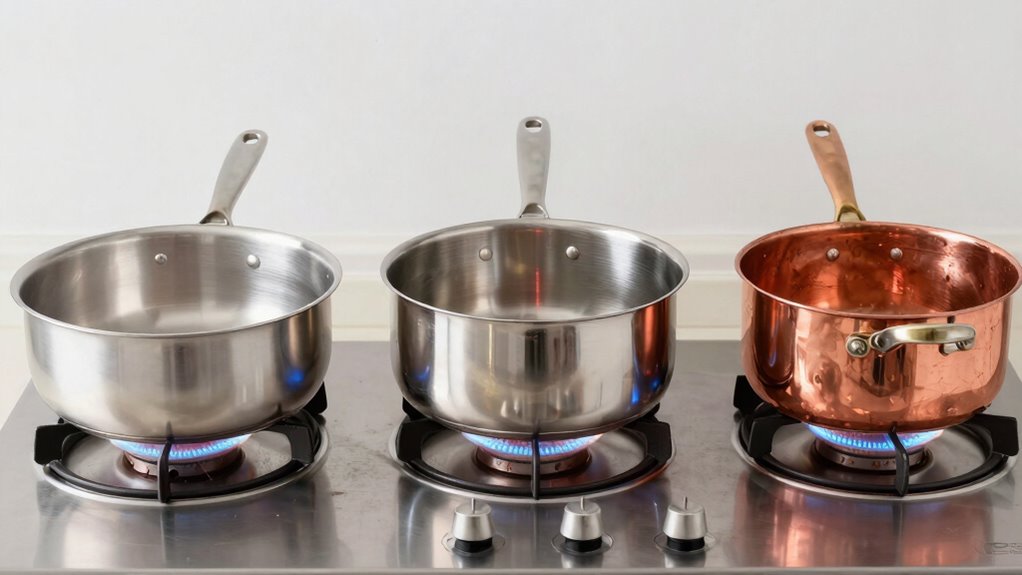
Aluminum pans are known for their excellent heat conduction, which helps distribute heat evenly across the cooking surface. The key is their pan thickness; a thicker aluminum pan provides better heat retention and reduces hot spots, ensuring consistent cooking. Thicker pans may take longer to heat initially but offer more uniform temperature distribution during cooking. Thinner pans may heat quickly but can create uneven spots, so choosing the right thickness is essential. Additionally, handle design plays a role in maintaining even heating; sturdy, well-attached handles prevent wobbling and allow safe, steady movement without disturbing the pan’s heat distribution. Aluminum’s natural thermal properties quickly transfer heat from the stove to the entire surface, while thoughtful design choices like appropriate thickness and secure handles help you achieve uniform cooking results. This combination makes aluminum pans a reliable choice for even heating, especially when considering heat conductivity as a crucial factor in cookware performance. Moreover, proper pan construction ensures that heat is evenly distributed and maintained throughout the cooking process, further enhancing the performance of aluminum cookware. Ensuring the material quality of aluminum also plays an important role in maintaining consistent heat distribution over time.
What Are the Heat Retention and Distribution Traits of Stainless Steel?
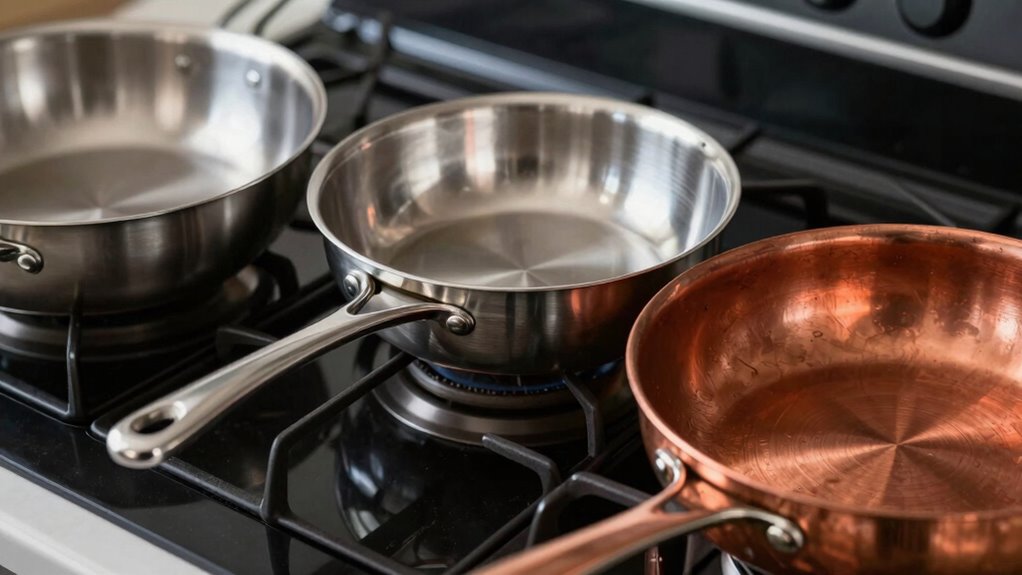
Stainless steel offers moderate heat distribution, which means it heats unevenly compared to other materials. Its heat retention capacity is decent but not as high as copper or aluminum. Understanding these traits helps you choose cookware that matches your cooking style and needs. Additionally, selecting the right material can influence how efficiently your dog’s meals are prepared, especially when considering the importance of heat conduction in cooking. Recognizing the thermal properties of stainless steel can help you optimize your kitchen setup for better results, especially when integrating holistic SEO strategies to improve your culinary content online. Moreover, its heat retention properties can vary depending on the construction and layering of the cookware, affecting cooking performance. Being aware of its heat distribution patterns can guide you in selecting cookware that offers more consistent heating across the surface.
Heat Distribution Efficiency
While stainless steel is known for its durability and sleek appearance, its heat distribution traits are often less impressive. It tends to have uneven heat spread, which can lead to hot spots and inconsistent cooking. This makes thermal insulation less effective, as heat doesn’t evenly transfer across the surface. Its aesthetic appeal is high, but this often comes at the expense of heat efficiency. To improve performance, many stainless steel pans incorporate core layers of aluminum or copper, enhancing heat distribution. Without these enhancements, you might notice uneven cooking results. Remember, the overall heat distribution efficiency of stainless steel cookware depends heavily on its construction. Choosing well-made stainless steel with layered bases can help mitigate some of its inherent distribution weaknesses. Additionally, heat conduction properties of stainless steel are generally inferior to copper or aluminum, which are more effective conductors of heat. The incorporation of layered construction significantly influences how well heat is distributed across the cookware’s surface. Moreover, selecting cookware with optimized base design can further improve heat transfer and cooking performance.
Heat Retention Capacity
Stainless steel cookware is generally not known for its heat retention. Instead, it relies on its durability and even heat distribution. Its insulation properties are limited, causing heat to escape more easily once removed from the heat source. This means you need to maintain a steady flame or heat to keep your food warm. The metal itself doesn’t trap heat well, so it cools quickly once off the stove. If you’re cooking dishes that require consistent heat over time, stainless steel may not be the best choice for heat retention. However, some cookware combines stainless steel with an aluminum or copper core to improve insulation properties and boost heat retention. This layered design helps you retain heat longer and cook more evenly. Understanding the heat transfer mechanisms of different materials can help you choose the right cookware for your cooking needs. Incorporating layered construction can significantly enhance the heat retention capabilities of stainless steel cookware. Recognizing material properties is key to selecting cookware suited for various cooking styles. Additionally, thermal conductivity plays a crucial role in how effectively heat is retained and distributed within the cookware. Moreover, selecting the appropriate core materials can optimize heat retention for specific culinary tasks.
Which Cookware Material Is Most Durable and Practical?
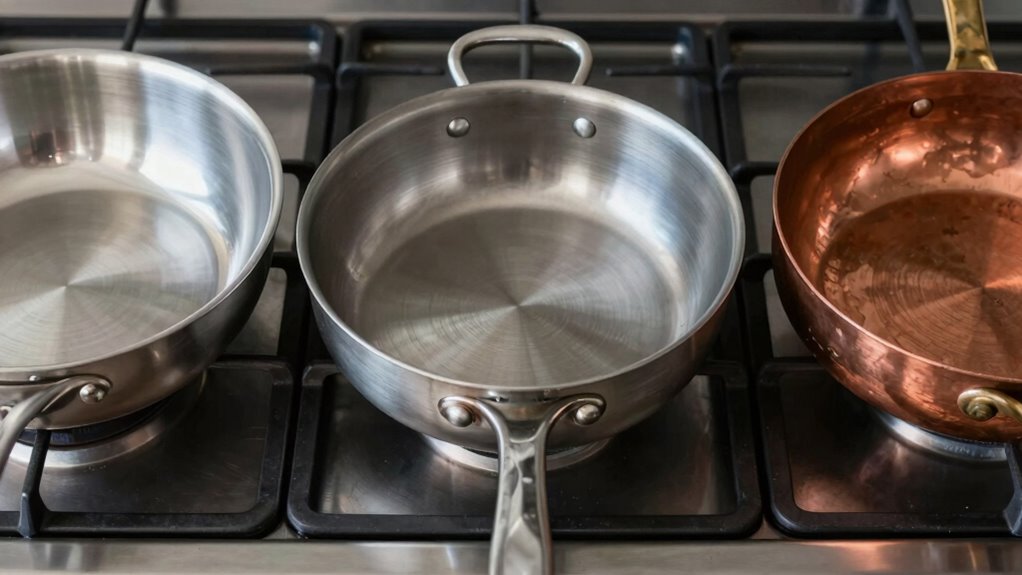
When choosing cookware for everyday use, durability and practicality are key factors to contemplate. You want something that lasts and is easy to maintain, without breaking the bank. Metal type plays a big role here. For example, stainless steel is highly durable, resistant to rust, and requires minimal cookware maintenance. Copper, while durable, can be more expensive and needs regular polishing. Aluminum is lightweight and affordable but can dent easily if not handled carefully. Consider the material cost when balancing durability with budget. If you prefer low-maintenance cookware, stainless steel might be your best bet. For longevity and a classic look, copper is great, but it can be pricier. Aluminum offers practicality with lighter weight but less resilience. Think about your cooking habits and budget to choose wisely. Additionally, understanding the heat conductivity of each material can help optimize your cooking performance and energy efficiency.
Which Material Is Best for Your Cooking Style and Recipes?
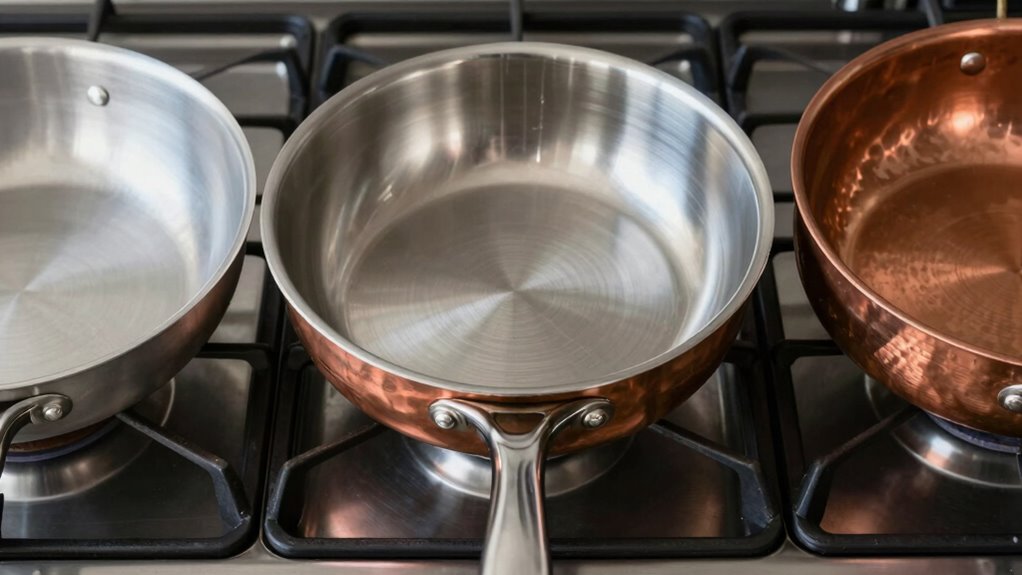
Choosing the right cookware material depends largely on your cooking style and the types of recipes you prepare most often. If you favor quick, even heating for delicate dishes, copper might suit your needs, but it requires careful cookware maintenance. For versatile, everyday cooking, stainless steel offers durability and low maintenance, making it ideal for various cooking techniques. Aluminum heats rapidly and is lightweight, perfect for sautéing and frying, though it may need more attention to prevent warping. Consider how often you cook and what techniques you use most—this will help determine the best material. Additionally, think about cleaning and upkeep, since some materials demand more care than others. Matching your cookware to your style ensures better results and a more enjoyable cooking experience.
Frequently Asked Questions
How Does Cookware Thickness Affect Heat Conduction?
Thicker cookware generally enhances heat conduction because it increases the thermal mass, allowing the heat to distribute more evenly across the surface. With material layering, thicker pans reduce hot spots and maintain steady temperatures. Keep in mind, though, that overly thick cookware might take longer to heat initially. Balancing thickness with material type ensures better heat conduction, giving you more control during cooking.
Does Non-Stick Coating Impact Heat Transfer Efficiency?
Non-stick coating can influence heat transfer efficiency, but the effect is usually minimal if the coating is well-applied. You might notice slight heat transfer impact at the edges or during rapid temperature changes, but durable non-stick surfaces maintain good heat conduction. Keep in mind that non-stick durability varies; a high-quality coating ensures consistent heat transfer, helping you cook evenly without hotspots or sticking.
How Do Different Metals React With Acidic Foods?
You should know that metals react differently with acidic foods due to their acid reactivity. Copper and aluminum are more prone to metal corrosion when exposed to acids, which can lead to discoloration and off-flavors. Stainless steel resists acid reactivity better, making it a durable choice for cooking with acidic ingredients. Keep in mind, prolonged contact with acids can increase metal corrosion in reactive metals, affecting both flavor and cookware longevity.
What Is the Maintenance Required for Copper Cookware?
Copper cookware needs regular maintenance cleaning to keep its shine and performance. Remarkably, copper develops a natural patina called copper patina that can add character but also affects appearance. To maintain it, you should clean it with a gentle, non-abrasive cleaner and occasionally polish it to prevent tarnishing. Proper maintenance ensures your copper cookware stays beautiful and functional, making it a worthwhile investment in your kitchen.
Are There Safety Concerns With Different Heat-Conductive Materials?
You should be aware that some heat-conductive materials, like copper and aluminum, can pose safety concerns due to metal toxicity if the cookware’s interior isn’t properly coated. People with metal allergies might also experience reactions, especially with uncoated or reactive metals. Always choose cookware with appropriate lining or coating to minimize allergy risks and prevent metal leaching, ensuring safe cooking and health protection.
Conclusion
Choosing the right cookware depends on your cooking style. For instance, if you love precise temperature control, copper’s superior heat conductivity makes it ideal—just like a professional chef who swears by their copper pots. If durability matters more, stainless steel offers strength and versatility. Consider your recipes and priorities—whether even heating or longevity—and pick the material that helps you cook your best, every time. Your perfect pan awaits!
Flea & tick season Picks
flea and tick prevention
As an affiliate, we earn on qualifying purchases.