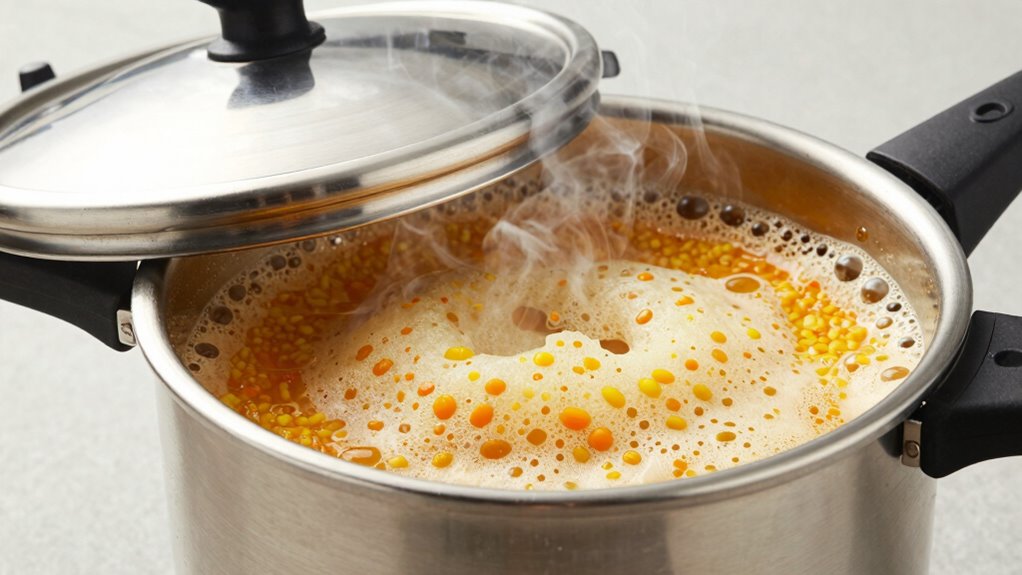

Dal foams in a pressure cooker mainly because of the high starch and protein content in lentils, which create bubbles when heated under pressure. Mineral-rich water and cooking methods like overfilling or high heat can make the foam worse, leading to spills. Different lentil types and poor rinsing or soaking also increase foam formation. If you want reliable tips to control this, keep exploring how to prevent and manage the foam effectively.
Key Takeaways
- High starch content in dal releases bubbles during heating, leading to foam formation.
- Gelatinization of starch and protein denaturation stabilize foam, causing persistent bubbling.
- Mineral-rich water enhances foam stability and increases spill-over risk.
- Insufficient rinsing or soaking leaves surface starch that promotes foam during cooking.
- Wide or shallow utensils and vigorous stirring increase foam buildup and pressure cooker spills.
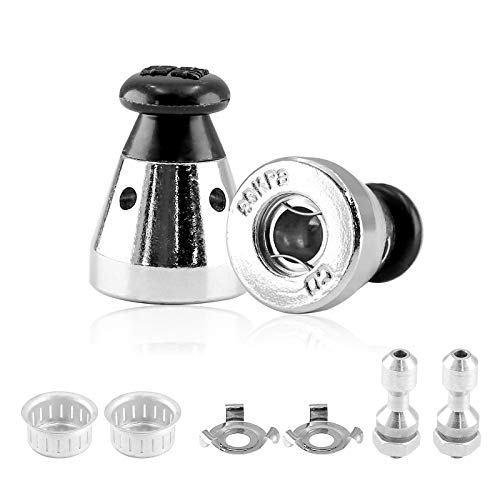
Bonsicoky 2PCS Universal Pressure Cooker Relief Jigger Valve with Exhaust Rod, Safe and Anti-blocking, Regulator Weight Pressure Control 80KPA
PACKAGE CONTENT – 2 x Jigger Valve, 2 x Stainless Steel Anti-Blocking Cover, 2 x Anti-Blocking Bracket, 1…
As an affiliate, we earn on qualifying purchases.
As an affiliate, we earn on qualifying purchases.
Why Does Dal Foam and Spill Over in a Pressure Cooker?

When cooking dal in a pressure cooker, it often foams and spills over unexpectedly. This happens because the dal’s texture causes it to produce foam as it heats, especially during pressure cooking. The starchy nature of dal creates bubbles that expand rapidly, making the foam rise quickly. As pressure builds inside the cooker, these bubbles push upward, causing the foaming to spill over the edges. The foam is a natural byproduct of the cooking process, but if not managed, it can make a mess and affect cooking time. To minimize this, you can rinse the dal thoroughly before cooking or add a bit of oil or butter to reduce foam. Understanding how pressure cooking affects dal’s texture helps prevent these spills. Additionally, applying creative culinary techniques can help manage foam and improve the cooking experience.

Presto 01341 4-Quart Stainless Steel Pressure Cooker
Chicken, fish, meat, and vegetables cook to perfection fast. Helps tenderize economical cuts of meat. Pressure regulator maintains…
As an affiliate, we earn on qualifying purchases.
As an affiliate, we earn on qualifying purchases.
What Causes Dal to Foam in a Pressure Cooker?
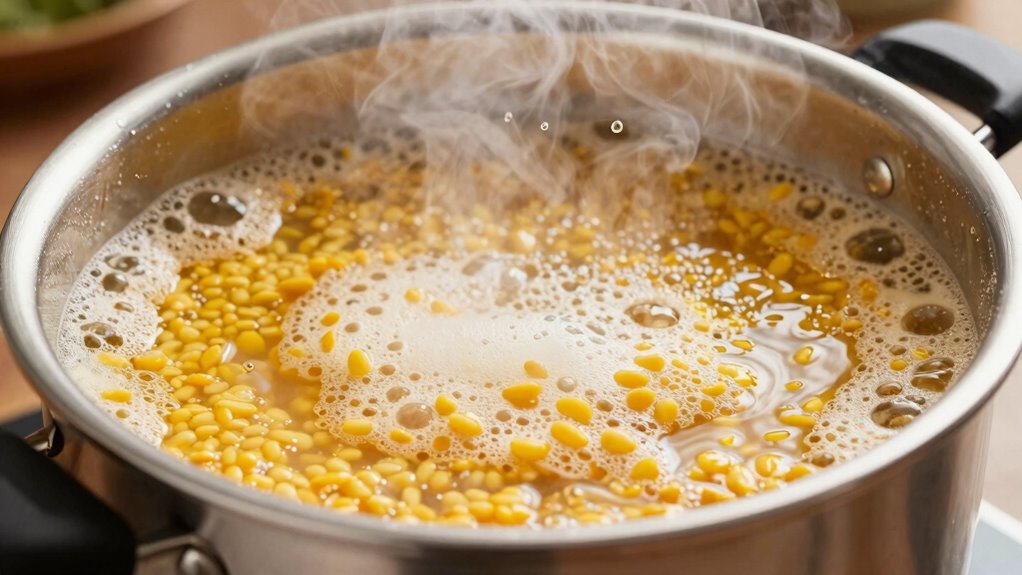
The main cause of dal foaming in a pressure cooker is its high starch content. Dal foam chemistry involves starch molecules that expand and create bubbles when heated, leading to foam formation. When you cook dal, the heat causes starch granules to gelatinize, releasing starch into the water and increasing foam potential. Cooking utensil effects can also influence foaming; for example, using a wide or shallow pot exposes more surface area, encouraging foam buildup. Additionally, stirring too vigorously introduces air into the mixture, further boosting foam formation. Starch behavior during heating is an essential factor in understanding foam development. Understanding how dal’s starch interacts with heat and the shape of your cooking utensil helps you anticipate and manage foaming, ensuring a smoother cooking process without spills or messes. The starch content in dal is a key factor that influences the amount of foam produced during cooking. Moreover, the chemical properties of starch can vary depending on the type of dal used, affecting how much foam is generated during cooking. Recognizing starch properties can help in selecting the right dal for reduced foaming. Additionally, processing methods of dal, such as soaking or dehulling, can alter starch properties and influence foam formation.

Hawkins Ceramic Nonstick Pressure Cooker, Induction Inner Lid Cooker, Granite Contura shaped Cooker, Best Cooker, Blue ICC30 3 Litre
Ideal for 3 or 4 Persons
As an affiliate, we earn on qualifying purchases.
As an affiliate, we earn on qualifying purchases.
How Do Starches and Proteins Contribute to Dal Foaming?
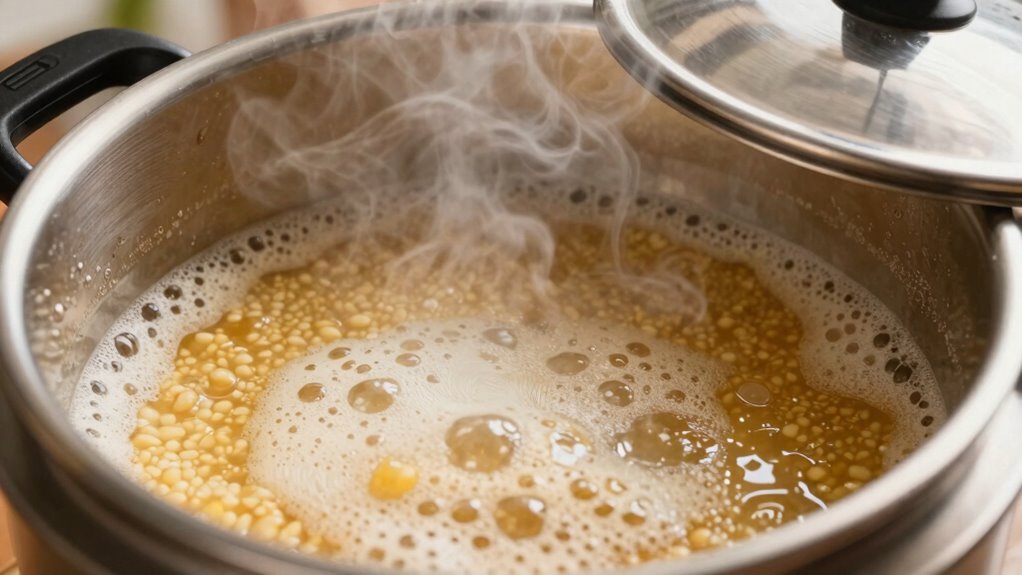
Starches and proteins in dal play significant roles in foam formation during cooking. When heated, starch interactions cause the granules to swell and release their contents, creating a sticky, viscous mixture that traps bubbles. Meanwhile, protein behavior influences foam stability; proteins denature and unfold, forming a film around bubbles that can either stabilize or destabilize foam depending on their structure. As the dal heats, these proteins may form foam-stabilizing layers, trapping air and steam. The combined effects of starch interactions and protein behavior contribute to the formation and persistence of foam in a pressure cooker. Understanding how these components behave during cooking helps explain why dal foams and how to manage it effectively.
Bonsicoky 2PCS Universal Pressure Cooker Relief Jigger Valve with Exhaust Rod, Safe and Anti-blocking, Regulator Weight Pressure Control 80KPA
PACKAGE CONTENT – 2 x Jigger Valve, 2 x Stainless Steel Anti-Blocking Cover, 2 x Anti-Blocking Bracket, 1…
As an affiliate, we earn on qualifying purchases.
As an affiliate, we earn on qualifying purchases.
Does Water Hardness and Mineral Content Make a Difference?
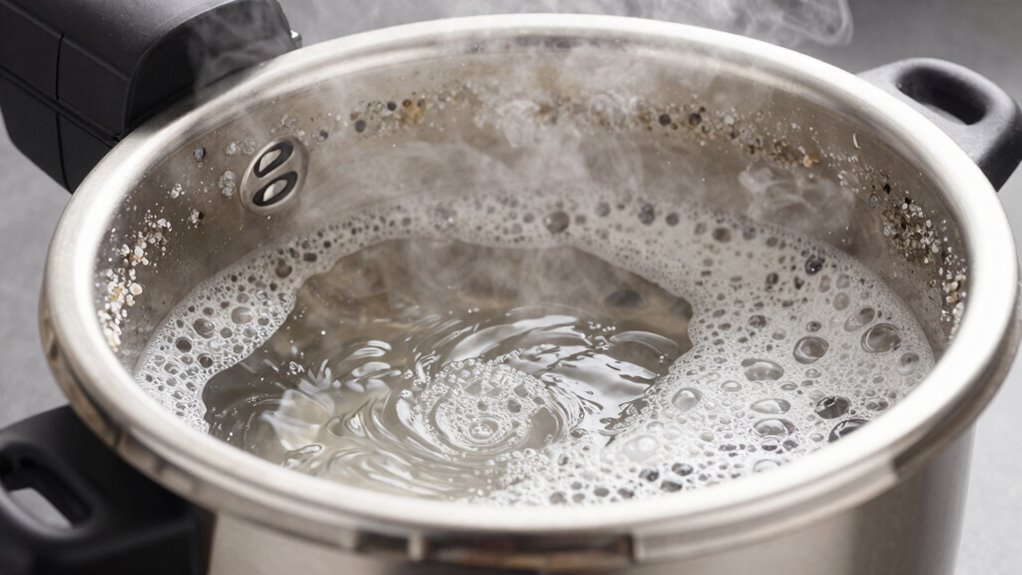
Have you noticed that the mineral content in your water seems to affect how much your dal foams? Hard water with high mineral levels can increase foam formation during cooking, making a difference in the process. Understanding how water composition impacts foaming helps you control the cooking environment better. Additionally, using proper water softening techniques can help manage foam levels effectively. For example, knowledge of contrast ratio can guide you in adjusting your cooking setup for clearer visual cues of doneness. Incorporating creative storytelling for branding in your cooking tips can also engage your audience and foster trust. Recognizing the role of water chemistry can further optimize your cooking results by reducing unwanted foaming. Moreover, understanding auditory cues can assist in monitoring cooking progress more precisely.
Mineral Content Effects
Mineral content in water can markedly influence how a pressure cooker behaves, especially when it comes to foaming. The mineral balance affects the way proteins and starches in dal react during cooking, which can lead to more or less foam. Higher mineral levels, particularly calcium and magnesium, can stabilize foam, making it more persistent. Additionally, pH levels play a role; alkaline water tends to increase foaming due to changes in protein solubility. When mineral content is high, it can alter the water’s chemistry, impacting foaming tendencies. The water chemistry influenced by mineral content can also affect other aspects of cooking, such as taste and texture. Understanding these mineral content effects allows you to better predict and manage foaming issues during pressure cooker dal cooking. Recognizing the impact of water chemistry can help you choose the right water for optimal cooking results and minimize foaming problems. Being aware of water mineral levels can help prevent over-foaming and potential safety hazards during pressure cooking.
Hardness and Foaming
Water hardness and mineral content definitely influence the amount of foam produced during pressure cooking. Hard water, rich in minerals like calcium and magnesium, can intensify foam formation, affecting dal fermentation and cooking temperature. To understand this better, consider:
- Hard water increases protein interactions, leading to more foam.
- Mineral buildup affects how dal ferments, potentially altering fermentation speed.
- Higher mineral content can raise the cooking temperature needed to soften dal.
- Excess minerals may cause more vigorous foaming, risking overflows.
- The water composition can also impact the longevity of your pressure cooker’s gasket and other components.
- Using water treatment methods such as boiling or filtering can help reduce mineral levels and control foam formation.
- Additionally, mineral-rich water can lead to scaling issues inside your cooker, requiring more frequent maintenance.
- The presence of minerals can also influence the cooking efficiency and prolong the lifespan of your appliance.
- Employing appropriate pre-treatment techniques can further optimize cooking results and minimize foaming problems.
These factors influence how your dal cooks and foams in the pressure cooker. Adjusting water hardness or pre-treating water can help control foam levels. Remember, mineral content directly impacts foam, fermentation, and ideal cooking temperature.
Water Composition Impact
Since the mineral content in your water directly affects how dal reacts during pressure cooking, understanding its composition is essential. Hard water with high mineral levels, like calcium and magnesium, can cause more foam and foam buildup in your cooking vessel. These minerals interact with proteins in the dal, affecting its texture and potentially creating extra bubbles. Using softer water can lead to a cleaner, more efficient cooking process and improve flavor enhancement, as impurities don’t interfere with the dal’s natural taste. The mineral content also influences how quickly the dal cooks and how it reacts to pressure. Additionally, mineral levels can impact the foaming behavior of the dal, making pre-treatment or water choice even more important. Adjusting your water type or pre-treating it can help minimize foaming issues, ensuring a smoother cooking experience and better overall results. Proper water treatment techniques can significantly reduce mineral-related foaming, leading to more consistent cooking outcomes. Moreover, understanding the specific mineral composition allows for better control of cooking variables, ensuring your dal turns out just right every time.
Which Types of Lentils Are More Prone to Foaming?
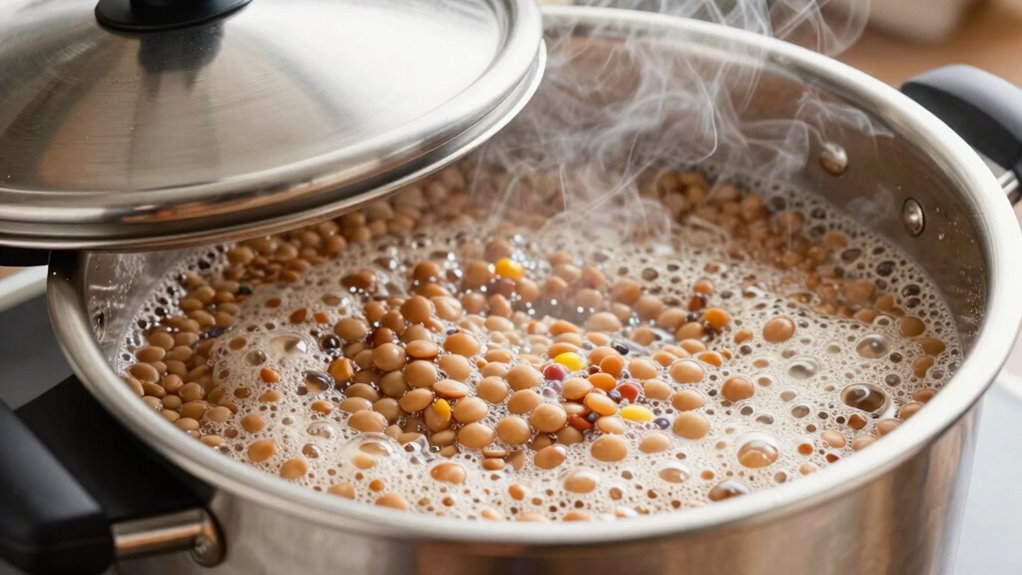
Have you ever noticed that some lentil varieties tend to foam more than others when cooked in a pressure cooker? This is due to differences in foam formation among lentil types. Generally, the more starchy or protein-rich the lentil variety, the higher the likelihood of foaming. Here are four lentil varieties prone to foam formation:
- Red lentils – quick to break down, releasing starch that causes foam.
- Green lentils – contain more fiber, which can contribute to foaming.
- Brown lentils – tend to produce more foam due to their thicker skins.
- Puy or French lentils – known for their firm texture, but still prone to foaming when cooked.
Understanding these differences helps you anticipate and manage foam in your pressure cooker.
What Common Cooking Mistakes Cause Dal to Foam Over?
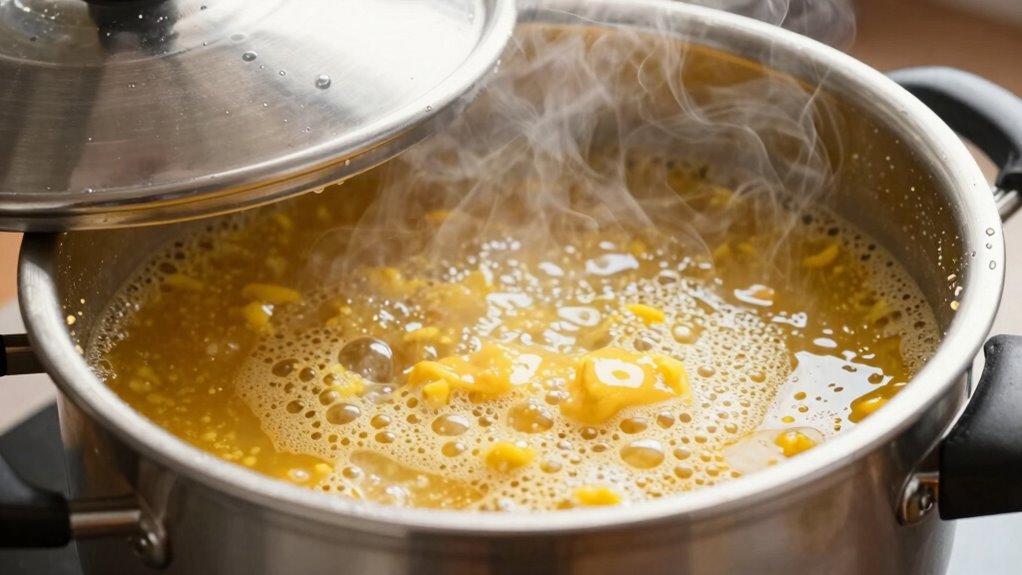
Many common cooking mistakes can lead to dal foaming over in a pressure cooker. One mistake is not rinsing the lentils thoroughly before cooking, which leaves excess starch that creates foam. Using too high heat can cause rapid boiling, increasing foam production and risking spills. Overfilling the cooker also reduces space for steam, making foaming more likely. Ignoring proper cooking techniques, like not removing foam buildup or not adjusting the heat once pressure is reached, can worsen the problem. These errors compromise kitchen safety by increasing the risk of messy spills or accidents. To avoid this, always rinse lentils well, control your heat, and follow recommended cooking procedures. Staying attentive to these details ensures safe, efficient cooking and prevents dal from foaming over.
How Can You Prevent Dal From Foaming and Spilling?
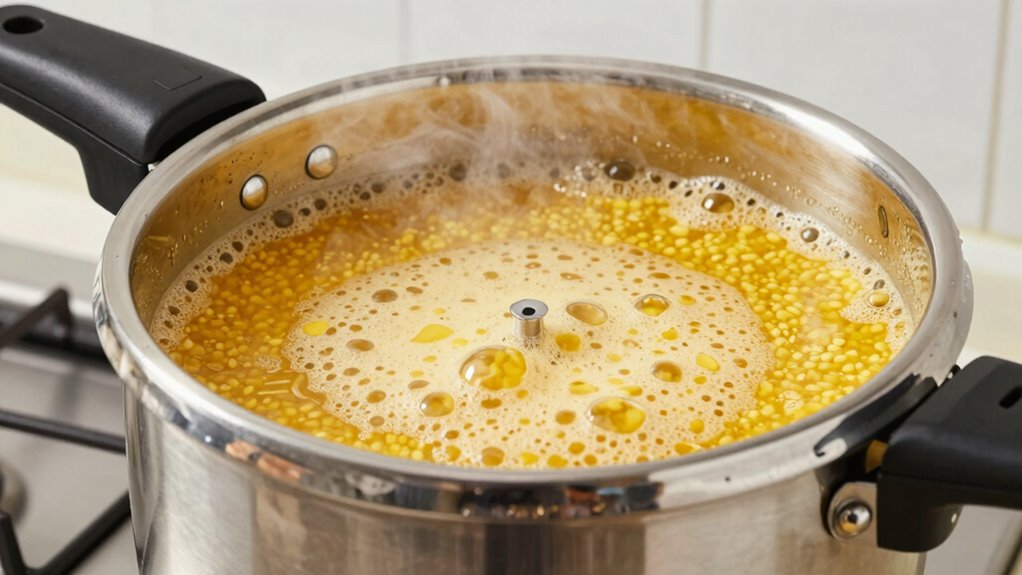
To prevent dal from foaming and spilling, start by properly soaking the lentils before cooking. You can also add foam-reducing spices like cumin or ginger to minimize bubbling. These simple steps help keep your pressure cooker clean and avoid messy overflows.
Proper Soaking Techniques
Soaking dal properly is key to preventing foaming and spilling during pressure cooking. It enhances soaking benefits by improving water absorption, which reduces the chance of excessive foam formation. To optimize this process:
- Rinse the dal thoroughly under cold water to remove dirt and excess starch.
- Soak the dal in plenty of water for at least 30 minutes or up to 4 hours.
- Drain and discard the soaking water, which contains loosened starch and impurities.
- Use fresh water for cooking to minimize foam production.
These steps ensure the dal absorbs water evenly, softens properly, and produces less foam. Proper soaking is a simple yet effective way to prevent messes and achieve better texture in your pressure cooker.
Use of Foam-Reducing Spices
Adding foam-reducing spices to your dal can substantially lower the chances of foaming and spilling during pressure cooking. Incorporate simple spice blends like cumin, turmeric, or a pinch of asafoetida, which are known for their ability to suppress foam formation. These spices not only help control foaming but also enhance the overall flavor of your dish, giving it a richer taste. You can add them directly to the dal before cooking or mix them into your seasoning stage. Using foam-reducing spices is an easy, natural method to prevent messy spills and ensure smooth pressure cooking. Plus, they contribute to flavor enhancement, making your dal more aromatic and delicious without the need for artificial additives.
Are There Natural Remedies to Reduce Dal Foam During Cooking?
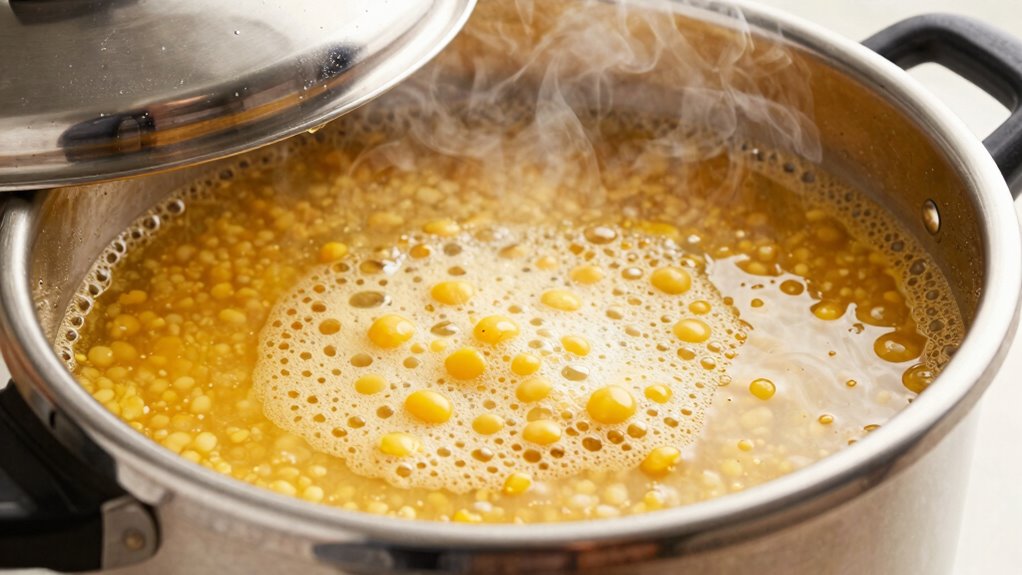
If you’re looking for natural ways to reduce dal foam during cooking, several simple techniques can help. First, try rinsing your dal thoroughly before cooking to remove excess starch. Second, adding a teaspoon of herbal remedies like cumin seeds or a small piece of ginger can help minimize foam naturally. Third, soaking the dal for 30 minutes before cooking reduces surface starch, decreasing foaming. Fourth, incorporating a splash of oil or a small amount of lemon juice during cooking can also help control foam. These cooking tips are effective and free from chemical additives. Using these natural remedies not only prevents foaming but also enhances the flavor and nutritional benefits of your dal. Give these methods a try for a cleaner, smoother cooking process.
What Should You Do If Your Dal Starts Foaming Over?

What should you do if your dal starts foaming over? First, stay calm and turn off the heat immediately to prevent a bigger mess or kitchen safety hazard. Carefully remove the pressure cooker from the stove and release any built-up pressure following your cooker’s safety guidelines. Once safe, open the lid slowly to avoid steam burns. To prevent future foaming over, add a little oil or ghee to reduce surface tension, or rinse the dal thoroughly before cooking. Keep an eye on the cooker while it’s working to catch signs of foaming early. These simple kitchen tips help you maintain safety during cooking and avoid dangerous spills. Always prioritize cooking safety, and don’t hesitate to adjust your methods to keep your kitchen safe and clean.
Frequently Asked Questions
Does the Age of Lentils Affect Their Foaming Behavior?
Yes, the age of lentils affects their foaming behavior. Older lentils, especially those with poor storage conditions, tend to produce more foam because they may have more surface starches and degraded proteins that create bubbles during cooking. Fresher lentils generally foam less, as proper storage preserves their natural composition. To minimize foaming, store lentils in airtight containers in a cool, dry place and use them within their recommended shelf life.
Can Adding Oil Prevent Dal From Foaming?
Adding oil can markedly reduce foam when cooking dal, preventing it from overflowing like a volcano about to erupt. Oil addition works by coating the surface of the lentils, which helps break the surface tension and suppress foam formation. For best foam reduction, stir in a small amount of oil before cooking. This simple trick keeps your pressure cooker clean and your cooking experience smooth and worry-free.
Does the Type of Pressure Cooker Influence Dal Foaming?
Yes, the type of pressure cooker influences dal foaming because different designs affect how pressure release occurs. A lid with a good vent or steam release valve helps control foam buildup, preventing overflows. If your cooker’s lid design restricts pressure release, foam can accumulate more easily, leading to spills. So, choosing a cooker with an efficient pressure release system can reduce foaming and make cooking safer and cleaner.
How Does Cooking Time Impact Dal Foam Formation?
Cooking time is like a ticking clock for dal foam formation. The longer you cook, the more the cooking temperature affects foam stabilization, leading to increased foam production. As the dal heats up, proteins and starches break down, creating bubbles that stabilize into foam. So, extended cooking times give foam more time to develop and stabilize, making it more noticeable. Keep an eye on your timing to control foam effectively.
Are There Specific Spices That Reduce Dal Foaming?
You can use specific spice combinations as foam reducers to minimize dal foaming. Spices like cumin, ginger, and turmeric help reduce foam formation when added to the cooking process. These foam reducers work by calming the surface tension of the dal, preventing excessive foaming. Incorporate these spices early in your cooking to achieve a smoother, less foamy dal, making your pressure cooker experience more manageable and enjoyable.
Conclusion
So, next time your dal refuses to stay calm and spills over, remember—it’s not just stubbornness, but the playful dance of starches and proteins. Ironically, the very ingredients that make your dal delicious also cause the chaos. Instead of blaming the pressure cooker, maybe it’s just trying to tell you it’s got a mind of its own. Embrace the foaming frenzy—after all, even your lentils love a little bit of drama.