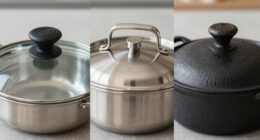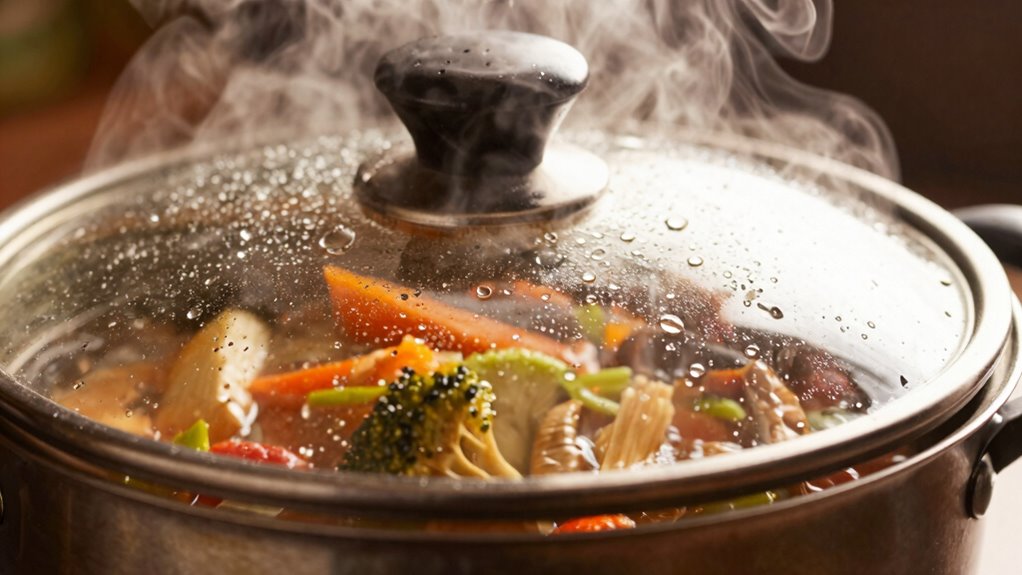
When you cover food while cooking, condensation creates a moist, self-basting environment that enhances flavor and keeps your dish juicy. The trapped steam condenses and drips back onto the ingredients, tenderizing and concentrating flavors. This process also locks in aroma and natural juices, making your food taste richer and more flavorful. To discover the secrets behind this magic, you’ll find how controlling moisture and condensation can elevate your cooking techniques.
Key Takeaways
- Covering traps steam inside, creating a self-basting environment that enhances moisture and flavor retention.
- Condensed steam reabsorbs into food, intensifying and deepening flavors.
- Moisture retention prevents drying, resulting in juicier, more tender dishes.
- Trapped volatile compounds preserve aroma and nutrients, boosting flavor richness.
- Proper lid use regulates condensation, preventing over-sogginess and ensuring balanced taste.

T-fal Specialty Nonstick Handy Pot with Glass Lid 3 Quart Oven Safe 350F Cookware, Pots and Pans, Dishwasher Safe Black
𝐄𝐧𝐣𝐨𝐲 𝐄𝐟𝐟𝐨𝐫𝐭𝐥𝐞𝐬𝐬 𝐂𝐨𝐨𝐤𝐢𝐧𝐠: Experience easy food release and cleanup thanks to our ProGlide Non-Stick interior. Cook with confidence…
As an affiliate, we earn on qualifying purchases.
As an affiliate, we earn on qualifying purchases.
What Is Condensation Cooking and How Does It Work?
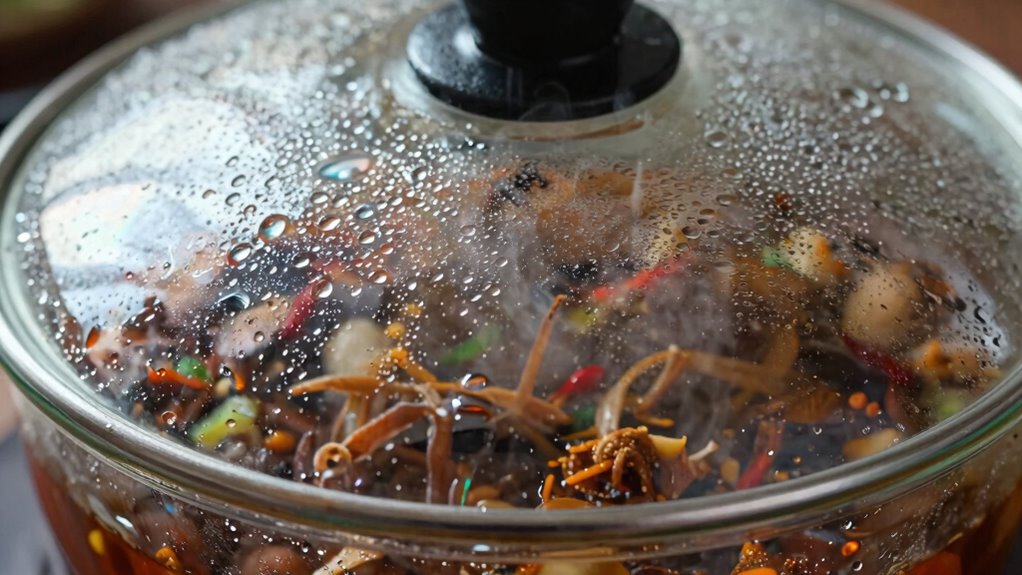
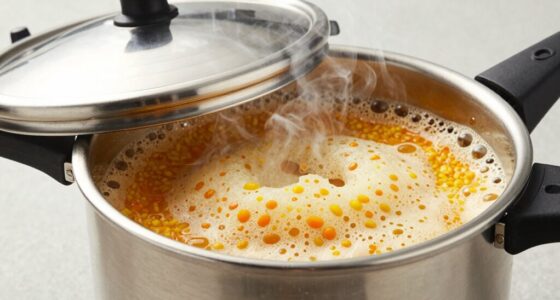
Have you ever wondered how condensation cooking transforms simple ingredients into flavorful dishes? It all starts with steam retention inside a covered pot or pan. When you cook with a lid, heat causes moisture from the food to turn into steam. Instead of escaping, this steam stays trapped, creating a humid environment. As it condenses back into water on the lid, it drips back onto the food, keeping it moist. This process not only prevents the food from drying out but also enhances flavors by allowing ingredients to meld more thoroughly. The continuous cycle of steam formation and condensation ensures your dish remains juicy and tender, all while intensifying its natural flavors. Understanding heat transfer is key to mastering the technique and achieving perfect results every time. Additionally, this process utilizes principles of moist heat cooking, which are essential for developing rich textures and deep flavors in many dishes. Recognizing how condensation contributes to even heat distribution can further improve your cooking outcomes. Properly managing humidity levels in cooking can help you control the texture and flavor of your dishes. Condensation cooking turns basic ingredients into rich, flavorful meals with minimal effort.

Sterline Large Universal Lid,Fits 8 -12 Inch Cookware,Tempered Glass Top with Steam Vent for Pots, Frying Pan,Stainless Steel Replacement Pot Lid for Kitchen Organizing, Space Saving
GRAB ONE SIZE FITS LARGE POTS SET – Sterline Stainless Steel Universal Large Lid is thoughtfully designed to…
As an affiliate, we earn on qualifying purchases.
As an affiliate, we earn on qualifying purchases.
How the Lid Creates a Juicier, More Flavorful Dish
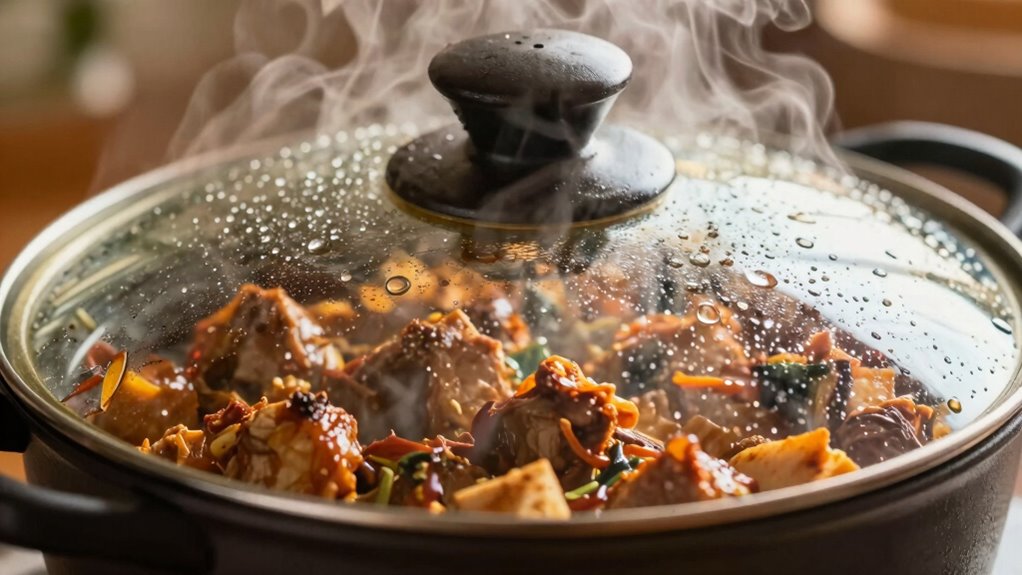
When you cover a pot or pan with a lid during cooking, you create a sealed environment that traps moisture and heat. This steam retention keeps liquids from escaping, ensuring your food stays moist. As the dish cooks, moisture from ingredients rises and condenses on the lid, then drips back into the pot, providing moisture preservation. This process prevents drying out and helps ingredients release their flavors fully. The contained environment also allows heat to circulate evenly, cooking your food more thoroughly. By maintaining consistent moisture levels, the lid makes your dishes juicier and more flavorful. Proper filtration of the steam and liquids also prevents impurities from affecting taste and quality. Additionally, the sealed environment helps to lock in aroma and nutrients, enhancing overall flavor. The condensation process plays a crucial role in developing complex flavors and tender textures in your dishes. Moreover, the temperature regulation facilitated by the lid helps prevent overcooking and preserves food integrity. Using a lid also promotes even heat distribution, which contributes to more uniform cooking outcomes. Overall, using a lid during cooking not only prevents loss of essential liquids but also enhances the taste and tenderness of your food.

Lodge 10-1/4-Inch Cast-Iron Lid
Seasoned with oil for a natural, easy-release finish that improves with use
As an affiliate, we earn on qualifying purchases.
As an affiliate, we earn on qualifying purchases.
How Condensation Boosts Flavor and Keeps Food Moist
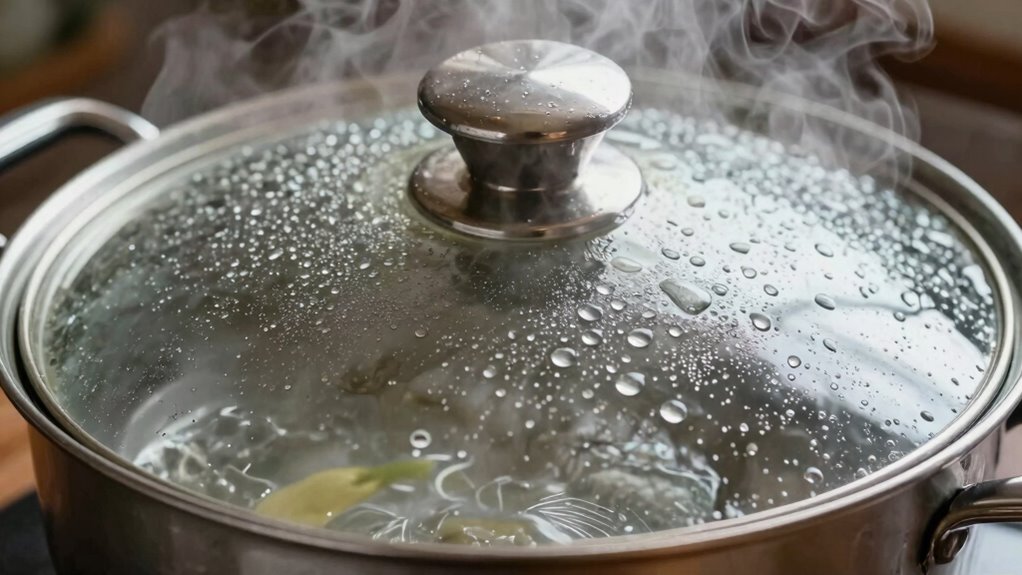
Ever wonder how condensation enhances the flavor and moisture of your dishes? When you cook with a lid, the steam that forms condenses back onto the food, creating a natural barrier that preserves moisture. This process allows flavors to intensify as juices stay sealed within, leading to better flavor enhancement. It also prevents the dish from drying out, keeping it tender and juicy.
Condensation keeps food moist, locking in flavors and preventing dryness for tender, flavorful dishes.
You can enjoy these benefits by:
- Locking in natural juices for richer taste
- Developing deeper, more concentrated flavors
- Maintaining moisture to avoid dryness

MAGNAWARE 14 Quart Cast Aluminum Stock Pot with Lid – Durable & Lightweight Soup Pot with Even Heat Distribution & Retention – Professional Cookware Stockpot with Silicone Handle Covers
Level Up Your Culinary Arsenal – Cook up a storm with Magnaware lightweight, rustproof aluminum stock pots! Made…
As an affiliate, we earn on qualifying purchases.
As an affiliate, we earn on qualifying purchases.
Covered vs. Uncovered: How Taste and Texture Change
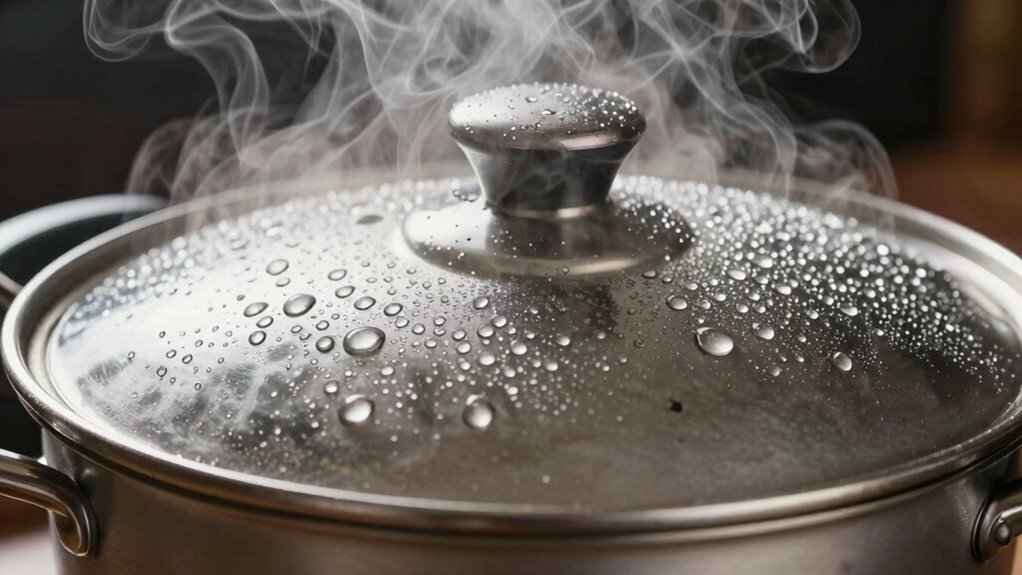
Choosing whether to cover your pot or leave it uncovered during cooking substantially impacts the final taste and texture of your dish. Covered cooking traps steam, which helps develop richer flavors through condensation, enhancing seasoning techniques. It results in more tender, moist textures, ideal for stews and braises. Uncovered cooking allows moisture to escape, concentrating flavors and creating a different mouthfeel. This method often produces a drier, more caramelized finish, perfect for dishes where texture matters, like roasting vegetables. Your plating presentation also benefits: covered dishes tend to look saucier and more cohesive, while uncovered dishes can showcase crispiness and color. Deciding whether to cover or uncover depends on your desired flavor profile and texture, directly influencing how your dish tastes and how it visually appeals. Additionally, understanding the Free Floating concept can help you optimize cooking techniques for better results. Incorporating smart kitchen appliances can also assist in maintaining consistent cooking conditions, ensuring optimal results every time. By mastering these techniques, you can better control the condensation process and tailor your dishes to achieve the perfect balance of flavor and texture. Recognizing the importance of cooking temperature can further help you adjust your methods for consistent outcomes. Using precise temperature control can help you fine-tune whether to cover or uncover for ideal results.
Foods That Benefit Most From Covering During Cooking
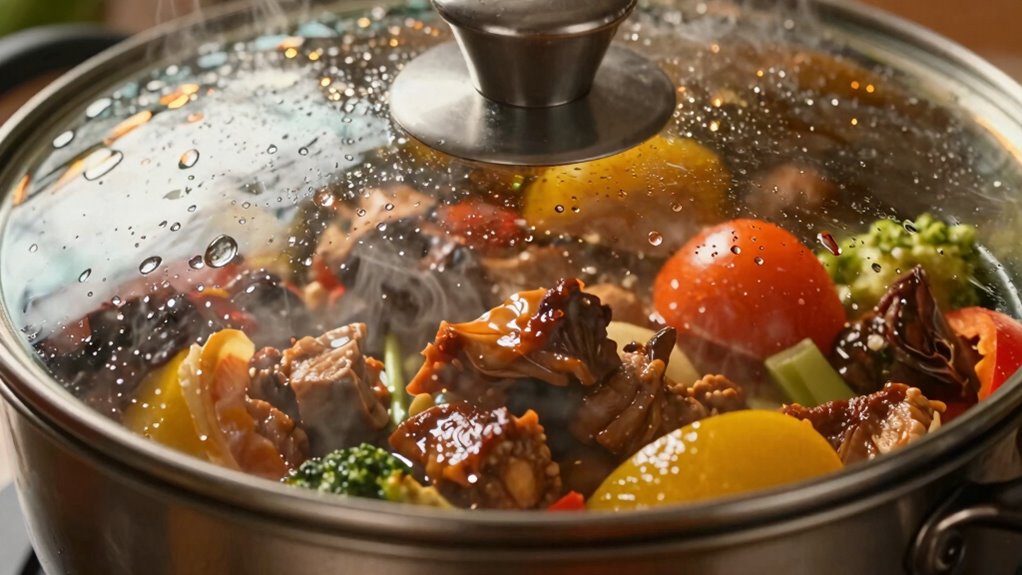
Certain foods benefit considerably from being covered during cooking because the lid traps steam and moisture, which helps achieve ideal tenderness and flavor development. Covering enhances flavor infusion by keeping herbs, spices, and juices close to the food. It also improves moisture retention, preventing drying out and ensuring juicy results. Foods that particularly benefit include:
Covering foods during cooking traps steam and moisture for tender, flavorful, and juicy results.
- Braised meats, which become tender and flavorful with retained moisture.
- Rice and grains, that cook evenly and absorb flavors better.
- Vegetables, such as greens and root vegetables, that stay moist and develop richer tastes. Using a lid creates a mini-steam environment, making sure your dishes stay moist and full of flavor. Covering these foods during cooking ensures you get tender, flavorful results every time, especially when controlling moisture levels is essential for optimal cooking. Incorporating cooking techniques like covering can significantly impact the final taste and texture of your dishes. Proper lid placement can also influence heat circulation, leading to more consistent cooking outcomes.
Easy Tips to Master Condensation Cooking at Home
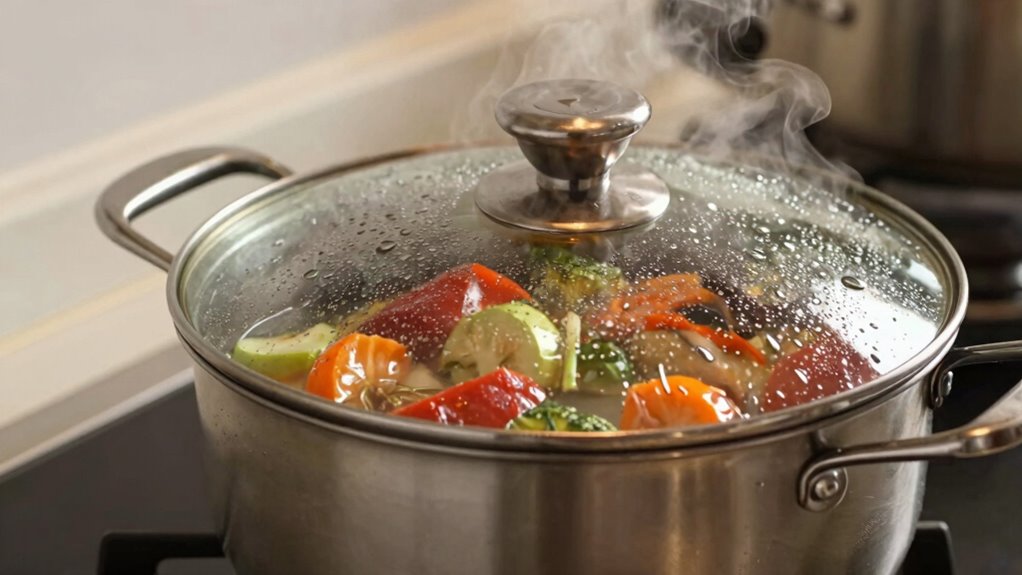
Mastering condensation cooking at home is easier than you might think with a few simple tips. First, use proper baking techniques by ensuring your lid fits snugly to trap moisture effectively. This creates the ideal environment for condensation, which enhances flavor and tenderness. Second, don’t hesitate to make ingredient substitutions to optimize moisture content—for example, swapping water for broth or adding a splash of wine for depth. Keep an eye on heat levels; moderate temperatures prevent excess evaporation and maintain consistent condensation. Also, monitor cooking times closely, as covered dishes tend to cook faster. Incorporating kitchen environment management into your setup can help you better observe temperature and moisture levels during cooking. Being mindful of moisture retention techniques ensures your dishes stay juicy and flavorful. With practice, these tips help you control moisture and develop rich, flavorful dishes, making condensation cooking a straightforward and rewarding technique to master at home.
Common Mistakes: Covering Too Much or Too Little
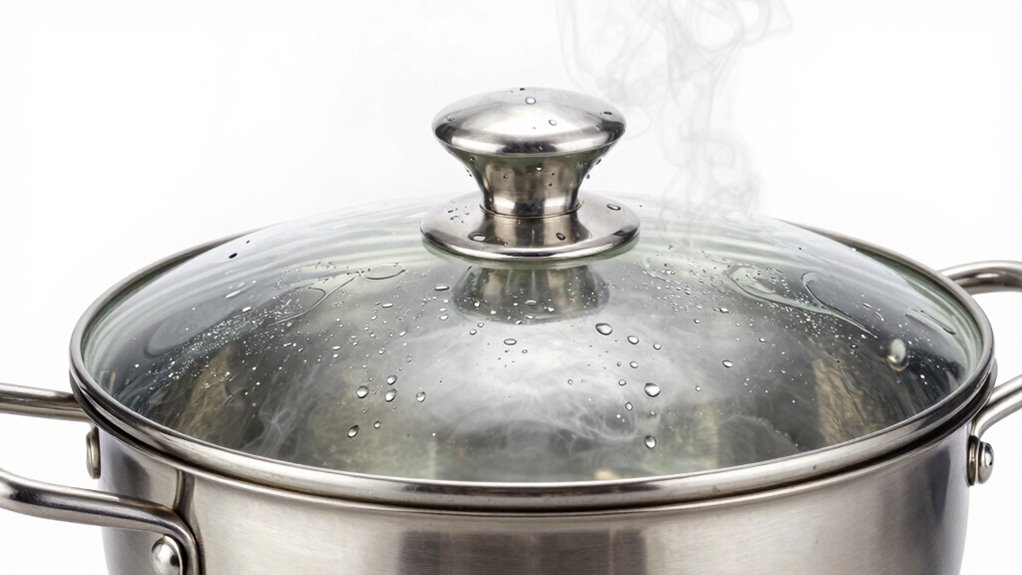
Finding the right balance when covering your cookware is essential; too much or too little can affect your cooking. Overcovering traps excess moisture, leading to soggy dishes or longer cooking times. Pay attention to your lid placement to avoid these common pitfalls and make certain of better results. Additionally, understanding electric power generation can help you communicate more effectively in informal settings, preventing misunderstandings that could impact your culinary experiences.
Proper Covering Balance
Have you ever noticed how the amount of coverage on your pot can make or break your condensation cooking? Achieving the proper covering balance is vital for ideal results. Using the right covering techniques helps regulate moisture levels, preventing food from drying out or becoming overly wet. Too much coverage traps too much steam, disrupting the moisture balance and leading to soggy dishes. Conversely, too little coverage allows moisture to escape, which can cause uneven cooking or dryness. To find the sweet spot, start with a loose-fitting lid or slightly ajar cover, then adjust based on the food’s needs. Keep an eye on the steam and condensation levels to ensure your food stays flavorful and tender. Mastering this balance ensures consistent, delicious results every time.
Risks of Overcovering
Overcovering your pot can substantially impact the outcome of your condensation cooking. Excess covering can trap too much moisture, leading to overly soggy food, while lid misuse might cause steam to escape or condense unevenly. When you use too much cover, you risk creating a sealed environment that prevents proper evaporation, affecting flavor and texture. Conversely, leaving the lid slightly ajar can help control moisture levels. Here’s a quick comparison:
| Covering Excess | Lid Misuse | Resulting Effect |
|---|---|---|
| Too much lid | Not sealing properly | Excess moisture, sogginess |
| Fully covered | Partially open | Uneven condensation, flavor loss |
| Tight lid | Loose or crooked lid | Spills, inconsistent steaming |
Avoid these mistakes by adjusting your cover appropriately to optimize condensation and flavor.
The Science of Steam and Flavor Development Explained
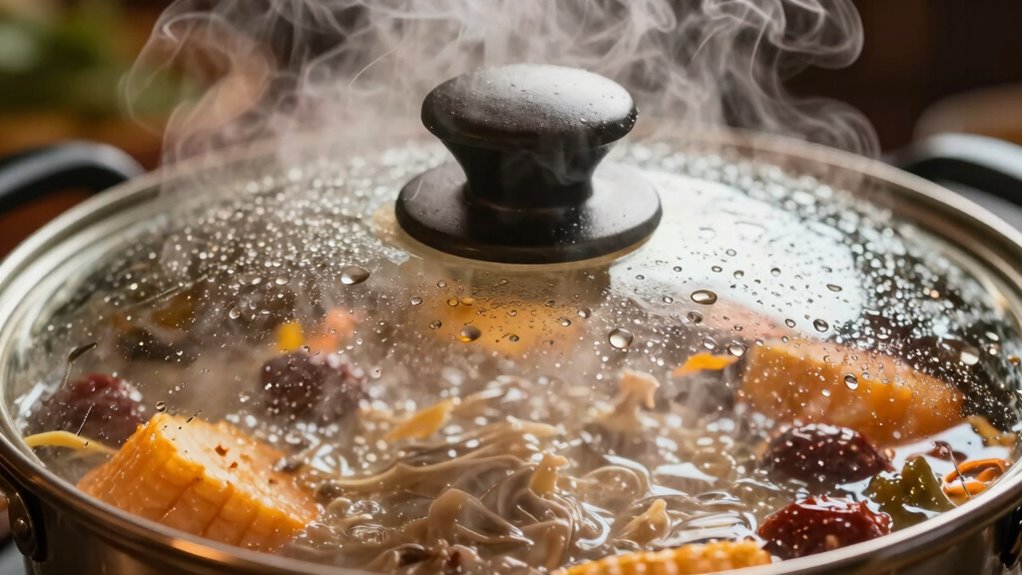
Steam helps cook food evenly and tenderizes ingredients by transferring heat efficiently. As it rises, it concentrates flavors, making dishes more intense. Covering your food affects how much steam stays inside, shaping both texture and taste.
Steam’s Role in Cooking
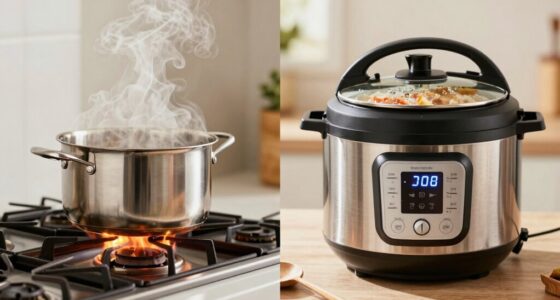
When you cook with steam, you harness the power of moisture to transform ingredients at a molecular level. Steam evenly transfers heat, tenderizing proteins and softening fibers, which enhances flavor and texture. Unlike sous vide, which uses precise temperature control, steam relies on high heat to rapidly cook and develop moisture within food. Pressure cooking, on the other hand, traps steam under high pressure, boosting temperature and speeding up cooking. This method intensifies flavors and preserves nutrients while preventing moisture loss. Steam also facilitates the release of natural juices, enriching the dish’s taste. By covering food, condensation creates a self-basting environment, ensuring ingredients stay moist and flavorful throughout the cooking process.
- Moisture transfer accelerates tenderization
- Even heat distribution enhances flavor development
- Trapped steam heightens aroma and juiciness
Flavor Concentration Mechanisms
Have you ever noticed how dishes seem more flavorful after steaming? This is due to flavor concentration mechanisms happening during the process. When you cover food, steam traps volatile compounds, causing them to reabsorb into the ingredients instead of escaping. This intensifies flavors, making each bite richer. Proper seasoning techniques also play a role; adding spices early allows their oils to infuse thoroughly. If you’re ingredient substituting, choose those with strong natural flavors to maximize taste. Covering food prevents flavor loss, concentrating the natural juices and seasonings. As moisture condenses, it redistributes flavors evenly, enhancing overall taste. Understanding these mechanisms helps you manipulate cooking methods to boost flavor, ensuring that your dishes are not only tender but also deeply flavorful.
Effects of Covering Food
Covering food during cooking creates a sealed environment that traps heat and moisture, which in turn influences how flavors develop. This process enhances ingredient interactions, allowing flavors to meld more thoroughly. It also intensifies seasoning techniques by preventing moisture loss, making spices and herbs more effective. As steam circulates, it helps break down tougher ingredients and distributes heat evenly. The trapped moisture can create a subtle condensation that keeps food moist and tender, enriching the overall taste.
- Improves flavor blending through better ingredient interactions
- Amplifies seasoning effectiveness by retaining moisture
- Creates a moist environment that boosts tenderness and flavor depth
When to Cover Up and When to Leave Food Uncovered
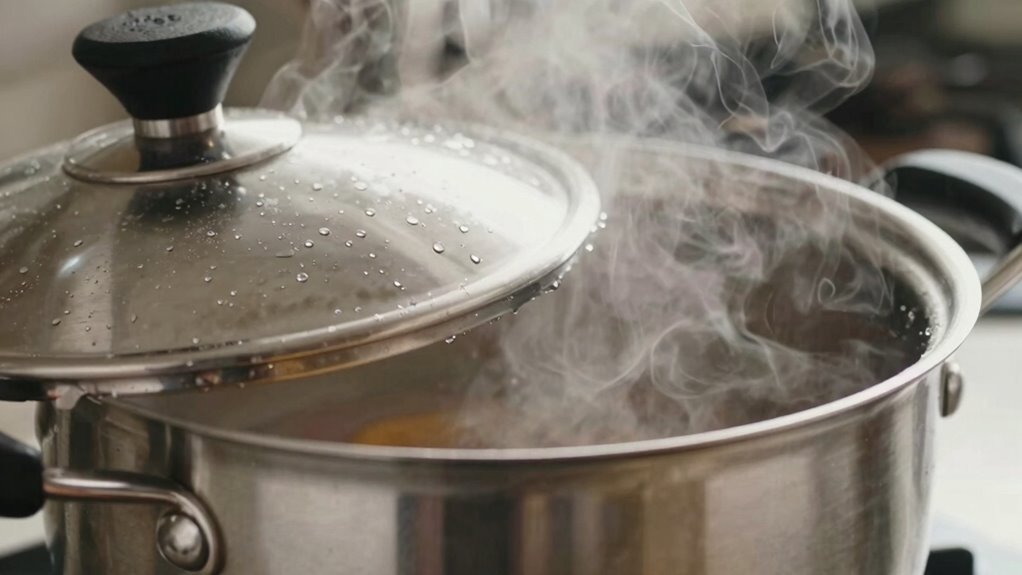
Knowing when to cover your food and when to leave it uncovered is key to successful condensation cooking. You’ll want to cover dishes when you seek steam retention, which helps tenderize ingredients and lock in moisture. Using the lid traps the steam, intensifying flavors and creating a moist environment. On the other hand, leave food uncovered when you want to reduce moisture or develop a crispy top. The lid’s impact in this case is to prevent excess condensation from building up, allowing excess liquid to evaporate. Pay attention to your recipe’s goal: if you need more moisture, cover; if you want a drier or crispier result, leave it uncovered. Mastering this balance guarantees your dishes taste just right, with the desired texture and flavor.
Frequently Asked Questions
Does Condensation Cooking Save Energy in the Kitchen?
Yes, condensation cooking can save energy in your kitchen. By trapping steam and recycling heat, it enhances energy efficiency, so you use less power overall. This method not only reduces your energy consumption but also lowers the environmental impact by cutting down on energy waste. You’ll find your dishes cook faster and more evenly, making it a practical choice for eco-conscious cooking and saving you money on utility bills.
Can Condensation Cooking Be Used for All Types of Recipes?
You can’t use condensation cooking for all recipes, but it works well for many, especially those needing moisture and flavor retention. This alternative cooking method excels with dishes like stews, braises, and steamed vegetables. However, it may not be suitable for recipes requiring crisp textures or dry heat. Experiment with different dishes to see how condensation cooking enhances flavors, but keep in mind its limitations for certain culinary techniques.
How Does Altitude Affect Condensation Cooking Results?
Altitude effects can greatly influence condensation cooking results. As you cook at higher elevations, the reduced air pressure causes water to evaporate faster, affecting moisture retention and cooking times. You’ll need to make cooking adjustments, like increasing liquid amounts or extending cooking durations, to guarantee your covered dishes turn out tender and flavorful. Pay close attention to these altitude effects to achieve the best results with condensation cooking.
Are There Safety Concerns When Using Lids During Boiling?
Using lids during boiling is generally safe if you follow proper lid safety and boiling hazards precautions. Always make sure the lid fits securely to prevent hot steam from escaping suddenly, which can cause burns. Never force a lid on or off when the liquid is boiling, and keep the lid slightly ajar if necessary to release steam safely. Being cautious helps avoid boiling hazards and keeps your cooking safe.
What Materials Are Best for Lids in Condensation Cooking?
You should choose lid materials that maximize condensation efficiency, like glass or metal. Glass lids let you see inside without lifting, reducing heat loss, while metal lids are durable and heat-conductive. Both materials help trap moisture, enhancing condensation and flavor. Avoid lids made of porous or non-heat-resistant materials. Selecting the right lid material guarantees your condensation cooking is efficient, flavorful, and safe, giving you better control over your cooking process.
Conclusion
By understanding how condensation cooking works, you can turn your kitchen into a flavor lab. Covering your food is like giving it a cozy blanket, locking in moisture and intensifying taste. When you master when to cover and uncover, every dish becomes a delicious masterpiece. Think of it as nurturing your food’s soul—making each bite as satisfying as a warm hug on a cold day. So, get cooking and let your flavors shine!