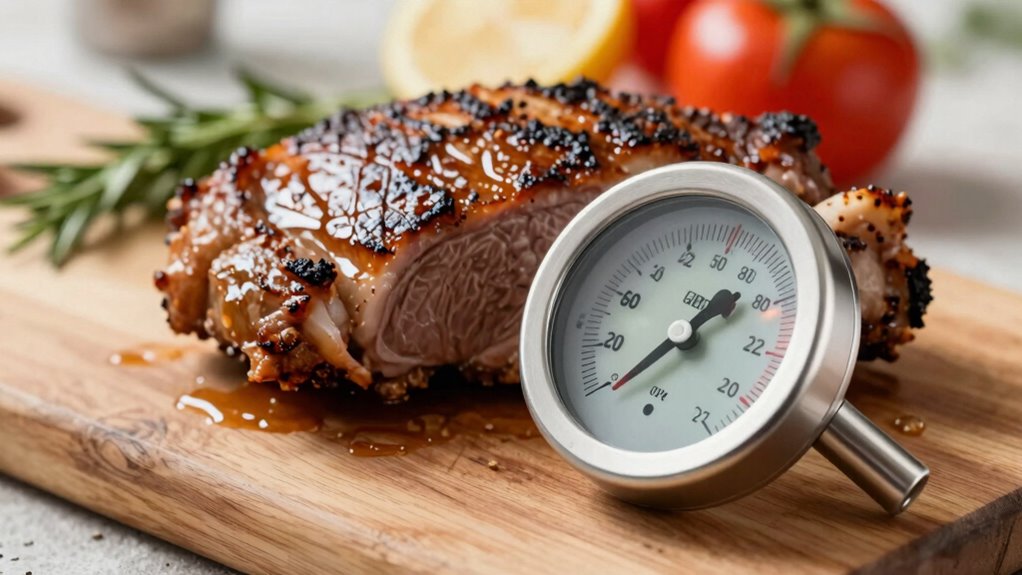

To keep your meats safe, aim for the right internal temperatures: 165°F for poultry, 160°F for ground meats, and 145°F for whole cuts like beef, veal, or pork, with a resting time often required. Use a reliable meat thermometer, insert it into the thickest part, and recheck after resting. Mastering these basics will help you cook confidently—continue to explore for simple tips to perfect your meat every time.
Key Takeaways
- Use a reliable meat thermometer to check internal temperatures accurately for safe meat consumption.
- Remember poultry needs 165°F, while whole cuts like beef or pork require 145°F plus rest.
- Insert the thermometer into the thickest part, avoiding bones and fat for precise readings.
- Rest cooked meat for several minutes to allow temperature to stabilize and juices to distribute safely.
- Calibrate your thermometer regularly to ensure consistent, accurate temperature measurements.

Alpha Grillers Meat Thermometer Digital – Instant Read Food Thermometer for Cooking & Grilling – Professional Kitchen Gift for Men, Dad & Mom
Instant Read Food Thermometer | Our instant read thermometer features a temperature probe and advanced, highly accurate technology…
As an affiliate, we earn on qualifying purchases.
As an affiliate, we earn on qualifying purchases.
What Are the Safe Internal Temperatures for Different Meats?
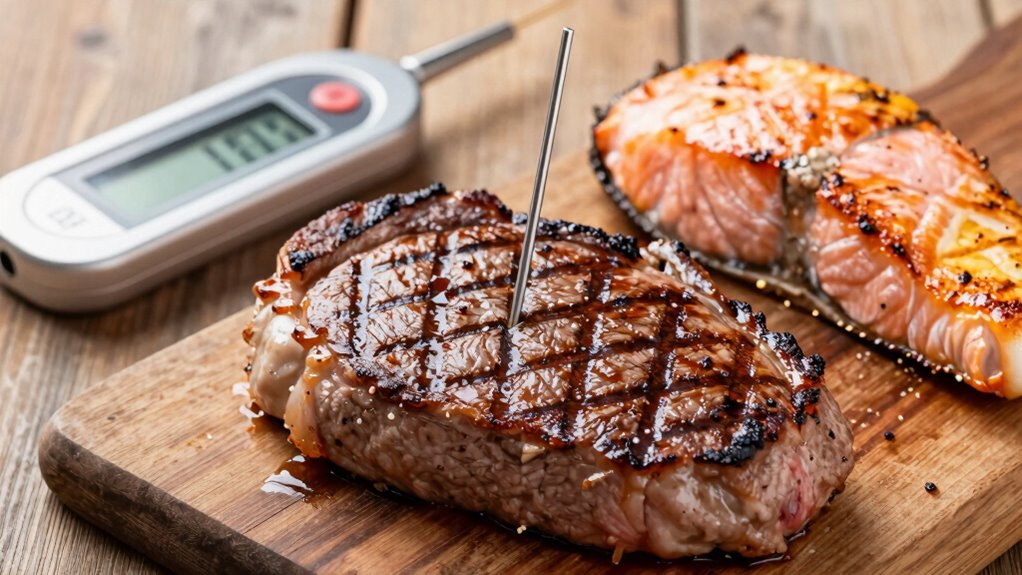
Knowing the safe internal temperatures for different meats is essential to guarantee they are cooked properly and safe to eat. Meat safety depends on reaching specific internal temperatures, which you can find on reliable temperature charts. For poultry like chicken and turkey, cook to at least 165°F (74°C) to kill bacteria. Ground meats, including beef and pork, should reach 160°F (71°C). Whole cuts of beef, lamb, or veal can be safely eaten at 145°F (63°C) with a three-minute rest. Pork should be cooked to 145°F (63°C) with a resting period. Fish is safe at 145°F (63°C). Always refer to trusted temperature charts to guarantee you meet these guidelines, reducing foodborne illness risks and maintaining meat safety. Proper cooking temperatures are crucial for ensuring both safety and quality in meat preparation. Additionally, meat thermometers help ensure accuracy and consistency when checking internal temperatures. Proper calibration of cooking devices ensures your readings are accurate and reliable.
Alpha Grillers Meat Thermometer Digital – Instant Read Food Thermometer for Cooking & Grilling – Professional Kitchen Gift for Men, Dad & Mom
Instant Read Food Thermometer | Our instant read thermometer features a temperature probe and advanced, highly accurate technology…
As an affiliate, we earn on qualifying purchases.
As an affiliate, we earn on qualifying purchases.
How to Use a Meat Thermometer Correctly (And Get Accurate Readings)
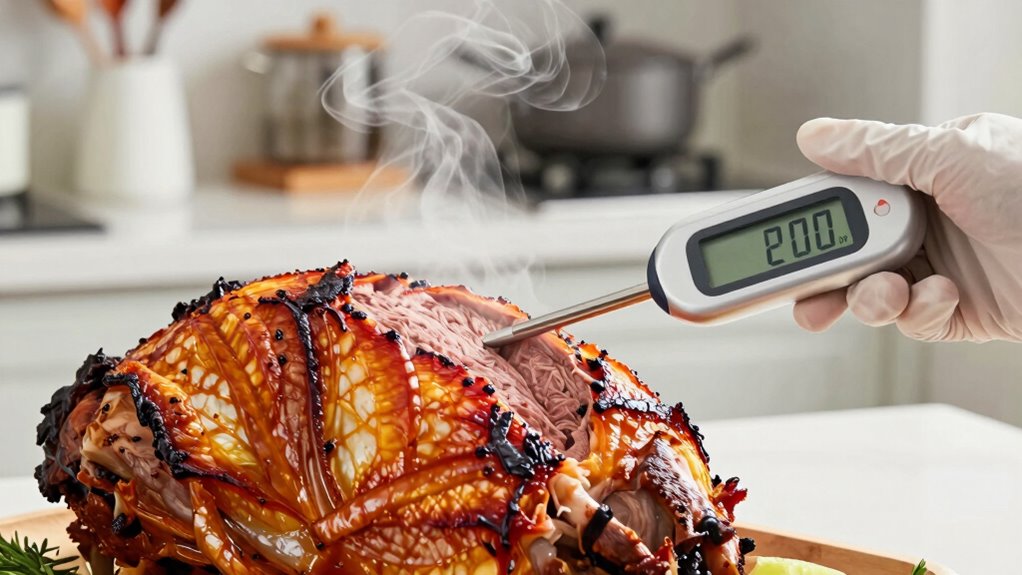
To guarantee your meat reaches the correct internal temperature, using a meat thermometer accurately is essential. Insert the probe into the thickest part of the meat, avoiding bones or fat, for precise readings. Wait a few seconds until the display stabilizes before checking. Remember, different cooking techniques affect meat texture, so monitor temperatures accordingly. For best results, calibrate your thermometer regularly and avoid opening the oven repeatedly, which can cause temperature fluctuations. To improve your method, consider these tips:
| Tip | Explanation |
|---|---|
| Insert Properly | Ensure the probe reaches the center of the meat |
| Wait for Stability | Wait a few seconds for an accurate reading |
| Calibrate Regularly | Keep your thermometer accurate over time |
| Use Correct Technique | Adjust cooking based on meat type and desired texture |
Being aware of internal temperature guidelines helps prevent undercooking or overcooking. Additionally, understanding the proper thermometer usage ensures consistent and safe results. Regularly checking and maintaining your thermometer can help ensure accuracy, especially when dealing with temperature-sensitive processes or other investments. Mastering proper thermometer use assures safe, tasty results every time.
Alpha Grillers Meat Thermometer Digital – Instant Read Food Thermometer for Cooking & Grilling – Professional Kitchen Gift for Men, Dad & Mom
Instant Read Food Thermometer | Our instant read thermometer features a temperature probe and advanced, highly accurate technology…
As an affiliate, we earn on qualifying purchases.
As an affiliate, we earn on qualifying purchases.
Myths Busting: Common Misconceptions About Meat Temperatures
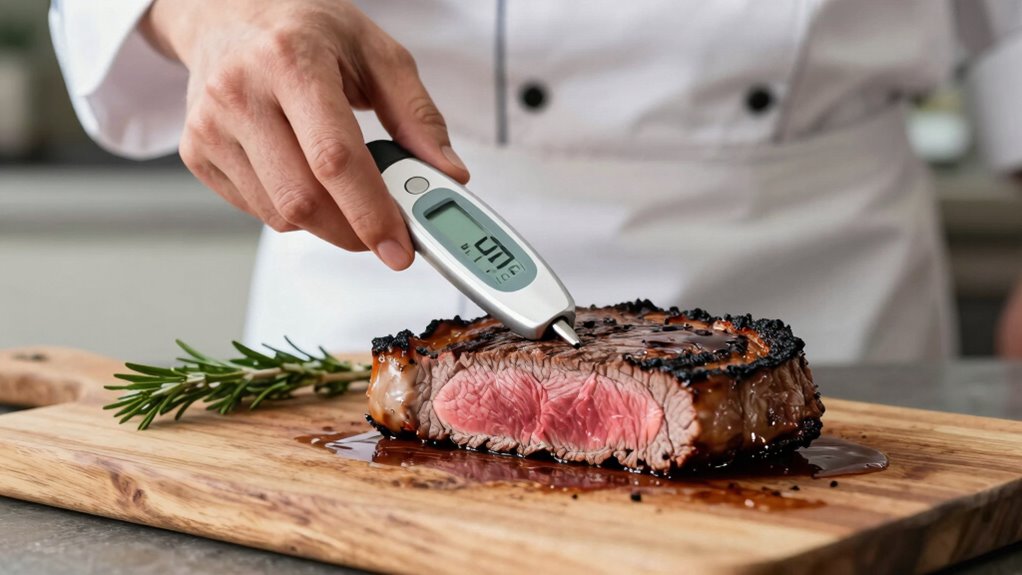
Many people believe that the color of meat indicates doneness, but that’s not always true. You might think a perfectly cooked steak is well-done based on texture, yet the internal temperature could still be undercooked. Understanding the difference between temperature and texture helps you cook meat safely and to your preference.
Misconceptions About Doneness
Misconceptions about meat doneness often lead people to overcook or undercook their food, risking safety or sacrificing quality. Many fall for cooking myths, like believing that meat must always be cooked to well-done to be safe. These temperature myths can cause unnecessary dryness or loss of tenderness. In reality, safe internal temperatures vary by meat type, and many cuts are perfectly safe at lower temps than commonly thought. For example, steak can be safely enjoyed medium-rare if it reaches the right internal temperature, debunking the myth that all meats must be cooked thoroughly. Understanding these facts helps you avoid overcooking while ensuring safety. Proper temperature measurement is essential for confirming doneness and safety, aligning with the scientific standards of food safety guidelines. Busting these myths empowers you to cook meat to the ideal doneness without panic or guesswork.
Temperature Versus Texture
Understanding the relationship between temperature and texture is key to achieving your preferred meat doneness without sacrificing quality. Many believe that once meat hits a certain temperature, its texture remains the same, but texture differences actually develop as internal temperatures rise. As meat cooks, proteins denature, and moisture loss affects tenderness, shaping sensory perceptions of doneness. For example, a steak at medium rare feels tender and juicy, while the same cut cooked to well-done becomes firm and drier. These texture changes are directly tied to temperature but aren’t always reflected visually or through time alone. Recognizing how temperature influences texture helps you cook meat to your ideal doneness, ensuring best sensory experiences without overcooking or undercooking. Forsale 100

Meat Temperature Chart Magnet (5 x 7.6 in) – Meat Temp Magnet – Steak Temperature Chart -Internal Cooking Temps for Steak, Chicken, Pork, Beef, Turkey
Effortless Meat Cooking: Our meat temperature chart provides a quick reference for safe cooking temperatures for beef, pork,…
As an affiliate, we earn on qualifying purchases.
As an affiliate, we earn on qualifying purchases.
Tips for Cooking Meat Perfectly Without Guesswork
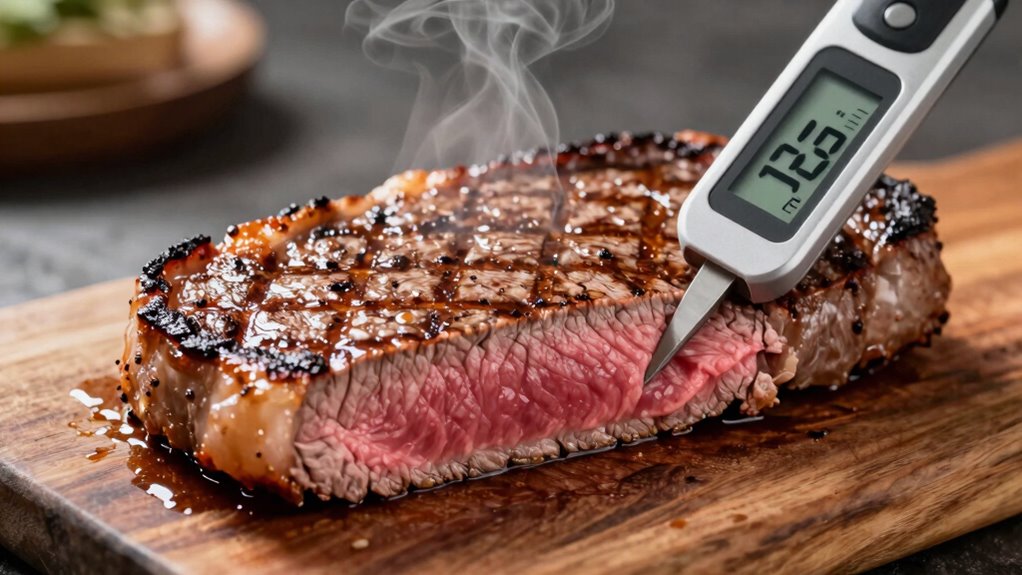
To cook meat perfectly without guesswork, using a reliable meat thermometer is essential. It takes the uncertainty out of achieving the right doneness. First, choose quality meat from trusted sources to ensure freshness and safety. Second, master grilling techniques like proper heat control and timing to prevent overcooking. Third, always preheat your grill to create an even cooking surface. Fourth, monitor internal temperatures regularly, adjusting heat as needed. This approach helps avoid guesswork and guarantees safe, perfectly cooked meat. Keep in mind that sourcing high-quality meat makes a difference in flavor and texture. Incorporating temperature monitoring tools can help automate temperature checks for even more precision. Using a whole-house water filtration system can also improve overall food quality by reducing contaminants during food prep. Combining good grilling practices with precise temperature checks ensures your meat is cooked to perfection every time, without panic or uncertainty. Understanding safe cooking temperatures can further reinforce your confidence and prevent foodborne illness.
When and How to Rest Your Meat for Best Results
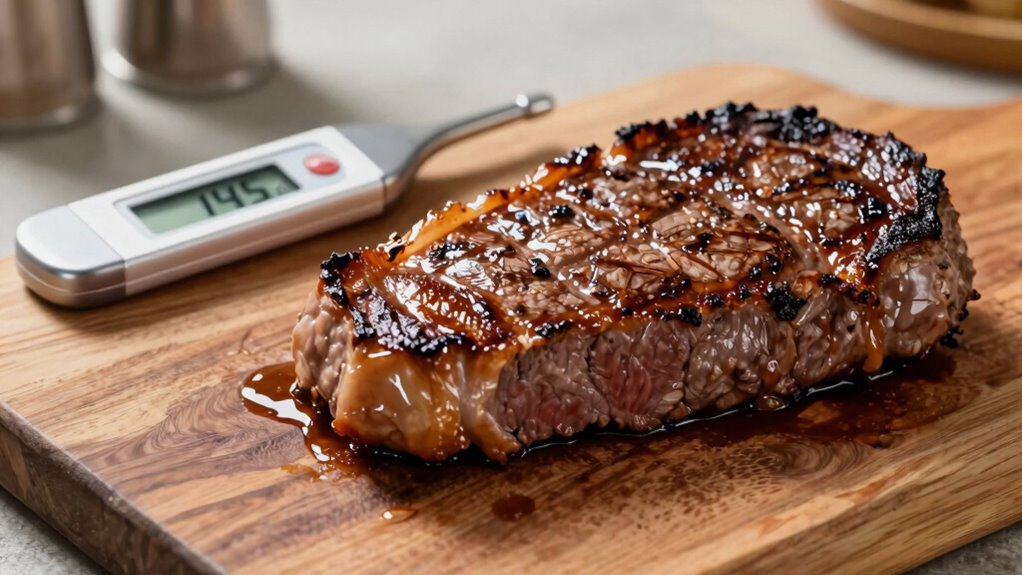
Knowing when and how to let your meat rest is essential for locking in juices and achieving the best texture. After removing it from heat, let your meat rest for about 5 to 15 minutes, depending on size. During this resting time, carryover cooking continues, causing the internal temperature to rise slightly, which helps ensure your meat reaches the perfect doneness. Resting allows juices to redistribute throughout the meat, preventing them from spilling out when you cut into it. Covering the meat loosely with foil during resting can help maintain warmth without trapping excess moisture. Remember, the longer the resting time, the more evenly your meat will be cooked and juicy. Proper resting is a simple step that makes a significant difference in the final result. Understanding carryover cooking is key to timing your resting period effectively. Additionally, being aware of your safe internal temperature ensures your meat is both delicious and safe to eat. Adequate resting time also helps to prevent overcooking, ensuring your meat remains tender and flavorful.
Memory Tricks to Remember Safe Temperatures and Boost Confidence
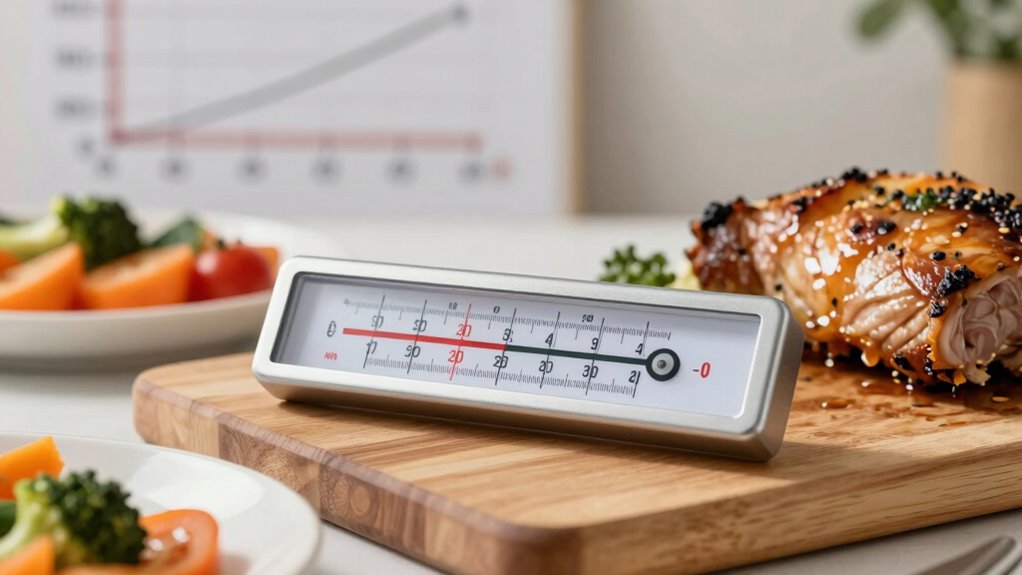
Memorizing safe internal temperatures can feel intimidating, but using simple memory tricks makes it easier and boosts your confidence in cooking meat safely. Mnemonic devices and memory aids are your friends here. Try these techniques:
- Associate the temperature with a familiar number or phrase, like “165°F is the ‘hot’ number for poultry.”
- Create a rhyme or acronym, such as “T-Bone’s Tasty, 145°F” for steak.
- Use visual cues, like imagining a thermometer rising to the target temp.
- Connect temperatures to everyday items, like “160°F is the point where beef is fully cooked, just like a well-done burger.”
- Remember that internal temperature accuracy is crucial for food safety and is easier to achieve with these memory tricks. Additionally, understanding proper cooking temperatures can help prevent foodborne illnesses and ensure your meals are safe to eat.
These tricks make recalling safe temperatures quick and effortless, reducing anxiety and increasing confidence in your cooking.
Troubleshooting: What to Do if Your Meat Isn’t at the Right Temp?
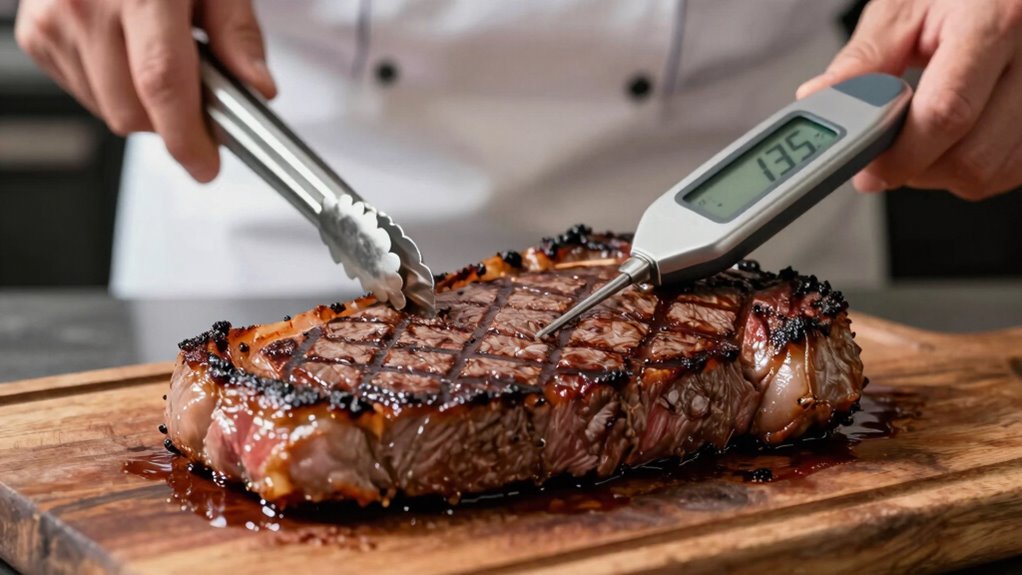
If your meat isn’t at the right temperature, start by verifying it with a reliable thermometer. If it’s still undercooked, try adjusting the cooking time or technique, and remember to let the meat rest before rechecking the temperature. These steps help guarantee your meat is safe and perfectly cooked. Additionally, consider using proper cooking tools to ensure accurate temperature readings.
Verify With a Thermometer
Using a reliable thermometer is the most accurate way to guarantee your meat has reached the proper internal temperature. First, verify your thermometer is properly calibrated for accurate readings. Next, confirm the meat’s freshness, since older meat can affect temperature targets. Insert the thermometer into the thickest part of the meat, avoiding bones or fat. Finally, check the reading, making sure it matches the recommended internal temperature for the type of meat you’re cooking. If the temperature is off, recalibrate your thermometer and recheck. Remember, meat freshness and proper thermometer calibration are key to safe, perfectly cooked meat. Using these steps helps prevent undercooking or overcooking, giving you confidence in your results every time. Proper thermometer calibration is essential for accurate readings and safe cooking outcomes.
Adjust Cooking Time
When your meat isn’t reaching the desired internal temperature despite following proper cooking procedures, modifying cooking time can help. Variations in internal temperature often stem from factors like meat size, oven accuracy, or initial temperature. To manage this, consider these cooking time adjustments:
| Meat Type | Typical Adjustment | Notes |
|---|---|---|
| Chicken breasts | Add 5-10 minutes | Larger or thicker pieces |
| Beef steaks | Extend 2-5 minutes | For denser cuts |
| Pork tenderloin | Increase 5-8 minutes | Ensure even cooking |
Rest Before Rechecking
After removing the meat from the heat, letting it rest for a few minutes allows the internal juices to redistribute, which can cause the temperature to rise slightly. This resting period is vital for accurate temperature recovery, preventing you from overcooking or undercooking. During this time:
- Avoid slicing immediately to allow the temperature to settle.
- Use a meat thermometer to recheck the internal temp after resting.
- Remember that the temperature may increase by 5°F to 10°F during resting.
- Trust the rest time to give the meat a more accurate reading and ensure safe, proper doneness.
- Incorporate meat resting techniques to ensure your cooked meat reaches the ideal temperature and texture.
Frequently Asked Questions
Can Safe Internal Temperatures Vary Between Different Cuts of the Same Meat?
Yes, safe internal temperatures can vary between different meat cuts because of cut variation. Different cuts of meat have different textures and fat content, which influence how they cook and what temperature is reliable. For example, tougher cuts may require higher temperatures to break down connective tissue, while tender cuts can be safely cooked to lower temperatures. Always check specific guidelines for each meat cut to ensure safety and quality.
How Does Altitude Affect Meat Cooking Temperatures and Safety?
Imagine trying to boil water at high altitude—it’s harder because boiling points drop. Similarly, altitude affects meat cooking temperatures and safety, requiring adjustments. When you cook at higher elevations, you need to increase internal temperatures slightly to guarantee harmful bacteria are killed. Altitude adjustments are vital for cooking safety, so use a reliable thermometer and follow recommended guidelines to keep your meat safe and delicious, no matter where you are.
Are There Alternative Methods to Verify Meat Safety Besides a Thermometer?
Yes, you can verify meat safety using visual cues and texture testing. Look for clear juices and no pink color in poultry, and confirm beef is firm and no longer sticky. Press the meat to check its firmness; it should feel springy but not overly soft. While these methods help, they aren’t foolproof, so using a thermometer remains the most reliable way to guarantee safe internal temperatures.
What Are the Risks of Undercooking or Overcooking Meat?
Cooking meat is like walking a tightrope—too little, and food safety suffers; too much, and you lose flavor and texture. Undercooking risks foodborne illnesses, while overcooking ruins tenderness and nutrients. Precise cooking temperatures guarantee safety and quality, safeguarding you from health hazards. By mastering cooking precision, you confidently serve delicious, safe meat every time, turning a potentially risky task into a culinary triumph that keeps everyone healthy and happy.
How Long Can Cooked Meat Safely Sit Out Before It Becomes Unsafe?
You should not leave cooked meat out for more than two hours, as bacteria can grow rapidly and compromise meat preservation. After that, it becomes unsafe to eat. To guarantee safety, use proper cooking techniques to reach safe internal temperatures, and if you need to store leftovers, refrigerate promptly. Keeping track of time and temperature helps prevent foodborne illnesses and maintains the quality of your cooked meat.
Conclusion
So, next time you’re tempted to rely on your instincts or a vague touch, remember—your meat’s safety isn’t a gamble. With a reliable thermometer, those perfect, juicy steaks become less of a risk and more of a reward. Ironically, trusting your intuition might leave you guessing—and wishing you’d checked that internal temperature. So, embrace the numbers; they’re your best shot at a deliciously safe, worry-free meal.