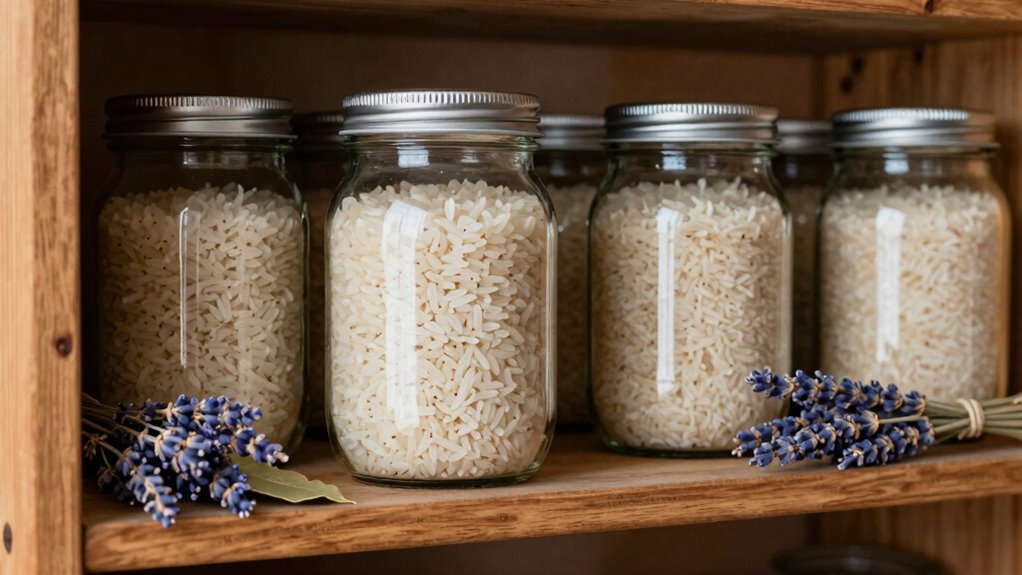

To keep bugs out of rice without chemicals, store it in airtight, food-safe containers like glass or stainless steel that are properly sealed. Keep the storage environment cool, dry, and at a consistent temperature to slow pest activity. Use natural repellents such as bay leaves or dried lavender inside the containers to deter bugs. Regularly check for signs of infestation and maintain cleanliness. Discover more tips to protect your rice naturally and effectively.
Key Takeaways
- Store rice in airtight, food-safe containers like glass, stainless steel, or durable plastic to prevent pest entry.
- Keep storage areas cool (50°F-60°F) and dry, using desiccants and proper ventilation to deter bugs.
- Incorporate natural repellents such as bay leaves, lavender, or dried herbs inside containers for pest prevention.
- Regularly inspect stored rice and clean storage areas with vinegar solutions to detect and deter pests early.
- Maintain proper storage conditions and avoid high humidity and temperature fluctuations to disrupt pest lifecycle naturally.
Why Proper Rice Storage Matters for Freshness and Pest Prevention
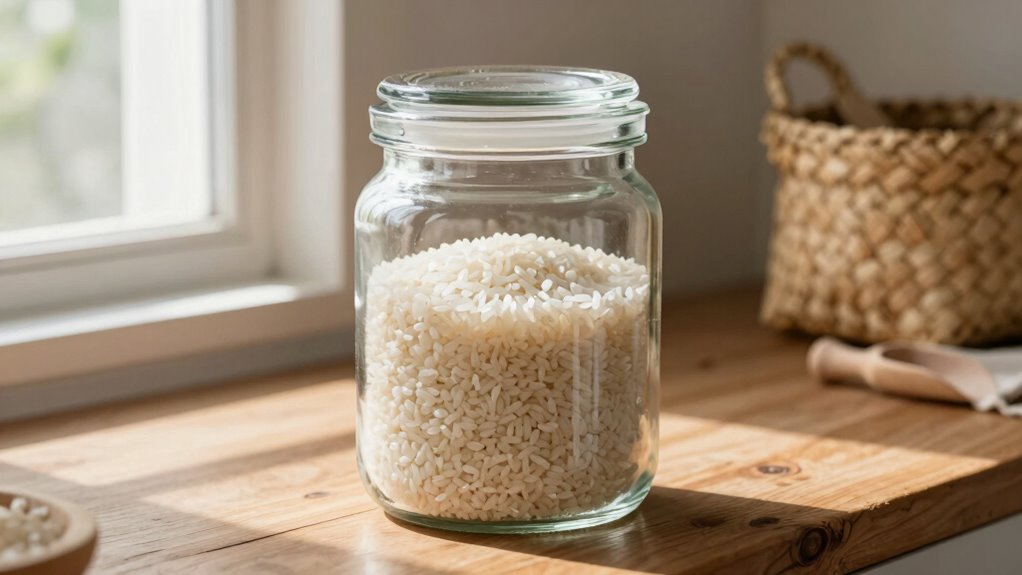
Proper rice storage is essential to keep your rice fresh and prevent pests from taking over. When rice moisture levels are too high, it creates an ideal environment for pests to thrive, accelerating their lifecycle. Maintaining the right moisture helps keep rice dry and less appealing to bugs like weevils and beetles. If rice is stored improperly, pests can quickly establish themselves, reproduce, and spread, making infestation difficult to control. Proper storage conditions slow down pest activity and protect your rice’s quality. By controlling rice moisture, you disrupt the pest lifecycle, reducing the chances of bugs contaminating your supply. Additionally, understanding the contrast ratio of your storage environment can help you maintain optimal conditions for rice preservation. Good storage practices also involve creating a healthy home environment, which can further deter pests from invading your stored food. Implementing proper humidity control measures is crucial for maintaining the ideal environment. Ultimately, good storage practices preserve freshness and save you from the hassle of pest infestations that spoil your rice and compromise its safety.
How Temperature and Humidity Affect Rice Storage and Pest Control
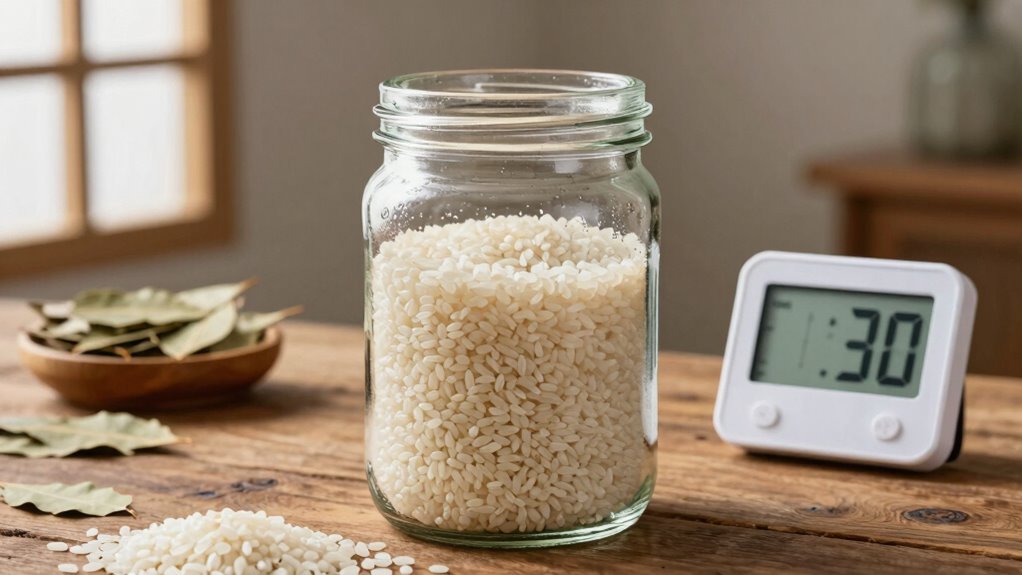
Maintaining the right temperature and humidity levels is vital for keeping your rice fresh and pest-free. When temperatures stay within the ideal range, pests struggle to survive and reproduce, while high humidity can encourage mold growth. By controlling these factors, you can effectively manage pest lifecycles and protect your rice store. Implementing proper storage solutions that monitor environmental conditions can further enhance pest prevention efforts. Additionally, understanding how biological factors influence pest activity can help in developing more effective, eco-friendly pest control strategies. Recognizing pest behavior patterns in relation to environmental conditions allows for targeted interventions that reduce reliance on chemicals. Moreover, applying insights from personality assessments can assist in tailoring pest management approaches to specific storage environments, optimizing outcomes with minimal chemical use.
Optimal Temperature Range
Have you ever wondered how temperature and humidity influence the quality and safety of stored rice? Maintaining an essential storage temperature is vital to prevent pest growth and spoilage. Ideally, keep your rice between 50°F and 60°F (10°C to 15°C), as higher temperatures can increase grain moisture, creating a breeding ground for insects and mold. Too cold, and rice may become brittle, risking damage during handling. Consistent storage temperature helps preserve grain moisture at safe levels, reducing the risk of pest infestation. Avoid fluctuations that can cause condensation or moisture buildup, which compromise rice quality. By controlling the temperature within this range, you create an environment that discourages pests while maintaining rice freshness and safety without chemicals. Proper storage conditions play a crucial role in maintaining rice quality and preventing pest issues. Additionally, monitoring storage environment with simple tools like thermometers and hygrometers can help maintain these ideal conditions effectively. Regularly checking grain moisture content ensures that rice remains at optimal humidity levels, further reducing the risk of mold and pests. Maintaining consistent temperature and humidity levels also reduces the likelihood of mold development, further safeguarding your rice and preventing infestation.
Controlling Humidity Levels
Controlling humidity levels is essential because excess moisture can lead to mold growth, insect infestations, and spoilage in stored rice. Maintaining proper humidity helps preserve rice quality and prevents pests from thriving. To achieve effective moisture control, regularly monitor humidity levels using a hygrometer for accurate humidity monitoring. Keep storage areas dry by using airtight containers and adding desiccants if needed. Ensure good ventilation to reduce trapped moisture and avoid high humidity zones. Additionally, avoid storing rice in humid environments like basements or near water sources, which can increase moisture levels. Proper humidity management creates an inhospitable environment for pests and preserves rice longer without chemicals. Using dehumidifiers or moisture absorbers can further help control humidity levels in storage spaces. Maintaining proper storage conditions is crucial for long-term pest prevention and rice preservation. Staying vigilant about moisture control is your key to safe, pest-free rice storage. Proper airflow and temperature regulation also play vital roles in maintaining ideal storage conditions. Incorporating humidity management techniques can further optimize storage environments to keep pests away.
Effects on Pest Lifecycles
Temperature and humidity levels directly influence the life cycles of common rice pests, affecting how quickly they multiply and how difficult they are to eradicate. Higher temperatures accelerate pest development, shortening their pest lifecycle and leading to faster infestation timing. Conversely, cooler conditions slow pest growth, giving you more time to detect and control infestations. Humidity also plays a vital role; excessive moisture creates ideal conditions for pests like rice weevils and beetles to thrive. Keeping storage areas dry and cool disrupts their lifecycle, making it harder for pests to reproduce and establish large infestations. Proper climate control is essential for maintaining optimal storage conditions. It is also important to understand how pest lifecycles are influenced by environmental factors to implement effective prevention strategies. By managing these environmental factors, you can extend the time between infestations and make pest control more effective without chemicals. For example, regulating temperature and humidity can prevent pests from reaching reproductive maturity, thereby reducing infestation risks. Controlling temperature and humidity is key to disrupting pest lifecycle and protecting your rice.
How to Choose the Best Containers for Bug-Free Rice Storage

Choosing the right containers is key to keeping your rice bug-free and fresh. You need options that are durable, safe, and provide a tight airtight seal. Consider the size and portability to ensure your storage method guarantees your space and lifestyle. Additionally, selecting containers made from food-safe materials helps prevent contamination and preserves rice quality over time. Using containers with airtight seals can significantly reduce the risk of bugs infiltrating your rice supply. It’s also beneficial to opt for high-quality storage options to ensure longevity and effectiveness in pest prevention. Incorporating containers with proper sealing mechanisms is essential for maintaining optimal storage conditions and deterring pests effectively.
Material Durability and Safety
Selecting the right containers for rice storage is essential to keep bugs out and preserve freshness. You want materials that are durable and safe for food contact. Consider the material composition, ensuring it’s non-toxic and BPA-free. A sturdy storage container lifespan means fewer replacements and less risk of contamination. Look for containers made from glass, stainless steel, or high-quality plastic designed for food storage. These materials resist cracking, warping, and staining, maintaining integrity over time. Avoid flimsy or porous options that can harbor bacteria or degrade quickly. Properly chosen containers safeguard your rice from pests, moisture, and spoilage, ensuring your storage solution remains effective long-term. Investing in durable, safe containers helps keep your rice fresh without chemicals or frequent replacements.
Airtight Seal Effectiveness
An airtight seal is essential for keeping pests and moisture out of your rice storage containers. When choosing airtight containers, prioritize seal integrity—look for containers with secure, well-fitting lids that snap or screw tightly. A good seal prevents bugs from slipping in and keeps humidity and pests from contaminating your rice. Check for containers made with durable, non-porous materials that won’t warp or crack over time, which can compromise the seal. Avoid containers with flimsy or uneven lids, as these can create gaps. Regularly inspect the seal integrity to ensure it remains intact, especially if the container gets dropped or mishandled. A reliable airtight seal is your best defense against bugs and moisture, keeping your rice fresh and pest-free longer.
Size and Portability
When it comes to keeping your rice bug-free, the size and portability of your storage containers matter more than you might think. Choosing the right storage size guarantees you don’t buy more than you need or leave excess rice exposed. Portability options allow you to move your rice easily, whether for pantry organization or outdoor use. Smaller containers are great for frequent use, while larger ones are ideal for bulk storage. Consider how often you’ll access your rice and where you’ll store the containers. Lightweight, stackable options save space and make transportation simple. Look for containers with secure lids that are easy to carry and fit your storage area. Balancing size and portability helps keep bugs out while making your rice storage practical.
How Natural Repellents Like Bay Leaves and Lavender Keep Bugs Away
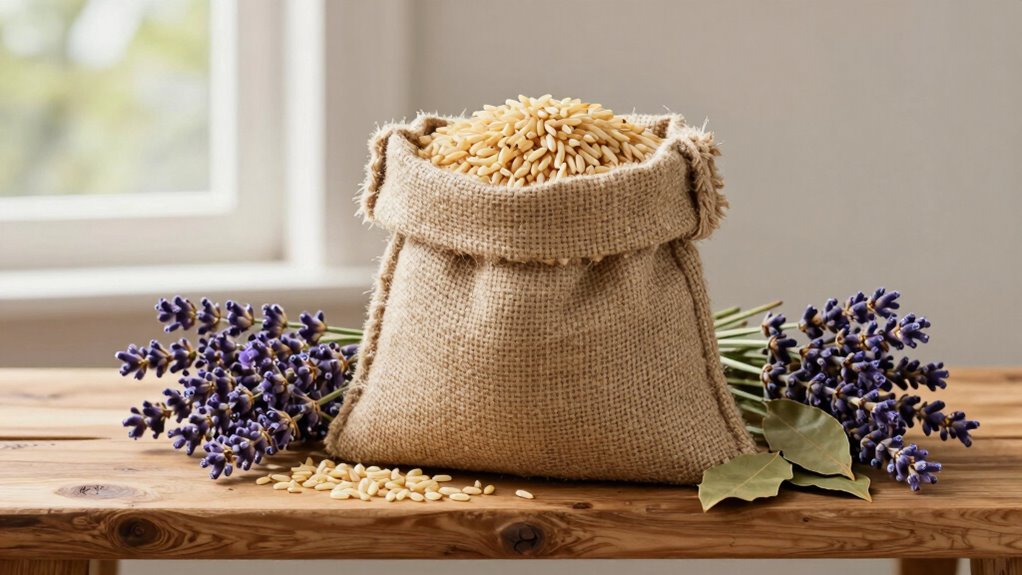
Natural repellents like bay leaves and lavender are effective at keeping bugs out of your stored rice because their strong scents deter pests from invading your pantry. These herbal remedies act as natural pest deterrents, making your storage space less attractive to bugs without chemicals. Bay leaves release a scent that bugs find unappealing, while lavender’s aroma is both pleasant to humans and repulsive to pests. To use them, simply place a few bay leaves or a small sachet of dried lavender among your rice. Regularly replacing or revitalizing these natural repellents ensures their effectiveness. This simple, chemical-free method helps protect your rice and maintains a pest-free environment, leveraging the power of nature’s herbal remedies to keep bugs at bay.
Tips for Using Natural Methods to Prevent Rice Infestations

To effectively prevent rice infestations using natural methods, you should start by choosing the right herbal repellents, such as bay leaves, dried lavender, or whole cloves. These natural deterrents help disrupt the pest lifecycle and keep bugs at bay. Maintaining proper grain moisture is vital since pests thrive in humid environments. Keep rice in a cool, dry place to reduce pest activity and slow their development. Regularly inspect your stored rice for signs of infestation, especially if humidity levels fluctuate. Using airtight containers can also prevent pests from accessing the rice. Additionally, layering repellents like herbs or dried flowers inside storage containers creates a natural barrier. Combining these practices ensures minimal pest activity without relying on chemicals.
How to Store Large Quantities of Rice Safely and Effectively
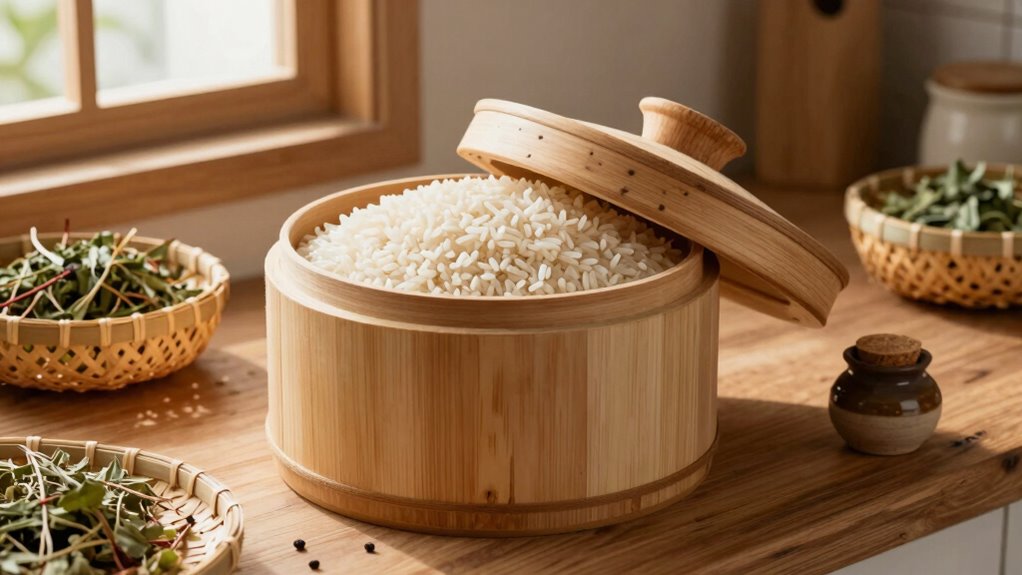
Storing large quantities of rice requires careful planning to prevent spoilage and pest infestation. To guarantee grains preservation, choose airtight, pest-proof containers like metal or thick plastic bins with tight-fitting lids. Store these containers in a cool, dry, and dark place to minimize moisture and temperature fluctuations that attract pests. Regularly inspect your stored rice for signs of pests or mold, and keep the storage area clean to support pest management. Using natural repellents like dried herbs or diatomaceous earth can also help deter bugs without chemicals. Properly organized storage not only extends rice freshness but also reduces the risk of infestations, making sure your grains stay safe and edible for longer periods.
Top Mistakes That Lead to Rice Bugs and How to Avoid Them
One of the most common mistakes that lead to rice bugs is neglecting proper storage practices, allowing pests to infiltrate your grains. Using inadequate storage containers or leaving rice exposed invites bugs to thrive. Failing to keep storage areas clean and dry creates an environment for pests to breed. Storing rice near sources of heat or moisture also attracts pests. Additionally, ignoring pest prevention measures, like sealing containers tightly or inspecting rice regularly, makes infestations more likely. To avoid these mistakes, assure you use airtight storage containers designed for pest prevention. Keep your storage area clean and dry, and regularly check your rice for signs of bugs. Taking these simple steps helps prevent rice bugs and keeps your grains pest-free.
Daily and Weekly Maintenance Tips to Keep Your Rice Pest-Free
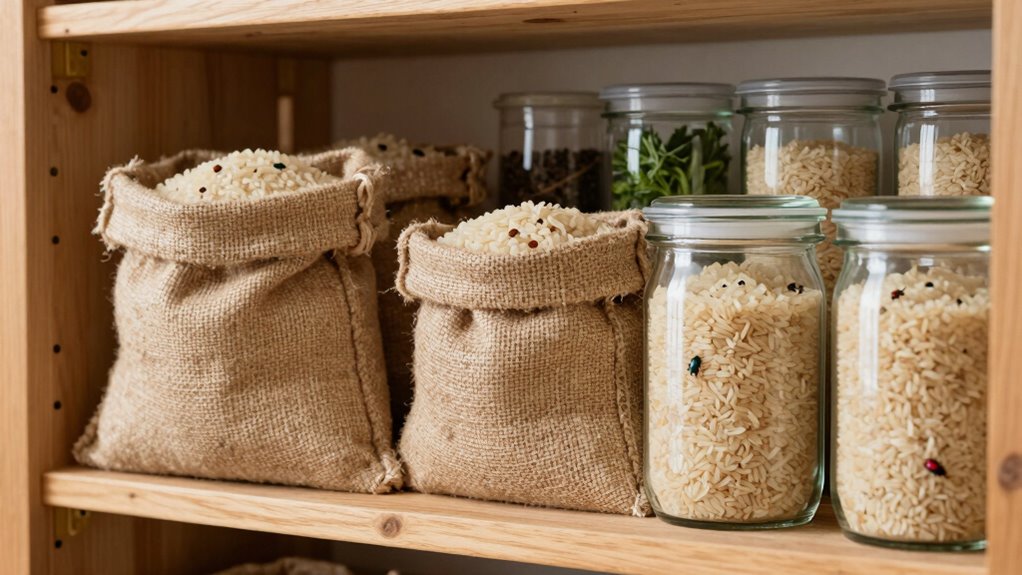
Maintaining a pest-free rice supply requires consistent daily and weekly habits. Start each day by inspecting your storage containers for signs of pest activity, such as tiny holes or webbing. Regular pest identification helps catch problems early before they spread. Use storage container materials like glass, metal, or high-quality plastic that are airtight and durable, preventing pests from entering or hiding. Weekly, wipe down storage areas with a vinegar solution to deter pests and keep the environment clean. Check for any cracks or damage in containers and repair or replace them immediately. Proper labeling and rotation ensure older rice gets used first, reducing the chance of infestation. Staying vigilant with these simple habits keeps your rice pest-free without chemicals, maintaining freshness and safety.
When to Consider Natural Pest Control Alternatives for Rice Storage

Natural pest control alternatives are worth contemplating when traditional methods aren’t enough to keep your rice safe. If you notice signs of pests despite regular maintenance, it’s time to explore chemical alternatives that are eco-friendly. Understanding the pest lifecycle helps you identify the right moment to act, especially before pests reproduce and spread. When pests become persistent or resistant to your current approach, natural options like traps or diatomaceous earth can be effective. These alternatives disrupt the pest lifecycle without introducing harmful chemicals into your storage. Consider natural pest control when traditional methods fail to fully eliminate bugs or when you want to avoid chemical residues. Taking action early ensures your rice stays protected and safe for long-term storage.
- Pests keep reappearing despite regular cleaning
- Signs of infestation persist after initial treatment
- You prefer eco-friendly, chemical-free solutions
- Pests are resistant to conventional methods
Frequently Asked Questions
Can I Store Rice Outdoors Without Attracting Pests?
Yes, you can store rice outdoors without attracting pests if you take proper pest prevention steps. Use airtight, pest-proof containers and keep your rice in a cool, dry, shaded area. Elevate the containers off the ground and regularly check for signs of pests. Covering the storage area with a fine mesh or net can also help prevent bugs from getting in, ensuring your rice stays pest-free.
How Long Can Rice Be Stored Without Risking Bugs?
You can store rice for about 1 to 2 years if kept properly, but it’s best to check the shelf life regularly. Follow storage tips like keeping it in airtight containers, in a cool, dry place, and away from sunlight. Proper storage helps prevent bugs and keeps your rice fresh longer. Always inspect the rice before use to make certain no signs of pests or spoilage.
Are There Specific Rice Types More Resistant to Pests?
You’re right on the money thinking some rice types are more pest-resistant. Organic varieties often have fewer chemicals, but pest-resistant strains are specifically bred to fend off bugs naturally. These strains are like a fortress, making them less likely to attract pests. When choosing rice, look for labels indicating pest resistance or organic certification, and store it properly to keep bugs at bay—don’t let pests spoil your pantry!
Can Regular Cleaning Eliminate Existing Rice Bugs?
Yes, regular cleaning can eliminate existing rice bugs and help with pest prevention. You should thoroughly clean your rice storage area, removing any spilled rice, debris, and dust. Wipe down shelves and containers with warm, soapy water. Effective cleaning disrupts the bugs’ habitat and reduces their chances of multiplying. Consistent cleaning not only gets rid of current pests but also prevents future infestations, keeping your rice safe and pest-free.
How Do Natural Methods Compare to Chemical Treatments?
Natural methods, like using natural repellents such as bay leaves or neem, are safer and eco-friendly but may not be as immediately effective as chemical treatments. You can improve results by storing rice in airtight storage containers, which prevent bugs from entering. Combining natural repellents with proper storage offers a good balance, protecting your rice without harmful chemicals, though it might require more frequent maintenance.
Conclusion
By mastering meticulous methods and mindful maintenance, you can masterfully minimize mold, mold, and munching bugs. Keep containers clean, control climate conditions, and consider clever natural repellents like bay leaves or lavender. Staying vigilant with vigilant ventilation and vigilant vigilance ensures your rice remains fresh, flawless, and free from pests. With consistent care and clever choices, you’ll safeguard your grains, securing a safe, savory, and pest-proof pantry for years to come.